Top

DigiFT Unveils First Fully Regulatory-Compliant US Treasury Token

Policy & Regulation·August 11, 2023, 1:15 AM

DigiFT, a pioneering decentralized exchange (DEX) for digital assets with a Singapore-based project team, has made waves in the financial landscape with the official launch of the DigiFT US Treasury Token.
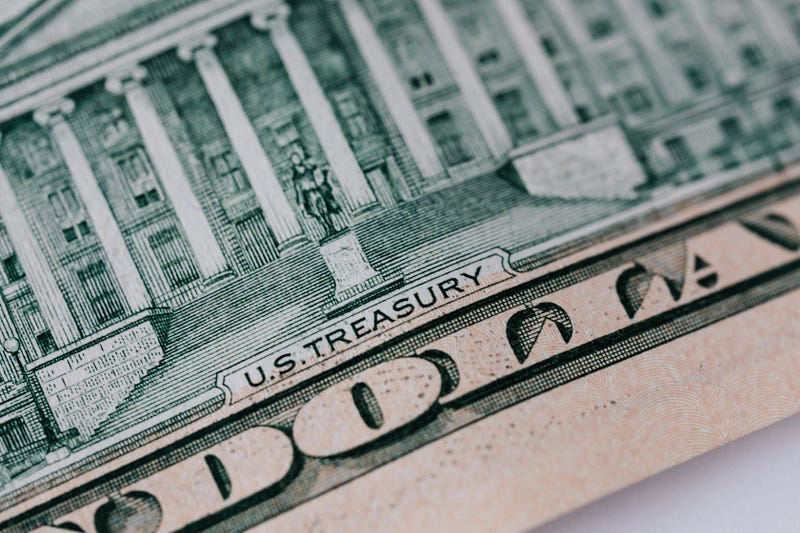
Photo by Karolina Grabowska on Pexels


TradFi and blockchain convergence

The company announced the launch of the Treasury token, known as “DUST,” via a press release on Thursday. It’s the first-ever fully regulatory-compliant US Treasury token issued on a public blockchain, signaling a powerful convergence of traditional finance and blockchain technology.

DUST has the potential to be a game-changer in the crypto space, offering accredited and institutional investors an unparalleled opportunity to seamlessly invest in US Treasuries through a secure and transparent on-chain channel. One of its standout features is its backing by a single US Treasury note with a specific maturity date, instilling confidence and reassurance in investors seeking stable and reliable assets.


Regulatory compliance

There are other tokenized treasuries in existence already. However, DigiFT differentiates its product through adherence to rigorous regulatory standards, ensuring that the tokenization process aligns with established financial norms.

Henry Zhang, CEO of DigiFT, expressed his enthusiasm about this groundbreaking achievement:

“The launch of DigiFT US Treasury Token represents our commitment to bring the best of both decentralized finance (DeFi) and traditional yield to investors.”

He emphasized that DUST not only bridges the gap between DeFi and real-world assets (RWAs) but also upholds the highest standards of regulatory compliance.

DUST’s innovative structure offers investors the flexibility to participate using US dollars or US dollar stablecoin (USD Coin). The product is accessible to all, given that it facilitates a minimum investment amount of 1 USD or USDC. To enhance accessibility further still, DUST ensures same-day settlement for investments below USD 50,000, contingent on liquidity conditions.

Zhang emphasized the transformative potential of DUST, stating: “We believe that tokenization of RWAs is poised to become the future of investing, and DUST will support the wider adoption of digital tokens with its compliant features.”


Rapid progress

The issuance of DUST tokens is overseen by Red Cedar Digital Pte. Ltd., an affiliate of DigiFT, with a yield to maturity (YTM) of 5.40% as of August 3, 2023. DigiFT’s journey began in 2020 when it became the first and only DEX to be accepted into the Monetary Authority of Singapore (MAS) FinTech Regulatory Sandbox.

Since then, DigiFT’s list of achievements has grown exponentially. The platform successfully listed a tokenized corporate note from Diners Club (Singapore), which achieved full subscription at its initial offering.

Additionally, a tokenized bond, backed by a Barclays 8% Perpetual Bond and custodied with a licensed global financial institution, reinforced DigiFT’s reputation for innovation. The platform’s regulatory-compliant access to Matrixdock’s Short-term Treasury Bill Token (STBT) further solidified its role in pioneering secure and transparent investment avenues.

DigiFT’s product offering demonstrates that we are likely to see an ongoing blurring of the lines between blockchain-based innovation and traditional products in conventional finance over the next few years. As DigiFT continues to champion regulatory compliance and innovation, investors can anticipate even more transformative solutions that harmonize the best of both worlds.

More to Read
View All
Policy & Regulation·

Jul 12, 2023

China Unveils Offline SIM Card Wallet for Digital Yuan Payments

China Unveils Offline SIM Card Wallet for Digital Yuan PaymentsThe People’s Bank of China (PBoC) has announced a new offline SIM card-based solution for its digital yuan, enabling users to make payments even with their phones switched off.Photo by Sumeet Singh on UnsplashEmbedded hardwareThe innovative initiative was revealed via a social media post on Monday. It aims to reach users with 2G phones who were previously unable to access digital currency.Currently, this feature is only available for Android phone users with NFC functionality, as no details have been given for iOS users or 2G phone owners. This innovation is part of the central bank’s efforts to expand the reach and usage of its digital currency, especially for users with 2G phones who were previously unable to access it.Earlier this year, the PBoC launched a similar solution for smartphone users, using near-field communication (NFC) technology. However, the latest solution relies on hardware embedded in SIM cards, which can act as a “hard” (offline) central bank digital currency (CBDC) wallet.Partnership with telecoms giantsThe central bank’s partners relative to this particular project include major telecom operators China Mobile, China Telecom, and China Unicom, as well as state-owned commercial banks Industrial and Commercial Bank of China and Bank of China, who have also introduced SIM card-based “hard wallet products.” These developments are expected to significantly improve the payment capabilities and network-free functionality of the digital yuan.To use this feature, citizens have to get a “super SIM card” from their carriers. After they have replaced their existing SIM cards and opened the digital yuan app on their phones, they will see an option to “open a SIM card hard wallet.” This will enable them to make touch-based payments to merchants even when their devices are powered off or lack network connectivity.SIM-based wallets are likely to be particularly useful for those using 2G devices or smartphones without NFC capabilities. Considering that about 20% of Chinese mobile users still use 2G phones, it would make sense for the PBoC to continue working in this direction with future updates.Driving adoptionThe ultimate plan of the PBoC regarding SIM-based wallets is not clear yet. However, recent developments, such as the pilot project in Qingdao where CBDC payments were tested on the metro system without electricity or network, indicate a strong push toward increasing the accessibility and adoption of the digital yuan.Frankly, moves to bring about adoption of the e-CNY have been nothing short of relentless. These measures have varied from paying state employees in e-CNY in Changshu, collaborating with French bank BNP Paribas so that its corporate clients start to use the digital yuan and enabling e-CNY bus fare payments on public transport in Jinan.China’s Jiangsu Province has integrated the digital yuan into its education system, while the resort city of Sanya recently introduced e-CNY ATM machines so that foreign tourists have a means through which they can access the digital currency. These developments demonstrate a clear commitment by the Chinese authorities in advancing the rollout of its central bank digital currency.

news
Web3 & Enterprise·

Nov 03, 2023

Korean crypto exchange Upbit adds one-second interval charts

Korean crypto exchange Upbit adds one-second interval chartsSouth Korea’s largest cryptocurrency exchange, Upbit, now offers one-second interval charts for its users.Dunamu, the blockchain and fintech company behind Upbit, announced on Friday (local time) that it has introduced a one-second interval feature to Upbit’s “original” charts. This makes Upbit the first Korean cryptocurrency exchange to offer this functionality.Photo by m. on UnsplashResponding to user demandUpbit has rolled out this one-second interval feature in response to user demand. This addition facilitates a broader range of investment strategies, allowing Upbit users to fine-tune their decisions based on their investment preferences. Now, the time frames available on Upbit are 1 second, 1 minute, 3 minutes, 5 minutes, 10 minutes, 15 minutes, 30 minutes, 1 hour, 4 hours, 1 day, 1 week and 1 month.A representative from Upbit said that they have incorporated the one-second interval feature into their original charts to provide users with quick and easy access to virtual asset price information for their investments. The official added that the company will remain committed to fostering a user-friendly and comfortable trading environment.Available on both web and mobileUsers can access the one-second interval feature on both the web and app versions of Upbit. To utilize this feature, they can select the “1s” time frame on the original charts found under the “Exchange” tab of Upbit.

news
Web3 & Enterprise·

Oct 21, 2023

SynFutures Completes Series B Funding Round and V3 Launch

SynFutures Completes Series B Funding Round and V3 LaunchSynFutures, the Singapore-based project behind the SynFutures Protocol and decentralized derivatives exchange (DEX) specializing in crypto perpetual futures, has successfully completed its Series B funding round of $22 million.In a big week for the DEX project, SynFutures also launched V3 of the protocol on public testnet, incorporating its updated automated market maker (AMM) model, Oyster AMM.Photo by micheile henderson on UnsplashPotential token launchThe Series B funding round was spearheaded by Pantera Capital, with participation from Singapore’s HashKey Capital, SIG DT Investments (a unit of the Susquehanna International Group), and other investors.Co-founder and CEO of SynFutures, Rachel Lin, stated that while the company is excited about its recent funding success, it is also open to the idea of launching a native token in the future. However, any such decision would be contingent on market conditions and regulatory considerations.Enabling decentralized crypto derivatives tradingThis Series B funding, which was initiated in 2022, marks a significant milestone for SynFutures, coming to a close nearly two and a half years after its Series A round that raised $14 million in June 2021. In total, the company has now secured approximately $38 million in funding to date. In an interview with The Block, Lin declined to indicate the company valuation associated with the recent funding round.SynFutures, established in 2021, serves as a decentralized exchange catering to the trading of crypto perpetual futures, a derivative product that allows traders to speculate on the future price of cryptocurrencies with leverage and without fixed expiration dates. This approach enables traders to rapidly profit or incur losses based on market price movements.While SynFutures operates on various blockchain networks, it currently ranks as the second-largest derivatives protocol on Polygon, with a total value locked (TVL) of over $6 million, according to data from DeFi Llama. The platform has facilitated over $22 billion in cumulative trading volume since its inception.Notably, SynFutures has introduced its latest platform public testnet version, V3, on the Ethereum testnet. The company aims to extend its support for multiple blockchains, including Polygon and zkSync Era, an Ethereum Layer 2 network, when the mainnet version goes live, scheduled for late this year to early next year. Previous iterations of the platform, such as SynFutures V2 and SynFutures V1, have been deployed on Ethereum, Polygon, Arbitrum, and BNB Chain.V3 FeaturesOne of the standout features of SynFutures’ V3 platform is its proprietary AMM model called Oyster. Lin clarified that Oyster AMM combines concentrated liquidity AMM (offering up to 26,666x boost) with the traditional order book model (providing unlimited liquidity boost).With Oyster AMM, SynFutures aims to compete directly with centralized exchanges. The project’s Chief Marketing Officer (CMO) Mark Lee maintains that the offering provides advantages over other decentralized platforms also. “While several projects, including dYdX, opt for a hybrid approach — integrating off-chain orders with on-chain settlements — the full on-chain methodology stands out for its inherent transparency and trustworthiness,” Lee told Blockworks.SynFutures currently maintains a team of approximately 20 individuals. With the latest funding infusion, the company plans to expand its workforce, particularly in engineering and business development roles, to further its mission of advancing decentralized derivatives trading.

news
Loading