Top

Binance Expands Crypto Offering in Dubai with New License

Policy & Regulation·August 01, 2023, 1:05 AM

Dubai has welcomed one of the biggest players in the crypto sector, Binance, with the Virtual Asset Regulatory Authority (VARA) awarding the firm a new trading license.
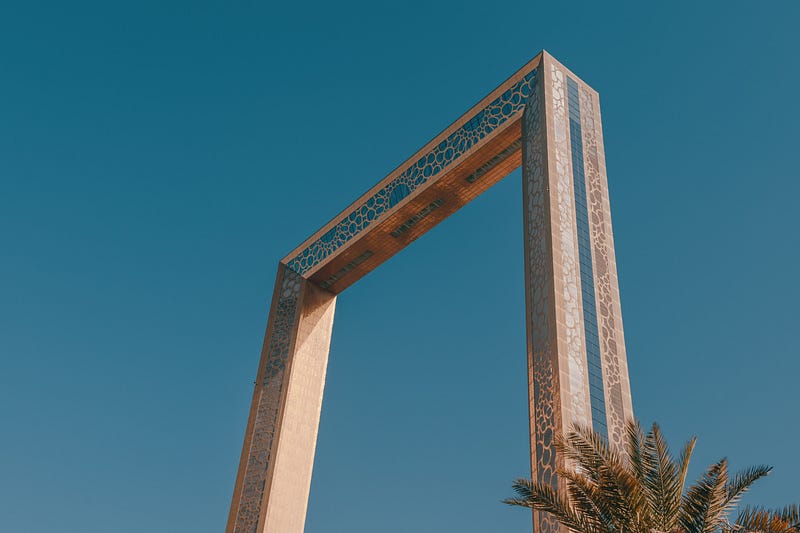
Photo by Petar Avramoski on Unsplash


Serving qualified investors

According to an announcement made by the company on Monday, Binance’s Dubai-based subsidiary, Binance FZE, has secured the operational Minimum Viable Product (MVP) license from VARA.

Eligible investors in Dubai, deemed as “qualified retail clients,” will now have access to authorized services such as compliant crypto-to-fiat exchanges, adhering to the guidelines set by the Financial Action Task Force (FATF). To qualify, investors must meet specific criteria, including being at least 21 years old and possessing a minimum of 500,000 United Arab Emirates dirhams ($136,000) in net liquid assets, supported by relevant documentary proof like bank statements and proof of funds.

Additionally, qualified investors are required to provide valid identification documents, including passports and visas, along with proof of a valid UAE address and contact details. This comprehensive verification process ensures compliance with regulatory requirements and enhances security measures for all parties involved.


Expanded service offering

The move is a significant development as it allows Binance to offer cryptocurrency exchange and virtual asset broker-dealer services to institutional and qualified retail investors in Dubai.

With the new license, Binance’s Dubai entity can now offer crypto-to-fiat exchange, conversions, transfer and custody solutions, brokerage facilities, as well as virtual asset payments and remittance services. The development builds upon Binance’s previous progress, having received the provisional MVP license in March 2022, followed by the preparatory MVP license in September 2022.


Licensing challenges

It’s worth noting that some crypto exchanges have faced challenges operating with preparatory MVP licenses due to limited capabilities, only serving a restricted set of accredited investors. Bybit CEO Ben Zhou had previously highlighted this concern. That said, Zhou still came to the conclusion recently that the regulatory approach in the UAE is superior by comparison with many other jurisdictions.

The news of Binance’s successful licensing comes shortly after VARA suspended the operational license of another crypto exchange, BitOasis, for not meeting required conditions within the set timeframes. BitOasis assured its commitment to fulfilling the remaining conditions in collaboration with VARA.

In April 2023, VARA sought additional information from Binance, aiming to tighten regulatory standards in the emirate. Binance promptly provided all requested information and looked forward to further collaboration with VARA as it prepared for the next phase of licensing.

Compliance with VARA’s framework includes adherence to compulsory rulebooks related to general operations, compliance, and market conduct requirements. The regulator has published key highlights of the regulations in 2023, underscoring its efforts to create a robust and well-regulated crypto market in Dubai.


Regulatory headwinds

Binance’s latest regulatory achievement indicates the exchange’s dedication to expanding its services and offerings in the region. It could potentially lead to something even more significant for the company in the Middle East as Binance has suggested that it would be more likely to expand in places such as Dubai, given an adverse regulatory approach elsewhere.

Over the course of the past three months, the company has been forced out of key markets such as Germany, Canada, Belgium, the Netherlands, and Cyprus, due to regulatory pushback.


More to Read
View All
Web3 & Enterprise·

Nov 29, 2023

Rotonda revamps Burrito Wallet with cross-chain swapping, added mainnet and more

Rotonda revamps Burrito Wallet with cross-chain swapping, added mainnet and moreRotonda, a subsidiary of South Korean crypto exchange Bithumb, has recently revamped its Web3 wallet Burrito Wallet to make the app more convenient for users, according to Korean news agency Etoday on Wednesday (local time). The newest version features an improved mainnet support system, user interface (UI) and user experience (UX), with a stronger focus on enhancing user convenience and creating a framework for optimal investment.Photo by Shubham’s Web3 on Unsplash“Through this service renewal, we hope that many users will be able to experience a more convenient and unique web3 environment. We will continue to improve our services to establish Burrito Wallet as a user-friendly crypto wallet platform,” the company said.Expanded options for token tradingMost notably, Burrito Wallet now offers cross-chain swapping, which allows users to trade token currencies that have been issued on different mainnets. This is a step up from regular crypto swapping, which only allows the swapping of tokens issued on the same mainnet. Cross-chain swapping between the Ethereum, BNB Smart Chain, Matic, Avalanche and Arbitrum mainnets is now supported by the deSwap Liquidity Network (DLN), a decentralized cross-chain exchange built by deBridge Finance. DLN facilitates secure and unlimited liquidity transfers across chains with zero slippage.Rotonda added that it would continue to expand its lineup of swap platforms through collaborations with major industry names like Kana Labs, WOOFi and Unizen.Better user experienceThe company also added new features to help users make optimal investments. This includes a new notification bot dubbed “Burrito Chef,” which sends notifications for announcements, updates and events within the app. Users can quickly and conveniently check the insights they need to inform their personal investments and get the most out of the app’s services.On the UI front, a “Home” tab has been added, which provides users with a concise overview at of the most commonly used features like wallet, swap and chat, along with the most popular content. Token rankings by category — such as most swapped tokens and most rising tokens — that were previously available on the “Swap” tab have been moved to the “Home” tab and placed in the foreground of the screen. Rotonda also explained that it aims to provide a more customizable experience by adding more detailed chart features.The wallet also now supports the Sui mainnet, bringing the total number of supported mainnets to 12.This development comes shortly after Rotonda recently launched Burrito Wallet in the Latin American region in a move to expand its global user base.

news
Web3 & Enterprise·

Apr 29, 2025

Stacks establishes foundation within UAE’s ADGM

The Stacks Asia DLT Foundation, an organization associated with the Stacks Bitcoin layer-2 network, has become the first Bitcoin-based foundation to establish itself within, and be recognized by, the Abu Dhabi Global Market (ADGM). ADGM is a free zone and international financial centre located on Al Maryah Island within the capital of the United Arab Emirates (UAE). In a press release published on April 28, the foundation set out that it has established itself within the ADGM in an effort to further grow the adoption of the Bitcoin layer-2 network within Asia and the Middle East, while leveraging the positive regulatory environment that has been established by the ADGM with regard to distributed ledger technology (DLT).Photo by Joshua Woroniecki on UnsplashAttracting DLT foundationsThe ADGM has played a significant role in positioning the UAE as a go-to location for crypto startups and projects. The Berlin-based IOTA Foundation, developer of the IOTA DLT project, was among the first to establish a foundation within the ADGM to promote use of its network in the Middle East region back in November 2023.Since then, others have followed. In 2024 DLT foundations were established related to blockchain projects such as Kaia, Aptos and Beam. Last month DeFi protocol project NEOPIN announced that it had established a DLT foundation within the ADGM.  The free zone has proven popular not just among DLT foundations, but among crypto startups too. Projects such as Polygon Labs, Chainlink Labs and TON have established a presence there. Regulatory frameworkThe ADGM has its own regulator, the Financial Services Regulatory Authority (FSRA), and it established a framework for blockchain foundations in 2023. In establishing the Stacks Asia Foundation within the ADGM, the project would have had to register as a DLT Foundation, while meeting all local legal and regulatory requirements.Kyle Ellicott, interim Executive Director of the Stacks Asia DLT Foundation, commented on the development, providing an insight into why the ADGM was chosen:”We chose to establish our presence in ADGM because of its unparalleled commitment to fostering innovation in the blockchain space. Their forward-thinking approach to policy-making aligns perfectly with the Stacks ecosystem’s history of creating pathways for Bitcoin builders.”  Bitcoin programmabilityThe foundation asserts that it will play a “pivotal role” in forging the future of Bitcoin programmability and its adoption in that respect within Asia and the Middle East.  Referring to Bitcoin while speaking at the Abu Dhabi Digital Assets Forum, Ellicott said that “the once sleepy asset, seen only as a store of value, is now yielding with Layer 2s," through Stacks Bitcoin (sBTC), a 1:1 Bitcoin-backed asset hosted on the Stacks blockchain network. Stacks believes that the next wave of growth for Bitcoin will come through Bitcoin layer-2s. The project claims that unlike wrapped Bitcoin (wBTC), sBTC doesn’t rely on centralized intermediaries. The asset has been designed to extend Bitcoin’s utility, enabling Bitcoin-adjacent DeFi applications and smart contracts. While the project highlights the importance of Bitcoin layer-2 going forward, back in February, Stacks co-founder Muneeb Ali forecast that a shakeout of Bitcoin layer-2 projects will occur, with only a handful of such projects surviving over the course of the next three years.

news
Web3 & Enterprise·

Dec 01, 2023

Fingerlabs launches Web3 solution to help partners build membership NFTs

Fingerlabs launches Web3 solution to help partners build membership NFTsFingerlabs, a subsidiary of digital marketing company FSN, has launched its participatory Web3 membership platform dubbed “Bling” in an effort to foray into the evolving digital landscape, according to an official press release.Photo by Choong Deng Xiang on UnsplashCustomizable characters and collaborative benefitsBling is an all-in-one marketing solution that allows businesses to conveniently create and manage NFTs that offer membership benefits. Users can create customizable characters on Favorlet, Fingerlabs’ NFT wallet and customer management service, using clothing or accessories called “parts.” These parts are linked to benefits offered by Fingerlabs’ partner firms, usually in the form of coupons that can be used both online and offline — thus touting the name “parts NFTs.” This can help boost brand exposure as Fingerlabs will be able to share its customer base with its partners.“Bling will prove to be a novel attempt in demonstrating that Web3 technology is not exclusive but for everyone to use. It will significantly reduce the risks associated with directly operating NFT projects and support any brand in effortlessly utilizing Web3 technology as an all-in-one solution for development and operations,” explained Fingerlabs CEO Kim Dong-hoon.Partner firms can construct their parts NFTs through Favorlet, and users can store theirs on their Favorlet wallet. Notably, parts NFTs can also be traded on NFT is Life Evolution (NILE), a decentralized autonomous organization (DAO) and NFT platform built on blockchain gaming publisher Wemade’s WEMIX3.0 mainnet.Bringing a classic to Web3Fingerlabs also announced that it is working with the K Museum of Contemporary Art, located in Seoul, as Bling’s first official partner. Users can customize their Bling characters with Great Gatsby-themed parts in line with the museum’s newest exhibit based on the classic novel. Passes to the exhibit will also be minted as NFTs. The K Museum of Contemporary Art previously worked with Fingerlabs in August on a project where exhibit poster cards were minted as reward-yielding NFTs.

news
Loading