Top

Chinese VC plans $10 billion Web3 fund launch

Web3 & Enterprise·December 29, 2023, 1:40 AM

While the Web3 sector seemed to be hamstrung by litigation and regulatory scrutiny in 2023 following multiple platform failures, it's going out with a bang in China with news of a $10 billion fund in Shenzhen to support Web3 startups.

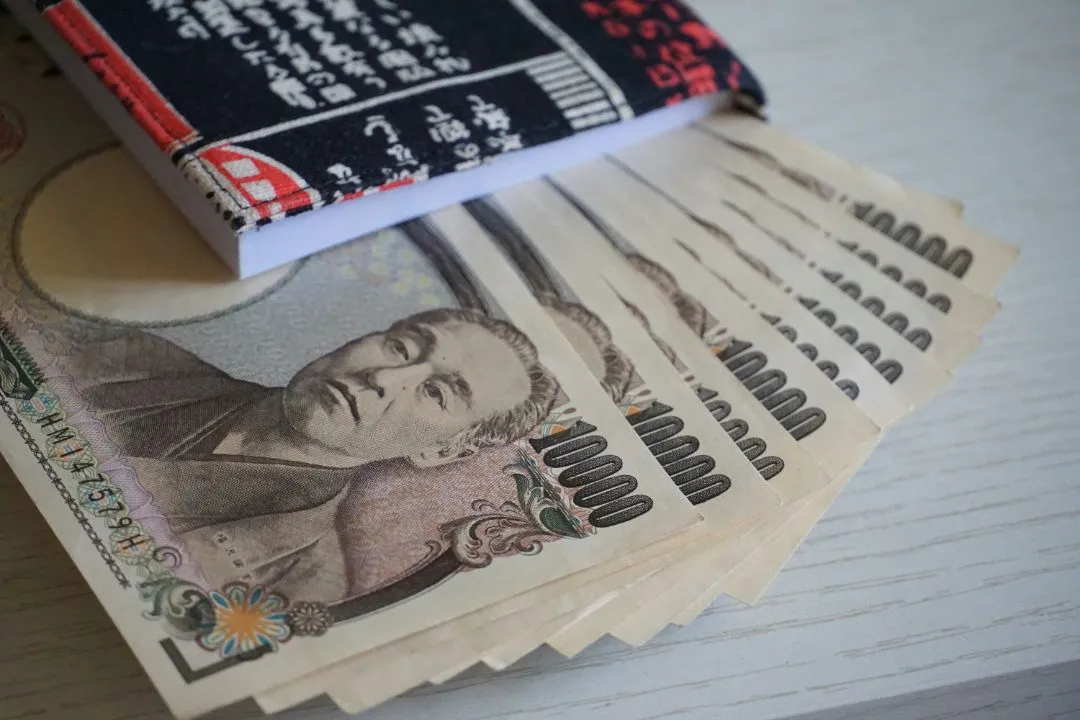
https://asset.coinness.com/en/news/ab22a14a6af1bb4a69a0b26a5c7045ab.jpg
Photo by 李大毛 没有猫 on Unsplash

Fueling Web3 startup growth

GBA Capital, a Chinese venture capital (VC) firm, made a significant announcement during the Guangdong-Hong Kong-Macao Greater Bay Area Digital Economy Development Conference on Tuesday. The firm, backed by China's state-owned National Engineering Laboratory, unveiled plans to launch a substantial $10 billion Web3 fund.


The conference also served as an educational platform, enlightening investors and attendees unfamiliar with the intricacies of the Web3 industry. Luo Jinhai, founder of Huoxun Finance and creator of the "Yuan Asset" concept, elucidated on the unique attributes of specific forms of digital assets, including independence, privacy, security, scarcity and liquidity.


Metaverse focus

This initiative aims to fuel the growth of startups specializing in virtual reality, the metaverse and non-fungible tokens (NFTs), ultimately transforming the Guangdong-Hong Kong-Macao economic region into the global "meta-asset capital."  Meta-assets are virtual objects that serve as key components within the make-up of the metaverse.


Haolong Li, the chairman of GBA Capital, outlined the ambitious vision, stating that the conference would facilitate "meta-asset global tours" in key international hubs such as Japan, Singapore, Dubai, Silicon Valley and Europe. The objective is to enhance the visibility of meta-assets and position the economic area as a leading force in the emerging Web3 landscape.


Previous developments that have played out over the course of 2023 suggest that China is placing a particular focus on embracing metaverse technology, with a view towards integrating the metaverse with existing systems in the country.  


The Ministry of Industry and Information Technology of China, in response to a proposal about promoting the development of the Web3 industry, emphasized ongoing research in areas such as the Metaverse, NFTs and decentralized identity management. In September the Ministry set out an action plan for the cultivation of a domestic metaverse. As part of that plan, it aspires to nurture three to five metaverse companies of global significance.


GBA Capital, established by China Europe International Financial Group in Hong Kong, boasts strategic partnerships with key financial institutions, including the Asia Pacific Investment Bank and China's state-owned National Engineering Laboratory. The firm's focus on investment and incubation in the digital economy aligns with its goal of integrating industrial clusters, capital resources, corporate resources and policy advantages to offer comprehensive support and services to enterprises.


In a related development, GBA Capital's subsidiary Zhongrong Global successfully raised an angel funding round at a valuation of 100 million Chinese yuan ($14 million) back in May. The funds will be allocated to Web3 project incubation and industrial services in the artificial intelligence sector.


The Guangdong-Hong Kong-Macao Bay Area has experienced a surge in Web3 startups and overseas corporate relocations since the beginning of the year, setting the stage for GBA Capital's substantial Web3 accelerator fund.


More to Read
View All
Web3 & Enterprise·

Jan 27, 2024

Sygnum plans Asian expansion following $40M fund raise

Switzerland and Singapore-based crypto bank Sygnum has successfully closed a funding round, securing over $40 million in capital, with plans to expand its service offering in Asia. On the brink of unicorn statusThe funding round was achieved based upon a post-money valuation of $900 million, with Sygnum edging closer to unicorn status. Led by global asset management group Azimut Holdings, the funding surpassed the initial target of $35 million, reinforcing Sygnum's position in the rapidly evolving digital assets space. In a press release, Mathias Imbach, Sygnum's co-founder and CEO, expressed excitement about the successful funding round, highlighting the company's commitment to building trust through regulation and good governance. Imbach stated:”Our core thesis has always been that Future has Heritage, and our strategy to build trust via regulation and good governance has guided us throughout all market cycles. ” Gerald Goh, Sygnum's co-founder and CEO of its Singapore operations, emphasized the importance of staying ahead as clients' needs and activities grow more sophisticated. The fresh funds will enable Sygnum to continuously upgrade and enhance its product and service offerings in response to evolving market demands.Photo by Towfiqu barbhuiya on UnsplashAsian focusThe funds raised in this round will be instrumental in expanding Sygnum's geographical reach into new markets in 2024, within the Asia-Pacific (APAC) region as well as within the European Union. Sygnum has already made in-roads in Asia. Having started out in Switzerland, in 2019 the company set up a base in Singapore, establishing Sygnum Singapore and obtained a capital markets license from the Monetary Authority of Singapore (MAS). Last June, the firm achieved in-principle approval for a Major Payment Institution (MPI) license from MAS. It fulfilled the regulator’s requirements to bring about full approval in October. Goh told Bloomberg that the company envisages achieving growth in Asia and Europe through acquisition.  Developing fully regulated productsThis latest capital injection has also been earmarked to accelerate the development of fully regulated products, including the bank-to-bank platform that currently powers crypto offerings for more than 15 banks and financial institutions worldwide. Sygnum's assets under management have surged to $4 billion, with a client base exceeding 1,700 from over 60 countries. At the end of 2023, the firm reported an annualized revenue run rate (ARRR) exceeding $100 million, marking a significant milestone for the company's financial health and positive cash flow. Sygnum's expansion efforts include collaborations with key players in the industry. In November, the bank furthered its partnership with the Singapore arm of 174-year-old private bank Bordier & Cie, strengthening their initial collaboration that started in Geneva in 2021. Giorgio Medda, CEO of Azimut Holding, highlighted the strategic partnership between Azimut and Sygnum since 2021, emphasizing their joint development of the first tokenization of a private credit portfolio in Europe. Despite the recent challenges in the crypto industry, Sygnum remains optimistic about the future. The broader industry is witnessing a resurgence, with investors and market participants seeking partnerships with trusted and well-managed financial institutions. This sentiment aligns with Sygnum's vision to provide fully regulated solutions and support investors as they increase exposure to the asset class. 

news
Policy & Regulation·

Jul 25, 2023

Bybit CEO Applauds Hong Kong and UAE Regulatory Approaches

Bybit CEO Applauds Hong Kong and UAE Regulatory ApproachesBen Zhou, the CEO of Dubai-based crypto spot and derivatives trading platform Bybit, has recently lauded the regulatory approach of Asian and Middle Eastern countries.In a recent interview with CoinDesk, Zhou singled out Hong Kong and the United Arab Emirates (UAE) in particular, while also drawing attention to the contrasting approach taken to regulation of digital assets in North America, particularly Canada.Photo by Alex King on UnsplashDiffering regulatory approachesThe Bybit CEO believes that the tone set by regulators towards the crypto industry differs significantly between regions, with Asia and the Middle East displaying a more collaborative and supportive stance compared to North America. He perceives a shift in the attitude of regulators, seeing cryptocurrencies as an opportunity rather than a crisis.Praising Hong Kong and Dubai Regulators, Zhou highlights Hong Kong’s aggressive efforts to attract crypto companies by tapping into the talents within the industry. While recognizing the common goals among regulators worldwide, he notes that Dubai’s crypto regulatory framework has advanced even further than Hong Kong’s.Bybit’s strategic moves underline Zhou’s praise for these regions’ regulatory environments. On April 1, Bybit announced plans to establish its core operations in Hong Kong, positioning its research and development (R&D) and marketing teams in the Chinese autonomous territory.Subsequently, on April 17, Bybit officially unveiled its headquarters at the Dubai World Trade Center, a year after receiving in-principle approval to operate its crypto asset business in the UAE.Canadian market exitHowever, Bybit faced challenges in Canada due to its evolving regulatory landscape. While the company claimed not to operate in the United States, it had onboarded customers in Canada in the past. The situation changed in May when Bybit withdrew its services from Canada following the fallout from the FTX exchange scandal in November 2022.The regulatory environment became increasingly stringent, prompting Bybit to exit the Canadian market. Despite having ongoing conversations with Canadian regulators and receiving an invitation to apply for a crypto license, the restrictions on stablecoin usage played a significant role in the company’s decision to withdraw.Fifth most popular exchangePresently, Bybit ranks as the fifth most popular crypto exchange in the world, according to a report by CoinGecko for the second quarter of 2023.The company has been extending out its product offering, recently entering the crypto lending arena. Towards the end of May, the business received “in-principle” approval from the Astana Financial Services Authority (AFSA) to operate as a digital asset trading business and digital asset custodian in Kazakhstan.In June the crypto exchange followed the lead of other global crypto platforms such as Crypto.com and Binance by integrating artificial intelligence-driven trading tools into its platform for the benefit of its users.As the crypto sector continues to evolve, the differing regulatory approaches in different regions will play a crucial role in shaping its future. Bybit’s CEO, Ben Zhou, advocates for collaboration between regulators and crypto companies, emphasizing that viewing cryptocurrencies as an opportunity will foster innovation and growth in the industry.

news
Policy & Regulation·

Sep 01, 2023

Report Reveals Global Trends and Online Discourse on Crypto Travel Rule

Report Reveals Global Trends and Online Discourse on Crypto Travel RuleCODE, the only Travel Rule solution provider in South Korea, together with blockchain consulting firm Catalyze Research, published a report that sheds light on global trends in Travel Rule legislation and popular online keywords associated with the Travel Rule. The Travel Rule is a set of guidelines that virtual asset service providers (VASPs) and financial institutions are obligated to observe in order to counteract money laundering and terrorist financing. These guidelines require these entities to share information about both the sender and the recipient of cryptocurrency or financial transactions.The authors of this report gathered online comments related to the Travel Rule from January 1, 2019 to July 31, 2023. They conducted this analysis across news outlets, media platforms, online forums, and various social media channels, encompassing over 200 countries and 150 languages.Photo by Volodymyr Hryshchenko on UnsplashKey events driving discussionsAccording to the report, online discussions concerning the Travel Rule intensified around the time of several key events. These events include the enforcement of the Travel Rule in South Korea in March 2022, the approval of the Markets in Crypto-Assets Regulation (MiCA) and Transfer of Funds Regulation (TFR) by the European Union in April 2023, endorsements of the Travel Rule by G7 countries in Japan in May 2023, and the subsequent implementation of the Travel Rule in Hong Kong and Japan in June 2023.Notably, South Korea, Japan, and France experienced the most substantial surges in Travel Rule-related discussions during the first half of 2023. In South Korea, comments were prompted by a lawmaker’s scandal related to cryptocurrency trading. Meanwhile, Japan and France observed a rise in comments linked to the enforcement of their respective local Travel Rule regulations in the second quarter.Negative market responsesIn addition, markets responded more negatively than positively to the tightening of Travel Rule regulations. The concerns about the market contraction were stronger than the positive outlook on the advantages of preventing money laundering.Lee Sung-mi, CEO of CODE, highlighted the growing significance of Travel Rule solution providers in ensuring the compliance of virtual asset service providers (VASPs) with the regulatory demands of various jurisdictions. Particularly, with the Financial Action Task Force (FATF), G7 nations, and the EU at the forefront, countries have been making noteworthy strides in Travel Rule implementations since 2023, she further noted. Lee emphasized CODE’s commitment to aiding its member VASPs in adhering to Travel Rule regulations by delivering secure and convenient services that align with the evolving global regulatory landscape.

news
Loading