Top

Datachain Secures Funding from Japan’s MUFG to Advance Blockchain Interoperability Initiatives

Web3 & Enterprise·June 30, 2023, 9:13 AM

Datachain, a Japanese blockchain interoperability solution provider, has secured funding from Mitsubishi UFJ Financial Group (MUFJ), one of Japan’s largest banking institutions, according to a press release. This investment will boost their collaboration as they work together to advance ongoing initiatives involving stablecoins, security tokens, and cross-chain technology.

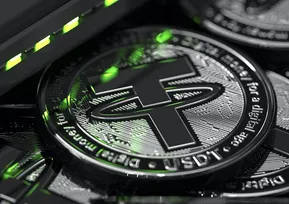
Photo by Shubham Dhage on Unsplash


Growing token market

In a joint report by the Boston Consulting Group (BCG) and Singapore-based investment platform ADDX, it is projected that the market for illiquid asset tokenization could reach $16.1 trillion by 2030 (as a conservative estimate) or potentially $68 trillion in a best-case scenario. This growth in the illiquid asset tokenization market, coupled with the expanding stablecoins and cryptocurrencies market, is expected to drive the overall digital asset market’s expansion.


Cross-chain tech

Datachain will collaborate with MUFG and other partners to develop an infrastructure that enables the transfer of digital assets across different blockchains. Boasting prowess in cross-chain technology, Datachain has been conducting tests and collaborative research with numerous companies in Japan and abroad. Notably, Datachain has been working closely with MUFG to drive initiatives utilizing stablecoins scheduled for issuance and distribution through the Progmat Coin stablecoin platform.

Moreover, Datachain, MUFG, and cross-chain bridge provider TOKI will form a three-way partnership aimed at commercializing the issuance and distribution of stablecoins on public blockchains like Ethereum between April and June 2024.

Datachain is also collaborating with MUFG to promote cross-chain settlements involving security tokens based on stablecoins. Their goal is to realize this initiative in cooperation with securities firms by 2024.

Starting with this new funding, Datachain plans to expedite its business expansion by seeking investments from other companies that can create synergies.

Tomohiro Kimura, Director and Managing Executive Officer at MUFG, commented on the investment, emphasizing MUFG’s commitment to the digital asset market’s anticipated growth. According to Kimura, MUFG has established and promoted Progmat Coin in preparation for the expanding digital asset market. Highlighting that multi-chain and cross-chain transactions are essential to the future of digital assets, Kimura expressed delight over MUFG’s investment in Datachain, citing the blockchain company’s unparalleled expertise in key technology areas such as multichains and cross-chain transactions. He also highlighted MUFG’s increased involvement as a shareholder in Datachain, underlining its dedication to making a substantial impact in the digital asset market.

More to Read
View All
Policy & Regulation·

Apr 24, 2025

Symbiotic raises $29M in funding amid moves to expand

Symbiotic, a shared security protocol project that seeks to create a marketplace for blockchain network economic security, has raised $29 million in a Series A funding round.The funding round related to the Dubai-headquartered project was led by American venture capital and hedge fund firm Pantera Capital. Other funding round participants included Coinbase Ventures and a long list of angel investors, including Aave CEO Stani Kulechov, 1inch co-founder Anton Bukov, Conduit founder Andrew Huang and Polygon co-founder Sandeep Nailwal.Photo by Markus Winkler on UnsplashBuilding out ‘universal staking’Announcing the Series A funding on social media, the project stated that it is building “universal staking” and with that, transforming “how blockchains implement security and economic alignment.”Symbiotic started out as an Ethereum-centric restaking project. It announced last August that its staking infrastructure had been deployed across 14 blockchain networks. Symbiotic co-founder Misha Putiatin told Blockworks that in now working towards building out a universal staking framework, it's going to double the number of supported blockchain networks. He stated: “This isn’t a pivot, it’s an expansion — a natural progression of the vision we started with.” In a press release publicizing the funding round, Pantera Capital Managing Partner Paul Veradittakit described universal staking as “the next step in blockchain infrastructure.” Describing Symbiotic’s business proposition, he said that the firm “unlocks economic coordination between assets and networks that were previously impossible,” allowing these assets “to easily serve as economic security while enabling entirely new use cases across DeFi.” Team & product expansionThe funding will also be used to expand the project’s current team. It will also expand its product offering beyond restaking, putting support in place for other staking activities. Symbiotic stated that beyond blockchain network security, the protocol supports other use cases, including insurance and other financial products.Putiatin told CoinDesk that the company is building infrastructure, and that its task going forward “is to improve on that by a huge margin.” The Symbiotic co-founder added that the company is catering to the needs of market participants who don’t want to share their security. He added: “They want to build their own security vertical and their own alignment, just using us.” Symbiotic emerged in June 2024 with backing from Konstantin Lomashuk and Vasiliy Shapovalov, co-founders of the Lido liquid staking protocol. At that time, the project attracted $5.8 million in seed funding, with the funding round having been led by crypto investment firm Paradigm and tech-oriented investment company cyber•Fund. It initially introduced a devnet on the Ethereum Holesky testnet. Following a considerable period of development, the project eventually launched on the Ethereum mainnet in January. The same month, the firm added customizable slashing capabilities to its restaking system. Slashing refers to a penalty system imposed on validators of proof-of-stake (PoS)-based networks.Symbiotic was introduced to the market as an alternative to EigenLayer, the restaking protocol with the largest share of total value locked (TVL). It differs from the market leader insofar as Symbiotic’s users can deposit any ERC-20 token into the protocol, whereas EigenLayer only facilitates ETH.

news
Web3 & Enterprise·

Dec 27, 2023

Blockchain investment firm Hashed invests $28.4 million in 29 projects in 2023

Hashed, a blockchain-focused investment firm with bases in Seoul and San Francisco, announced on Tuesday (KST) that it has invested a total of KRW 36.8 billion ($28.4 million) in 29 distinct projects over the course of this year, as reported by Korean news outlet Etoday.Photo by Mathieu Stern on UnsplashInfrastructure, gaming and financeThe Web3 investor has distributed its funds across various sectors, allocating 21% each to infrastructure, gaming and finance. Geographically, their investments were also diverse: South Korea has received 38% of the funds, North America 21% and Europe 7%. Other Asian countries, including Singapore, accounted for 34%. Of the 29 investments Hashed undertook, 20 were new additions. The company participated in seed funding rounds for a variety of ventures: Radius, a shared sequencing layer; Decentralised Gaming Ventures, a builder of Web3 games; AnotherBall, the company behind the VTuber platform Izumo; and Delabs Games, a studio focused on Web3 gaming.The remaining nine were follow-up investments. Among these projects were Archway, a Cosmos-based layer 1 blockchain; Payhere, a provider of mobile point-of-sale (POS) systems; and Dfns, an API-first key management solution. Hashed Ventures, the company’s investment arm, oversees two funds: one with a capital of KRW 120 billion and the other with KRW 240 billion. Through these funds, Hashed has invested in a total of 86 portfolio companies. This year, some of their notable investments include public chain project Aptos, Web3 startup Story Protocol and decentralized exchange dYdX. It’s also noteworthy that 55% of the larger fund has been allocated to Korean companies. Blockchain community and talent developmentHashed’s impact in the blockchain sector extends beyond just financial investments. The Web3 company has supported the organization of approximately 80 meet-ups, including university hackathons and academic blockchain conferences. A notable example of their initiatives is Korea Blockchain Week, co-hosted annually with Web3 ecosystem builder Factblock since 2018. This event has become one of Asia’s largest blockchain gatherings, drawing over 10,000 visitors. In addition to these events, Hashed has been keen on nurturing talent in the blockchain space. Their Protocol Camp, a boot camp aimed at developing Web3 builders, has successfully produced 59 developers across five sessions. Furthermore, Hashed Open Research, the firm’s research division, is actively involved in shaping the blockchain landscape. They engage in research, organize seminars, and publish findings, all with the goal of offering policy recommendations and advancing understanding in the field. Hashed has reinforced its management system for portfolio companies, focusing on supporting early-stage startups. Their efforts include building a community dedicated to startup support, aiding in recruitment and business development strategies, providing data analysis services and engaging in promotional activities. Reflecting on the past year, Simon Seojoon Kim, CEO of Hashed, acknowledged that 2023 posed challenges for startups. However, he pointed out that the relatively calm market conditions provided Hashed with opportunities to uncover a range of innovative ideas. These ideas, according to Kim, have the potential to make significant contributions to the development of blockchain infrastructure and its applications in real-world scenarios. Looking forward, Kim expressed optimism about the growth prospects of their portfolio companies in the coming year. This optimism is partly based on the potential approval of spot bitcoin ETFs, which he believes could usher in robust participation from institutional investors. Additionally, Kim anticipates further growth driven by the expected launch of wallets by major global platforms, indicating a promising and dynamic future for the blockchain industry and Hashed’s investments.

news
Policy & Regulation·

Jun 26, 2023

Japan’s New Tax Amendment Sparks Optimism for Crypto Industry

Japan’s New Tax Amendment Sparks Optimism for Crypto IndustryJapan’s National Tax Agency has recently announced a revision to corporate taxation rules regarding crypto assets, according to a report by local media outlet Coinpost. The amendment states the exemption of companies from taxes on unrealized gains with cryptocurrencies.Photo by Nataliya Vaitkevich on PexelsPrevious tax burden on crypto profitsPreviously, corporate tax at a rate of approximately 30% was imposed on profits from cryptocurrency holdings, including unrealized gains, as per the Japan Times. This regulation has been criticized for burdening companies and impeding innovation in the blockchain industry. In response, some companies had opted to conduct their business operations overseas. However, with the new amendment, the rules have been relaxed for virtual assets issued and held by their companies.Two conditions for tax exemptionThe National Tax Agency clarified the two conditions under which virtual assets issued by a company would be exempt from taxation. Firstly, the crypto asset must have been issued by the company and continuously held since its issuance. Secondly, the virtual asset must have remained under continuous transfer restrictions since its issuance, which can be achieved through either implementing technical measures to prevent the transfer to other parties or holding the assets in a trust that meets specific requirements.This revision in corporate taxation rules is expected to provide relief for businesses in Japan that deal with cryptocurrencies and encourage innovation in the domestic blockchain industry. The relaxation of taxes on unrealized gains may also incentivize companies to keep their operations within the country rather than seeking alternatives abroad.

news
Loading