Top

Eggverse and SPLabs team up to venture into Southeast Asian Web3 market

Web3 & Enterprise·November 30, 2023, 6:07 AM

Seoul-based non-fungible token (NFT) resell platform Eggverse has signed a strategic business agreement with SPLabs, a blockchain hub operating across Asia, according to the South Korean news outlet Maeil Business Newspaper on Thursday. The two companies plan to work together to enter the Southeast Asian Web3 market, vowing to share their respective technologies and insights into navigating international markets. They agreed to jointly work on digital marketing campaigns, organize networking events and analyze data to develop the best strategies for a successful business landing overseas.

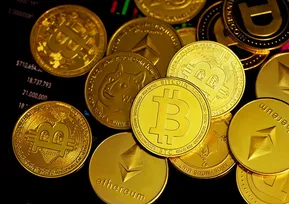
Photo by Shubham’s Web3 on Unsplash


Growing global reach

“Through this agreement, we aim to introduce our unique services and technology to global users, thus strengthening our competitiveness,” Eggverse said. “With the addition of SPLabs’ expertise in the Southeast Asian market, we look forward to the synergies that will be created.”


Leading innovation

Headquartered in Singapore, SPLabs specializes in blockchain platform development and Play-to-Earn (P2E) game publishing. As a global blockchain hub with a focus on Vietnam, South Korea and Japan, the firm specializes in creating gaming finance (GameFi), metaverse and Web3 platforms. It also has extensive experience in building on blockchains, such as BNB Chain, Avalanche, Ethereum, Polygon, Sui and more.

Eggverse is known for its Web3-compatible service that allows customers to mint and resell real-life items like hotel vouchers and artwork as NFTs — the first of its kind in South Korea. The company also recently established a business partnership in September with Lotte Homeshopping to work on NFT, metaverse and blockchain services.

More to Read
View All
Web3 & Enterprise·

Feb 07, 2024

Tether leads the way in Oobit’s $25M funding round

Oobit, the mobile crypto payment app based in Singapore, has raised $25 million in a series A funding round with the assistance of leading stablecoin issuer Tether. Funding global expansionThe company aims to broaden its reach across Asia, the Middle East and Latin America, with a strategic focus on bringing its platform to more mainstream users. While the company’s primary markets currently lie within the European Union and the UK, Oobit will be targeting the Asia Pacific (APAC) region and specific jurisdictions such as the United Arab Emirates (UAE), Canada and Australia. This expansion aligns with the company's goal of accelerating the development of a Web3 gateway. The funding round was led by Tether alongside Anatoly Yakovenko, co-founder of Solana Labs. Additionally, Germany’s 468 Capital, a technology investment firm, and Hong Kong-headquartered CMCC Global joined as contributors. CMCC invested through its $100 million Titan Fund, which it established last year to support blockchain startups in the Asian region.Photo by micheile henderson on UnsplashEnabling users to spend cryptoOobit's mobile payment app allows consumers to make purchases using cryptocurrencies, while merchants receive payments in fiat currency. The tap-and-pay feature enhances accessibility, enabling users to pay at any point of sale accepting Visa or MasterCard funds from their Oobit wallet. Furthermore, Oobit facilitates the direct purchase of bitcoin, ether and more than 35 other popular cryptocurrencies within its app. Tether CEO Paolo Ardoino expressed support for Oobit's development, emphasizing a shared vision for driving widespread cryptocurrency adoption globally. Oobit's co-founder and CEO, Amram Adar, highlighted the funding round as a pivotal moment, propelling the company forward in its mission to offer a straightforward way to pay with digital assets worldwide. Introducing non-custodial paymentsThe company plans to extend its capabilities to third-party wallets, transitioning into a non-custodial crypto payments app. This move will allow payments to and from external e-wallets, bridging the gap between Web3 and real-world spending. A company spokeswoman stated via email:"We have several partnerships in the pipeline that will be announced in the coming months," hinting at Oobit's commitment to ongoing collaboration and expansion. Oobit's vision is to empower crypto holders to Tap & Pay at over 100 million retailers globally, accepting Visa and MasterCard. Merchants can seamlessly embrace digital assets as a form of payment, and customers can conveniently use their digital assets for transactions. Future updates to Oobit will enable customers to make crypto payments, ensuring merchants receive fiat currency in return, mirroring the simplicity of credit card transactions. The native cryptocurrency of Oobit is the OBT token through which the platform rewards its growing community and ecosystem. The token is used for transaction fees and payments. The OBT token is currently trading at $0.0992, according to CoinMarketCap data. With the backing of industry leaders and a user-centric focus, Oobit is attempting to position itself to make significant strides in its mission to facilitate frictionless transactions and promote the adoption of cryptocurrencies on a global scale.

news
Web3 & Enterprise·

May 27, 2025

Chinese food company adds Bitcoin to balance sheet

DDC Enterprise, a Chinese company headquartered in Hong Kong and listed on the New York Stock Exchange (NYSE), has become the latest corporation to add Bitcoin (BTC) to its balance sheet.Photo by Michael Förtsch on UnsplashInitial 21 BTC purchaseThe plant-based food products company which operates under the “DayDayCook” brand published a press release via Business Wire last Friday announcing its first Bitcoin purchase. It’s likely that there was a symbolic element to the firm’s first Bitcoin purchase, given that it bought 21 BTC while Bitcoin has a supply cap of 21 million BTC. The company completed the transaction via share exchange with an investor group, issuing 254,333 class A ordinary shares while acquiring the 21 BTC at a market price of $2,283,667. DDC outlined that it plans to make two further purchases over the coming days of 79 BTC, at which point the firm’s corporate treasury will hold 100 BTC. Targeting 5,000 BTCThe company has a much more ambitious Bitcoin accumulation plan, however. Over the course of the next three years, it is targeting the establishment of a Bitcoin treasury holding 5,000 BTC. At current market pricing, that would amount to a Bitcoin treasury of around half a billion dollars in value. In the near term, the firm is targeting the acquisition of 500 BTC by the end of this year. DDC Founder and CEO Norma Chu described the development as a “pivotal moment” in the company’s evolution. She said that this plan reflects DDC’s “confidence in Bitcoin as a store of value,” while demonstrating the firm’s interest in pursuing innovation. “We are fully committed to ensuring the success of this strategy, which aligns with our vision to drive long-term value for our shareholders,” she added. Web3 innovationAccording to a DDC website, the company has innovative plans that go beyond just a Bitcoin treasury. It plans to deepen community engagement through the use of NFT loyalty programs and immersive Web3 experiences. It also plans to leverage blockchain transparency in its efforts to build greater community engagement. The website sets out a vision whereby DDC can blend its culinary heritage with next-generation technologies.  The company suggests that real-world asset (RWA) tokenization has the potential to revolutionize consumer engagement, while offering the possibility of enabling fractional ownership of product lines. It has set out a roadmap where it outlines having established a digital platform in 2012, going on to engage in content creation and content commerce over the course of a decade.  The firm carried out an initial public offering (IPO) in 2023 and from 2025 onwards, aside from its Bitcoin treasury strategy, it plans to integrate RWA tokenization and Web3 technology into its business, while also adopting AI technologies to enhance supply chain efficiency. DDC is one of a growing list of corporations to adopt Bitcoin as a strategic asset over the course of the past 18 months. Earlier this month, another Chinese company, Nasdaq-listed Jiuzi Holdings, an electric vehicle (EV) retailer, announced that it had adopted a plan to acquire 1,000 BTC. Hong Kong-listed game developer Boyaa Interactive holds 3,350 BTC.

news
Policy & Regulation·

Jan 12, 2024

South Korea’s top asset manager halts trading for bitcoin ETFs

Mirae Asset Securities, South Korea’s largest asset management firm, has begun suspending trading for bitcoin ETFs, according to industry sources on Friday. This comes after an announcement made by the Financial Services Commission (FSC) stating that brokering spot bitcoin ETFs may be considered a violation of the government’s stance on virtual assets and the Financial Investment Services and Capital Markets Act.Photo by Dmytro Demidko on UnsplashTaking preemptive measuresThe asset manager has blocked new purchases of spot bitcoin ETFs listed in Canada and Germany starting yesterday and is considering suspending trading of bitcoin futures ETFs that have been listed in overseas markets since 2021. This includes the Proshares Bitcoin Strategy ETF, Valkyrie Bitcoin Strategy ETF, Invesco Galaxy Bitcoin Strategy ETF and VanEck Bitcoin Strategy ETF. As Korean financial authorities are putting the brakes on domestic investments in the recently approved spot bitcoin ETF by the U.S. Securities Exchange Commission (SEC), it is believed that Mirae Asset Securities is putting a preemptive halt to trading in other bitcoin ETFs. Spot vs futuresSpot bitcoin ETFs differ from futures ETFs in that they track the price of Bitcoin by actually holding the cryptocurrency, while the latter tracks its price through futures contracts. South Korean securities firms have been brokering futures ETFs listed in overseas market for a while now.

news
Loading