Top

Hang Seng Ponders Crypto Product Offering

Web3 & Enterprise·June 30, 2023, 12:07 AM

Hang Seng Investment Management Co., the largest exchange-traded fund (ETF) manager in Hong Kong, is considering entering the decentralized ecosystem.

According to a report in local news media in Hong Kong on Wednesday, Li Peishan, the firm’s Director and Executive President, stated that Hang Seng is paying close attention to the development of digital assets. She clarified that the company is examining the possibility of including digital assets within its existing investment product offering.
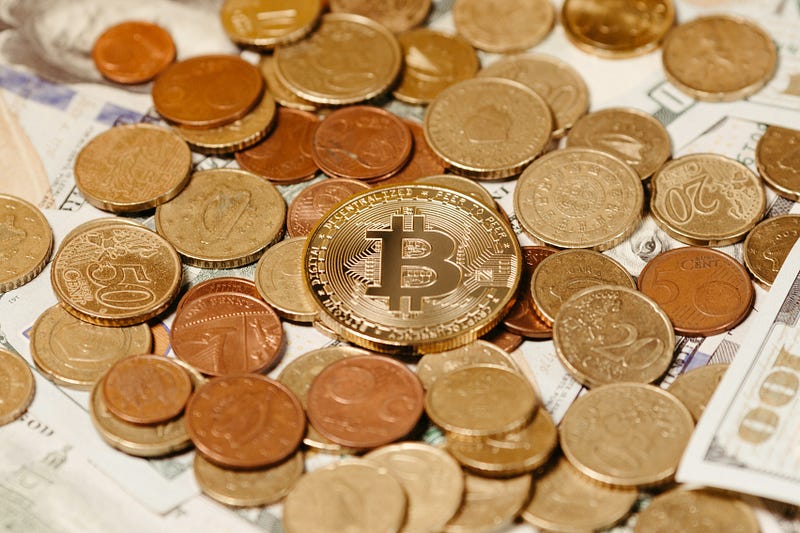
Photo by Jonathan Borba on Unsplash


Crypto ETF expansion

This news comes shortly after HSBC, one of the largest banks in Hong Kong, introduced Bitcoin (BTC) and Ethereum (ETH) ETFs to its customers, becoming the first bank in the region to do so. This development has opened up possibilities for greater cryptocurrency adoption in the area.

While most people in the space recognize that the authorities in the US have gone too far in their clampdown on the digital assets space, it’s interesting to note that recent weeks have seen a plethora of established TradFi players filing Bitcoin spot ETF applications. That list includes the world’s largest asset manager, BlackRock, multinational financial services firm Fidelity Investments, WisdomTree, VanEck, and others.


Assessing potential

Peishan stated that while the company does not have a specific plan to develop a crypto ETF, Hang Seng is actively assessing the potential of incorporating digital assets into their existing investment products. She highlighted the remarkable growth in the average daily asset management scale, which has surged by 80% since December and has surpassed HK$12 billion.

On June 24, Leung Fung Yee, the CEO of the Securities and Futures Commission of Hong Kong (SFC), emphasized the importance of crypto service providers embracing the next generation of the web and finance. He expressed Hong Kong’s ambition to establish itself as the central hub for crypto companies, fostering innovation within the region.

Responding to Yee’s statement, the Hong Kong Virtual Assets Consortium (HKVAC) announced the inclusion of XRP, SHIB, and ADA in its newly developed HKVAC index. The creation of the HKVAC index aims to assist investors in analyzing the potential of cryptocurrencies and gaining insights into their prospects.

The digital assets landscape in Hong Kong is evolving rapidly, driven by increasing interest in the asset class and the recognition of their transformative potential. Hang Seng Investment Management’s exploration of the decentralized ecosystem signifies the growing demand for exposure to cryptocurrencies among traditional financial institutions.


TradFi Integration

The introduction of Bitcoin and Ethereum ETFs by HSBC represents a significant milestone in the adoption of cryptocurrencies within the traditional banking sector. This recent indicator from Hang Seng suggests that we are likely to see more developments unfold within the ETF space in Hong Kong in the not-too-distant future where digital assets are concerned. That view is further endorsed by the findings of a recent report produced by the Hong Kong Stock Exchange, pointing to the yet-to-be-realized potential of crypto ETFs.

As the industry continues to mature, the integration of digital assets into traditional investment products is likely to become increasingly common, leading to a more diversified and inclusive financial ecosystem.


More to Read
View All
Policy & Regulation·

Dec 15, 2023

Banking giants in Turkey embrace crypto ahead of legislative change

Banking giants in Turkey embrace crypto ahead of legislative changeIt remains unclear what the underlying environment for the further development of the crypto sector in Turkey will be until such time as the country introduces a legislative framework to shape the industry’s development. However, that fact is not deterring a couple of Turkey’s leading banks, who have decided to embrace the digital asset realm.Photo by Michael Jerrard on UnsplashStablex acquisitionOn Monday CoinDesk Turkiye reported that the investment arm of Turkish bank Akbank had acquired local crypto company Stablex. Stablex was founded in May 2020 by Jihad Shannak with the objective of providing professional services, including trading relative to cryptocurrencies in Turkey. Majority shareholding passed to Ak Investment in May of this year, with initial negotiations on the sale having commenced in August 2022.A high-ranking official at Ak Investment expressed the group’s ambition to become a pivotal figure in the digital asset realm, signaling a proactive approach to the evolving financial landscape. Akbank also banks the majority of crypto start-ups based in Turkey.Speaking about the acquisition recently, Akbank executive Mert Erdoğmuş stated:“We have invested in Stablex to respond to the need for reliable and innovative service in the cryptocurrency market. Stablex reflects our values with its experience in the sector, pioneering achievements and professional service approach.”BBVA crypto walletAlongside Akbank’s move into the digital assets arena, Garanti BBVA, Turkey’s second largest private bank, recently unveiled its crypto wallet app. The feature-rich application includes a cold wallet, empowering users to seamlessly send and receive assets such as bitcoin (BTC), USD Coin (USDC) and ether (ETH).The pilot project for the app commenced in August, with the application currently available on iOS. In bringing the app to market, the bank created Garanti BBVA Digital Assets, a dedicated subsidiary firm. Commenting on that development back in August, the subsidiary’s Chairman of the Board, M. Çağrı Süzer, stated:”Our research shows that customers significantly value trust in their crypto transactions and especially on its storage. Hence, we are happy to launch our Crypto Custody Wallet addressing these real needs.”Despite uncertainties, Turkey has firmly established itself in the global crypto landscape, ranking among the top 20 countries in Chainalysis’ Global Crypto Adoption Index 2023. The instability of the Turkish lira in recent years has been a driver for crypto adoption in the country. In recent days, the bitcoin unit price has reached its highest exchange rate level against the local sovereign currency.Earlier this week, it emerged that crypto platform Blockchain.com is adding headcount and has its sights set on expansion into Turkey as one of its growth opportunities.FATF-compliant regulatory approachTurkey’s regulatory stance has been to take a cautious approach. In 2021, the central bank restricted the use of crypto for payments, although a complete ban on digital assets was ruled out by officials.Looking ahead, a government official revealed plans for crypto legislation to be presented to Parliament in November. While details remain scarce, this legislative move aligns with Turkey’s broader strategy to exit the Financial Action Task Force’s (FATF) “gray list.”

news
Policy & Regulation·

Apr 12, 2023

Official Says Hong Kong Should Invest in Web3 Economy

Official Says Hong Kong Should Invest in Web3 EconomyAccording to Hong Kong’s financial secretary, Paul Chan, this is the perfect time for Hong Kong to promote the development of Web3, the next-generation version of the World Wide Web that is decentralized and distributed through the use of blockchain and similar technologies.©Pexels/Tara WinsteadLearning from the dot com boomDespite the recent instability of the virtual assets market and the collapse of some digital asset exchanges, Chan has pointed out that the quality of the real economy has improved since the dotcom bubble burst in 2000, and surviving market players have focused on technological innovation, applications and value creation.In remarks made via a blog post published on Sunday, Chan argues that the development of Web3 is going through the same process. He suggested that the next stage of development would be to focus on developing blockchain technology more deeply to find wider application for it, which would improve existing business models, ultimately benefiting users and improving the quality of the real economy.To accelerate the development of Web3, Chan allocated HK$50 million (US$6.4 million) to the Cyberport business park to organize major international conferences and youth workshops in his latest budget released in February.VASP licensingChan also announced that authorities would introduce a licensing regime for virtual asset service providers (VASPs) in June to ensure appropriate supervision and minimize risks in the innovation and development of Web3. Furthermore, the government is looking into regulating stablecoins or cryptocurrencies with their value pegged to another currency or commodity.According to some local experts, Hong Kong should not delay in pushing Web3 development, and the government should work out clear policies to attract overseas investors and Web3 developers to set up offices in Hong Kong.Working towards a Web3 hubFrancis Fong Po-kiu, honorary president of the Hong Kong Information Technology Federation, told the South China Morning Post that the government could help by building up infrastructure such as data and supercomputing centers to help small and medium-sized enterprises to adopt more advanced technology.Although IT sector veteran Joseph Leung Wai-fung agreed that Hong Kong was lagging Singapore in terms of Web3 development, he suggested that the government should step up efforts to attract overseas investors and Web3 developers by working out clear policies to support them in setting up offices in Hong Kong. He also pointed out that Web3 covers key areas such as artificial intelligence, the Internet of Things, blockchain technology, and metaverse augmented reality, and that every international smart city should explore this area.The recent fluctuations in virtual asset markets and the collapse of some online trading platforms have cast doubts on the future of Web3, but Chan believes that competent market players who survive a “burst bubble” can focus on innovation and make significant strides.The government’s efforts to accelerate the development of Web3 through the allocation of HK$50 million to the Cyberport business park, the introduction of a licensing regime for virtual asset service providers, and the regulation of stablecoins, are steps in the right direction. However, more needs to be done to attract overseas investors and Web3 developers to set up offices in Hong Kong and to build up infrastructure such as data and supercomputing centers to help small and medium-sized enterprises to adopt more advanced technology.

news
Markets·

Feb 03, 2024

Crypto enthusiasm prevails in China despite crypto trading prohibition

In the face of a crypto trading ban imposed in 2021, the cryptocurrency market in China continues to thrive, defying the odds, according to a recent report from Kyros Ventures. Regional survey and reportThe Vietnam-based blockchain-focused startup incubator and venture capital firm has presented its report findings, shedding light on the unique dynamics of the Chinese crypto landscape compared to neighboring countries such as South Korea, Vietnam, Taiwan and Thailand. The survey was conducted in December in collaboration with 10 media agencies across the region, involving over 5,000 participants to gauge their sentiments and investment patterns.Photo by Road Trip with Raj on UnsplashGreater crypto interestMore than 70% of respondents revealed that cryptocurrencies accounted for over half of their asset portfolios. Among survey respondents in China, 88.9% reported heavy investments in cryptocurrencies, surpassing the enthusiasm observed in Vietnam, South Korea, Taiwan and Thailand. The finding is surprising, given that cryptocurrency trading is prohibited in China, while in the other jurisdictions the same level of restrictions is not in place. China's crypto scene faces substantial regulatory hurdles, with a government ban on crypto trading implemented in 2021. Despite this, the report highlights that a majority of Chinese investors opt for centralized crypto exchanges (CEXs) for their trading activities. Arthur Hayes, the founder of crypto derivatives platform BitMEX, recently outlined that wealthy individuals in China have access to international banking, and with that, access to overseas cryptocurrency platforms through the Chinese autonomous territory of Hong Kong. An investigative report produced by the Wall Street Journal in 2023 found that leading global crypto exchange Binance continues to have a thriving business relative to its Chinese user base. The Chinese authorities appear to be aware that the crypto trading prohibition that has been applied by the government is being flouted. This is demonstrated by the fact that the government is looking to update its anti-money laundering rules for the first time in 17 years to account for the rise in cryptocurrency investment, trading and use. Higher risk appetiteNotably, 33.3% of Chinese investors indicated an allocation to stablecoins. That is indicative of a greater risk appetite in China by comparison with countries like South Korea and Vietnam where 43% and 59% of respondents had money allocated in risk-off stablecoin positions. In terms of investment by referral, Thailand and China emerged with the highest rates, reaching up to 80%. Previous research carried out by Kyros earlier in 2023 highlighted the significance of crypto investment via referrals within the Vietnamese market. Developing regional regulatory landscapeThe regulatory landscape in Asia witnessed significant developments in 2023, with Hong Kong emerging as a leading hub for crypto and Web3 innovation. The issuance of cryptocurrency exchange licenses in Hong Kong marked a pivotal moment for the industry in the region. In South Korea, new legislation aimed at protecting cryptocurrency users, enhancing transaction transparency and fostering market discipline was enacted. Meanwhile, Taiwan's Financial Supervisory Commission explored the possibility of allowing crypto exchange-traded funds, pending a thorough analysis of the product's development in global markets.  

news
Loading