Top

WEMIX Listed on Crypto Exchange CoinDCX, Strengthening Presence in India

Web3 & Enterprise·July 20, 2023, 3:27 AM

WEMIX, the utility coin of blockchain game platform WEMIX Play, has now been listed on India-based cryptocurrency exchange CoinDCX, according to a press release. WEMIX Play is operated by South Korean gaming company Wemade.

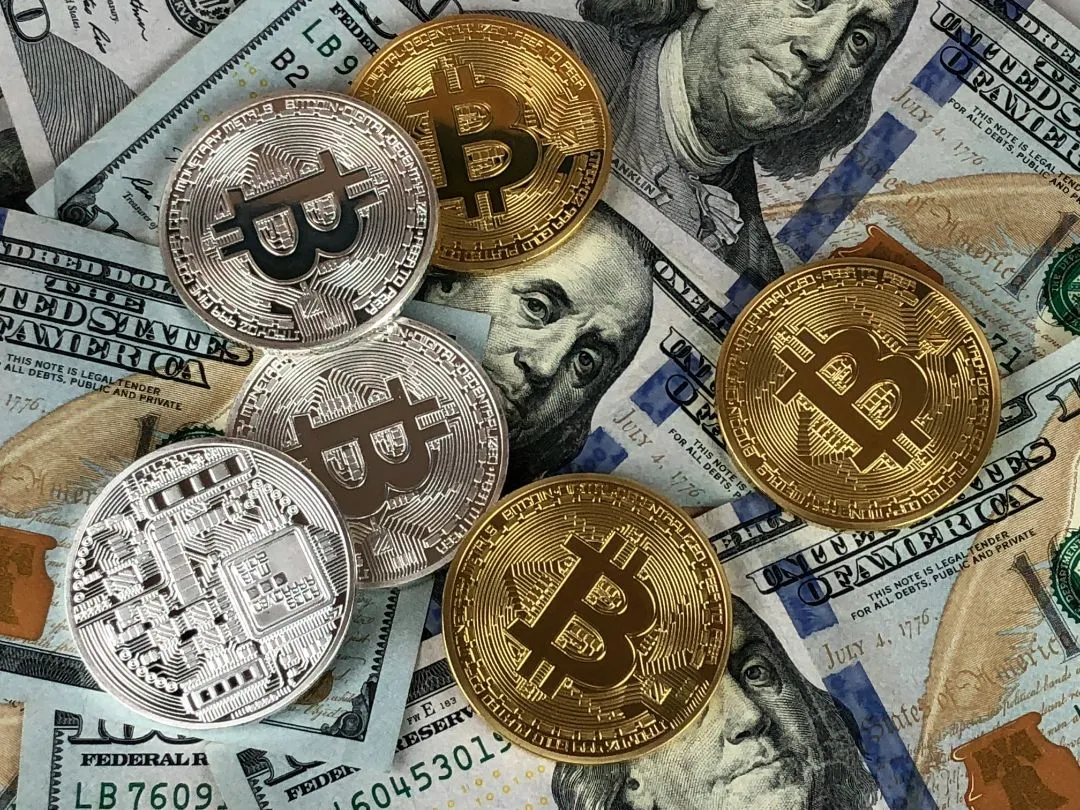
Photo by Naveed Ahmed on Unsplash


WEMIX/USDT & WEMIX/INR

Established in 2018, CoinDCX earned unicorn status two years ago, becoming the first Indian crypto exchange to accomplish this feat. With a current valuation of approximately $2.5 billion, CoinDCX offers trading support for over 80 cryptocurrencies and provides decentralized financial (DeFi) services to a customer base of 15 million global users. CoinDCX users can trade WEMIX against USDT and INR, where USDT stands for a stablecoin issued by crypto giant Tether and INR for Indian Rupee.

WEMIX made its debut on the Indian market in February through its listing on Bitbns, another cryptocurrency exchange. The token’s addition to another trading platform in India indicates the growing presence of the WEMIX ecosystem in the region.


India’s Web3 landscape

India is a prominent market for non-fungible tokens (NFTs) and blockchain technology. As of April, investments in the Indian Web3 ecosystem had reached $1.3 billion. The country also boasts the world’s third-largest talent pool for Web3 development. Currently, more than 450 Indian startups are making their mark on the global stage, demonstrating expertise in DeFi services, gaming, NFTs, and metaverses.

Looking ahead, WEMIX aims to further expand its reach by pursuing listings on additional crypto exchanges. This strategy will enable gamers worldwide to trade the WEMIX token with their respective fiat currencies.

More to Read
View All
Policy & Regulation·

Mar 21, 2025

Pakistan moves towards legalizing & regulating crypto

While Pakistan’s Minister of State for Finance and Revenue stated back in 2023 that cryptocurrencies “will never be legalized in Pakistan,” recent events suggest that policy change is now likely.Photo by Hamid Roshaan on UnsplashAttracting foreign direct investmentIn an interview with Bloomberg TV on March 20, Bilal bin Saqib, CEO of the Pakistan Crypto Council (PCC), outlined that the South Asian country plans to move forward towards unbanning cryptocurrency within the country, while establishing a legal framework for such digital assets. The PCC itself was only established in February, with bin Saqib appointed as CEO earlier this month. The role of the PCC is to regulate and integrate blockchain technology and digital assets in Pakistan. The motivation for the proposed change in policy is a desire to attract foreign direct investment into Pakistan. The Trump effectWhen asked “why now,” bin Saqib said that “if [not] now, then never.” Expanding on that theme, he articulated that the return of U.S. President Donald Trump to office combined with his support of cryptocurrency, stands as a “bullish” catalyst for the global development of digital assets. He added: “Trump is essentially flipping the script. Trump signing an executive order instructing regulatory bodies to accommodate digital assets, forming the White House crypto advisory team, creating the U.S. strategic Bitcoin reserve,” . . . “that means that the largest economy in the world is creating it like a valuable national asset.” bin Saqib told Bloomberg that Pakistan is done with sitting on the sidelines and that the country now wants to achieve regulatory clarity on behalf of participants in the crypto sector within the country. He added that there’s a need to establish a legal framework that is pro-business. He added: “We want Pakistan as the leader in blockchain-powered finance, and we want to attract international investment.” Policy u-turnThis new stance on crypto stands in stark contrast to Pakistan’s previous position on cryptocurrencies. The country’s central bank, the State Bank of Pakistan, has warned investors of the risks of dealing in cryptocurrencies on a number of occasions previously, highlighting the fact that no entity is licensed within Pakistan to offer remittance services that implicate crypto tokens.  Earlier this month, bin Saqib outlined that Pakistan is investigating the use of blockchain technology to streamline remittances. The South Asian nation ranks within the top 10 countries in terms of total value remitted each year. At that time, he also confirmed to CoinDesk that Pakistan is exploring real-world asset (RWA) tokenization initiatives.  A report by Chainalysis in 2023 stated that Pakistan is “a world leader in grassroots cryptocurrency adoption.” Wealth preservation was identified as one catalyst for crypto adoption, given that the country has faced high inflation rates in recent years and a devaluation of its sovereign currency. That has led to stablecoins being popular despite a ban being in place on cryptocurrencies all the while. In taking matters forward from this point, bin Saqib said that the PCC is keen to learn from the experiences of jurisdictions such as the United Arab Emirates (UAE), Nigeria, Turkey, Singapore and Hong Kong in determining how best to formulate a pro-business regulatory framework for digital assets in Pakistan. 

news
Markets·

Jan 25, 2024

OKX to compensate service users following flash crash

OKX is set to compensate users after its native exchange token, OKB, experienced a rapid 48% flash crash on Tuesday. OKB price fluctuationThe crash occurred within a brief three-minute window, triggered by a series of liquidations resulting from an abnormal price fluctuation. During the event, OKB's diluted market capitalization plummeted by $6.5 billion. At around 9 a.m. GMT on Tuesday, the price of OKB dropped from $46.80 to $25.10, representing a 48% decrease within 15 minutes. However, the token has since recovered, currently trading at $47.63 at the time of writing. The crash led to the triggering of liquidations for large leverage positions, causing a cascading effect on pledged loans, leverage transactions and cross-currency transactions.Photo by Nicholas Cappello on UnsplashCompensation planOKX responded promptly, pledging to fully compensate users for any additional losses incurred due to abnormal liquidation. The exchange aims to launch a specific compensation plan within the next three days, taking into account users who engaged in on-chain trades. In a statement on Tuesday, the platform suggested that it is committed to enhancing "margin position tier rules, risk management controls and liquidation mechanism" to prevent similar issues in the future. The flash crash coincided with a day of notable price swings across cryptocurrency markets, partly driven by the Grayscale Bitcoin Trust's (GBTC) sale of bitcoin to meet investor redemption demands on its exchange-traded fund (ETF). Additionally, the bankrupt crypto exchange FTX has been selling nearly $1 billion worth of GBTC ETF shares recently, further contributing to market volatility. Focusing on complianceOKX has been actively focusing on regulatory compliance in recent times. On Dec. 29, the exchange announced the delisting of several privacy coins, including Monero (XMR), Zcash (ZEC), Dash (DASH) and Horizen (ZEN). Subsequently, on Jan. 2, the platform introduced additional requirements for United Kingdom users to comply with the new Financial Conduct Authority (FCA) regulations, including the mandatory completion of risk assessment questionnaires before engaging in trading activities. Flash crashes are a common occurrence in cryptocurrency markets, often attributed to thin liquidity distributed across multiple venues. The 2% market depth for OKB indicates that a sell order exceeding $224,000 could potentially trigger another price cascade. Notwithstanding that, oftentimes it can be difficult to pinpoint the precise reason for a flash crash. In 2021 global crypto exchange Kraken experienced a flash crash that saw token prices drop by in excess of 50% over the course of one hour before recovery was achieved. While some suggested it was caused by a technical glitch, Kraken founder Jesse Powell dismissed that notion, pointing instead to the possibility of a large-scale sell-off by a service user. Despite this recent challenge, OKB remains a significant player in the cryptocurrency space, boasting a market cap of $2.8 billion, making it the fourth-largest exchange token in circulation, according to CoinGecko. 

news
Web3 & Enterprise·

Jan 24, 2025

Phemex halts withdraws following $37M hack

Phemex, a Singapore-headquartered crypto derivatives trading platform, has halted withdrawals following a multi-million dollar hack.Photo by GuerrillaBuzz on UnsplashHot wallet compromisedIn a message to platform users published to social media, the project stated: “To ensure security, withdrawals have been temporarily suspended while we conduct an emergency inspection and strengthen wallet services. We sincerely apologize for the inconvenience. Withdrawals will be restored soon.” In further commentary, the project apologized for the disruption, assuring service users that its mission remains to provide a trusted trading environment, while outlining that it is working on putting together a compensation plan. It added that “Our ongoing business operations are fine,” and that “trading services continue as usual.” The digital assets were removed from the platform over multiple blockchains including Polygon, Arbitrum, the Base network and BNB. Blockchain analytics firm Lookonchain itemized some of the assets that are believed to have been stolen. They include 3.48 million USDC stablecoin, 3.42 million USDT stablecoin, 841 ETH valued at $2.7 million, 110,701 LINK valued at $2.69 million, 142 billion PEPE tokens valued at $2.12 million, 1.19 million FET tokens valued at $1.45 million and 29,509 AVAX tokens valued at $1.04 million. Initial reports put the loss at $31 million. However, Web3 security firm Cyvers later claimed that $37  million covers the full extent of the loss. Following deeper analysis, it found that both Bitcoin and TRON blockchains had also been impacted, resulting in the overall loss being increased by a further $6 million. Cold wallet assets are safeThe company’s CEO Federico Variola, published a post on X advising service users that all of the assets held within the company’s cold wallets remain safe. He included a link to the Phemex proof of reserves, encouraging customers to check it. In a follow-up post, he wrote: “We are currently carefully testing our system to reprise withdrawals as soon as possible. Due to the sophistication of the threat actor we cannot rush this stage. The estimated timeline to reprise full operations is within 24h, thank you for your support.” The XNET Foundation, a non-profit entity that develops decentralized wireless networks, said that it is actively working with the Phemex team on the production of an exploit report following the incident. It added that “It has been confirmed that tokens sent to the exchange for a launchpad pool were compromised as part of this exploit.” Ongoing problemCrypto hacking remains a major concern within the digital assets sector. Blockchain security firm PackShield reported recently that $1.3 billion had been laundered from crypto hacks in 2024. That statistic demonstrates that the problem is worsening as it accounts for a $342 million or 280% increase when compared with 2023. In December a Chainalysis report found that 61% of the hacking losses suffered in 2024 implicated the involvement of North Korean hackers. It estimated crypto hacking losses of $2.2 billion for 2024, based on losses associated with 303 hacking incidents.

news
Loading