Top

Crypto.com Scores MPI License in Singapore

Policy & Regulation·June 02, 2023, 1:32 AM

In a significant move for the Web3 industry, the Monetary Authority of Singapore (MAS) has granted online crypto trading platform, Crypto.com, a Major Payment Institution (MPI) license. This regulatory development showcases Singapore’s commitment to welcoming innovation and embracing the potential of the Web3 sector.

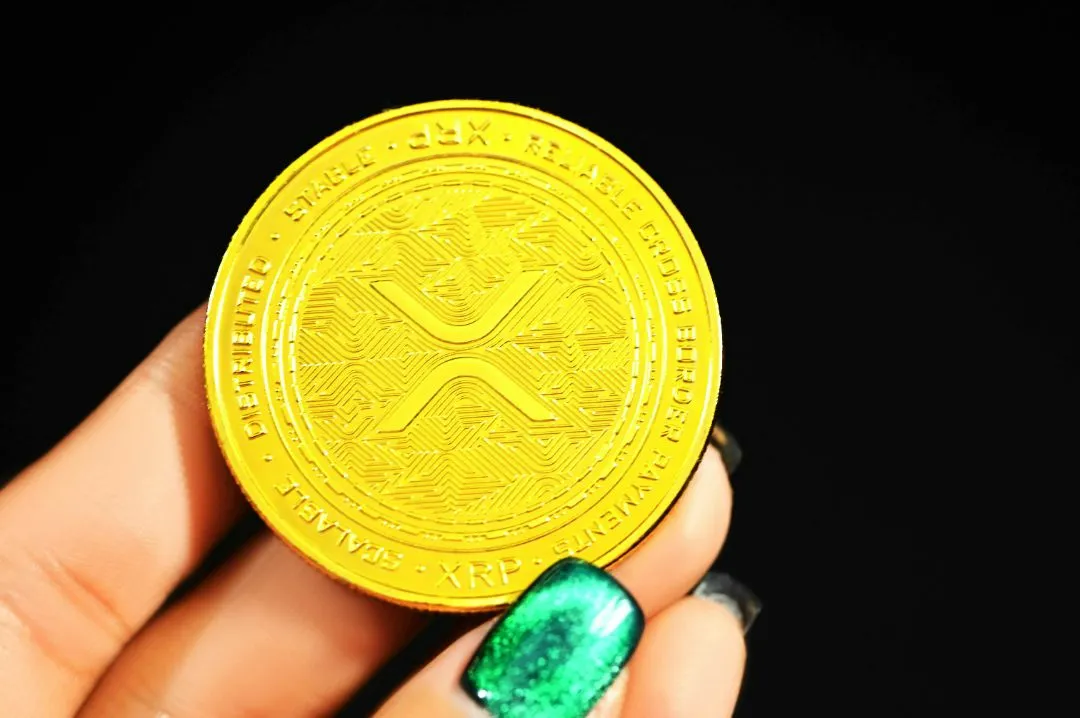
Photo by Timo Volz on Pexels


Licensing milestone

Crypto.com made the exciting announcement on Thursday, revealing that it has received the MPI license from the MAS, the country’s central bank and financial regulator. With this license in hand, Crypto.com can now provide its Digital Payment Token (DPT) services to residents of Singapore.

This achievement follows the in-principle approvals granted to Crypto.com by the MAS in June of the previous year, further highlighting the company’s adherence to regulatory standards and its dedication to operating within the guidelines set by financial authorities.


Community reaction

The news of the license has garnered positive reactions within the crypto community. Many members see the Singaporean government’s decision as a significant endorsement of the Web3 industry. ‘Aravind,’ a Twitter user, expressed this sentiment, stating, “Singapore government giving out a license is itself a massive plus for the Web3 Industry,” adding that it's probable the process to obtain the license has been hard fought, and likely two years in the making.

Interestingly, another community member drew comparisons between Crypto.com’s successes and the challenges faced by global crypto exchange, Binance. While Binance has encountered difficulties in various jurisdictions, Crypto.com has been praised for its steady progress and forward-looking approach.

Yet another Twitter user chimed in along similar lines, stating: “Whilst Binance seems to be losing ground, Crypto.com seems to be slowly doing things right and building for the future.”

Binance has recently faced setbacks, such as its diminishing presence in the Australian and Canadian markets and trading restrictions imposed in certain European countries. Reports have even surfaced suggesting that Binance plans to lay off 20% of its staff in June.

However, it’s important to note that Binance has not given up, as evidenced by its recent expansion into Thailand, where it established a regulatory-compliant platform. The exchange has also taken steps to ensure compliance in Japan through the creation of another regulatory-compliant platform.


Additional licenses

Crypto.com has set up its headquarters in Singapore, and it is in good company there with leading crypto firms Kraken and Coinbase also maintaining offices in the city state. The company has taken a truly global strategy, having marketed heavily in recent years. It maintains offices in nine other locations, including Miami, Dublin, London, Seoul, Malta, Sofia, Hong Kong and Shenzhen, as well as Kadıköy in Turkey.

The crypto trading platform has received a Minimal Viable Product (MVP) preparatory license from the Virtual Assets Regulatory Authority (VARA) in Dubai, alongside firms like Komainu, Hex Trust, and GC Exchange. The company has also successfully pursued digital asset licensing in France, Australia, and the United Kingdom.

Crypto.com’s acquisition of the MPI license in Singapore marks a significant milestone for the company and the broader Web3 industry. With Singapore embracing innovation and offering a favorable regulatory environment, Crypto.com is well-positioned to continue its growth and contribute to the advancement of the digital payment token ecosystem.

More to Read
View All
Web3 & Enterprise·

Aug 05, 2023

Bitget Report Finds Gen Z Dominates Crypto Copy Trading

Bitget Report Finds Gen Z Dominates Crypto Copy TradingA recent report by Bitget, the Seychelles-headquartered crypto exchange, sheds light on the growing trend of copy trading among younger investors, particularly Gen Z.Photo by rc.xyz NFT gallery on Unsplash44% under 25The report, released on Thursday, reveals that an impressive 44% of all copy traders on the platform are under the age of 25, indicating a strong inclination among this generation towards this type of investment and trading strategy.Copy trading, or social trading, involves emulating the trading activities of established investors. Bitget’s findings indicate that the younger demographic is more receptive to this approach, with individuals aged 25 to 35 constituting just under one-third of all copy traders. Comparatively, individuals aged 35 to 55 represented 17% of copy traders, while those over 55 constituted a mere 7%.Reliance on influencersInterestingly, this trend aligns with Generation Z’s penchant for seeking advice from social media influencers. Bitget’s report highlights that Gen Z’s tendency to turn to these influencers for investment decisions could be a driving factor behind their affinity for copy trading.A survey by Forbes Advisor in January found that approximately 80% of both Gen Z and millennials rely on financial advice from social media platforms. Notably, platforms like YouTube, Reddit, and TikTok have gained their trust, with half of the respondents claiming to have profited from advice received.The report also reinforces crypto’s status as the preferred investment choice among Gen Z. A joint study by the CFA Institute and the Financial Industry Regulatory Authority (FINRA) Foundation in May revealed that crypto was the most popular investment option for Gen Z in the United States, a striking 44% of Gen Z investors initiated their investment journey with cryptocurrencies, surpassing the 35% of millennials who did the same.Geographical differencesThe trend extends beyond the US, with 43% of British and 35% of Canadian Gen Z investors indicating crypto as their inaugural investment.Geographically, Bitget’s report showcases intriguing patterns among its copy-trading user base. While nearly a third of users hail from Western Europe, almost half originate from East or Southeast Asia. This distribution highlights the global reach of the platform and the appeal of copy trading across diverse regions.Of note, despite constituting only 1% of Bitget’s global copy traders, a remarkable 62% of African users expressed interest in copy trading. This proportion stands as the highest among all regions surveyed, reflecting a growing appetite for innovative investment methods on the African continent.Bitget’s report underscores the evolving landscape of investment practices, with Generation Z at the forefront of embracing new approaches like copy trading. It also builds on prior initiatives and research undertaken by the firm. In May Bitget launched a corporate social responsibility (CSR) project titled “Blockchain4Youth.” That initiative revealed that Bitget understands that the younger generation is where the greatest opportunity for mass market adoption lies for crypto and Web3.As the influence of social media on financial decisions continues to rise, the crypto industry may see further shifts in investment patterns and strategies among different demographic groups.

news
Web3 & Enterprise·

Jan 25, 2024

ClayStack expands into Ethereum restaking ahead of token launch

ClayStack, the crypto liquid staking platform, has made a strategic move into the Ethereum restaking arena through EigenLayer, providing users with reward points in anticipation of its upcoming token launch.Photo by Kanchanara on Unsplash‘Redefining the staking landscape’The Singaporean platform describes its mission as redefining “the staking landscape by helping users unlock the underlying value of their crypto assets, and we are doing this by building a decentralized cross-chain liquid staking protocol.” In its efforts to deliver on that mission, it appears that the crypto startup is set to convert its Ethereum liquid staking token, csETH, into a liquid restaking token, leveraging the Ethereum restaking protocol offered by EigenLayer. Eigenlayer enables restaked sidechains, through which ETH restakers can participate in Ethereum-centric consensus protocols. Reward pointsIn an announcement on Tuesday, ClayStack revealed its plan to offer reward points to users participating in Ethereum restaking, with a 1:1 ratio for redemption when the platform's token is launched. Each clay point earned will be redeemable for one clay token during the token launch. Notably, the platform distinguishes itself by offering a 1:1 redemption system, setting it apart from other points programs. Founder and CEO Mohak Agarwal explained how the project is adopting EigenLayer's protocol for this new service. Agarwal had teased that the project had something new to offer in the pipeline when taking to social media last week, writing:”We are entering into a new era where staking will become more dynamic, accessible, and rewarding for the entire DeFi community.” Currently, ClayStack accepts native ETH for direct restaking on EigenLayer. Agarwal confirmed to The Block that other liquid staking tokens, such as Lido staked ether (stETH) and Rocket Pool ether (rETH), will be integrated into the platform in the coming days. He emphasized that these tokens will be directly deposited on EigenLayer, streamlining the restaking process. Growing interest in restakingEthereum restaking has gained significant traction since EigenLayer's launch in June of the previous year, with a total value locked (TVL) in smart contracts reaching approximately $1.7 billion. Renzo Protocol recently entered the Ethereum restaking space via EigenLayer, securing a $3.2 million seed funding round. Despite being in beta, Renzo has already achieved a TVL exceeding $116 million. ClayStack's TVL currently stands at around $2.25 million, having initially launched liquid staking for Polygon's MATIC token in 2022. Following that, the platform introduced Ethereum liquid staking in September. However, the latest move marks a shift in focus towards Ethereum restaking due to challenges faced on the Polygon network. Agarwal outlined the reward structure, stating that 20 clay points will be allocated per ETH per week, with rates subject to change every Monday but generally remaining constant throughout the week. There are no minimum or maximum points for individual users, although there is a weekly total cap for all users combined, which refreshes at the beginning of each week.

news
Web3 & Enterprise·

Aug 09, 2023

Galaxia Metaverse Joins Hands with MVL Foundation to Expand Blockchain Ecosystems

Galaxia Metaverse Joins Hands with MVL Foundation to Expand Blockchain EcosystemsSouth Korean blockchain company Galaxia Metaverse said Wednesday it will collaborate with MVL Foundation, a blockchain-based mobility enterprise in Singapore, to advance their respective blockchain ecosystems by enabling the use of their tokens, Galaxia (GXA) and MVL, within them.Photo by Shubham Dhage on UnsplashPromoting token utilizationAs of now, MVL tokens can be used for purchasing discount coupons for TADA, MVL Foundation’s ride-hailing service. Through the partnership, GXA tokens will also be able to purchase TADA discount coupons through MVL’s cryptocurrency wallet, Clutch Wallet. Discussions are currently underway regarding more joint ventures, such as integrating the MVL token with staking products offered by Galaxia’s own digital wallet.“The MVL token is already being used by millions of mobility service users with Southeast Asia as its base. Through this partnership, we expect that our global expansion will be accelerated as we bring more users to our ecosystem,” Galaxia emphasized.Expanding the Southeast Asian user baseMVL Foundation operates its mobility services mainly in Southeast Asian countries including Singapore, Cambodia, and Vietnam. Its ride-hailing service TADA is the second-largest of its kind in Singapore. This ecosystem is connected via blockchain, enabling participants to receive rewards in accordance with their activities and ultimately forging a Web3 mobility system.Subsequently, Galaxia intends to take advantage of MVL’s solid footing in Singapore to push joint localized marketing within the country.“We are planning to develop various solutions, rewards, and service integrations with MVL by leveraging our strengths, expertise, and networks,” Galaxia said.Meanwhile, throughout this year, Galaxia has been expanding its blockchain ecosystem in other ways. Notably, it has collaborated with industry leaders such as Korean NFT exchange Pala and karaoke app Somesing.

news
Loading