Top

Blockchain Experts from Ethereum, Solana, and More to Visit Seoul for Upbit D Conference

Web3 & Enterprise·August 22, 2023, 6:56 AM

Dunamu, the fintech company operating South Korea’s leading crypto exchange Upbit, has unveiled the lineup of international speakers for the upcoming sixth annual Upbit D Conference (UDC). Scheduled to take place on November 13, the conference will bring together global blockchain specialists from notable projects like Ethereum and Solana to explore the latest trends and insights in the industry as well as future prospects.

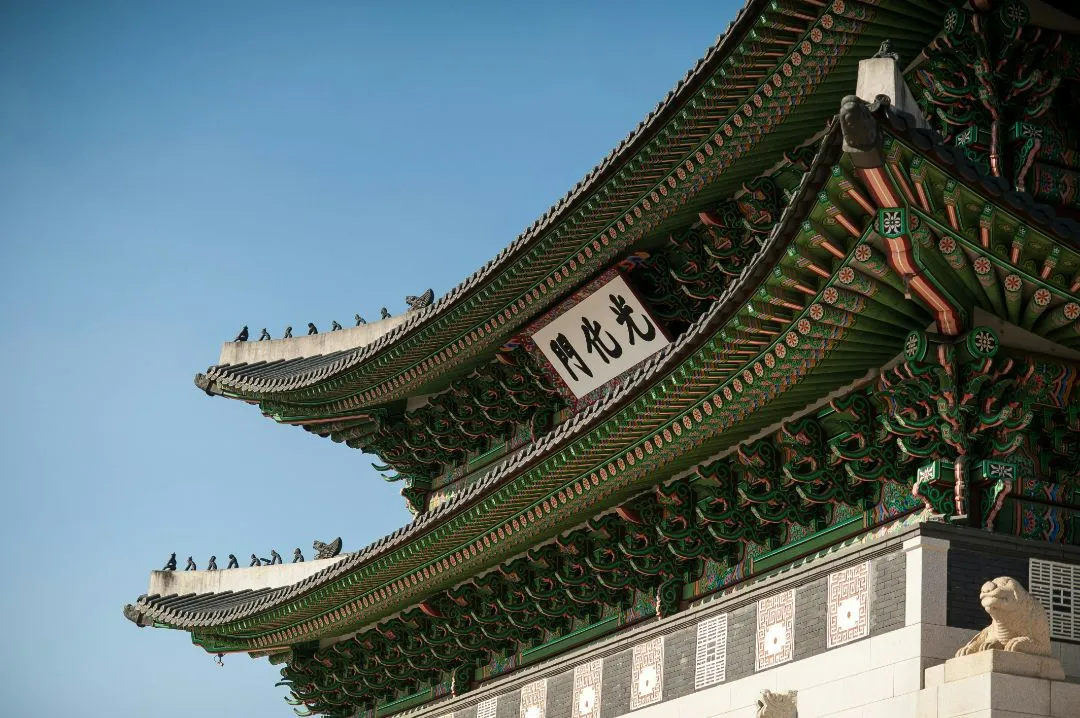
Photo by Terren Hurst on Unsplash

The roster of speakers includes renowned figures such as Tom Teman, Product Manager at Ethereum Foundation; Roger Ver, Founder of Bitcoin.com; and Wally Yu, Solutions Architect at Chainlink Labs. Korean speakers, such as Sehyeon Oh, Executive Vice President of telecommunications giant SK Telecom, are also set to attend.


Empowering Korea’s blockchain landscape

Since its inception in 2018, UDC has grown to become Korea’s central blockchain conference. Conceived as a means to contribute to the domestic blockchain ecosystem without focusing on generating profit, the conference has consistently garnered praise for its in-depth presentations from global experts and a wide variety of sessions.

Under the theme coined “All That Blockchain,” this year’s conference is open to anyone interested in blockchain, Dunamu said. The “D” in UDC stands for various keywords related to blockchain, including digital assets, decentralization, and developers. However, the focus of the conference has evolved beyond just technology, now encompassing areas such as policy, finance, technology, culture, and societal trends.


Event details

The conference will be conducted in a hybrid — both online and offline — format, allowing a higher level of participation without the constraints of time and place. Though it will be hosted at the Grand Walkerhill Seoul hotel, anyone anywhere can tune in live through the official UDC YouTube channel. Simultaneous interpretation will also be provided in Korean and English.

Dunamu will kick off registrations for both online and offline attendance starting from 10:00 AM KST on September 11. Due to the limited venue capacity, offline tickets will be available on a first come, first served basis.

More to Read
View All
Markets·

Jul 03, 2023

Korean Crypto Market’s Healthy Growth Requires Corporate Participation

Korean Crypto Market’s Healthy Growth Requires Corporate ParticipationA healthy growth of the South Korean virtual asset industry needs the private sector’s investment in cryptocurrencies, a legal scholar argued at a recent international academic conference titled “Digital Financial Transition and International Trends in Commercial Law.”That’s according to a report by local news outlet Edaily. Namgung Ju-hyun, an assistant professor of commercial law at Sungkyunkwan University Law School, attended the two-day event hosted over the last weekend by the Korea Commercial Law Association to point out that the current restrictions on corporate investments in cryptocurrencies have not only increased speculation within the domestic market but have also hampered Korean companies’ endeavors in pursuing blockchain-powered projects.Banks and companiesProfessor Namgung addressed the current situation where Korean commercial banks are withholding real-name bank accounts from firms without specific legal grounds. This practice became common after the Act on Reporting and Using Specified Financial Transaction Information was revised in March 2021. This Act requires virtual asset service providers (VASPs) to adhere to anti-money laundering (AML) regulations; therefore, firms wishing to trade cryptocurrencies with the South Korean currency must have real-name accounts with domestic banks. While the Act doesn’t explicitly restrict issuing such accounts to corporations, banks have shown reluctance to do so.However, in countries like the United States, cryptocurrency trading in the corporate world is thriving. For instance, institutional investors at Coinbase, America’s largest crypto exchange, accounted for over 85% of the total trading volume in the first quarter, a rise from 76% during the same period last year.Photo by JESHOOTS.COM on UnsplashMinor altcoins’ strong presenceProfessor Namgung identified the prevalence of retail investors and their speculative behaviors as the primary issue plaguing the Korean crypto market. A case in point is a relatively large proportion of trades in minor altcoins. As per a report by the Korean Financial Services Commission (FSC), the combined market cap of BTC and ETH accounted for only 33% in the domestic market, a contrast to their 58.2% share in the global market. Namgung underscored that the high trade volumes of volatile crypto assets contribute to the Kimchi premium, a phenomenon where crypto prices in Korea are higher than those in other countries.Namgung also mentioned that Korean companies like Hyundai Motor, Lotte Homeshopping, and Shinsegae, despite promoting projects based on non-fungible tokens (NFTs), face difficulties due to their inability to convert cryptocurrencies to cash on domestic crypto exchanges. In comparison, global companies like Nike are successfully leveraging NFTs for their projects and exploring new business opportunities.Role of financial authoritiesProfessor Namgung urged Korean financial authorities to devise guidelines that encourage corporate participation in the crypto market, eliminating uncertainties. As a step towards risk management, he recommended considering publicly traded companies or established firms of a certain size as initial participants in the crypto market.Input from international scholarsPrior to Professor Namgung’s talk, the international academic conference also featured presentations from foreign scholars, namely Mirella Pellegrini, a professor at LUISS University of Rome; Marco Bodellini, an associate lecturer in banking and financial law at Queen Mary University of London; and Albert H. Choi, a professor of law at the University of Michigan Law School.Professor Pellegrini discussed personalized financial products and investor protection in the digital market from the perspective of the European Union. Dr. Bodellini provided insights into central bank digital currencies (CBDCs) from a policy perspective, while Professor Choi focused on digital transformation and retail shareholder engagement.

news
Policy & Regulation·

Sep 09, 2023

No Turkish Delight for Crypto Exchange CEO Sentenced to 11,196 Years

No Turkish Delight for Crypto Exchange CEO Sentenced to 11,196 YearsIn a landmark ruling, Faruk Fatih Ozer, the 29-year-old Turkish Founder and CEO of defunct Turkish crypto exchange Thodex, has been sentenced to 11,196 years in prison for orchestrating a massive fraud that left investors out of pocket.Photo by engin akyurt on UnsplashExtradited from AlbaniaBloomberg reported on Friday that Ozer, the mastermind behind the Thodex exchange, fled to Albania in 2021, vanishing along with millions of dollars in investor assets as the exchange suddenly crumbled.His arrest in Albania on an Interpol warrant marked the beginning of a lengthy legal battle. Having spent months on the run, he was finally extradited back to Turkey in June, where he faced charges of money laundering, fraud, and organized crime. During the trial in Istanbul, Ozer defended himself, claiming that his actions did not demonstrate criminal intent. He asserted:“I am smart enough to lead any institution on Earth.”“That is evident in this company I established at the age of 22. I wouldn’t have acted so amateurishly if this were a criminal organization,” he added. Nevertheless, the court found him guilty, along with his sister Serap and brother Guven, who faced the same charges.Lengthy jail termThe sentences handed down were notably long, with the defendants sentenced separately for multiple crimes against 2,027 victims. Following the abolition of the death penalty in 2004, lengthy prison sentences are quite common in Turkey.Prosecutors had initially sought a jaw-dropping 40,562-year prison sentence for Ozer, although the difference would have been purely symbolic when compared with the sentence which was ultimately handed down. The Thodex exchange, founded in 2017, quickly rose to prominence as one of Turkey’s largest cryptocurrency platforms.Ozer’s financial acumen earned him national recognition, and he even cultivated ties with influential pro-government figures. However, the sudden implosion of the Thodex exchange in April 2021 shook the cryptocurrency world. Investor assets vanished, and Ozer went into hiding.Reports initially indicated that Ozer had fled with assets worth $2 billion, but the prosecutor’s indictment put the total losses to Thodex investors at 356 million Turkish liras. The depreciation of the lira and rampant inflation since the exchange’s collapse means that this amount is now equivalent to around $13 million on the international markets.Lagging regulationThe Thodex case serves as a stark reminder of cryptocurrency market risks, given its immature state and the lag in regulators responding to the innovation in order to ensure a safe marketplace for investors.Despite this setback in the development of the crypto ecosystem within Turkey, interest in crypto is stronger than ever. A recent report produced by Seychelles-based crypto exchange KuCoin found that there has been a significant increase in crypto market participants in Turkey over the course of the past 18 months. It’s likely that runaway inflation of the Turkish lira is providing Turks with the motivation to investigate crypto as an alternative.

news
Policy & Regulation·

May 19, 2023

BOK Staffers Assess Crypto Market Vulnerabilities and Their Implications

BOK Staffers Assess Crypto Market Vulnerabilities and Their ImplicationsOn Thursday, the Bank of Korea’s (BOK) staff members published an assessment of the vulnerabilities in the cryptocurrency market and their potential implications. Here is the summary of the report.Photo by D Tan on Unsplash2022 crypto winterThroughout 2022, the worldwide crypto market faced a series of adverse occurrences, such as significant drops in the prices of major crypto-assets and the collapse of prominent crypto companies. These events shed light on the vulnerabilities that had accumulated during the rapid growth of the market.The first major event occurred in May 2022 when the algorithmic stablecoin TerraUSD experienced a sharp decline, resulting in substantial losses and bankruptcies for numerous retail investors and crypto firms. This incident significantly eroded confidence in the overall crypto market. The subsequent bankruptcies of prominent crypto lender Celsius and hedge fund Three Arrows Capital (3AC) further highlighted the realization of risks commonly associated with traditional financial markets, such as multiple collateral loans and maturity and liquidity mismatches, within the crypto market.In November 2022, the well-known crypto exchange FTX filed for bankruptcy, demonstrating that the activities of a large crypto company can propagate risks through moral hazard and excessive profit-seeking behavior when it operates outside the realm of regulatory oversight.Similarities with TradFiThese negative events that unfolded in the global crypto market in 2022 share similarities with issues previously observed in financial markets, such as unsustainable business models, liquidity risk, leverage, and lack of transparency in financial conditions. These parallels suggest that if the crypto markets were subjected to comparable levels of regulation as traditional financial markets, it is plausible that the triggering of these risks could have been avoided altogether, or at the very least, the resulting damage could have been mitigated to some extent.Implications for the Korean marketAt present, it is deemed unlikely that events akin to those witnessed in overseas crypto markets will transpire in the Korean market. The Korean crypto-asset market has primarily evolved through exchanges, with limited influence from other enterprises such as crypto issuers and decentralized lending platforms. In addition, Korean crypto exchanges are subject to regulation under the Act on Reporting and Using Specified Financial Transaction Information. This mandates the separation of customer deposits from exchange assets and the strict management of custodial crypto-assets through secure wallets. Additionally, Korean exchanges are prohibited from listing their own tokens on their platforms.However, there remains a dearth of information regarding the business structures of crypto companies that offer services similar to those in the traditional financial industry. This lack of information poses challenges in accurately assessing risk and providing adequate investor protection. Meanwhile, there is a potential for a deeper integration between the crypto market and users’ daily lives, particularly through major technology companies, gaming companies, and security tokens.SuggestionsIt is vital to ensure that crypto-assets are regulated based on the principle of “same activity, same risk, same regulation” through the ongoing development of crypto-asset-related legislation. The Financial Stability Board, an international body monitoring the global financial system, explained this principle in a 2022 paper: “Where crypto-assets and intermediaries perform an equivalent economic function to one performed by instruments and intermediaries of the traditional financial sector, they should be subject to equivalent regulation.”Additionally, it is necessary to stay aligned with major countries in terms of the speed and comprehensiveness of regulatory measures to prevent regulatory discrepancies across borders due to the global nature of crypto risks.Enhancing the effectiveness and efficiency of regulation requires the establishment and maintenance of a close cooperation system between authorities. This collaborative effort should encompass various aspects, including monitoring, information gathering, and supervision of the crypto-asset market. Notably, the widespread adoption of stablecoins can affect the stability of the overall financial system, including monetary systems and payment and settlement systems. Hence, it is necessary to strengthen the involvement of central banks in the monitoring and supervision framework for crypto-assets, including stablecoins, as demonstrated by legislative approaches adopted by major economies like the EU. Furthermore, imposing disclosure requirements, external audits, and documentation submission obligations on crypto-asset operators is advisable.

news
Loading