Top

Upbit lists Tottenham Hotspurs fan token

Web3 & Enterprise·December 21, 2023, 5:06 AM

South Korea’s largest cryptocurrency exchange Upbit listed a fan token for the Tottenham Hotspurs — a world-renowned football club of the English Premier League and home to captain Son Heung-min, who also leads the South Korean national team — on its BTC market on Thursday (KST), according to an official announcement on the exchange’s homepage. Listed under the ticker symbol SPURS, the token is worth about KRW 6,000 ($4.60) as of this writing.
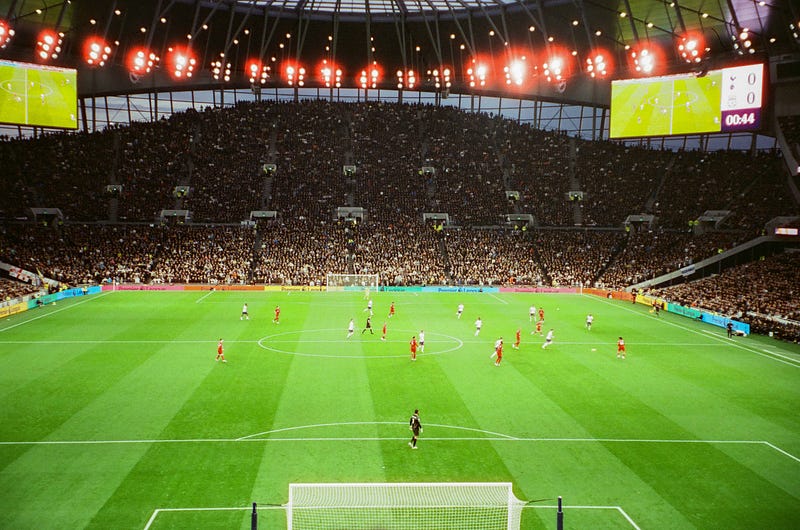
Photo by Memories on 35mm on Unsplash


Expanding football’s presence in crypto

Upbit added a total of 23 tokens to its BTC market this year, eight of which are fan tokens associated with football clubs, including Tottenham Hotspurs, AC Milan, Arsenal F.C., Atlético de Madrid, FC Barcelona, Manchester City F.C., Inter Milan and SSC Napoli, which the exchange signed a two-year partnership contract with in January. The team notably houses one of South Korea’s top footballers Kim Min-jae. Upbit also previously listed a Paris Saint-Germain token in 2021, which player Lee Kang-in recently joined this year.

With the most recent addition of SPURS, Upbit now supports a total of ten football club fan tokens — all of which can only be traded on the sports blockchain network Chiliz Chain — highlighting its recognition of the sport’s popularity among Koreans. In particular, the Chiliz token (CHZ) also experienced a 10% price boost on Thursday when SPURS was listed.


Upbit’s focus on football

However, Upbit’s consistent listing of football-related tokens contrasts with its overall modest approach to listing new cryptocurrencies this year. The exchange has introduced just 12 cryptocurrencies so far this year on its Korean won-denominated market, which is just a fraction of the 88 that were listed by Bithumb, South Korea’s second-largest exchange.

Bithumb, which had already been supporting trading for SPURS on its Korean won-dominated market, also saw the token’s price double as a result of Upbit’s listing, jumping from around KRW 5,500 to KRW 11,300.

More to Read
View All
Policy & Regulation·

Apr 28, 2025

Russian exchange raided against backdrop of cash-to-crypto ban proposal

Mosca, a cash-to-crypto exchange headquartered at the Moscow International Business Center, was subject to a raid carried out by the Russian authorities on April 23. The raid occurred in the immediate aftermath of a call from a member of the commission of the Public Chamber (OP) of the Russian Federation to ban crypto exchanges from facilitating the purchase of cryptocurrencies using cash.Photo by Egor Filin on UnsplashInvestigating fraudWhile attending the Blockchain Life 2025 event in Moscow, Mosca’s Head of Development, Dmitry Titarenko, confirmed to Cointelegraph that the rationale provided for the raid was that it was in connection with fraud perpetrated by one of its platform users. Titarenko added: “Law enforcement agencies have carried out a standard procedure of checking our customer data.” The raid occurred during the company’s attendance at the Blockchain Life conference. Mosca was a key conference participant, having established two stands at the event and winning an award for the best crypto exchange service. Reporting on the raid, local media outlet Baza said that it had been carried out in relation to fraud perpetrated against the former head of the Samara Region Development Corporation, Olga Serova. It explained that Serova had been conned into handing over 350 million rubles ($4.24 million) and $800,000 to the scammers.  Seven arrestsShe withdrew these funds from her bank at the end of last year, despite bank officials having tried to persuade her against the withdrawal for this purpose. The news outlet added that to date, seven people have been arrested in connection with the alleged fraud. The Mosca exchange service may be proving to be attractive to scammers as the platform allows users to buy up to 100,000 USDT per day using cash. Titarenko couldn’t confirm that the raid was carried out in connection with the Serova fraud case. He said that “maybe it was [in relation to] another client.”The exchange executive also confirmed that the company had been in the process of putting in place more resources to carry out anti-money laundering (AML) and know-your-customer (KYC) checks, together with a blacklisting system related to suspicious platform users. Cash-to-crypto ban proposalThe raid occurred within 24 hours of Yevgeny Masharov, a member of the commission of the Public Chamber (OP) of the Russian Federation, putting forward a proposal to ban crypto exchanges from receiving cash, making services like Mosca’s cash-to-crypto exchange illegal. According to state-owned Russian news agency TASS, Masharov said that such a move would “cause a large-scale blow to scammers, because it’s no secret that telephone scammers use crypto exchangers to withdraw cash.”Sergey Mendeleev, a well-known figure within crypto circles in Russia, told attendees at the Blockchain Life conference that such a cash-to-crypto ban would be an unwelcome development for the sector. If such a ban were to materialize, Mendeleev suggested that it would be an indication that the Russian authorities were turning away from the greater development of cryptocurrency in Russia. Last week, it emerged that Russia’s Ministry of Finance, in collaboration with the country’s central bank, plans to launch a crypto exchange for qualified investors. The central bank also confirmed plans to launch a digital ruble payment network in 2026.

news
Policy & Regulation·

Nov 11, 2023

Turkish Lira emerges as dominant fiat trading pair on Binance

Turkish Lira emerges as dominant fiat trading pair on BinanceThe Turkish Lira (TRY) claimed the top spot as the most influential fiat trading pair on Binance throughout the month of September, as per the latest research from the leading cryptocurrency exchange.Photo by PublicDomainPictures on Pixabay75% of all fiat volumeAccording to a report by Cointelegraph on Friday, despite being the fourth-largest crypto market globally in terms of transaction volume, following the United States, India and the United Kingdom, the Turkish Lira commanded a staggering 75% of all fiat volume in early September. This surge in the TRY trading pair is attributed to a recent influx of crypto investors into the Turkish market.In its analysis last month, crypto market data provider Kaiko put Turkish Lira dominance at 81% on Binance. Kaiko also pointed to growth in the volume of the Brazilian Real on Binance, while dominance of the British Pound and the Euro were fading.It’s important to note that the disproportionate level of lira-based fiat volume on the Binance exchange may also have come about due to difficulties Binance has had in recent months in keeping various fiat on and off-ramps open. In June Binance US suspended USD deposits while pausing fiat withdrawals.It has also faced disruption when it comes to Euro payments, withdrawals and deposits. In May Binance Australia users experienced difficulties relative to AUD deposits and withdrawals following a decision to terminate the availability of PayID services to Australian account holders.27% new crypto sector participantsBinance’s research revealed that 27% of participants in Turkey initiated their crypto investment journey within the past year, with 8% joining in the last six months alone. Most respondents indicated holding up to $175 (5,000 TRY) in cryptocurrencies, expressing a strong inclination towards investing in real estate.The profitability factor emerged as a significant motivator for Turkey’s interest in crypto, with ease of monitoring, no minimum threshold, and low transaction costs standing out as key drivers for new investors. However, the inherent risks associated with crypto investments contribute to the hesitancy observed among many Turkish investors.The evolving landscape of crypto adoption in Turkey is evident in the statistics, showing a substantial increase from 16% to 40% over the last three years. Chainalysis’ Global Crypto Adoption Index 2023 ranks Turkey at 12th place. Moreover, the country received humanitarian aid in the form of cryptocurrency during the 2023 earthquake, underscoring the growing integration of digital assets in various aspects of Turkish society.Protecting long-term wealthA report by KuCoin earlier this year identified a marked increase in crypto investors in Turkey. It found that one of the main motivations for the pursuit of crypto investments in Turkey was the desire to create long-term wealth. Recent years have seen the Turkish sovereign currency suffer from runaway inflation. Recent data put the year-on-year inflation rate at 59%.It’s likely that the ongoing loss of buying power of the Turkish Lira is a key motivator for Turkish citizens in choosing to onboard into crypto, in an effort to safeguard their savings and wealth.

news
Policy & Regulation·

Jun 21, 2023

Korean Financial Watchdog: Investor Protection Boosts Crypto Market

Korean Financial Watchdog: Investor Protection Boosts Crypto MarketLee Bok-hyun, Governor of the South Korean Financial Supervisory Service (FSS), addressed the issue of investor protection measures in the cryptocurrency market during his speech at the fourth Blockchain Leaders’ Club in Seoul. According to a report by local news agency News1, Governor Lee emphasized that these measures would not hinder the market but instead establish a positive cycle by increasing market confidence and driving industry growth.Photo by Joshua Miranda on PexelsCrypto user protectionTo underscore the importance of safeguarding users in the crypto industry, Governor Lee referred to recent incidents such as the collapse of stablecoin Terra and the failures of Silvergate and Silicon Valley Bank. He highlighted how these examples demonstrate the need for protective measures as the influence of the crypto market extends beyond the financial sector and impacts the real economy.Governor Lee further emphasized the FSS’s commitment to maintaining ongoing communication with the crypto industry and adapting the regulatory system to accommodate the changing landscape. He stated that the FSS would assist the industry in establishing its own self-regulatory system, which includes monitoring suspicious transactions and transparent procedures for virtual asset listing. Additionally, the FSS plans to collaborate with industry insiders to prevent misunderstandings when formulating relevant rules and regulations.Governor Lee also touched on the Virtual Asset User Protection Bill, stating that he expects to see the final draft this summer as it is currently undergoing a legislative process in the National Assembly. He highlighted the government’s commitment to improving market order and minimizing investor losses before the law’s implementation. The government is taking a “same risks, same regulation” approach to prevent regulatory arbitrage and establish effective monitoring systems for virtual asset transactions and on-chain data.Unfamiliar but importantMeanwhile, Lee Yong-woo, a member of the opposition Democratic Party of Korea (DPK), echoed the importance of establishing and improving a regulatory framework for the cryptocurrency industry. He drew parallels between the current situation and the dot-com bubble era, emphasizing the significance of not disregarding the potential of the crypto market due to unfamiliarity.Communication channelLawmaker Lee expressed hope that the Blockchain Leaders’ Club would contribute to shaping a stable crypto market by providing opportunities to listen to the opinions of market participants, which can then be reflected in managing and revising laws and regulations.Today’s event, hosted by News1, saw the gathering of lawmakers, government officials, crypto industry leaders, and academics. Among the participants were People Power Party Lawmaker Yun Chang-hyun, the top executives of the five major Korean crypto exchanges (Upbit, Bithumb, Coinone, Korbit, and Gopax), and the CEO of blockchain gaming company Wemade.

news
Loading