Top

Crypto fund manager secures capital markets license in Singapore

Policy & Regulation·December 21, 2023, 1:07 AM

Digital asset fund manager HashKey Capital Singapore celebrated a significant milestone on Tuesday as it secured a regulatory license from the local regulator and central bank, the Monetary Authority of Singapore (MAS).
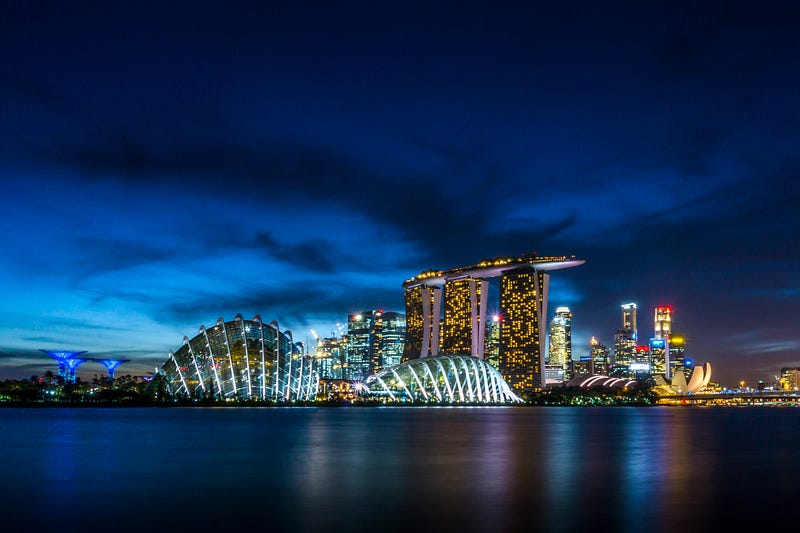
Photo by Mike Enerio on Unsplash


‘Pivotal development’

HashKey announced its regulatory success by way of a press release published to its website. This achievement, described by the company as a “pivotal development,” positions the firm to offer regulated fund management services primarily in connection with capital markets products from its Singapore base.

Deng Chao, Chief Executive of HashKey Capital Singapore and Head of HashKey Singapore, expressed the company’s commitment to the local blockchain community, stating:

“As a licensed fund management company, we are committed to contributing to the local blockchain community and playing our part in shaping its future.”


Enabling product launch

Having initiated the licensing process in late 2021, HashKey Capital Singapore now plans to leverage its new status to launch a regulated fund and provide capital market products to local customers. The company envisions connecting blockchain experts and global capital to the local market, contributing to the advancement of the blockchain community in the region.

Chao emphasized the company’s excitement about propelling blockchain-related capital markets products and investments further into the mainstream. This move is expected to open new possibilities for institutional and accredited investors in Singapore.


Hong Kong presence

HashKey Capital falls under the overarching umbrella of Hong Kong-headquartered parent company HashKey Group. Company colleagues in Hong Kong have been busy in 2023, with a number of milestones having been achieved during the year.

HashKey and OSL became the first digital asset exchange platforms to be licensed by the Hong Kong Securities and Futures Commission (SFC) as part of a new regulatory approach that allowed such platforms to offer their services to retail investors from June 1 onwards.

A few months on from that and the company has been working towards increasing platform liquidity and trading volumes through a token rewards program and partnerships with market makers.

At the end of October, the firm launched an exchange app, having received approval for the product from the local regulator. The firm has also bolstered customer deposit protection by way of a deal struck with fintech firm OneDegree to provide insurance cover for digital assets held on the platform.

In April, a separate entity, HashKey Wealth, was formed, offering a wealth management service to both institutional and individual investors looking for exposure to digital assets.

HashKey Singapore, inclusive of HashKey Capital Singapore, boasts a team of approximately 40 professionals covering various areas such as venture capital investment, fund management and over-the-counter trading of digital assets. The development follows HashKey Capital’s successful conclusion of a $500 million funding round, reinforcing its position as one of the largest crypto asset managers.

Founded in 2015, HashKey Capital has played a pioneering role as an institutional investor in Ethereum, managing over $1 billion in client assets and making investments in more than 500 projects across infrastructure, tools and applications.

During a funding round which the HashKey Group pursued earlier this year, it emerged that the company was being valued at $1 billion.

More to Read
View All
Policy & Regulation·

Nov 07, 2024

Crypto community optimism across Asia following Trump’s election victory

Recognition of Donald Trump’s victory in the U.S. presidential election on Nov. 6 has led to many crypto proponents in Asia foreseeing a positive outcome for crypto within the Asian region, and globally.Photo by Kevin Lanceplaine on UnsplashBright future for cryptoAccording to a report published by the South China Morning Post (SCMP), crypto proponents in China are expectant of a bright future for crypto both on the Chinese mainland and in Hong Kong. The mindset seems to be that a pro-crypto stance in the U.S. will lead to other jurisdictions taking a similar approach. HashKey CEO Livio Weng expressed such a view, stating:“Trump’s pro-crypto stance is expected not only to invigorate the US virtual-asset industry, but also to encourage Hong Kong to further relax its own virtual-asset policies in its quest to become a global Web3 hub.”  Prior to being elected, Trump had promised to fire Gary Gensler, who as Chair of the Securities and Exchange Commission (SEC) has pursued a strategy of regulation by enforcement, a course of action that has been broadly criticized by crypto market participants in the United States. Ripple CEO Brad Garlinghouse wasted no time in calling on Trump to act, and to fire Gensler. Influencing regulatory attitudesThere seems to be a consensus among commentators that the regulatory approach to crypto in the U.S. is going to become crypto-friendly. Crypto analyst Miles Deutscher suggests that “a Trump victory is a WIN for US tech innovation, as it would solidify [the United States’] status as a crypto powerhouse.” Weng believes that “this shift could also positively influence regulatory attitudes toward virtual assets in mainland China.” That view is mirrored in South Korea by KP Jang, head of Xangle Research. Jang asserts that “if Trump implements bold virtual asset policies while improving existing regulations, it is expected to accelerate regulatory reforms in Korea as well.” Sumit Gupta, CEO and co-founder of India’s largest crypto exchange, CoinDCX, outlined on X that Trump’s victory is a pivotal moment for global crypto, adding:”The direct effects of Trump’s policies might not alter India’s regulatory environment right away. However, global sentiment and investor behaviour will be influenced, eventually reaching India.” The CoinDCX CEO believes that should Trump now appoint regulatory leadership that’s crypto-positive, any resultant crypto regulatory framework adopted by the U.S. could become a blueprint for use by other nations. Gupta identified further potential upside insofar as the implementation of positive crypto policies by Trump would lead to a more attractive environment for crypto, “potentially opening up enhanced funding opportunities and partnerships for Indian startups as investors seek global growth.” Bitcoin price surgeAt the time of writing, the Bitcoin unit price is up 0.64% over the course of the past 24 hours, at $74,884. American business news channel CNBC reported that Bitcoin could reach $100,000 before Trump even takes office.  Matthew Hougan, chief investment officer (CIO) at crypto asset fund manager Bitwise, said that Trump’s election victory could herald in a “golden age of crypto,” with a friendlier regulatory environment leading to greater institutional investment and mainstream adoption.

news
Markets·

Jun 25, 2024

Nomura survey indicates shift towards crypto investment in Japan

Nomura Holdings, Japan's largest brokerage and investment banking company, along with its digital asset arm, Laser Digital, has unveiled a survey indicating a significant shift towards cryptocurrency investment among Japanese investment managers.  54% of investment managers favor cryptoThe survey, conducted in April with over 500 respondents, reveals that 54% of investment managers plan to invest in crypto assets within the next three years, aiming to stabilize their portfolios and mitigate risks through diversification and hedging against inflation. According to the survey, approximately 25% of respondents hold a positive impression of cryptocurrencies, particularly Bitcoin and Ether. Meanwhile, 62% view crypto assets as a viable diversification opportunity. Around half of those that responded indicated an interest in crypto exchange-traded funds (ETFs) while 31% are considering direct investment. This trend follows the Japanese cabinet's February approval of a proposal to include crypto in the list of assets that local investment limited partnerships can acquire or hold. Nomura anticipates a revision to the Limited Partnerships Act later this year to accommodate this change.Photo by Jezael Melgoza on UnsplashNew product development to drive demandThe survey also highlights the primary drivers for future investments in crypto assets. These include the development of a variety of financial products such as exchange-traded funds, investment trusts, staking, lending and other innovative offerings. These developments align with Japanese Prime Minister Fumio Kishida's "new capitalism" economic policy. Within that policy, Kishida outlined that fostering Web3 innovation is a key priority in a keynote address at the WebX conference in Tokyo in 2023. Metaplanet bond issuanceIn a related move, Tokyo-based investment and consulting firm Metaplanet plans to issue 1 billion yen ($6.26 million) worth of bonds to finance its Bitcoin acquisitions. The firm announced on June 24 that its board had approved the bond issuance, with the Bitcoin intended for long-term holding. A separate notice detailed that the bonds would offer an annual rate of 0.5%. Metaplanet appears to be following a business strategy first pioneered by MicroStrategy in the United States. The American business intelligence firm, now focused on Bitcoin development, holds the record for a public company with the most Bitcoin, possessing 226,331 BTC worth $15 billion. It provides an alternative means through which corporations can gain exposure to Bitcoin investment. Metaplanet is likely to fulfill a similar role within the Japanese market, meeting that developing investment need identified among Japanese investment managers in Nomura’s survey. While the Nomura survey findings are largely positive, there were a number of concerns expressed by investment managers also in relation to crypto. Among them were concerns about counterparty risk, regulatory requirements and high asset volatility. However, the report suggests that there is a path through which these concerns can be minimized. The report states: “These hurdles could soon be lowered, as Japan’s digital asset laws and regulations are rapidly being developed, enabling increased engagement from institutional investors in the future.” In December, the Japanese government approved a tax regime revision to exempt corporations from paying tax on unrealized crypto gains if they hold the assets long-term.

news
Web3 & Enterprise·

Jan 10, 2024

Partnerships enable AsiaNext to launch crypto derivative trading

AsiaNext, a Singapore-based institutional digital asset trading venue, has officially rolled out its cryptocurrency derivatives trading platform.Photo by Kirill Petropavlov on UnsplashWintermute and B2C2 collaborationsThe launch involves notable trading members such as Wintermute and London-headquartered liquidity provider B2C2. B2C2 is a subsidiary company of Japanese financial services conglomerate SBI Holdings. SBI acquired the company in August of last year with B2C2 expressing the view that the acquisition would represent an opportunity for the company to broaden its client base. SBI partnered with Swiss financial infrastructure firm Six Group in a joint venture to establish AsiaNext back in 2020 with a view towards driving institutional digital asset liquidity. Meanwhile, Wintermute’s involvement with AsiaNext in this instance follows its move in 2023 to expand its Singapore base, where it conducts its derivatives business. In November, Wintermute Asia conducted its first-ever options block trade through the CME Group, one of the world’s leading derivatives marketplaces. Wintermute's Founder & CEO, Evgeny Gaevoy, highlighted the significance of the partnership with AsiaNext in the context of traditional financial institutions seeking alternative exposure to digital assets. Gaevoy stated: "Partnering with AsiaNext enables us to elevate our derivatives offering, positioning Wintermute in the foreground of the expanding digital asset ecosystem." The AsiaNext platform asserts that it provides enhanced risk management with reduced counterparty and settlement risk. Additionally, AsiaNext offers capital efficiencies through intraday margining and settlement processes, supporting high-frequency trading and ensuring availability 24/7 for crypto derivatives trading. Chong Kok Kee, CEO of AsiaNext, emphasized the platform's commitment to providing a secure environment for institutional investors to explore digital assets in the region. By prioritizing regulation and rigorous governance, AsiaNext aims to establish itself as a trusted venue for exposure to digital assets. B2C2 CEO Thomas Restout commented on the positive nature of the collaboration. He stated:”We’ve witnessed [AsiaNext’s] unwavering commitment to governance and risk management, alongside their focus on aligning closely with our needs. This instills a high level of confidence in our partnership. Being at the forefront of digital asset adoption, we are pleased to provide liquidity on the venue through our collaboration.” Licensing approvalsIt's worth noting that AsiaNext obtained a Recognized Market Operator (RMO) license from the Monetary Authority of Singapore (MAS) in September. However, this license specifically pertains to tokenized securities, and as such, the crypto derivatives trading operates through a separate subsidiary. In June the company had acquired in-principle approval for a Capital Markets Services (CMS) license. On the digital securities front, SIX Digital Exchange (SDX) and Osaka Digital Exchange (ODX), operated by SIX and SBI respectively, play key roles in secondary markets, showcasing the partners' commitment to advancing regulated digital securities markets. Launched in late 2021, SDX was the world's first regulated digital securities market. SBI followed suit with the recent launch of ODX on Christmas Day. The anticipated approval of the first U.S. spot bitcoin ETFs adds a timely dimension to the launch, potentially driving increased demand for hedging strategies in the market. 

news
Loading