Top

China and Singapore collaborate on cross-border digital yuan transactions

Policy & Regulation·December 12, 2023, 1:07 AM

Taking yet another stride toward globalizing the e-CNY currency, China’s central bank has unveiled a pilot program in collaboration with its Singaporean counterpart, enabling tourists from both countries to use the digital yuan for transactions when traveling.
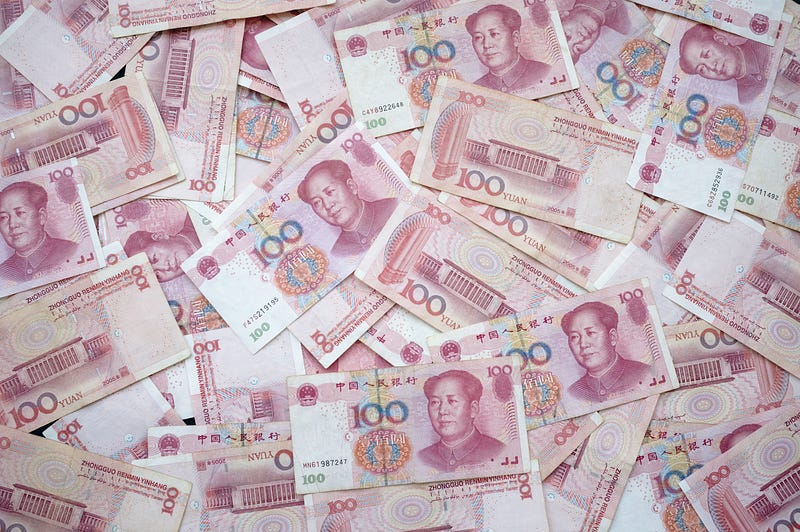
Photo by Eric Prouzet on Unsplash


Series of initiatives

This move is part of a series of initiatives unveiled by the two governments during a Joint Council for Bilateral Cooperation event which was held in Tianjin, China, last week. Among the announced measures is a mutual 30-day visa-free travel arrangement, one of 24 deals signed to strengthen bilateral ties between China and Singapore.

The Monetary Authority of Singapore (MAS) disclosed in a statement that it had collaborated with the Digital Currency Institute of the People’s Bank of China (PBOC) for this initiative. The program aims to facilitate the use of the digital version of the Chinese currency for tourist spending, enhancing convenience for travelers during their overseas trips. While specific details about the scheme were not disclosed, it represents a collaborative effort to promote cross-border transactions using the digital yuan.


Internationalizing the digital yuan

In its reporting on the announcement, the South China Morning Post (SCMP) pointed to the views of Richard Turrin, an independent financial technology consultant and author of “Cashless: China’s Digital Currency Revolution.” Turrin sees the digital yuan collaboration as a promising opportunity for cross-border retail use. He suggests that starting with small transactions, such as those by tourists, could pave the way for broader applications in trade and other high-value scenarios.

In an editorial back in November, the SCMP referred to the birth of the Petro-Yuan, speculating that the era of the Petro-Dollar is coming to an end. “In a global political economy long dominated by the petrodollar, this could be the beginning of a seismic shift,” the editorial stated. The internationalization of the e-CNY will likely be a key aspect of that overall monetary sea change.


Over 5 years in development

China initiated digital yuan testing in 2019, and although an official launch timetable has not been confirmed, adoption has accelerated recently. Former PBOC governor Yi Gang reported that total e-CNY transactions reached 950 million yuan ($133 million) in June, with a cumulative value of 1.8 trillion yuan compared to 100 billion yuan in August 2022. This indicates a substantial increase in digital yuan transactions.

The momentum extends beyond mainland China, with Beijing exploring CBDC usage internationally. The mBridge trial, completed last year, involved multiple countries using central bank digital currencies to settle trades, including Hong Kong, Thailand and the United Arab Emirates.

In June, authorities in China’s resort city of Sanya introduced e-CNY ATMs so that foreign visitors could buy the digital yuan and use it during their time in China. Another initiative aims to encourage further use of the digital currency within the Chinese autonomous territory of Hong Kong. In July, the Hong Kong arm of the Bank of China rolled out a digital yuan shopping festival in Hong Kong, allowing visitors to Hong Kong from mainland China to make purchases using the digital yuan.


More to Read
View All
Policy & Regulation·

Aug 04, 2023

Hong Kong Lawmaker Explores Digital Asset Links With Mainland

Hong Kong Lawmaker Explores Digital Asset Links With MainlandIn a move aimed at bolstering its position as a rising global Web3 hub, Hong Kong Legislative Council member Johnny Ng has expressed his aspiration to foster greater collaboration between digital asset platforms in Hong Kong and a Shanghai-based exchange.Photo by Simon Zhu on UnsplashDigital asset exchange interconnectivityAs Hong Kong continues to position itself as a key player in the emerging Web3 landscape, Ng envisions a future where licensed virtual asset exchanges in Hong Kong could be interconnected with their counterparts in Shanghai.Ng’s remarks came during an interview with Chinese media outlet The Paper. Drawing a parallel with the established Shanghai-Hong Kong Stock Connect program that seamlessly connects the stock markets of both cities, Ng raised the question of whether a similar connection could be established for licensed digital asset exchanges. Ng’s idea hinges on the potential to bridge appropriate platforms in Shanghai with those licensed in Hong Kong for virtual asset trading.Interconnected talent poolThe lawmaker’s enthusiasm for interconnectivity also extends to the talent pool. He expressed his desire for more Web3 talent exchanges between Hong Kong and the mainland, recognizing Shanghai’s status as a financial hub boasting numerous exceptional financial enterprises.Hong Kong’s approach to the Web3 landscape stands in contrast to mainland China’s stringent cryptocurrency regulations. While China banned cryptocurrency transactions in 2021, Hong Kong has embraced crypto firms, even encouraging partnerships between these firms and local banks.This year, Hong Kong authorities unveiled a series of cryptocurrency-related policy statements, aimed at fortifying its stature as a global financial center. A significant step followed in December, when the Hong Kong Legislative Council passed an amendment introducing a comprehensive licensing framework for virtual asset service providers (VASPs).In a recent development underscoring Hong Kong’s pro-crypto stance, HashKey and OSL have become the pioneering recipients of licenses for retail trading under the new regulatory regime, which commenced on June 1.Differing policy approachesPeople following developments in crypto and Web3 in China and East Asia have been speculating if the strategic positive shift in Hong Kong towards developing as a regional hub relative to the sector is indicative of a softening in the approach of mainland China towards the industry. It appears that Hong Kong’s pursuit of crypto business has been sanctioned by Beijing.Commentators have been monitoring the emergence of further encouraging signals. In May, Chinese state television featured a segment that covered cryptocurrency and in particular Bitcoin. Binance CEO Changpeng Zhao (CZ) was sufficiently encouraged by the development to suggest that it was “a big deal,” although the clip was later removed from the broadcaster’s website.Ng’s proposal aligns with the broader narrative of Hong Kong’s ambitious push into the Web3 landscape, capitalizing on its favorable regulatory environment to attract crypto-related ventures. As discussions evolve around the potential interconnectivity between Hong Kong and Shanghai’s digital asset exchanges, the global cryptocurrency community watches with interest to see if there are any emerging signs that Beijing will reciprocate positively.

news
Policy & Regulation·

May 23, 2023

South Korea: Crypto Exchange Execs Indicted on Manipulation Charges

South Korea: Crypto Exchange Execs Indicted on Manipulation ChargesA number of executives at Coinone, one of South Korea’s leading cryptocurrency exchanges, have been indicted on charges related to market manipulation.That’s according to a report published by South Korean news outlet, The JoongAng, on Monday. The complaint details no less than forty-six coins that are alleged to have been the subject of manipulation in some form. That represents one in four of the total number of coins that the exchange has enabled for trading on the platform.Photo by Burak The Weekender on PexelsFour executives indictedThe indictment lists four Coinone executives, Mr. Jeon, Mr. Kim, Mr. Ko, and Mr. Hwang. The four have been charged with employing illegal mechanisms to manipulate coin listings, resulting in the four executives profiting to the tune of 2.98 billion Korean Won, which amounts to $2.26 million dollars according to current fx exchange rates.The complaint specifies that these offenses were committed between December 2019 and November 2022. South Korean prosecutors further allege that prior to various projects obtaining a token listing on Coinone, company executives made them sign third-party market-making contracts. That in and of itself is not unusual.One of the key aspects of a new coin listing (and an ongoing listing for that matter), is the need to have sufficient liquidity in place to ensure that the coin can be traded without being susceptible to market manipulation. Low liquidity conditions open the door to bad actors moving the market relative to a particular token.Cross tradingThe indictment is far more specific in calling out illegal cross trading activity. It’s likely that these key Coinone employees would have been expecting such an indictment to land at their doors. Last week, it emerged that LUNA tokens associated with Terraform Labs’ failed Terra USD (TUSD) algorithmic stablecoin project, had been illegally cross traded on three South Korean crypto exchanges: Bithumb, GoPax and Coinone.Cross trading is the practice of trading an asset on an exchange without recording the transaction transparently on the exchange. Strictly speaking, the activity can be legitimate although most exchanges prohibit the practice as it can be used to affect market manipulation.A cross trade could be permitted in a scenario where the price is deemed to be competitive at the time that the trade takes place. While this can more easily be determined in conventional markets as the practice is covered by specific regulation, that’s not the case in most jurisdictions right now where digital asset trading is concerned. By extension, there’s a complete lack of transparency and a lack of reporting.As other market participants don’t have visibility of this type of trading activity, they are unaware as to whether a better price is available on the market or not. In an unregulated state, the practice undermines trust.In the case of Coinone, the executives enabled the practice in order to provide an illusion with regard to trading activity. That meant that trading volumes claimed were inaccurate, misleading ordinary traders and exchange users. Along with trading volume in these coins being artificially boosted, so too were token prices.In the indictment, prosecutors explicitly alleged that cross trading was being employed in an illegal manner:“This price manipulation causes misunderstandings about the trading volume and market price among general members of the exchange, and induces [service users] to participate in the coin transaction and buy the coin.”

news
Web3 & Enterprise·

Mar 08, 2024

Silicon Valley blockchain firm Gluwa becomes partner in Nigeria’s CBDC project

Gluwa, a San Francisco-based blockchain firm, has become a key partner in Nigeria’s central bank digital currency (CBDC) project, the eNaira, Korean media outlet Seoul Economic Daily reported.   Tapping into Nigeria’s 226M populationGluwa, the issuer of Creditcoin (CTC), announced yesterday that its Nigerian branch Gluwa Nigeria signed a memorandum of understanding (MOU) with the Central Bank of Nigeria (CBN). Through the MOU, Gluwa Nigeria aims to facilitate the adoption of digital currency in Africa’s largest economy with a 226 million population, by connecting eNaira to Credal, the native API for Gluwa’s Creditcoin network. This integration is expected to enhance Nigeria’s financial ecosystem by recording loan and payment transactions on the Creditcoin network.Photo by Emmanuel Ikwuegbu on UnsplashMaking the financial system more inclusive and efficient The partnership is anticipated to boost financial inclusiveness among many Nigerians who are financially isolated due to their lack of access to traditional financial services. Moreover, the CBN expects that the adoption will improve the eNaira’s functionality and spur innovation in the country’s financial system. Among other objectives of the project is to create an efficient financial infrastructure in the country so that Western fintech firms can easily enter the Nigerian financial market.   Oh Tae-lim, CEO of Gluwa, said the company plans to lay out the project’s blueprint by the end of this year and eventually broaden the acceptance of the eNaira, taking the potential of the digital currency to a new level.  Meanwhile, Gluwa’s native token, CTC, is a real-world asset (RWA) network with a loan transaction volume of KRW 106.8 billion ($80 million) and a user base of 337,000.  

news
Loading