Top

Web3 chatting app Beoble launches beta version with 50,000 users

Web3 & Enterprise·December 04, 2023, 6:58 AM

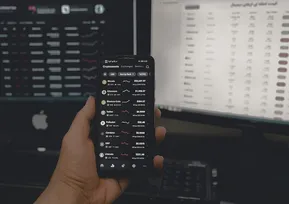
Web3 social messaging app Beoble has secured over 50,000 users in just one day since the beta version of the app was released on Saturday (KST), according to a post on its official X account. This comes after pre-registration applications closed on Nov. 30, which saw over 100,000 sign-ups.

Photo by Andrej Lišakov on Unsplash


Empowering Web3 connectivity

Beoble is a Web3-based social messenger platform that employs a decentralized encryption network called the Communication Delivery Graph. It allows users to engage in end-to-end encrypted chatting between their digital wallets and offers a communication toolkit for integrating decentralized applications (dApps). The app currently supports all EVM-compatible blockchains like Ethereum and Polygon and plans to add others like Solana, Aptos and Sui in the future.

“Beoble is essentially the first Web3 messaging app with the complete user experience,” said Cho Sung-min, CEO of Beoble.

In particular, Beoble has gained attention for having a low barrier to entry due to its user-friendly user interface and experience (UI/UX). Notably, the platform facilitates direct communication between Web3 wallet owners and allows them to conduct non-fungible token (NFT) and peer-to-peer (P2P) transactions.


Incentivizing community engagement

The Beoble team explained that the ongoing beta test will be an opportunity to incorporate user feedback and improve services. It will also be a period during which users can receive rewards based on their chat room engagement.

“The more active users are in the community, the higher their rewards. Rewards can be obtained through activities like completing quests, following others, reacting to messages and logging in,” the firm explained. The Beoble rewards system distributes “cat points” to users based on their participation and contribution to the ecosystem, which are then used to determine their eligibility for rewards like token airdrops.

Beoble also previously raised $2 million in pre-seed funding, backed by investors like Digital Currency Group, HashKey Capital and Genesis Blockchain Ventures. The platform’s public launch is scheduled for Q1 2024.

More to Read
View All
Web3 & Enterprise·

Nov 30, 2023

Lemon Healthcare launches blockchain-based electronic prescription service

Lemon Healthcare launches blockchain-based electronic prescription serviceSeoul-based healthcare data platform company Lemon Healthcare’s blockchain-based, personalized electronic prescription service dubbed “LemonCare” has officially been launched in three major hospitals in the North Gyeongsang Province region of South Korea, according to an article published by local news outlet Etnews on Thursday. This comes after the recent end of the service’s development and pilot operation period.Photo by Christina Victoria Craft on UnsplashRevolutionizing healthcareThe aim of the project was to replace paper prescriptions with electronic prescriptions through a blockchain-based mobile service that offers patients an additional layer of security as well as the ability to view and manage their prescription history. It also reduces and prevents risks such as duplicate prescriptions.Kyungpook National University Hospital, Kyungpook National University Chilgok Hospital and Daegu Fatima Hospital — all located in Daegu Metropolitan City in North Gyeongsang Province — were selected as participants in the pilot project, during which they were responsible for electronically prescribing medication to patients, which would then be compounded and delivered by nearby pharmacies. They will also be the first to implement the app as an official service.Advancing healthcare accessLemon Healthcare stated that it has also hired new personnel, applied for patents related to electronic prescriptions and issued some 500 electronic prescriptions.Patients who have received treatment at any of the three hospitals and want to utilize the electronic prescription service can do so under the “Electronic Prescription Delivery” option on the hospital’s mobile app. After completing user authentication, the patient’s prescription is transmitted to the pharmacy of their choice, from which patients can pick up their medication.Leveraging its blockchain technology, Lemon Healthcare plans to bring secure and accurate electronic prescription services to more people in the future.

news
Web3 & Enterprise·

Jan 11, 2024

LINE NEXT launches digital commerce platform DOSI

LINE NEXT, the NFT business arm of Tokyo-based Internet giant LINE Corporation, has officially launched DOSI, a digital commerce platform that allows the trading of digital products like collectible NFTs, according to an official announcement on Wednesday (KST). During its beta period that started in September last year, DOSI was able to attract some 5.5 million users worldwide in more than 180 countries who conducted over 560,000 cumulative transactions.Photo by Jonas Leupe on UnsplashDigital products for everyoneThe company revealed plans to add more than 20 million digital products from over 150 brands including special app memberships, in-game items that are directly verified by game developers, and digital tickets to entertainment performances. There will also be limited-edition products like LINE stamps, digital art and special video playback rights.  Products from popular Japanese brands such as Japan Airlines and CryptoNinja Partners – a 22,222-piece NFT collection – will be available on the service during this month as part of a merging with Line NFT, a comprehensive marketplace for NFTs that has been operating in Japan for a while.  By March, the company will also sell app membership products from more than 20 promising startups, including content community-based social media platform SuperPlat, stock investment platform Quantrack, AI-based music platform inDJ and K-pop fandom community service FL DA. Exclusive membershipIn particular, DOSI also has a special membership called “DOSI Citizen,” which offers points called DON that can be earned by checking app attendance, purchasing products and playing mini-games. DON can be traded for Citizen Items or used to participate in events for a chance to win crypto rewards. Users can easily sign up and log in using their social media accounts and purchase digital products with simple payment methods such as Line Pay, Naver Pay, Apple Pay and Google Pay. Payments can also be made with the digital assets Finsia (FNSA) and Ethereum (ETH). Investment boostLast year, LINE NEXT made headlines for securing the largest investment made in the Asian Web3 industry worth $140 million from a consortium led by Seoul-based private equity firm Crescendo Equity Partners. At the time, the company had divulged that it would use part of the funds to launch DOSI.

news
Policy & Regulation·

Dec 27, 2023

Worldcoin withdraws verification service from Indian market

Worldcoin, the startup co-founded by OpenAI CEO Sam Altman, has encountered setbacks in its eye-scanning initiatives just six months after its international expansion. A recent report by TechCrunch indicates that the company’s signature orb eye-scanner is no longer available to users in the Indian market. According to that report, the Worldcoin Foundation clarified that its activities have also been suspended in France and Brazil. The company clarified that its offerings in those markets were only intended to be limited-time product previews as opposed to long-term roll-outs.Photo by Big G Media on UnsplashTemporary service haltIn India, the World App is experiencing widespread adoption, but the orb-verified proof of personhood services has been temporarily halted. The pause aims to allow the protocol to develop and implement a bespoke, safe and orderly process to meet the growing demand. The setback comes after Tools for Humanity, the organization behind Worldcoin, announced the expansion of World ID, its digital identity program linked to iris scans, in July. The startup had ambitious plans, intending to make 1,500 orbs available in over 35 cities globally. Recently, the company unveiled a program offering $5 million in grants to developers utilizing its eye-scanning technology. Regulatory investigationsSam Altman and his co-founders established Worldcoin in 2020 to help individuals prove their digital identity amidst the rise of AI. Over the years, Worldcoin has secured $250 million in funding from notable venture capitalists, including Andreessen Horowitz. However, the startup has faced regulatory challenges, including investigations by French and German regulators and an Argentinian government agency. Altman, himself, has navigated recent challenges. In November, the OpenAI board temporarily removed him as CEO, reinstating him two weeks later. More recently, Fortune reported that Altman quietly received $75 million from the University of Michigan for a new venture capital fund, raising questions about transparency, particularly following the launch of OpenAI’s signature product, ChatGPT. Asian tourIn recent weeks, the project development team behind Worldcoin had engaged in a tour of Asia. The objective of that mission was to gather market feedback prior to engaging in greater efforts to expand the reach of its World ID verification system within the region. To gauge market receptiveness to its product offering, the tour included meetups in major Asian cities such as Hong Kong, Seoul, Singapore and Tokyo. Up until mid-November, the Asian region accounted for 1.4 million World App sign-ups.The introduction of World ID 2.0 by the company on Dec. 13 led to a surge in the price of WLD. Over the course of the 48 hours that followed, it jumped from $2.47 to $4.23, a 71% increase. At the time of writing, the token unit price stood at $3.66. As Worldcoin navigates these challenges, the cryptocurrency industry will closely monitor developments, recognizing the broader implications for the startup’s innovative approach to digital identity verification.

news
Loading