Top

Hong Kong financial services platform plans spot Bitcoin ETF launch for Q1

Markets·January 20, 2024, 12:46 AM

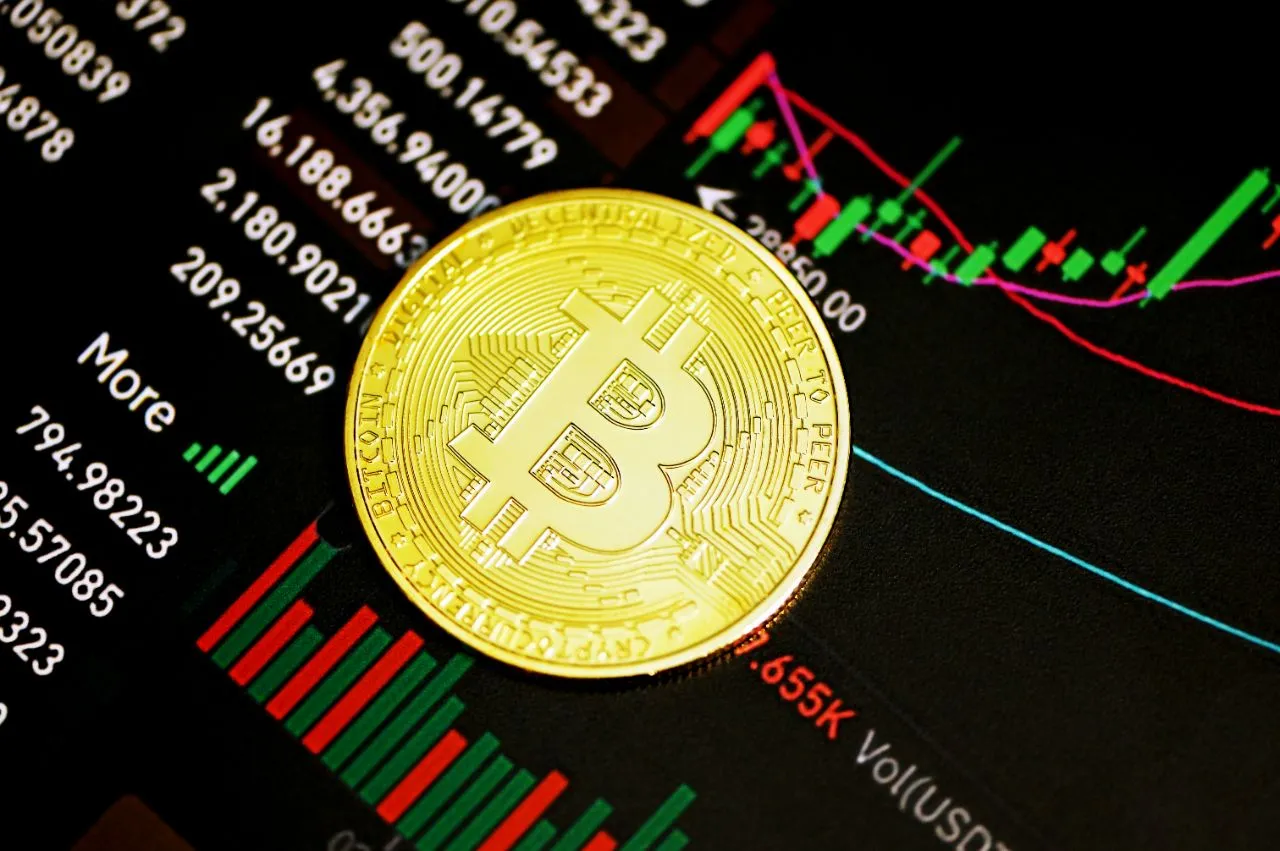
Venture Smart Financial Holdings Ltd. (VSFG), a Hong Kong-based financial services company, is gearing up to initiate an exchange-traded fund (ETF) directly investing in bitcoin in the first quarter of this year.
https://asset.coinness.com/en/news/480adf2970831c42aa4020d10400b1c6.webp
Photo by Kanchanara on Unsplash

That’s according to a report by Bloomberg on Friday. The move aligns with Hong Kong's strategic efforts to establish itself as a digital asset hub, and with that, the company plans to submit an application to the Securities and Futures Commission (SFC) for ETF approval.


Brian Chan, the group head of investment and product at VSFG, expressed optimism about the potential of this market, setting a goal of achieving $500 million in assets under management by the end of the year.


Long-term objective

While the firm has taken the decision to focus on spot crypto ETFs amid a backdrop of spot bitcoin ETF approval in the United States earlier this month, it’s an objective the firm has been working on for some time. In June of last year, crypto media reported that VSFG were planning the launch of such a product.


Notwithstanding that intention, the recent launch of several high-profile bitcoin funds in the United States, including offerings from BlackRock and Fidelity Investments, will likely assist the company in getting product approval in Hong Kong.


Immediately following U.S. approval, a Hong Kong lawmaker suggested that the Chinese autonomous territory should respond proactively. Johnny Ng outlined that Hong Kong had to respond to secure its global position in developing the digital assets space in Hong Kong.


Positive soundings

Towards the end of December, there appeared to be positive soundings on the possibility of spot bitcoin ETF approval in Hong Kong emerging from the local regulator. SFC CEO Julia Leung stated that the regulator was open to the notion of retail participation in spot crypto ETF products.


Her comment was followed shortly afterwards by a joint announcement from the SFC alongside the Hong Kong Monetary Authority (HKMA) that they were prepared to accept applications for such funds. The approval process for such products typically takes weeks to months, following the precedent of traditional ETFs.


Hong Kong presently permits futures-based crypto ETFs, with three already listed: CSOP Bitcoin Futures, CSOP Ether Futures and Samsung Bitcoin Futures. However, these funds have a combined asset value of around $50 million. Samsung Asset Management has not ruled out exploring the launch of a spot ETF, while CSOP Asset Management remains silent on the matter.


VSFG is one of Hong Kong's first SFC-approved virtual asset managers, offering both traditional and digital wealth management services. Aegis Custody, a digital asset custodian, is in discussions with four asset managers about listing spot crypto products in Hong Kong. The regulatory requirements in the city may lead issuers to impose higher fees compared to the low management levies seen in many new U.S. spot bitcoin ETFs.


Although bitcoin experienced substantial growth in anticipation of these U.S. products, it has seen a 10% decline since their trading commenced on Jan. 11. Nevertheless, many industry commentators expect a stronger bitcoin unit price in the medium to long term as a direct consequence of these products.


 

More to Read
View All
Policy & Regulation·

Aug 25, 2023

Regulatory Pressure Sees Binance Cease Card Offering in the Middle East

Regulatory Pressure Sees Binance Cease Card Offering in the Middle EastLeading global crypto exchange Binance has announced the discontinuation of its card services in the Middle East.Users hailing from the region will have until September 21 to maximize the utility of their Binance cards before the product will no longer be available to them. Latin America is another region which will be similarly affected by the decision. Binance Customer Support stated: “The Binance Card will regrettably no longer be accessible to users based in Latin America and the Middle East.”Photo by rupixen.com on UnsplashEnabling crypto spendingDistinct from conventional debit cards, these Binance cards have offered users the convenience of settling day-to-day expenses with crypto assets. However, this unique feature is now set to become a relic as the exchange shifts its strategy in response to evolving regulatory dynamics.It’s worth noting that this product curtailment will only impact less than 1% of users situated in these regions. Other Binance services around the world will continue unimpeded. That said, products like this one are significant as they help to bridge the gap between the crypto sphere and conventional commerce.As a substitute, Binance is actively championing its “Binance Pay” platform, touting it as “an advanced cryptocurrency payment solution that is both contactless and internationally accessible.”Checkout.com setbackFinancial pundits are speculating that this strategic move could be closely intertwined with recent realignments in Binance’s corporate partnerships. Notably, the UK-based payment processor, Checkout.com, severed its connections with Binance earlier this month amidst mounting regional regulatory interventions and concerns.Responding to this severed partnership, Binance has indicated a contemplation of legal recourse against Checkout.com’s decision. The backdrop of this collaboration has been problematic since its inception in 2020. Initial troubles surfaced when the absence of the 3-D Secure system facilitated a criminal syndicate to conduct a $10 million transaction spree on Binance.Clash with global regulatorsRecent months have seen Binance find itself entangled in a web of legal battles. The US Securities and Exchange Commission (SEC) leveled allegations against Binance, accusing the exchange of deceiving regulatory bodies and mishandling customer funds.Meanwhile, French authorities have intensified their scrutiny, suspecting Binance of potential involvement in money laundering activities. As a domino effect, Binance had to exit numerous markets due to its inability to meet the stringent compliance criteria. Over the course of just three months, the company has lost its ability to trade in Germany, Canada, Belgium, the Netherlands, and Cyprus.Asian pivotAs the company comes under pressure in Western markets, it has focused on furthering its offering in the Asian region. In May, its subsidiary, Gulf Binance, successfully acquired a trading license in Thailand. Later that month, the company announced plans for a dedicated platform for Japanese customers.Parrot Capital, a decentralized hedge fund, has issued a direct recommendation to Binance Card users in response to the news:“Check your daily limits. Withdraw via ATM all your funds or spend them ASAP or risk losing them for good.”This sustained and pervasive scrutiny underscores the formidable challenges faced by the leading crypto exchange. As the regulatory landscape evolves, exchanges like Binance are being forced to re-calibrate in order to navigate an ever-changing environment.

news
Policy & Regulation·

May 17, 2023

Banking Difficulties Remain in Hong Kong for Crypto Start-Ups

Banking Difficulties Remain in Hong Kong for Crypto Start-UpsWhile Hong Kong has demonstrated a very clear crypto-friendly stance over the course of the past six months, crypto start-ups are still struggling with banking in the Chinese autonomous territory.Photo by Manson Yim on UnsplashLicensing backlogAll the signs are that Hong Kong is striving to develop itself as a regional hub for crypto and blockchain related business. Encouraged by that stance, against a background of the United States becoming openly hostile to crypto over that very same time frame, applications are streaming in from international firms to be licensed to operate their businesses in the city.In discussion with crypto start-up applicants, CoinDesk has established that the issue extends to firms that have already obtained a license to operate. To compound matters, the Hong Kong regulator, the Securities and Futures Commission (SFC), has a shortage of manpower, with just eight officials currently working on the applications of eighty crypto firms.Speaking to that backlog, Amy Yu, APAC CEO for Swiss crypto financial services company, SEBA Bank, stated: “This probably would have been a different story six or nine months ago.”A known problemIt appears that both the SFC and its regulatory peer, the Hong Kong Monetary Authority (HKMA) were aware of the issue and tried to get out ahead of it. Late last month, both regulators convened a meeting with bank officials and virtual asset service providers (VASPs).The objective was to try to forge a path forward such that banks could amend their approach, enabling greater facilitation and acceptance of crypto businesses such that the banks would be more inclined to approve bank account applications from those fledgling businesses.Arthur Yuen, Deputy CEO of the HKMA addressed the matter in a blog post published to the regulator’s website on April 27. Yuen was clear in calling on the banks to enable banking for VASPs:“With the implementation of the regulatory regime for VA [virtual assets] activities in Hong Kong and the strengthening of supervisory regimes in different jurisdictions according to the international standards, and as the banking industry develops a better understanding of the VA industry over time, we expect that regulated virtual asset service providers (VASPs) will be able to successfully apply for a bank account through a reasonable process.”Banker resistanceElaborating on the matter further, it’s clear that Yuen and his colleagues understand the importance of banking in enabling this nascent business sector such that the broader strategy of a pro-crypto business environment is affected in Hong Kong. “To attract businesses from new markets, it is crucial to have high quality financial services, while enhancing corporate access to bank accounts would be one of the key priorities,”he stated.An attendee at that regulator-organized round-table last month said that “It was more like a wish list from the regulator,” and that “whether the banks fully embrace it is another matter.” The issue remains as a major impediment to the ability of crypto start-up companies to operate, Some are being forced to try and work around the stumbling block, relying instead on overseas banking partners.

news
Web3 & Enterprise·

Aug 12, 2023

Hong Kong Gives HKVAX Green Light for Virtual Asset Trading

Hong Kong Gives HKVAX Green Light for Virtual Asset TradingHong Kong’s financial landscape continues to develop, with the latest installment coming from a Securities and Futures Commission (SFC) decision to grant in-principle approval to Hong Kong Virtual Asset Exchange (HKVAX) to operate a virtual asset trading platform within the bounds of the region’s securities laws.The development, announced via a press release published to HKVAX’s website on Friday, follows the recent introduction of crypto retail trading by exchanges HashKey and OSL in Hong Kong.Photo by Dids on PexelsLicensed to extend service offeringIn a notable move, the SFC has green-lit HKVAX’s entry into the virtual asset trading arena. The approval-in-principle, announced on Friday, empowers HKVAX to conduct regulated activities of both Type 1 and Type 7. A Type 1 license permits the operation of a digital asset trading platform specializing in securities. Meanwhile, the Type 7 classification endows the company with the official capacity to deliver automated trading services to both retail users and institutional investors.Upon obtaining the final green light, the platform envisions providing an array of services, including over-the-counter (OTC) brokerage enabling seamless fiat-to-digital asset trading, an institutional-grade exchange platform, and a secure custody solution fortified by insurance coverage.HKVAX is poised to introduce an up-and-coming product category, security token offerings (STOs), seeking to harness the burgeoning investment prospects of the Web3 ecosystem. STOs involve offering security tokens which represent traditional legal ownership of real-world assets.Upcoming collaborative fundingAnthony Ng, the Co-Founder and CEO of HKVAX, affirmed the exchange’s growth trajectory and outlined plans for expansion of its product suite in Hong Kong. Ng also emphasized forging collaborations with strategic investors to fuel the exchange’s upcoming funding rounds.HKVAX’s announcement is emblematic of Hong Kong’s embrace of crypto retail trading. Recent entrants HashKey and OSL have set the precedent by becoming the first exchanges to secure licenses for offering crypto trading services in the region as of August 3.It’s been a long process for HKVAX to arrive at this point. The firm first contacted the SFC in 2018 in relation to licensing. It started the application process in 2019. It’s also proving to be an incredibly costly exercise. It’s believed that crypto-related operating licenses are costing firms up to $20 million.The backdrop to these developments is Hong Kong regulators’ proactive stance on crypto regulation, catalyzed by the FTX exchange collapse in 2022. CEO Julia Leung Fung-yee of the SFC, in a speech on June 24, highlighted the integral role of crypto trading in the virtual asset ecosystem, underscoring the importance of safeguarding investors through the new licensing framework for virtual asset service providers.In a financial landscape undergoing transformation, Hong Kong’s regulatory moves are poised to shape the future trajectory of virtual asset trading and its integration within the broader securities landscape. As HKVAX gains its foothold and the crypto industry matures, the coming months are expected to see further refinements in this nascent yet rapidly evolving market.

news
Loading