Top

Wemade to onboard NFT trading card game Underground Waifus to WEMIX PLAY

Web3 & Enterprise·January 22, 2024, 3:15 AM

Wemade has signed a deal with Maniac Panda Games, a development studio of Spanish gaming company JURVAL CORP SL, to onboard the blockchain game Underground Waifus to WEMIX PLAY, Wemade’s gaming platform, according to an official announcement on Monday (KST).

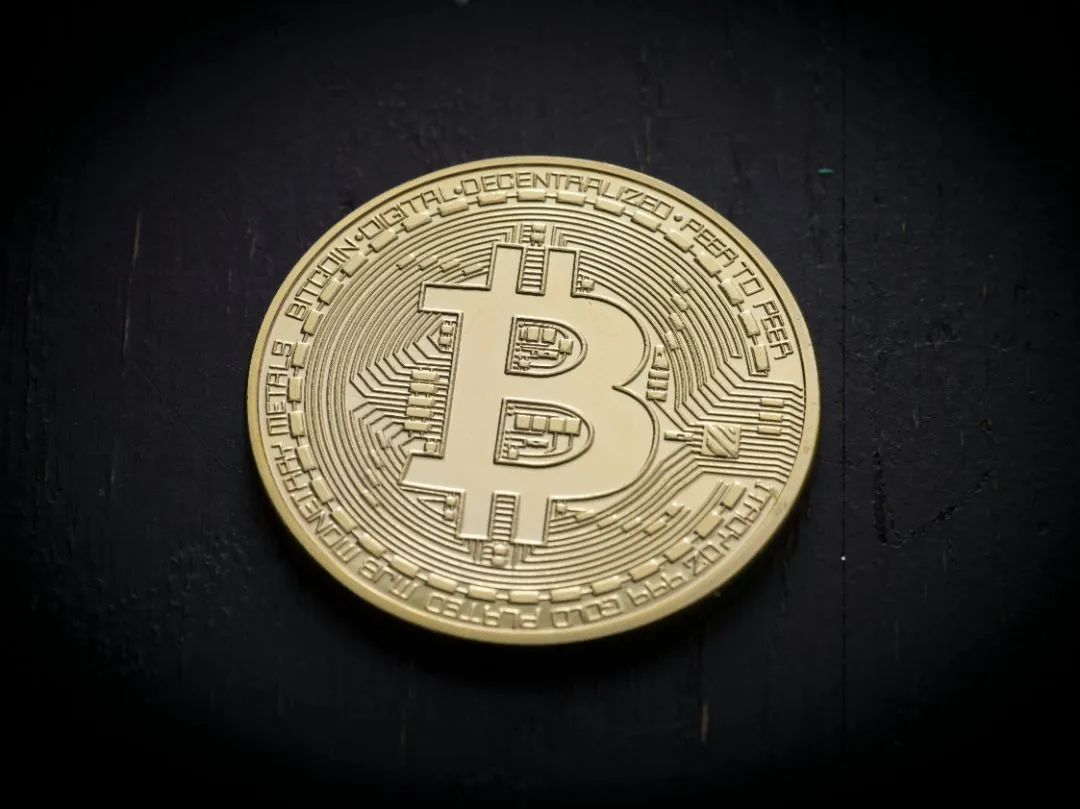
https://asset.coinness.com/en/news/97abd5e9cdf463374d91ddc406ba6814.webp
Photo by Syed Ali on Unsplash

“Underground Waifus proposes top-level gameplay and fun,” said Maniac Panda Games CEO Daniel Valdés. “We believe that the collaboration with WEMIX PLAY can take the game to another level, adding a wider reach and implementation among players around the world.”


Unveiling the cyberpunk battleground

Underground Waifus is a multiplayer NFT trading card game set in a cyberpunk, post-apocalyptic universe. It is notable for its circular economy model that employs Free-to-Play (F2P) and Play-to-Earn (P2E) mechanisms within a tokenized system. The game revolves around a player-driven economy, where players can participate in player versus player (PVP) battles where the winner takes all.


The game is built on blockchain technology, offering exclusive NFT collections. Gamers are subject to ownership of these assets, which they can use for collecting or playing. The ecosystem also has a utility token called Underground Waifus Token (GQ), which can be used off-game or in-game as a cryptocurrency.


Wemade’s ongoing efforts

Wemade has been consistently growing its lineup of Web3 games on WEMIX PLAY, endeavoring into diverse genres in an effort to appeal to all gamers. The firm revealed that it is working with developers around the world, including North America, Europe and Asia, to expand the gaming platform’s ecosystem.

More to Read
View All
Policy & Regulation·

Apr 27, 2023

Terraform Money Trail Leads to Swiss Bank

Terraform Money Trail Leads to Swiss BankAuthorities in both South Korea and the United States continue to advance their investigations into Terraform Labs, the Singapore-based company behind collapsed algorithmic stablecoin Terra USD (TUSD) and its South Korean CEO, Do Kwon, with the latest developments involving transfers made to a Swiss bank.©Pexels/Robert StokoeFollowing the moneyIn a lawsuit filed by the Securities and Exchange Commission (SEC) in the United States in February, the Commission claimed that Do Kwon and his company Terraform Labs transferred 10,000 Bitcoin to a Swiss bank. It now appears that the bank in question is digital asset banking specialist, Sygnum Bank.It’s understood that Do Kwon converted a large proportion of that Bitcoin into cash. According to Finbold, the Financial Securities Crime Joint Investigation Division at the Seoul Southern District Prosecutor’s Office has disclosed that it is following the digital asset trail to Switzerland in an effort to secure associated funds.LFG fundsThe funds are believed to have belonged to the LUNA Foundation Guard (LFG), an entity that was established with the objective of building reserves and safeguarding the USD peg of the Terra USD algorithmic stablecoin during volatile market conditions.Roughly 130 billion won, or $100 million, is being pursued, between digital assets and cash held within various Sygnum accounts. South Korean authorities had previously indicated that they were investigating transfers made by Do Kwon to a prominent Korean law firm. Earlier this week, they charged ten individuals connected to Terraform Labs with various offenses.During the press conference in which those charges were brought, the Seoul Southern District Prosecutor’s Office stated:”We have also confirmed that $100 million has been used in several places, not left in the Sygnum account as it is, and some transfers have been made to the Kim & Chang law firm account (at the attorney’s expense) and the remaining amount is about billions of won.”International complexityThis recent phase in the investigation is revealing the international nature of the case and the complexity that brings with it. Authorities in the United States and South Korea have submitted requests to have certain Sygnum Bank accounts frozen. Do Kwon and Terraform Labs are trying through the courts to have the SECs involvement dismissed on the basis that Terraform was a Singaporean company and Do Kwon a South Korean national, and on that basis they claim that the SEC lacks jurisdiction.Sygnum, being a Swiss entity will have to abide by what Swiss authorities instruct it to do relative to the Terraform-related funds held in accounts with the bank. Sygnum told Finbold that it couldn’t comment on whether it had received requests to freeze assets.The bank stated: “We can communicate that after the collapse of Terra in May 2022, on the basis of an official court order, Sygnum transferred more than 70% of the Bitcoin-sale FIAT proceeds into the escrow account of an international and to other reputable law firms.” It added that no Swiss or foreign authority has accused Sygnum of any wrongdoing.

news
Web3 & Enterprise·

Jun 12, 2023

SBINFT and JPNFT Collaborate to Establish A Secure NFT Market in Japan

SBINFT and JPNFT Collaborate to Establish A Secure NFT Market in JapanSBINFT, a Japanese company specializing in NFT consulting and marketplace services, has joined forces with JPNFT, a Japanese platform dedicated to establishing a secure NFT market by combating unauthorized NFTs, according to a press release. Together, these entities are working towards the development of a marketplace that ensures users have access to secure and authorized NFTs, with the overarching aim of promoting the distribution of legitimate digital assets.Photo by Choong Deng Xiang on UnsplashRise of NFTsThe advent of blockchain technology has revolutionized the way digital assets are valued and their ownership is determined. This transformative technology has enabled the creation of non-fungible tokens (NFTs), which now serve as digital representations of various creations and are actively traded on dedicated marketplaces.Unauthorized NFTsSince 2021, numerous new players have entered the global NFT landscape. As of March 2023, OpenSea, the world’s largest NFT marketplace, boasts a monthly trading volume of $430 million. While this growth signals promising market development, it also brings forth challenges stemming from the proliferation of pirated and unauthorized NFTs. Considering Japan’s esteemed international reputation in the realms of art and content, the country possesses the potential to emerge as a significant player in the NFT market. However, to realize this potential, appropriate measures must be swiftly implemented to guarantee security and authenticity within the industry.License check & certification markIn order to tackle this challenge, SBINFT and JPNFT have joined forces to establish a safe and sound NFT market that ensures the availability of genuine NFTs for users. As part of this collaboration, content NFTs registered on the NFT disclosure information platform called “jpnft” will undergo a verification process for authenticity when traded on the “SBINFT Market.” This verification process will involve an official license check as well as the inclusion of a JPNFT certification mark.The launch of jpnft content on the SBINFT Market is planned for the summer of 2023. The jpnft platform plays a crucial role in distinguishing between licensed NFTs and unauthorized ones by publishing official information related to NFTs based on Japanese intellectual properties. Licensed NFTs will be either issued directly by rights holders or authorized by them. It’s worth noting that the jpnft platform was developed as a project supported by the subsidy for “Japan content localization and distribution (J-LOD)” in the 2021 Supplementary Budget of the Japanese Ministry of Economy, Trade and Industry.Previously known as nanakusa, the SBINFT Market is built on two public chains (Ethereum and Polygon) and is committed to becoming a global open marketplace and. With a focus on providing a secure trading environment, the SBINFT Market meticulously reviews NFTs to safeguard users from potential risks such as fraud and hacking.Both SBINFT and JPNFT share a common philosophy that emphasizes the security of NFTs and the healthy development of the industry. With this shared vision, the SBINFT Market aims to enhance its content offerings and position itself as an authorized NFT marketplace that handles NFTs on jpnft.Government initiativeLast month, the Working Group for Digital Society Promotion under Japan’s ruling Liberal Democratic Party (LDP) presented a proposal to Prime Minister Kishida Fumio regarding the Web3 industry. This proposal recommended the implementation of measures to safeguard Japanese content and data from unauthorized monetization by foreign entities. This initiative highlights the government’s endeavor to protect and promote the integrity of Japan’s digital assets.

news
Policy & Regulation·

Apr 09, 2025

DLD partners with regulator in Dubai to integrate tokenized property

The Dubai Land Department (DLD), a government agency responsible for the registration of real estate in Dubai and the promotion of real estate investments, has signed an agreement with the Virtual Assets Regulatory Authority (VARA), a local regulator, to better integrate tokenized real estate within existing systems. In a statement published on the DLD website on April 6, the government agency set out further details on the collaboration. The purpose of the agreement is to better accommodate fractional ownership of Dubai real estate through tokenization. Photo by Precondo CA on UnsplashLinking fractional ownership to DLD registryTo that end, a governance system will be put in place in order to link the DLD’s land and property registry with tokenized, fractional ownership of property. The parties believe that this approach will lead to greater operational efficiency for stakeholders such as property management firms. Furthermore, greater accommodation of tokenized ownership will lead to enhanced liquidity within the Dubai real estate market.  As a consequence of this improved liquidity and facilitating a more seamless approach in terms of operational efficiency for property management firms, it’s believed that a greater share of global investment in local real estate can be achieved. Broadening the investor baseFractional ownership via tokenized real estate opens the market up to a broader range of potential investors. On this basis, the collaboration can play a role in contributing towards the objectives of Dubai’s Real Estate Strategy 2033, which sets out to boost the local property sector’s contribution towards gross domestic product (GDP). That initiative targets a real estate market value of AED 1 trillion ($272 billion). The DLD said that the initiative also feeds into the broader objectives of the Dubai Economic Agenda (D33), a ten-year plan that has been set out to double Dubai’s economy by 2033, through focusing on innovation, achieving competitiveness at a global level and sustainable growth. Helal Almari, the director general of Dubai’s Department of Economy and Tourism, commented on the partnership, stating that it reflects the future-focused innovation, which he claims Dubai has already become associated with. He added: “Real Estate and Virtual Assets are key pillars of the D33 Economic Agenda D33 and by joining forces DLD and VARA will be creating the blueprint for RE 2.0 in a Decentralised Future Economy.” Almari expressed the belief that putting legal safeguards in place to recognize fractional ownership rights where real estate is concerned will facilitate “more inclusive economic participation” in this market sector.  The DLD recently launched a real estate tokenization pilot project in collaboration with VARA and the Dubai Future Foundation (DFF). At that time, DLD Director General Marwan Ahmed Bin Ghalita recognized the potential that tokenization can bring to the real estate sector. He stated: “By converting real estate assets into digital tokens recorded on blockchain technology, tokenization simplifies and enhances buying, selling, and investment processes.”Last month, Scott Thiel, founder and CEO of Dubai-based real-world asset (RWA) token marketplace Tokinvest, outlined that RWA asset tokenization in the United Arab Emirates (UAE) is gaining momentum. Commenting on this latest development, Thiel said that it’s a demonstration that “the future of real estate investment is onchain.”

news
Loading