Top

Terraform Labs claims bankruptcy protection will help SEC lawsuit appeal

Policy & Regulation·February 01, 2024, 2:38 AM

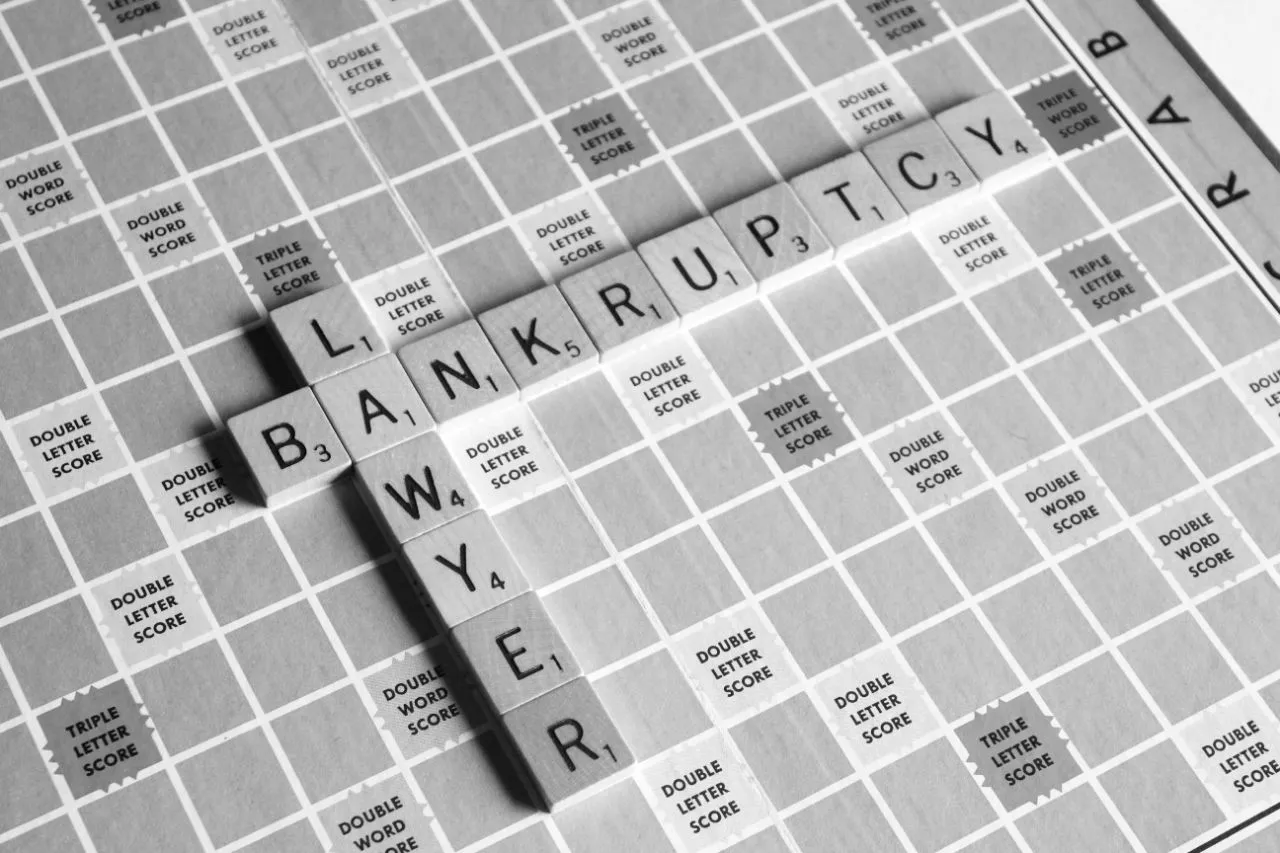
Singapore’s Terraform Labs, the company founded by incarcerated crypto entrepreneur Do Kwon, has filed for Chapter 11 bankruptcy protection as a mechanism to shield itself from potential severe penalties in the U.S. Securities and Exchange Commission's (SEC) securities fraud lawsuit.
https://asset.coinness.com/en/news/73e4b56764b30a6054091fae2112247c.webp
Photo by Melinda Gimpel on Unsplash

Pursuing an appeal

The bankruptcy filing, submitted on Tuesday in the U.S. Bankruptcy Court for the District of Delaware, aims to allow Terraform Labs to pursue an appeal against the SEC's allegations. In the filing, Terraform Labs CEO Chris Amani emphasized the critical nature of the bankruptcy protection for the company's ongoing operations, preservation of value for creditors, including the Terra community, and the pursuit of an appeal against the SEC enforcement action.


Amani expressed concerns that, without Chapter 11 protection, the company could face liquidation after the trial, forfeiting its right to appeal and leading to disastrous consequences for its business. Having acted as Terraform’s chief operating officer earlier in 2023, last July Amani was appointed as the firm’s CEO.


Protection afforded by Chapter 11

The estimated assets and liabilities of Terraform Labs fall between $100 million and $500 million, as disclosed in the firm’s bankruptcy filing earlier this month. Amani highlighted the potential financial strain resulting from a substantial money judgment, indicating that the company might not be able to satisfy such a judgment or post the necessary supersedeas bond for an appeal, a bond that must be provided by a petitioner who attempts to have a judgment set aside, without the protection afforded by Chapter 11.


The SEC charged Terraform Labs and former CEO Do Kwon with securities fraud in February 2023, accusing them of orchestrating a "multi-billion dollar crypto asset securities fraud." The Commission claimed the company raised billions from investors through unregistered transactions, offering an interconnected suite of crypto asset securities. Terraform Labs disputes the SEC's summary judgment decision, asserting that the cryptocurrency tokens in question are not securities under the Acts and that the SEC's jurisdiction is not applicable.


The potential consequences of liquidation extend beyond the company itself, impacting hundreds of thousands of Luna cryptocurrency holders, the same individuals the SEC purportedly seeks to protect. Luna operates on the Terra blockchain maintained by Terraform Labs.


Terraform Labs, known for the algorithmic stablecoin TerraUSD and its sister cryptocurrency Luna, filed for bankruptcy protection in the wake of the infamous collapse of both in May 2022.


The SEC's case stems from that $40 billion collapse of TerraUSD and a previous version of Luna, accusing Terraform Labs and Kwon of misleading investors about the stability of TerraUSD.


Kwon was arrested in March of last year in Montenegro for using false documents. He is currently detained in Montenegro, following his attempt to travel to Dubai with a fake Costa Rican passport. The Terraform founder is currently awaiting extradition to either the United States or South Korea. Both Do Kwon and Terraform Labs deny committing fraud, with the SEC trial scheduled to commence in New York in late March.



More to Read
View All
Policy & Regulation·

Feb 27, 2024

Thai SEC seeks to revoke license of troubled Zipmex exchange

Zipmex, the Asian digital asset exchange, faces another setback as the Securities and Exchange Commission Board of Thailand (SEC Board) moves to recommend the revocation of its digital asset business license. This decision, announced last week, marks the latest in a series of challenges for the exchange, which has struggled to navigate the complexities of the crypto market's downturn.Photo by Oleksandr P on PexelsCapital requirements failureThe SEC's recommendation stems from Zipmex's failure to meet the increased net capital requirement and address deficiencies in its personnel and management structure. These shortcomings were deemed unacceptable by the regulatory body, prompting a 15-day ultimatum issued on Feb. 1. Earlier this month, the Commission ordered a halt to Zipmex operations, enforcing a temporary suspension until such time as the company had improved its financial position and applied needed changes to its management structure.Despite this window for compliance, Zipmex fell short of meeting the specified conditions, leading to the current proposal for license revocation and the imposition of stringent regulatory measures on Thailand's digital asset exchanges. Business suspension extensionDuring a meeting on Feb. 21, the SEC further resolved to extend Zipmex's business suspension, initiated on Feb. 1, and allowed clients to request asset returns on the exchange until March 11. Any unclaimed assets after this date will be required to be placed in a "trusted and secured system," with Zipmex obligated to report this to the SEC. Notably, even after the potential revocation of its license, Zipmex will retain its status as a limited company, subject to associated rights, responsibilities and liabilities, including the possibility of legal action. Zipmex's woes trace back to 2022 when it faced significant challenges due to exposure to failed crypto lender Babel Finance. In July of that year, the exchange suspended withdrawals for weeks due to concerns over its ties to crypto lenders Babel and Celsius, both facing financial distress. Although access to Trade Wallets was restored after three days, Z Wallets remained inaccessible into the following year. Failed Coinbase and V Ventures dealsIn the midst of its troubles, Zipmex attracted interest from Coinbase, albeit without success. While Coinbase made a strategic investment in Zipmex, the acquisition attempt did not materialize as initially intended. Furthermore, Zipmex's financial struggles led it to file for debt relief in Singapore in July 2022, further complicating its position in the market. The exchange's regulatory challenges continued as it faced scrutiny from the SEC regarding compliance with the Digital Assets Act. Despite attempts to secure acquisition deals, such as the proposed acquisition by Thai investor V Ventures, Zipmex has been unable to alleviate regulatory concerns or stabilize its operations effectively. Since obtaining its license from the SEC in January 2020, Zipmex has operated in Thailand, Indonesia, Singapore and Australia. However, its inability to address regulatory requirements and financial challenges has cast doubt on its future viability in these markets.  In November of last year, the company itself announced a temporary cessation of trading in Thailand while it worked towards becoming compliant within that jurisdiction. Earlier this month, Thailand’s SEC took legal action against Akarlap Yimwilai, the former CEO of Zipmex Thailand.

news
Policy & Regulation·

Dec 22, 2023

Moomoo adds more cowbell with MAS license approval

Moomoo adds more cowbell with MAS license approvalMoomoo Financial Singapore has received in-principle approval for a major payment institution license from local regulator and central bank the Monetary Authority of Singapore.Photo by Zhu Hongzhi on UnsplashFirst stepThe milestone marks the firm’s first step on its journey towards full regulatory approval in the city-state. According to a report by The Straits Times, the company announced its licensing achievement on Wednesday, which makes it the first digital broker of its kind in Singapore to attain this initial licensing accreditation.With in-principle approval under its belt, Moomoo will work towards extending its crypto services to both retail and institutional investors within the country. The firm had been working towards licensing approval since May 2021 when it submitted its initial licensing application to the regulator.Currently, over a dozen firms covering various crypto-related trading activities, have obtained full licenses for digital payment token services in Singapore. In Moomoo’s case, the business markets itself as an all-in-one trading platform which includes a financial information app. Trading on the app is offered on a commission-free basis.Part of Moomoo’s strategy involves the promotion of financial inclusion, unlocking it through the use of innovative technologies. It’s with that intention that it is leaning heavily upon the use of artificial intelligence and big data, while incorporating a crypto trading product offering. Moomoo Singapore CEO Gavin Chia spoke to that approach recently, stating:“We will continue leveraging technology to deliver a unique investing experience, empowering investors to build their knowledge and refine their portfolios for a financially secure tomorrow, starting today.”Tencent backingIn light of this latest licensing success, Chia acknowledged the rising interest in digital payment token trading on their platform. Moomoo Singapore, a subsidiary of Nasdaq-listed Futu Holdings, was established in March 2021. Futu Holdings, in turn, is backed by Chinese tech giant Tencent, and it has positioned Moomoo Financial Singapore to play a significant role in the evolving cryptocurrency landscape within the region.Alongside Moomoo, Futu promotes its Futubull trading platform through its Chinese hub in Hong Kong. Last month, it emerged that subsidiary company PantherTrade, a Hong Kong-based entity, is in the process of preparing a license application in the Chinese autonomous territory.Singapore’s crypto potentialMoomoo Financial Singapore’s acquisition of in-principle approval is in anticipation of Singapore becoming a major cryptocurrency hub in Asia. This growth is attributed to the MAS’s efforts in establishing Singapore as a digital asset hub. Singapore’s crypto-friendly environment is demonstrated by a significant surge in cryptocurrency and blockchain investments, reaching $1.2 billion in 2022 compared to $109.75 million in 2020, according to Statista.In a survey conducted by Swiss crypto bank Sygnum involving more than 150 global institutional investors, those in Singapore showcased a tendency to view cryptocurrencies as a long-term investment. Additionally, Moomoo Financial Singapore highlighted a report by PwC Singapore and the Singapore Fintech Association, suggesting that the payments industry seems to be the most developed area within Singapore’s fintech landscape.As Singapore continues to embrace cryptocurrencies and blockchain, Moomoo Financial Singapore’s pending license adds to the expanding ecosystem, signaling a growing recognition of the importance of digital assets in the financial sector.

news
Policy & Regulation·

Jun 20, 2023

Korean Travel Rule Solution Provider CODE to Start Charging Monthly Fees Next Month

Korean Travel Rule Solution Provider CODE to Start Charging Monthly Fees Next MonthSouth Korean Travel Rule solution provider CODE, established in collaboration between local cryptocurrency exchanges Bithumb, Coinone, and Korbit, has announced the implementation of service fees starting next month. Up until this point, CODE has been offering its services free of charge. The notification regarding this change was issued to CODE’s clientele, which includes various crypto exchanges, as reported by local tech news outlet Digital Daily.Photo by Kenny Eliason on UnsplashTravel RuleThe Travel Rule regulations, set by the Financial Action Task Force (FATF) and Korean legislation, require Korean trading platforms to maintain records of both the sender and recipient’s information for virtual asset transactions exceeding 1 million KRW ($780). The FATF, founded in 1989 and headquartered in Paris, is an international financial watchdog dedicated to combating global money laundering and terrorist financing.More competitive priceCODE is anticipated to offer its services at a more competitive price of 1 million KRW ($780), in contrast to its rival VerifyVASP (VV), which introduced a monthly fee of $1,800 earlier this year. VV is a product developed by Lambda 256, a subsidiary of Dunamu, the parent company of Upbit, the largest cryptocurrency exchange in Korea.CODE launched its services in March last year. Among its crypto exchange members are Gopax, Cashierest, and Coredax. In December, the Travel Rule solution provider appointed Lee Sung-mi, the former compliance officer of Bithumb, as its new CEO, and since then, it has accelerated its monetization plan. Prior to Lee’s appointment, Coinone CEO Cha Myung-hun had been at the helm of CODE.

news
Loading