Top

DBS Bank integrates DDEx into new global financial markets unit

Web3 & Enterprise·February 08, 2024, 7:27 AM

DBS Bank, a key player in Singapore's banking sector, has unveiled a substantial reorganization of its operational framework, which includes its digital asset exchange business, DDEx.


Global Financial Markets (GFM)

Effective March 1 DBS will consolidate its equity capital markets, brokerage arm DBS Vickers and the DBS Digital Exchange (DDEx) into its Treasury Markets division. In doing so, it will form a unified entity known as Global Financial Markets (GFM). This amalgamation underscores DBS's intention to merge conventional financial services with the burgeoning digital assets landscape, contributing towards a new era of financial integration and innovation.


DDEx, a members-only exchange facilitating exposure to digital assets for accredited investors, financial institutions and family offices, will now operate under the umbrella of GFM. This strategic integration aims to leverage the synergies between traditional and digital financial spheres, positioning DBS at the forefront of transformative financial solutions.

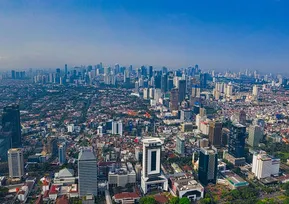
https://asset.coinness.com/en/news/e0e4db3cc55b42e01b52d078a8edb008.webp
Photo by Meriç Dağlı on Unsplash

DDEx founder retires

The announcement of this restructuring coincides with the retirement of Eng-Kwok Seat Moey, a revered figure within DBS, whose 36-year tenure has left an indelible mark on the bank's trajectory. Eng-Kwok's contributions to DBS's equity capital markets and the development of Singapore's REITs industry are widely recognized, as is her pivotal role in spearheading the DBS Digital Asset Ecosystem (DAE) and the founding of DDEx.


Under her stewardship, DBS has consistently ranked atop regional league tables, driving innovation and excellence in Singapore's financial landscape. Eng-Kwok's legacy extends to her instrumental role in establishing the DBS Digital Asset Ecosystem (DAE), a pioneering initiative offering a spectrum of digital asset services, including origination, distribution, custody and trading.


Andrew Ng, the current head of Treasury Markets, assumes leadership of the newly formed GFM group. His expertise will be instrumental in navigating the complexities of global finance, blending traditional market mechanisms with the innovative potential of digital assets. Clifford Lee, renowned for his proficiency in fixed income, will expand his purview to encompass investment banking, overseeing both debt and equity capital markets alongside his responsibilities at DBS Vickers.


Capitalizing on complementary strengths

The consolidation of DBS's financial arms not only aims to streamline operations but also seeks to capitalize on the complementary strengths of traditional and digital financial domains. Piyush Gupta, CEO of DBS, expressed confidence in the merger's ability to unlock greater synergies, enabling the bank to deliver a comprehensive suite of financial solutions to its clientele.


DDEx has been at the forefront of digital asset trading in Asia, witnessing significant growth in bitcoin and ether transactions in recent years. Notably, DDEx has explored avenues such as security token offerings (STOs) and it has ventured into the metaverse realm with investments in projects like The Sandbox. Additionally, DBS's Chinese subsidiary launched a digital yuan merchant solution, facilitating payments in the new currency for mainland enterprises.


As DBS embarks on this latest transformation, the integration of digital assets into its core financial operations underscores its interest in innovation within a rapidly evolving financial landscape.

More to Read
View All
Policy & Regulation·

Jun 09, 2025

Pakistan’s crypto minister pursues talks & partnerships in the U.S.

Pakistan’s newly appointed Minister of State for Crypto and Blockchain, Bilal bin Saqib, has been spending time in the United States recently with a view towards collaborating with the Trump administration and Wall Street on matters related to digital assets and digital asset regulation. Pakistani TV channel 24 News HD reported on June 4 that bin Saqib met with Bo Hines during a visit to the White House in Washington, D.C. Hines was appointed by U.S. President Donald Trump earlier this year as the executive director of the President’s Council of Advisors on Digital Assets. Ways to broaden cooperation between Pakistan and the U.S. with regard to the digital assets sector were a primary topic covered during their meeting. Consideration was given to the potential for future partnerships between the two nations, with a particular emphasis on strategic alignment on digital asset policy.Photo by Kanchanara on UnsplashStrategic Bitcoin ReserveBitcoin was also a topic of conversation during the meeting. Last week, bin Saqib, who also heads up the South Asian nation’s newly formed Pakistan Crypto Council (PCC), appeared at the Bitcoin 2025 conference in Las Vegas to announce that “the Pakistani government is setting up their own government-led Bitcoin Strategic Reserve.” In his keynote address, he stated that Pakistan would hold Bitcoin in a national wallet and would “never ever sell them.” Following his meeting with Hines, bin Saqib took to X, stating:”We’re building strong bridges with the U.S. on Bitcoin reserves, stablecoins, and digital asset frameworks.” Responding to bin Saqib’s X post, Faizan Siddiqi, a Pakistani expat and COO of Canadian advertising services firm, MonetizeMore, underscored the importance of the meeting for an emerging generation in Pakistan inspired “to believe in a brighter, decentralized future.” In addition to meeting with Hines, bin Saqib also met with officials from the White House Counsel’s office, engaging with them on blockchain governance and legal framework matters. New York meetingsFollowing his meeting in Washington, D.C., bin Saqib moved on to New York. A video clip posted by the PCC to the X social media platform on June 6 showed bin Saqib meeting with New York City Mayor Eric Adams. The Pakistani minister thanked Adams for all he is doing for the crypto ecosystem, while inviting him to visit Pakistan and to consider a partnership between New York and the PCC. While in New York, bin Saqib also met with Brandon Lutnick, chairman of global financial services firm Cantor Fitzgerald and son of former Cantor Fitzgerald Chairman Howard Lutnick, who was appointed by U.S. President Donald Trump to the position of secretary of commerce back in February.  While Cantor Fitzgerald is a well-established traditional finance (TradFi) firm founded in 1945, the company has embraced digital assets more recently. Cantor has taken on leading stablecoin issuer Tether as a client, having also invested in the company. Last month, the firm launched its first Bitcoin fund. It’s understood that bin Saqib discussed tokenization, Bitcoin mining, the future of Web3 in Pakistan and potential for collaboration with Lutnick. Last month, Pakistan allocated 2,000 MW of surplus electricity to Bitcoin mining and AI data centers.

news
Web3 & Enterprise·

Sep 29, 2023

Nomura Subsidiary Achieves In-Principle Approval in Abu Dhabi

Nomura Subsidiary Achieves In-Principle Approval in Abu DhabiThe digital assets subsidiary of Japanese financial services conglomerate Nomura has been granted in-principle approval by the Abu Dhabi Global Market (ADGM) to offer broker-dealer and asset/fund management services for both digital and traditional assets.Photo by Belinda Fewings on UnsplashPreliminary license to tradeThe development is a shot in the arm for Laser Digital Asset Management while serving to highlight Abu Dhabi’s growing prominence as a global center for digital assets, attracting prominent players such as Binance and Kraken.Led by CEO Jez Mohideen, Laser Digital is now on the path toward securing full financial services authorization in Abu Dhabi, subject to meeting undisclosed conditions specified in the approval. The company is enthusiastic about the ADGM’s transparent and comprehensive regulatory framework.Speaking to that, Mohideen stated: “We are thrilled to be part of their comprehensive and clear regulatory framework, which is creating a global hub for digital assets.”International free zoneThe ADGM, an international financial free zone situated in Abu Dhabi, covers nearly 15 square kilometers across two islands. It hosts a registration authority, regulatory authority, and a court system functioning under common law principles. This favorable regulatory ecosystem has been instrumental in attracting digital asset firms to establish a presence in the UAE’s capital.Laser Digital’s approval follows a series of recent cryptocurrency-related approvals in Abu Dhabi. Zodia Markets, backed by UK bank Standard Chartered, was recently granted permission to operate as a crypto broker, adding to the growing list of companies making strides in the region.Binance, one of the world’s largest cryptocurrency exchanges, received in-principle approval from the ADGM in April 2022 and subsequently obtained full financial services permission in November of the same year. Kraken, along with firms like UAE-based M2 and Bahrain-based Rain, have also received permissions to operate within the ADGM in recent years.Building on Dubai achievementLaser Digital’s approval in Abu Dhabi comes on the heels of its earlier achievement of obtaining an operating license from Dubai’s Virtual Asset Regulatory Authority (VARA). Alongside these regulatory milestones, Laser Digital introduced an institutional Bitcoin Adoption Fund in August. Despite its relatively short existence since its establishment in September 2022, the firm has made significant strides.Nomura’s engagement extends beyond Laser Digital, as it is also part of the Komainu joint venture alongside cryptocurrency firms CoinShares and Ledger. Komainu secured its operating license from Dubai’s VARA in August, contributing to the expanding community of crypto-focused businesses in the region.It is worth noting the UAE’s diversified approach to cryptocurrency regulation, offering five distinct regulatory regimes for cryptocurrencies, including the ADGM and VARA. Legal experts from White & Case have recently assessed these regulatory frameworks, highlighting the UAE’s commitment to fostering a progressive and well-regulated environment for digital assets.Nomura’s Laser Digital is well-positioned to play a pivotal role in the digital asset sector in Abu Dhabi, given that it’s leveraging the favorable regulatory environment of the ADGM and the UAE’s dedication to becoming a global digital asset hub.

news
Policy & Regulation·

Apr 10, 2023

The Philippines Forging Crypto Reg. Path US Could Learn From

The Philippines Forging Crypto Reg. Path US Could Learn FromThe Philippines has demonstrated best practice in operating a sensible regulatory framework relative to cryptocurrency while the United States has erred by engaging in regulation via enforcement while responding after the horse has bolted in relation to a string of crypto company collapses. That’s according to Robert De Guzman, Head of Legal Compliance at Philippines-based cryptocurrency exchange Coins.ph.©Unsplash/C BuezaIn an opinion piece published in Forkcast News on Tuesday, De Guzman lays out his view as to what’s required in terms of regulation, while drawing comparisons between the application of regulation relative to crypto in both jurisdictions.The need for “sensible” regulationDe Guzman believes that the crypto industry’s recent failures are a wake-up call for the whole sector. Losses of billions of dollars affected Celsius Network, BlockFi, Voyager Digital, Genesis, and FTX, and led to Silvergate, Silicon Valley Bank (SVB), and Signature banks’ collapse in a week. To maintain consumers’ trust, he believes that sensible regulation is necessary for the crypto exchanges dealing with digital assets.The legal compliance expert cites the FTX collapse. FTX’s Sam Bankman-Fried’s empire was among the largest collapses. FTX pretended to support regulation, but its true nature was an offshore exchange for global clients. Nonetheless, some businesses act on their regulation support by acquiring licenses and complying with central bank audits in the countries of operation.State-level and industry-level regulationThe crypto industry being open to self regulation is one element of the solution, he says. Regulators must proactively protect their consumers from scams and business failures, not just clean up the mess after millions of people have been harmed.Regulatory failuresDe Guzman points the finger at reactionary regulatory action. Regulators filed charges against crypto industry founders after their collapse. Previously, they missed the problems of the largest companies. FTX, based in the Bahamas, was mismanaged, and American regulators only responded after customer issues. Regulations by enforcement, preferred in several countries, wait for failure to happen before taking action. Over-regulation through enforcement pushes platforms offshore, where Wild West-type environments thrive, with clear consequences.Regulators in some countries focus on surface-level questions, like which tokens should be considered securities, while others, like in the Philippines, prioritize execution-level details to protect consumers. Anti-money laundering measures and custody are core issues, with the G-7’s Financial Action Task Force’s Travel Rule likely to be more strictly applied. Active regulation and audits are needed to ensure financial platforms act responsibly with customer deposits. Basic rules need to be put in place through a licensing regime, followed by regulation of market practices like commingling of assets, self-dealing, and trading against customers.The Philippines sensible approach to regulationThe Coins.ph legal guru holds out his home country as exemplary in terms of its approach to regulation. The Philippines’ regulatory regime requires a virtual asset service provider (VASP) license to operate a crypto exchange, as well as additional licenses for other services. The country’s central bank, BSP, directly regulates all crypto exchanges and expands its crypto regulations to adapt to market needs. KYC processes in the Philippines require recognition of valid ID documents from across 82 provinces.Additionally, the BSP expects the industry to cooperate in quarterly audits where they share balance sheet information and disclose digital assets in hot and cold wallets. Regulators in the Philippines are proactive and knowledgeable about the crypto space, which sets a sensible framework based on customer protection.

news
Loading