Top

Com2uS to sell Flashman NFTs on X-PLANET to raise funds for subway ad 

Web3 & Enterprise·February 19, 2024, 8:43 AM

Com2uS Platform, a blockchain subsidiary of South Korean game company Com2uS Holdings, announced today that it will sell NFTs to fund subway advertisements celebrating the upcoming fan meeting of Choushinsei Flashman, a Japanese live-action superhero series produced by Toei Animation. This year marks the 35th anniversary of the show’s introduction to Korea. 
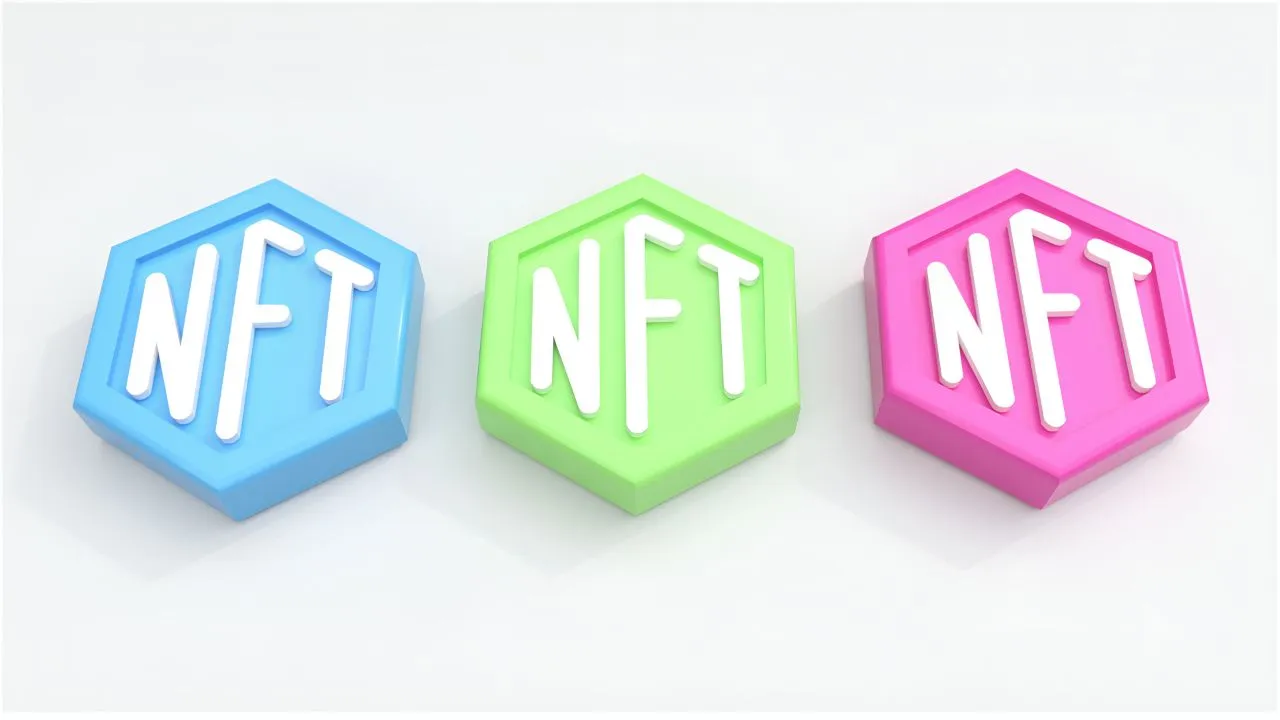
https://asset.coinness.com/en/news/97b0ed5801b7229f592fc3be546beb32.webp
Photo by Choong Deng Xiang on Unsplash

Special event for South Korean fans

This “Cosmo Sword NFTs” campaign has been launched by Com2uS Platform, backed by local fans’ voluntary participation and their enthusiasm towards the series. It has a special meaning for the fandom as it is the first time that the stars of Choushinsei Flashman are visiting Korea. The entire proceeds will be used to put advertisements on subway stations. This promotion is expected to attract a lot of fans as they can take selfies against the advertisement display or put paper notes containing messages for Flashman actors on the board. 


Fan meeting to take place in April 

The Flashman fan meeting is planned to be held on April 20 at Sky Art Hall located in Gangseo-gu, Seoul. The event will feature seven actors and actresses from Flashman, including Tarumi Tota who starred as “Red Flash,” a main protagonist, and Hagiwara Sayoko who performed as the villain “Ray Nefel.” Participants will be able to enjoy on-site giveaway events and collective exhibitions. 


Blockchain-enabled event tickets 

Fan-meeting NFT tickets can be exclusively purchased from X-PLANET, an NFT marketplace. VIP seats have already been sold out. The NFT tickets utilize blockchain technology which allows only ticket buyers to enjoy the show. They are resistant to forgery or counterfeiting since every process from purchasing to admission is recorded onchain, keeping scalpers at bay. 


Run by Com2uS Platform, X-PLANET strives to showcase various artworks in the realms of games and K-pop to NFT enthusiasts in the global Web3 market. The platform is committed to producing high-quality NFT content in collaboration with skillful artists and various organizations.


More to Read
View All
Policy & Regulation·

Jun 22, 2025

Iran curtails crypto exchange hours following $90M hack

While the crypto markets have not been immune to geopolitical developments, the sector in Iran experienced a more direct effect last week with a politically motivated $90 million exchange hack, prompting the authorities to introduce an exchange curfew. Blockchain analytics firm Chainalysis outlined on X on June 18 that Nobitex, Iran’s largest cryptocurrency exchange, had been hacked, with crypto assets to the value of $90 million having been drained from exchange-controlled wallets.Photo by Engin Akyurt on PexelsWeaponizing blockchain technologyThe hack had the hallmark of a politically-motivated attack given that rather than the digital assets being stolen, they were sent to vanity addresses, customized blockchain addresses involving user-defined sequences of characters. The vanity addresses contained “politically charged messages” and in sending the funds to them, the funds were effectively burned as they’re now permanently inaccessible.  The firm stated:”This incident highlights how crypto exploits aren’t always financially motivated. Bad actors can weaponize blockchain technology for geopolitical messaging, turning hacks into ideological statements rather than profit-driven crimes.” Pro-Israel hacker group Gonjeshke Darande, also known as “Predatory Sparrow,” appears to have carried out the hack, given that on June 18, it outlined on X that it would release Nobitex’s source code together with other internal information related to the firm’s internal network, while confirming that it had conducted cyberattacks against the company. The group made the following assertion:”The Nobitex exchange is at the heart of the [Iranian] regime’s efforts to finance terror worldwide, as well as being the regime’s favorite sanctions violation tool.” Rafe Pilling, director of threat intelligence at Sophos, a British cybersecurity company, told The Guardian that Predatory Sparrow “bears all the hallmarks of a false persona used by a government-sponsored threat group to conduct disruptive operations against targets” linked to the Iranian government. While Nobitex is estimated to have seven million users, an Open Source Intelligence (OSINT)-based investigation carried out in 2024 linked relatives of Ali Khamenei, Iran’s supreme leader, and other Iranian establishment figures to the crypto exchange. Minimizing systemic riskThe cyber attack has prompted a response from the Iranian government. In a blog post, Chainalysis outlined that the Central Bank of Iran has instructed all domestic crypto exchange platforms to curtail their service hours to between 10 a.m. and 8 p.m. The company speculated that this measure could be motivated by a desire to impose a higher level of oversight and control over the local crypto sector. However, it also suggested that it may be part of an attempt by the Iranian authorities to manage and minimize systemic risk. In recent years, Iran has been subject to extensive international sanctions applied by various entities including the United States, the European Union and the United Nations. Those sanctions have had a significant impact upon the country’s economy, triggering high inflation and currency devaluation.  With that, crypto has been increasingly viewed by the authorities as a means to circumvent sanctions. Last December, the Iranian authorities appeared to be working towards regulating crypto, embracing the asset class in acknowledgement of its growing importance to the Iranian economy. In February, Chainalysis reported that sanctioned entities worldwide had received $15.8 billion in crypto transactions in 2024.

news
Web3 & Enterprise·

Aug 22, 2023

Dunamu Pushes for Biodiversity Conservation Through NFT Project

Dunamu Pushes for Biodiversity Conservation Through NFT ProjectDunamu, the fintech company operating South Korea’s leading crypto exchange Upbit, said Monday that it signed a memorandum of understanding (MOU) with the Korea Arboreta and Gardens Institute (KoAGI) and the Korea Green Foundation (KFG) to drive a non-fungible token (NFT) biodiversity project over the course of three years. This comes as part of efforts to ramp up biodiversity conservation efforts.Photo by Eelco Böhtlingk on UnsplashThe MOU was signed at Dunamu’s headquarters in Gangnam, southern Seoul, with Dunamu CEO Lee Sirgoo, Director Ryu Kwang-soo of the KoAGI, and Lee Mi-kyung, Head of the KFG, in attendance.“This partnership serves as a starting point for Dunamu to actively utilize our technology to conserve biological resources — especially trees — and collaborate with various communities,” said Lee Sirgoo, CEO of Dunamu.Conservation meets NFTsThe project will involve creating NFTs from images of plant seeds stored in the Seed Vault — a conservation facility managed by KoAGI — which will then be issued through Upbit NFT, the exchange’s NFT trading platform. Owners of these NFTs will have the opportunity to engage in various events such as quizzes, Dunamu said, thereby promoting biodiversity conservation and fostering awareness about the importance of forests.Additionally, certain plant species that have been issued as NFTs will be selected to be placed in plant conservation facilities built in collaboration with botanical gardens located near the plants’ natural habitats.“Given the irreplaceability of both NFTs and flora and fauna, we will continue to do our utmost to fulfill our environmental responsibilities,” CEO Lee emphasized.The involved parties are also looking to establish an online community where they could directly gather the NFT owners’ opinions through methods such as polling to help plan for more upcoming projects. This integration of online projects with offline conservation activities is expected to contribute to local development and biodiversity.Boosting ESG effortsAs a key part of its ESG strategy, Dunamu has been focusing on trees while leading efforts for environmental protection and forest restoration. Earlier this year, the company teamed up with KoAGI to issue NFTs and contributed its entire sum of sales proceeds and transaction fees of around KRW 20 million (approximately $14,800) to establish an endangered plant protection fund.The company also held a campaign back in March with the Korea Forest Service and the Korea Forest Welfare Institute called “2nd foRest,” dedicated to restoring forests affected by fires. For every virtual tree planted in Dunamu’s metaverse, 2ndblock, two real trees were planted.The following month, Dunamu donated KRW 500 million in aid for the recovery of areas hit by the large-scale forest fires in Gangneung, Gangwon Province. The company also established virtual reality healing gardens at the Geumcheon Fire Station and Seoul Rehabilitation Hospital.

news
Policy & Regulation·

Mar 16, 2024

Indian railways to explore NFT ticketing during Holi festival

As part of the celebration of Holi, the Hindu festival of colors, the Indian Railway Catering and Tourism Corporation (IRCTC) is unveiling a series of colorful NFT tickets for the Lucknow to Delhi train service. Governed by the Ministry of Railways, IRCTC is a central public sector enterprise in India. Taking to the X social media platform on March 13, the railway company offered a sneak peek into these NFTs, showcasing sketches of iconic landmarks from both Delhi and Lucknow against vividly shaded backgrounds.Photo by Johannes Plenio on UnsplashLimited-time ticketing offeringCommencing March 20, passengers booking tickets for Tejas trains numbered 82501 and 82502 will have the opportunity to access these exclusive NFTs, with the initiative set to conclude on April 2. In its social media post, the IRCTC outlined the additional perks accompanying these NFT tickets, stating:"These tickets are not merely digital souvenirs. ... They symbolize our dedication to enriching your journey experiences, allowing you to personalize your travel memories with your own photographs and enjoy exclusive offers from handpicked brands." As of now, the IRCTC has not officially confirmed whether these NFT tickets will be complimentary with ticket purchases or if passengers will need to make additional payments to acquire these digital collectibles. Polygon and HyperledgerNFTs, or non-fungible tokens, are digital assets built on blockchain networks. Earlier this year, the IRCTC collaborated with NFTtrace, a service offered by Bangalore-based blockchain development firm ChainCode Consulting, to offer NFT tickets for journeys to the Hindu sacred city of Ayodhya. The tickets were presented as more than mere travel documents but as cherished mementos of divine experiences. The NFTtrace website stated:"More than just a ticket to Ayodhya Dham - a souvenir of the divine Shree Ramotsav. Treasure the pious memories of Lord Shree Rama's arrival forever, with Blockchain NFT.”On that occasion, the NFT certificates were minted on the Polygon blockchain. Indian Railways has been exploring blockchain technology for some time now. Last March, the National Academy of Indian Railways partnered with Polygon to conduct a workshop aimed at raising awareness about the benefits of blockchain in railway industries. Polygon outlined that the integration of blockchain within the Indian railway system was the beginning of a new era that moves the technology towards mass adoption.In this latest instance, the NFTtrace platform is involved once again. However, this time around, the NFTs will be minted on the Hyperledger blockchain. Ava Labs, the developer of the Avalanche layer one blockchain, has expressed its interest in developing ticketing-related blockchain applications in India. Last October the firm highlighted blockchain-based ticketing as one of a number of areas it wanted to concentrate on in an expansion within India. Conventional firms in the travel industry have been experimenting with the technology on an ongoing basis in recent times. In 2023 Japan’s largest airline All Nipon Airways (ANA) launched its own NFT marketplace. Argentinian budget airline Flybondi took the decision to offer NFT-based tickets in 2023 in a partnership with NFT ticketing firm TravelX.

news
Loading