Top

Bitcoin rally significantly benefits online-only Kbank in Korea

Markets·March 04, 2024, 7:11 AM

Following the recent bitcoin boom, transactions in cryptocurrencies among Korean investors have surged, significantly benefiting local banks that have made contracts with Korean crypto exchanges to offer real-name accounts for crypto investors. As the price of bitcoin soared to as high as KRW 90 million ($67.6 million) in Korea on Thursday, online-only bank Kbank saw an uptick in trading fee revenue, according to local media outlet The Seoul Economic Daily. Kbank is a partner with crypto exchange Upbit, which accounts for 70% of the Korean crypto market. 


Under the current law, Korean crypto exchanges offering trading against Korean won must secure real-name accounts from a bank. These banks typically earn fees of KRW 300 to KRW 1,000 per transaction. Currently, other than Kbank, NongHyup Bank offers real-name accounts to Bithumb, Kakaobank to Coinone, Shinhan Bank to Korbit and Jeonbuk Bank to Gopax.
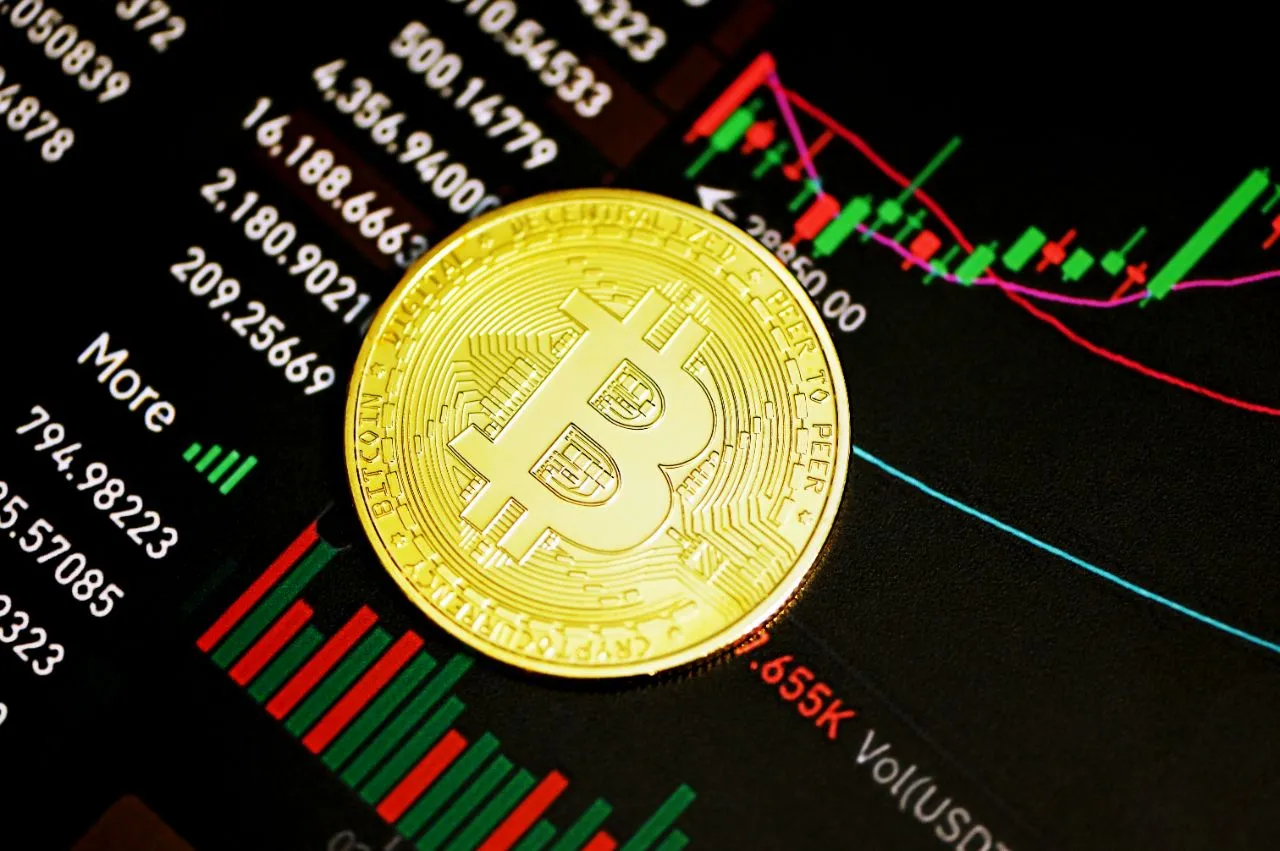
https://asset.coinness.com/en/news/7315c44d342b0a44a3f5b5528d734719.webp
Photo by Kanchanara on Unsplash

Crypto trading volume up 68.2% in a month

According to Xangle, a crypto data intelligence platform, the total crypto trading volume in Korea rose by 68.2% between the last week of January and the last week of February, rising from KRW 2.39 trillion to KRW 40.2 trillion. During the same period, the daily average trading volume also grew from around KRW 4 trillion to KRW 5.7 trillion.  


In particular, the bitcoin trading volume on Upbit surged to 19,254 BTC on Feb. 28, reaching the second-highest level since Nov. 10, 2022, when the asset’s trading volume stood at 20,710 BTC. After signing the real-name account contract with Upbit in 2020, Kbank raked in KRW 29.2 billion in fees during the last bull market of 2021, which was equivalent to 14% of its annual interest income of KRW 198 billion and exceeded its net income for the year, which stood at KRW 22.5 billion.


Increased bank deposits from exchange users

Kbank also saw a substantial rise in its balance sheet, with Upbit users depositing around KRW 2.94 trillion into their real-name accounts. The sum is six times greater than the deposits made into NongHyup Bank by Bithumb users, which stood at KRW 547.1 billion. 


Experts see that the surge in Kbank’s user base, which recently surpassed 10 million users, is largely attributed to growing excitement surrounding bitcoin. One crypto insider said that crypto trading fees, which have been on the decline for the past 2 years, could take a turn this year, signaling further gains for the affiliated banks. 

 

More to Read
View All
Web3 & Enterprise·

Aug 28, 2023

Kiwoom Securities and Koscom Partner to Pilot Security Token Platform Amid Regulatory Changes

Kiwoom Securities and Koscom Partner to Pilot Security Token Platform Amid Regulatory ChangesKiwoom Securities, a securities firm based in South Korea, has recently taken a step forward by announcing its collaboration through a memorandum of understanding (MOU) with fintech company Koscom. This partnership aims to carry out a pilot program for a security token platform.Photo by Shubham’s Web3 on UnsplashPreparing for regulatory shiftIn light of the expected enactment of a revised bill that will establish a legal framework for security tokens, the two companies have joined forces to work towards creating standardized practices for security tokens. Once this regulatory act comes into effect, fractional investment companies — the entities responsible for issuing security tokens — will have the opportunity to kick-start their operations promptly. This will be possible by utilizing the systems developed by securities firms, also known as account management institutions. The primary objective of this MOU is to define the essential industry standards that will facilitate this process.Combining strengthsWhile Kiwoom Securities benefits from a substantial retail customer base, Koscom brings technological expertise to the table thanks to its four-decade-long track record of constructing the data infrastructure for capital markets. Together, they will work to verify the seamless integration of distributed ledger technology into the operational system of the securities firm.Kiwoom Securities has been making strides in this direction through its partnerships with diverse companies, including music copyright trading platform Musicow and fine arts fractional investment platform Tessa. These collaborations have provided Kiwoom Securities with practical experience and technological insights relevant to security tokens.Hwang Hyun-soon, CEO of Kiwoom Securities, expressed Kiwoom’s commitment to collaborating to ensure that the security token platform developed by both companies evolves into a benchmark platform for the future security token market.Hong Woo-sun, CEO of Koscom, remarked that they expect the agreement to play a role in advancing their security token businesses and developing the Korean security token market.

news
Web3 & Enterprise·

May 10, 2023

SafePal Delves Into Korean Market Through Klaytn Partnership

SafePal Delves Into Korean Market Through Klaytn PartnershipThe Seychelles-based team behind non-custodial digital asset wallet provider, SafePal, has made its first attempt at conquering the Korean market through a partnership with South Korean enterprise blockchain, Klaytn.The collaboration will see the wallet provider support digital assets native to the Klaytn blockchain network. For Klaytn ecosystem users, it also means that they can access in excess of one hundred blockchains, which are already supported by SafePal’s non-custodial wallet. Both entities articulated their thoughts relative to the partnership, with SafePal doing so via a blog post published late last week. Meanwhile, the Klaytn project team expanded on the development in a post to its website on Tuesday.Photo by Mathew Schwartz on UnsplashKorean expansionKlaytn-native digital assets will be supported via SafePal’s mobile app, hardware wallet and its browser extension-based wallet. SafePal acknowledges the leading position that the Klaytn network takes in Korea, relative to the metaverse, blockchain gaming and other Web3 verticals. While SafePal already has 10 million users, this move demonstrates that it has plans on expanding that user-base to incorporate millions more, in this case Korea-based Klaytn network users.Alluding to that Korean expansion, Veronica Wong, Co-Founder and CEO of SafePal stated: “Klaytn is a leading blockchain in Korea for Web3 and DeFi, so this partnership made perfect sense, as we want users to access exciting opportunities in all established ecosystems globally.”Bringing Klaytn dApps to SafePal usersThe Klaytn project team is viewing the hook-up in the same manner. In its announcement it outlines that the collaboration can serve its purpose in “bringing in Klaytn’s next 10 million users with SafePal.” The partnership also serves to bring leading Klaytn dApps to that new user-base of 10 million. That includes on-chain instant swap protocol, Klayswap, blockchain play-to-earn game DeFi Kingdoms, Korean NFT marketplace Pala, leveraged yield farming project, Kleva Protocol and DEX aggregator Swapscanner.Conceived by the dominant messaging app provider in Korea, KAKAO, in 2018, the development of the Klaytn blockchain is now guided by the Klaytn Foundation. The project has set out a governance roadmap that will see the project achieve decentralization later this year.SafePal growth trajectorySafePal has been hitting its numbers when it comes to expanding its user base. Over the course of the past year, it has grown its user-base from 8 to 10 million. Its support for 100 blockchains results in overall support for in excess of 200,000 token types, including NFTs. That growth strategy belies further comments that Wong made relative to this latest collaboration:“While the self-custody offered by Web3 and DeFi is increasingly important amidst growing concerns about traditional financial systems, adoption is still hindered by language and geographical barriers. Klaytn is a leading blockchain in Korea for Web3 and DeFi, so this partnership made perfect sense, as we want users to access exciting opportunities in all established ecosystems globally.”With no let up in its growth strategy, SafePal followed up on Friday with an announcement that it had integrated the recently launched low latency, high throughput layer one SUI network and its native token, $SUI.

news
Policy & Regulation·

Sep 27, 2023

Upcoming Regulatory Framework in Taiwan Sees Crypto Exchanges Unite

Upcoming Regulatory Framework in Taiwan Sees Crypto Exchanges UniteIn preparation for the impending arrival of a regulatory framework for cryptocurrencies in Taiwan, nine prominent cryptocurrency firms have announced their collective efforts to establish an industry association.The nine exchange businesses announced the development via a press release which was published on Tuesday. The move comes in anticipation of Taiwan’s Financial Supervisory Commission (FSC) releasing comprehensive guidelines on cryptocurrency trading and payments by the end of September.Photo by Timo Volz on UnsplashDeveloping regulatory environmentThe industry body will include participation from native exchanges such as MaiCoin, BitoGroup, and ACE. While Taiwan has been behind the regulatory curve until now where crypto is concerned, the one measure that the FSC had already taken steps to mandate was that virtual asset services providers (VASPs) in Taiwan must adhere to the country’s anti-money laundering (AML) regulations. However, numerous other intricacies unique to the cryptocurrency industry still require careful consideration and regulation.Authorities in Taiwan have also put forward ten guiding principles for VASPs, designed to protect Taiwanese consumers.The forthcoming guidelines aim to address these concerns by introducing a comprehensive set of rules inspired by the VASP licensing framework in Hong Kong. One of the primary focuses of these proposed guidelines is consumer protection. They advocate for specific hot and cold wallet ratios for customer deposits with cryptocurrency exchanges, a measure designed to safeguard customer funds. Additionally, the guidelines suggest mandatory insurance against user losses to further enhance consumer confidence.Moreover, the FSC’s guidelines intend to prevent offshore cryptocurrency exchanges from operating onshore in Taiwan without proper compliance registration. This step aims to ensure that all participants in Taiwan’s cryptocurrency market adhere to uniform standards.In a bid to stabilize the Taiwanese financial system and prevent deceptive advertising practices, the guidelines also propose a ban on stablecoins linked to the Taiwanese dollar and impose restrictions on foreign exchange advertising within the country.Enabling self-regulationRegulators have also proposed the classification of crypto regulations within their own novel business category. As part of that initiative, officials expressed an interest in fostering self-regulation. The formation of this industry group could be deemed to be an encouraging sign relative to that aspiration.The nine cryptocurrency firms forming the industry association have established a working group led by Winston Hsiao, Co-Founder of XREX. This group aims to expedite the development of self-regulatory rules based on the forthcoming FSC guidelines.Wayne Huang, another Co-Founder of XREX, expressed his hope that the new FSC guidelines will provide the cryptocurrency industry with legitimacy, oversight, a clear growth trajectory, and an accelerated path to earn public trust.The formation of this industry association, coupled with the impending release of the FSC’s comprehensive regulatory guidelines, marks a significant milestone for Taiwan’s cryptocurrency sector. As the industry evolves, these proactive measures seek to ensure its stability, security, and compliance with international standards.

news
Loading