Top

AhnLab Blockchain Company distributes commemorative NFTs for “School of Rock” musical in Seoul

Web3 & Enterprise·January 29, 2024, 2:44 AM

South Korean cybersecurity firm AhnLab’s blockchain arm, AhnLab Blockchain Company, is working with Web3 performing arts platform Metacultures to offer free limited edition NFTs to all visitors of the "School of Rock" musical world tour’s show in Seoul, according to local news outlet Etoday on Monday (KST). The NFTs will be issued via AhnLab Blockchain Company’s digital Web3 wallet, ABC Wallet. As a non-custodial wallet, this service uses multi-party computation to support multiple blockchain networks including Ethereum, Polygon and Klaytn.

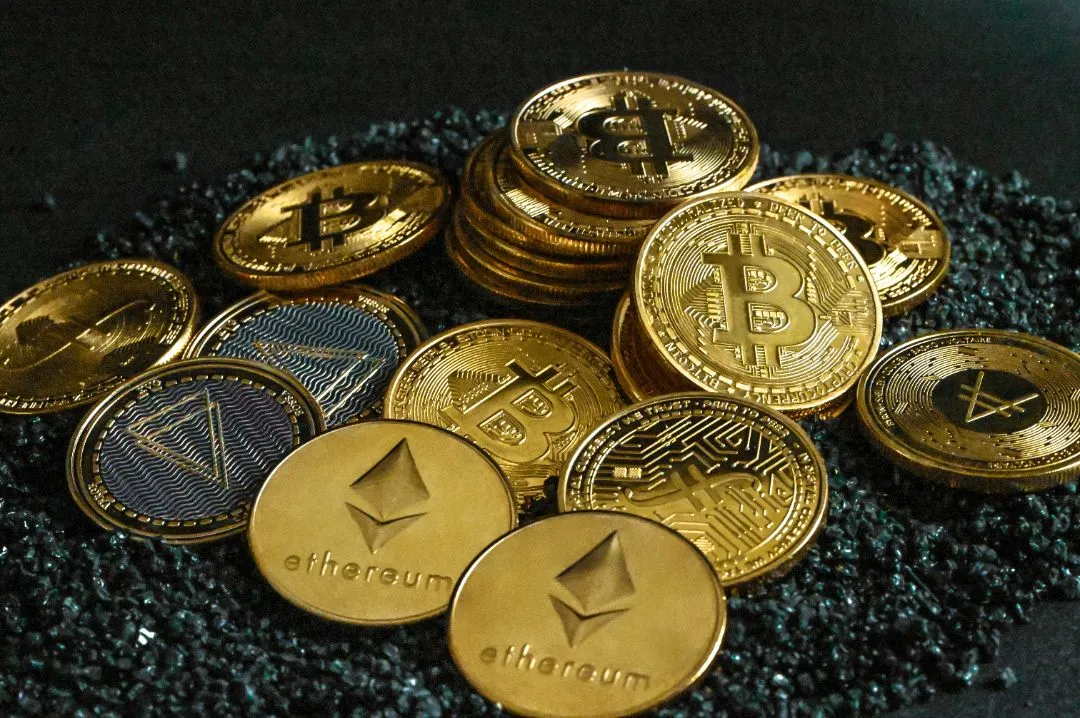
https://asset.coinness.com/en/news/c9f8a14875efb759b54ca90fca327111.webp
Photo by Gwen King on Unsplash

Preserving memories

"We aim to offer a way for Korean fans of the 'School of Rock' musical to preserve the special experience of the performance with this NFT," said Lim Joo-young, Business Leader at AhnLab Blockchain Company. "We will continue to carry out various projects based on blockchain technology at various events."


Visitors who wish to receive the NFTs can scan the QR code provided at the performance venue and register an ABC Wallet using their social media accounts on the linked site, after which the NFT will be automatically issued to their wallets.


"We are glad to be able to provide NFT products for the 'School of Rock' musical to the audience through ABC Wallet, which boasts excellent security. We look forward to various security-based collaborations with AhnLab Blockchain Company in the future," said Lee Sang-woon, CEO of Metacultures.


Show details

The ongoing performance will be held until March 24 at the Seoul Arts Center’s Opera House in Seocho-gu, Seoul.

More to Read
View All
Markets·

May 23, 2024

Japan’s largest bank collaborates with KlimaDAO on carbon credit marketplace

Japan’s largest bank, MUFG, has teamed up with KlimaDAO Japan, the provider of a digital reserve currency backed by carbon credits, to explore the use of the JPYC stablecoin for settling tokenized carbon credit transactions on the Progmat blockchain platform. Settlement on ProgmatProgmat provides the infrastructure to enable the issuance of various stablecoins. Last September, MUFG announced a collaboration with Binance geared towards stablecoin issuance. The JPYC stablecoin, operational since 2021, functions as a prepaid money instrument, similar to a prepaid card, due to its existence before Japan’s stablecoin legislation. Under new regulations, JPYC can either obtain a money transmitter license or issue a trust-style stablecoin with a bank like MUFG acting as the trustee for the stablecoin's reserves. Last year, JPYC formed a partnership with MUFG implicating the use of the Progmat platform.  This partnership, along with the involvement of Kansai Electric subsidiary Optage as the integration partner, sets the stage for the KlimaDAO stablecoin experiments. Optage will provide the corporate infrastructure required to manage the carbon credits added to the blockchain and provide a means for funds settlement to be achieved via bank transfer. Through the use of various local stablecoins for the purpose of settlement, it’s hoped that improved liquidity on a global basis may be achieved.Photo by Dan Meyers on UnsplashInitially recognized for making tokenized carbon credits accessible on public blockchains, KlimaDAO's functionality extends beyond this. The organization also offers the capability to retire credits. Last year, KlimaDAO expanded its reach by launching Carbonmark, an enterprise-focused marketplace.  This platform, which utilizes blockchain technology, namely Polygon, and smart contracts, offers a user-friendly experience by integrating traditional payment methods like bank transfers and SAP integration.  J-CreditsJapan operates a national scheme known as J-credits, and the Tokyo Stock Exchange has introduced a secondary market for these credits. J-credits are designed to certify the amount by which greenhouse gas emissions have been reduced through the use of carbon sinks in Japan. However, the volume of J-credit transactions remains low, reflecting the broader state of Japan's voluntary carbon market.  KlimaDAO aims to address this by launching the KlimaDAO Japan Market, simplifying the process for domestic companies to purchase and utilize carbon credits. This initiative will involve tokenizing J-credits, referred to as D-Carbons.  Andrew Bonneau, KlimaDAO co-founder, outlined on X that “@KlimaDAO is in a unique position to facilitate an efficient J-Credit market on chain, while serving as the base infrastructure for integrating these assets with 3rd party services.” While the initial phase will use traditional bank payments, the ultimate goal is to transition to using stablecoins, particularly the JPYC stablecoin. Norbert Gehrke, an observer of developments within the Japanese fintech scene, outlined on Medium that the Japanese carbon credit market is likely to reach three trillion yen ($19.15 billion) by 2030. Meanwhile, the global carbon credit market has a current value of 39 trillion yen ($249 billion). KlimaDAO Japan has mentioned the use of a permissionless blockchain for this initiative but has fallen short of confirming that the Polygon network will be relied upon. Japan has several homegrown blockchains, which might be considered for this project.  At the time of writing, the KLIMA token had risen 31% over the course of the previous 24 hours, with a unit price of $3.53 according to CoinGecko. 

news
Policy & Regulation·

Jan 13, 2025

Bybit suspends services in India amid regulatory blowback

It’s been a tough couple of months for global crypto exchange, Bybit. Having had to leave the Malaysian market due to regulatory issues, the firm is now being forced to shutter its service in India for similar reasons.Photo by Naveed Ahmed on UnsplashWithdrawing services on January 12The exchange announced its withdrawal from the Indian market via a statement published to its website on Jan. 10. The service for Indian residents has been ceased from 08:00 UTC on Sunday, Jan. 12.  Account opening and crypto trading has been disabled. Furthermore, the ability to place market orders through other exchange products offered by the company has also been disabled. The ability for customers to withdraw fiat currency and digital assets remains in place. Achieving full complianceWhile the company is leaving the market, it has stated that its services are temporarily suspended in India. It cited a need to “operate in full compliance” as the firm’s primary objective relative to the Indian market. Elaborating on this, it stated:”We have taken this measure while we continue to work closely with the regulator to finalize our registration as a Virtual Digital Asset Service Provider in India, which we expect to secure in the coming weeks.” Malaysian market issueThe situation mirrors a similar set of circumstances that Bybit finds itself in relative to the Malaysian market. On Dec. 27, the Malaysian Securities Commission published a statement outlining details of an enforcement action it had taken against Bybit and the firm’s CEO, Ben Zhou.  In that instance, Bybit was directed to disable its service offering within the Malaysian market. The company indicated that it would return to the market once it had secured the necessary licensing. India hasn’t proven to be the most crypto-friendly jurisdiction to date. Indian crypto influencer R.K. Gupta took to the X social media platform, claiming that the government was at fault for Bybit having to withdraw from the Indian market. He stated: “Our country’s flawed policies are ruining crypto, while others aim for reserve currency status. Govt targeting exchanges, and now Bybit might stop services in India.” In December 2023, India’s Financial Intelligence Unit (FIU) took action to prevent unregistered overseas exchanges from operating within the Indian market. It issued compliance show-cause notices to nine exchanges at the time. Shortly afterwards, Apple India blocked access to these exchanges on the Indian Apple App Store.  While Bybit wasn’t amongst them, it is now being brought into line by Indian regulators. Back in September, it emerged that the FIU was considering requests to allow four offshore cryptocurrency exchanges to resume activity within the Indian market. Having been deemed to have come into compliance, Binance and KuCoin resumed activities in India in August 2024. Aside from Malaysia and India, Bybit has also encountered regulatory difficulties in Europe. Last August, it left the French market due to regulatory problems. In May 2022, the Autorité des Marchés Financiers (AMF), the French financial markets authority, blacklisted Bybit, warning investors that it wasn’t a registered digital asset service provider.  As part of that market withdrawal, Bybit collaborated with partner Coinhouse, a regulated French crypto-asset platform. Accounts holding assets above the value of 10 USDC were transferred to Coinhouse.

news
Policy & Regulation·

Dec 20, 2023

Tether fueling Cambodia’s dark economy despite ban

Tether fueling Cambodia’s dark economy despite banDespite being officially prohibited for trade in Cambodia, Tether (USDT), the leading USD stablecoin, has been found to be integrated into the Southeast Asian nation’s shadow economy.That’s according to a report published by the South China Morning Post (SCMP) on Sunday. The publication cites security experts, who it claims have highlighted the pivotal role of USDT, emphasizing its low fees and unrestricted capability to expedite the movement, concealment and laundering of money.Photo by DrawKit Illustrations on UnsplashPig butcheringThe U.S. Department of Justice’s November seizure of nearly $9 million traced to over 70 victims of online scams underscored Tether’s involvement. Collaborating with Tether Holdings and the crypto trading platform OKX, the investigation identified assets linked to “pig butchering” cyber scams in Southeast Asia, freezing an additional $225 million. While specific details regarding the origin of these assets remained undisclosed, Southeast Asia, including Cambodia, has emerged as a hub for money laundering related to online gaming and cyber scams.Cybersecurity expert Ngo Minh Hieu from the Vietnamese government’s National Cyber Security Centre warned of the susceptibility of cryptocurrencies to scams and Ponzi schemes, particularly targeting less informed investors. This heightened risk has spurred a surge in money laundering and online scams, leading to a spike in arrests.Official line versus realityIn many jurisdictions, the official line taken on cryptocurrency and digital assets doesn’t necessarily reflect the reality. China clamped down on crypto trading and mining a number of years ago. Despite that, a Wall Street Journal investigation earlier this year found that global crypto exchange Binance had a thriving China-centric business.The same seems to be true in Cambodia with respect to its official ban on crypto. Owners of both physical and online crypto exchanges in Phnom Penh openly admit to providing a parallel financial service in the developing economy. The prevalence of neon signs advertising exchange rates in Chinese yuan for USDT underscores the widespread usage of Tether in the region, particularly within Cambodia’s dark economy.Critics chime inNews of the illicit use of Tether in Cambodia has prompted a response from long-standing critics of the company. Tether’s harshest critic has been a pseudo-anonymous persona on the X platform with the username “Bitfinex’ed.” That account wrote:”Tether. The choice for organized crime & criminals. Giancarlo Devasini once said, ‘We’re going to have to learn to bank like criminals.’”Despite its role in facilitating illicit activities, the extent of Tether’s penetration into Cambodia’s economy remains challenging to ascertain. Globally, approximately 84 billion USDT is in circulation, with banks, exchanges and platforms flourishing, leveraging social media and encrypted channels to advertise seamless and reliable digital solutions for money flow challenges.One such platform, Huione Pay, operates in a bank-like setting, engaging customers in discussions about USDT exchange options. A closer look at Huione’s publicly available USDT exchange activities reveals insights into Tether’s role in enabling transactions within Cambodia.Some conversations in Chinese seek “pure white assets,” indicating funds from legitimate sources, while others do not request such provenance. These exchanges also advertise products and services crucial to scam operators, such as the sale of SIM cards from different countries.

news
Loading