Top

Binance launches Sharia-compliant staking product

Web3 & Enterprise·July 17, 2025, 8:50 AM

Global crypto exchange platform Binance has launched “Sharia Earn,” a crypto staking product that has been certified as being Sharia-compliant.


Sharia-compliant financial products adhere to Islamic law, with sharia law being Islamic canonical law based upon the teachings of the Koran. The product incorporates multi-token staking featuring BNB, Ether (ETH) and Solana (SOL).


The product has been built on top of existing infrastructure which Binance had already used to offer “Simple Earn Locked Products” relative to BNB and liquid staking in the case of ETH and SOL. Users of the product can earn staking rewards on crypto assets, while secure in the knowledge that they are investing in compliance with Islamic finance principles.
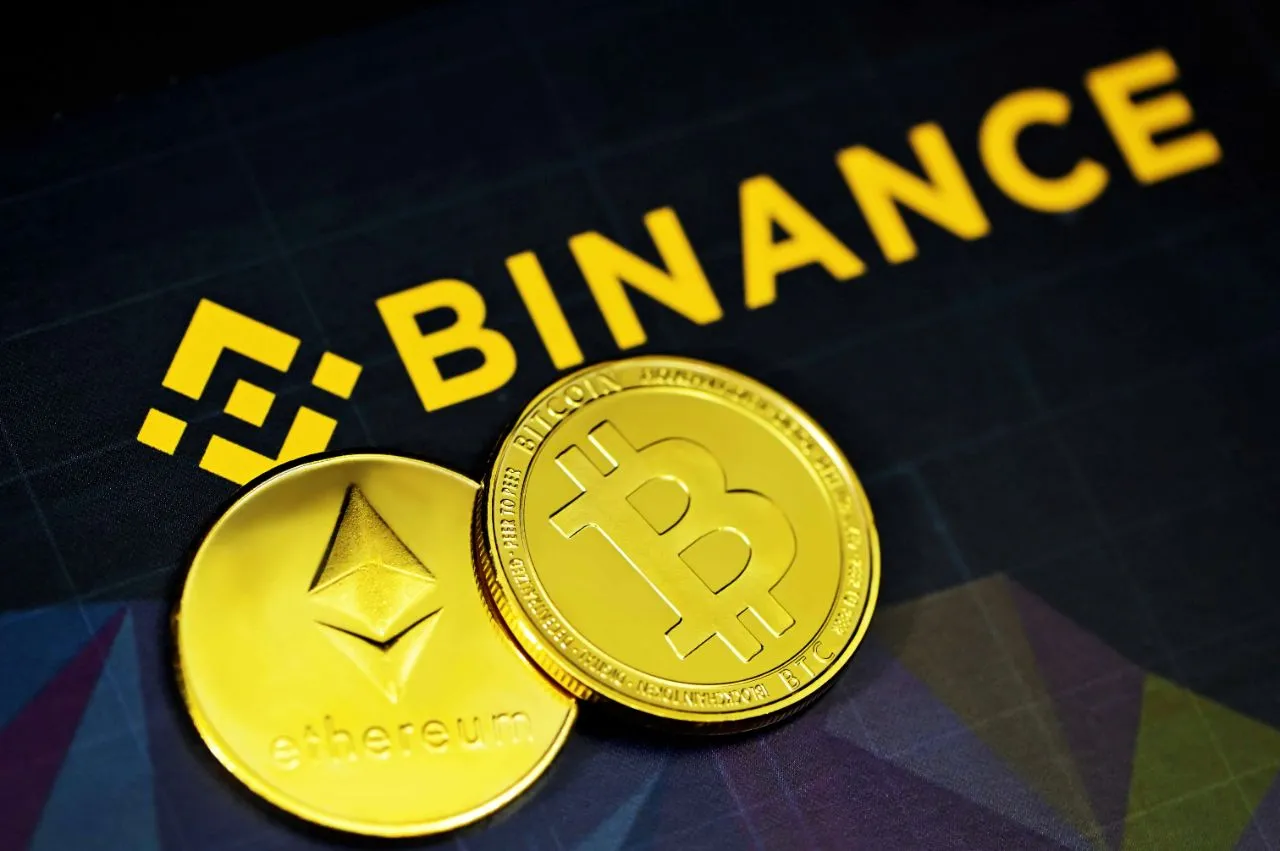
https://asset.coinness.com/en/news/ca6b7e2188c8974bb6ceafd550dfa0f2.webp
Photo by Kanchanara on Unsplash

‘Most meaningful product yet’

The new product was announced by the company during a Binance Square Webinar. Binance CEO Richard Teng described it as the firm’s “most meaningful product yet.” He referred to the launch of the product as a defining moment both for Binance and the broader crypto sector.


Teng said that “a truly inclusive financial system must respect the values and needs of every community, and that’s the vision behind Sharia Earn.” He added that “Islamic finance’s core tenets—transparency and shared prosperity—are universal,” asserting that these same values are at play in driving Binance.


The platform contracted Amanie Advisors, a Dubai-based global Islamic finance advisory service, in order to obtain Sharia-compliant certification for its latest product.


Bader Al Kalooti, Binance’s Head of Operations, Marketing & Growth for the Middle East & North Africa (MENA) region, said that “crypto adoption has surged in many Muslim-majority countries, but yield-generating products have remained largely inaccessible due to compliance concerns.” He claimed that the arrival of “Sharia Earn” addresses this issue.


While this is Binance’s first Sharia-compliant product, it’s not the first major exchange to enter this market. Last year, Bybit, a Dubai-headquartered global crypto exchange, engaged with ZICO Shariah Advisory Services in order to obtain certification for the trading of Sharia-compliant digital assets. At the time, Bybit claimed to have launched the world’s first crypto Islamic account.


Growing Islamic finance sector

Islamic law prohibits interest-based transactions. Crypto staking can be structured in such a way as to avoid interest. Staking is considered to be acceptable as rewards are not fixed. Staking rewards are seen as profit-sharing, with the staker retaining ownership of the asset and being open to the risk of potential losses.


Some forecasts suggest that the overarching Islamic finance sector could reach $4 trillion in the years ahead. That represents a market opportunity for crypto platforms to cater to this market by taking the time to acquire Sharia-compliant certification for their crypto products.


Binance and Bitget are not the only entities to spot this market opportunity. A new crypto trading platform called BurjX, founded by Canadian entrepreneurs Adam Ferris and Omar Abbas, has been established in the United Arab Emirates (UAE) with a vision of developing Sharia-compliant and regulatory-compliant crypto products. 


While no definitive timeline has been established, Abbas told the UAE English language daily newspaper, the Khaleej Times, that his company “will partner with the appropriate Sharia boards, and when we do launch, it’s going to be approved by the appropriate regulators.”


More to Read
View All
Web3 & Enterprise·

Oct 12, 2023

Delabs Games Opens Pre-Registration for Global Open Beta Test of Rumble Racing Star

Delabs Games Opens Pre-Registration for Global Open Beta Test of Rumble Racing StarKorean game developer Delabs Games has opened pre-registration for the global open beta test of its PC-based Web3 game Rumble Racing Star on October 11 at 06:00 UTC.Photo by Mateo on UnsplashBringing expertise and colorful charactersRumble Racing Star was directed by veteran developer Choi Beong-ryang, who is known for working on fan-favorite casual racing games like KartRider and ZIPI Racing. Popular profile picture (PFP) non-fungible token (NFT) characters with dynamic and whimsical features have been integrated into the gameplay, creating a unique experience and exciting racing controls for players.The pre-registration for Rumble Racing Star’s open beta test is being carried out on the game’s official website. It will be open to users around the world from now until October 25, 06:00 UTC. More detailed information can be found on the website as well.“We have incorporated distinctive PFP NFT characters and an accessible, dynamic arcade racing gameplay. We hope that Rumble Racing Star, a casual Web3 game that people of all ages can enjoy, will receive lots of attention and love,” said Kwon Joon-mo, CEO of Delabs Games.Social media promotionsTo celebrate the pre-registration event, Delabs Games also said that it has planned various engaging events on global social media platforms like Discord and Twitter.

news
Policy & Regulation·

Aug 19, 2023

Taiwan Proposes New Crypto Business Category

Taiwan Proposes New Crypto Business CategoryWith regulation having trailed the crypto innovation, more recently it seems like every day brings further developments, with the latest installment seeing Taiwan take a significant step forward. Officials in Taipei are proposing the classification of crypto regulations within their own novel business category.Photo by Jack Brind on UnsplashFostering self-regulationThe move aims to potentially allow cryptocurrency-related companies to establish industry associations, ultimately fostering the creation of self-regulatory guidelines. The Ministry of Economic Affairs, in a recent announcement, unveiled its draft amendment to the Standards of Classification of Commercial Group regulations. This proposed amendment centers on the inclusion of a distinct category for digital asset services.An official from the economic ministry informed The Block that the freshly introduced business category outlines the scope of operations within the cryptocurrency sector. This encompasses various activities, such as cryptocurrency to fiat or digital token exchanges, facilitating cryptocurrency transfers, offering services for crypto storage and management, and providing assistance related to cryptocurrency issuance or sales.The official further elaborated that cryptocurrency firms will be permitted to form industry associations once the proposed business category is successfully incorporated into the relevant regulations. Seeking public input, the ministry anticipates finalizing the amendment in collaboration with the Ministry of the Interior in either mid- or late-October.Encouraging trade associationsBy allowing the establishment of industry associations, cryptocurrency companies can proactively devise self-supervisory rules that address industry-specific challenges and concerns. This move is anticipated to bolster transparency, security, and responsible conduct within the cryptocurrency ecosystem.Taiwan’s approach to virtual asset services providers (VASPs) has mandated compliance with anti-money laundering laws since the implementation of anti-money laundering regulations by the Financial Supervisory Commission in July 2021. However, the overall industry remains relatively unregulated within the country.Binance, the world’s largest cryptocurrency exchange, has recently embarked on the process of obtaining registration for anti-money laundering compliance under the FSC.Regulatory guidelines being draftedAs the regulatory landscape evolves, Taiwan’s FSC, which assumed its role as the principal regulator overseeing the crypto industry in March, is actively formulating comprehensive guidelines. These guidelines will cover trading and payment aspects associated with cryptocurrencies for VASPs.An FSC official revealed that the agency plans to unveil the VASP guidelines by the end of September. It’s understood that the guidelines will comprise thirteen regulatory principles. It’s believed that the issuance of crypto assets will be permitted but that stablecoin issuance will be prohibited. One prerequisite for the issuance of digital assets will be a requirement to accompany that issuance with a comprehensive whitepaper, detailing fundamental and necessary information that investors can review, relative to the token offering.Taiwan’s proposition of a novel business category signifies a pivotal move towards enhanced self-regulation and industry cohesion within the cryptocurrency sector. As the regulatory framework takes shape, the introduction of self-regulatory guidelines is poised to contribute to the responsible growth of the cryptocurrency industry in Taiwan.

news
Web3 & Enterprise·

Oct 04, 2024

HashPalette acquisition sees Aptos Labs enter Japanese market

Aptos Labs, the developers behind the Aptos layer-1 blockchain, has entered the Japanese market through the acquisition of HashPalette, a blockchain network concerned with the issuance, management and distribution of non-fungible tokens (NFTs). HashPalette informed stakeholders of the development on Oct. through an X post, alongside a press release published on its behalf by Japanese public relations company PR Times. Photo by Tianshu Liu on UnsplashExpanding Asian presenceUp until now, HashPalette has been a wholly owned subsidiary of HashPort, a blockchain-related consulting and infrastructure provider based in Tokyo. This acquisition sees the project transfer to being a wholly owned subsidiary of Aptos Labs. Accordingly, this will mean that applications developed by HashPalette will be migrated onto the Aptos Network. Similarly, the Palette Chain blockchain will migrate over to Aptos. From Aptos Labs’ perspective, the acquisition enables it to expand its blockchain ecosystem in Japan and within Asia more broadly. Aptos Labs Co-Founder Mo Shaikh described the acquisition as an investment in “the talented builders and creators of the region.”  Deal pending approvals, closing conditionsWhile the parties have announced the acquisition, the deal is still subject to required approvals being granted, together with various closing conditions related to the sale being met. Addressing the need to close out the deal, HashPalette tweeted:“HashPort and Aptos Labs will work closely together in the transition and will take great care to ensure that all stakeholders, including PLT and ELF holders, are not disadvantaged by the migration.” The PLT token is HashPalette’s native token. According to the project’s whitepaper, it has utility when it comes to the payment of NFT issuance fees and node management fees relative to the Palette Chain. Additionally, it can be used to pay for NFTs issued on the Palette Chain and for subscription payments related to applications developed on top of the network. The ELF token is a crypto asset utilized within THE LAND ELF Crossing, an NFT farming game which was developed by HashPalette and issued on the Palette Chain. The game is being marketed in Japan with the assistance of Animoca Brands following a partnership earlier this year. The companies have agreed to gradually migrate NFTs which had been issued on Palette Chain, relative to the EXPO2025 digital wallet developed by HashPort, to the Aptos Network. Once that migration has been achieved, it’s envisaged that the Aptos Network will become the only blockchain associated with the EXPO2025 digital wallet. Unresolved Palette Chain issuesFrom the point of view of the development team behind HashPalette, it was outlined in the press release that the move goes beyond a simple financial transaction. It acknowledged that “Palette Chain still has many issues.”  Against that background, the team believes that in order to further accelerate the social implementation of Web3, it has “considered how to make services built on Palette Chain more scalable and usable, and to enable smoother access to the global Web3 market.” That consideration has brought the project team to the conclusion that migrating to the Aptos Network offers the best path forward. At the time of writing, Aptos’ APT token was trading at $8.93, up 12.44% over the course of 24 hours, according to CoinMarketCap data.

news
Loading