Top

Hong Kong to launch spot Solana ETF ahead of U.S.

Markets·October 23, 2025, 6:49 AM

A spot Solana (SOL) exchange-traded fund (ETF) is set to debut in Hong Kong next week, according to the South China Morning Post. Managed by ChinaAMC (HK), the Hong Kong subsidiary of Chinese financial services company China Asset Management, the product will begin trading on Oct. 27 and will be available against both Hong Kong and U.S. dollars.


The Hong Kong listing comes amid growing global interest in Solana-based investment products. While this marks a first for the city, the first country to trade a spot Solana ETF was Canada, where four products from 3iQ, Purpose, Evolve, and CI Financial went live on the Toronto Stock Exchange in April 2025.
https://asset.coinness.com/en/news/8d604e77d310e11e5a00cde9e5b27fe0.webp
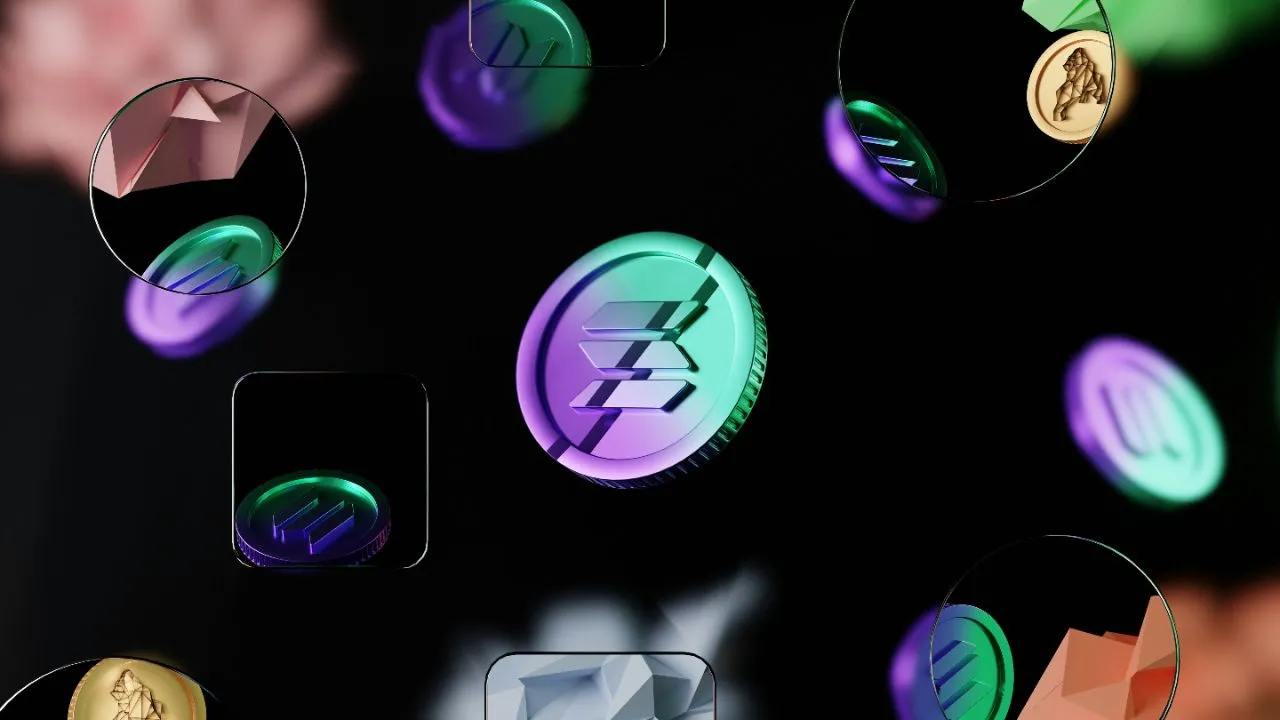
Photo by GuerrillaBuzz on Unsplash

U.S. institutions await regulatory approval

In the U.S., institutional interest is also high, though a product has yet to be approved. According to Bloomberg senior ETF analyst Eric Balchunas, 23 separate ETP filings for Solana have been submitted in the U.S. This matches Bitcoin, with both assets having the highest number of filings among 35 cryptocurrencies tracked, out of a total of 155 crypto ETP filings overall.


The push for exchange-traded products mirrors rising institutional investment in the Solana ecosystem itself. Several firms have recently established corporate SOL treasuries. Forward Industries spent $1.6 billion on its treasury and filed with the U.S. Securities and Exchange Commission (SEC) to raise up to $4 billion from share sales to acquire more SOL. Similarly, Sharps Technology announced a collaboration with Coinbase Global to expand its reserve strategy, and an SEC filing showed that Citadel and its affiliates hold a portion of the outstanding shares in DeFi Development Corp. (DFDV), another SOL treasury firm.


Uniswap expands to Solana network

Solana's platform has also seen wider technical integration. On Oct. 16, the decentralized exchange Uniswap began supporting the network, allowing its users to connect Solana wallets and swap SOL tokens. Uniswap stated the move helps address fragmentation issues by supporting both Solana and Ethereum, the two largest DeFi ecosystems. According to DefiLlama data, SOL currently boasts $10.88 billion in total value locked (TVL) in decentralized finance, while ETH TVL amounts to $83 billion.


Separately, the Solana team recently promoted the network's technical resilience. Following a recent Amazon Web Services (AWS) outage, the team shared an analysis on X indicating a 97.6 resilience index, noting that only 77 of its 1,295 nodes were affected, suggesting a 6% dependency on AWS.


Market performance lags despite growth

Despite these developments, the price of SOL, the sixth-largest cryptocurrency by market capitalization, has not reflected the positive sentiment in the short term. Trading at roughly $186, SOL is down 13.74% over the past month, according to Kraken data. The asset remains 36.49% below its all-time high of $293.31, which was reached on Jan. 19, 2025.

More to Read
View All
Policy & Regulation·

May 24, 2023

Hong Kong Moves to Enable Retail Crypto Trade

Hong Kong Moves to Enable Retail Crypto TradeHong Kong’s Securities and Futures Commission (SFC) has moved to enable retail participation in crypto trading within the Chinese autonomous territory.The SFC has arrived at that determination, according to a report it published on Tuesday. The report, titled “Consultation Conclusions on the Proposed Regulatory Requirements for Virtual Asset Trading Platform Operators Licensed by the SFC (Note 1),” provides an overview of the nature of feedback the Commission received as part of its consultation process relative to virtual asset trading.Photo by Ben Cheung on PexelsRetail investor protectionIn the press release which accompanied the report, the Commission outlined that “a significant majority of respondents agreed to our proposal to allow licensed trading platform operators to serve retail investors.” On that basis, the SFC is moving forward in enabling retail trading of crypto assets through licensed virtual asset trading platforms effective June 1, and it’s setting out to do so while implementing a number of measures to protect retail investors.That will include ensuring that operators provide an appropriate on-boarding process. In the case of crypto asset projects, the SFC is determined to see to it that good governance is implemented, alongside enhanced token due diligence, admission criteria, and disclosures.In the statement, the SFC’s CEO Julia Leung, said that “providing clear regulatory expectations is the key to fostering responsible development.” She added that “Hong Kong’s comprehensive virtual assets regulatory framework follows the principle of ‘same business, same risks, same rules’ and aims to provide robust investor protection and manage key risks. This will enable the industry to develop sustainably and support innovation.”Specific conditionsOne item that the SFC’s new rule-book on virtual asset trading for retail investors outlines is a ban on crypto “gifts.” Effectively any promotions or incentives that lead with free gifts, and this will likely include token airdrops, will be prohibited.In terms of capital liquidity, virtual asset exchanges will be required to maintain a minimum of 5,000,000 Hong Kong dollars ($638,000) at all times as a minimum paid-up share capital. A Platform Operator must at all times maintain liquid capital which is not less than its required liquid capital,” the document outlines.Token due diligenceThe SFC acknowledged that it can be difficult for virtual asset exchanges to carry out due diligence on new tokens. With that in mind, it has incorporated a requirement for any new token to have a twelve-month track record before it can be considered to be listed to provide an indication of such things as supply, demand, maturity, and liquidity. In that way, exchanges have some data to work with in carrying out token due diligence.Smart contracts have been a point of weakness in recent years, with considerable sums lost through hacks that have exploited smart contract code vulnerabilities. To that end, the SFC insists that as part of token due diligence, new assets will have to undergo smart contract audits performed by independent assessors.Given that the spate of recent crypto platform failures implicated loss of customer deposits, the rule-book considers the need for segregation of client funds. Exchanges will need to segregate funds and can either hold them separately from the assets of the exchange itself or have them held in escrow.

news
Web3 & Enterprise·

Dec 19, 2023

OKX NFT Marketplace hits the front on trading volume

OKX NFT Marketplace hits the front on trading volumeIn the non-fungible token (NFT) space, OKX’s NFT marketplace has emerged as the leader in daily trading volume, surpassing long-standing frontrunners such as OpenSea, Blur and Magic Eden.According to data from decentralized applications (DApp) tracker DappRadar, on Dec. 18, the OKX NFT Marketplace had recorded a 24-hour trading volume of $50 million. In more recent trading, that has reduced to around $35 million. Nevertheless, it maintains its lead over its main competitors, whose combined 24-hour trading volume stands at approximately $24 million.Photo by Kanchanara on UnsplashOrdinals driving volume uptickThe surge in trading volume can be attributed to OKX’s support for Bitcoin Ordinals NFTs and BRC-20 tokens. Notably, the NFT transaction volume on Bitcoin experienced a substantial increase, reaching $121.8 million between Dec. 10 and Dec. 17.Unlike traditional NFTs, Ordinals do not rely on smart contracts pointing to a digital asset. Described as digital artifacts by developer Casey Rodarmor, they lack smart contract features, making their trading reliant on decentralized exchanges and wallets.The Ordinals protocol has been made possible by the Bitcoin Taproot upgrade, which was implemented in November 2021. The upgrade allows digital files to be inscribed on satoshis, the smallest monetary denomination on the Bitcoin network, each with a unique number or ordinal.Strategic focus on BRC-20The OKX NFT Marketplace’s strategic focus on the BRC-20 token standard has also played a role in its success. Collaborating with UniSat, a developer of Ordinals wallets, OKX created an indexing mechanism for BRC-20 transactions built on ordinal inscriptions, further solidifying its position in the market.The Ordinals protocol has not been without controversy, with some, including Adam Back, CEO of Blockstream, criticizing it as a misuse of Bitcoin transaction blockspace. Despite the controversy, Ordinals have gained momentum, contributing to $367 million in sales volume on the Bitcoin network, surpassing Ethereum and Solana.Ordinals and the BRC-20 standard have generally been a boon for Bitcoin miners, boosting their revenues through increased fees. This incentivizes miners to secure the network. Over 49 million transactions have resulted in over 2,250 BTC in transaction fees. Around 6 p.m. UTC on Monday, bitcoin fees are averaging out at $38.43 per transaction.Beyond Bitcoin Ordinals, the broader NFT space has seen a resurgence, with the collective volume nearing $1 billion in November. During that month, the average value of NFT transactions experienced a notable 114% increase, rising from $126 to $270. This suggests a willingness among users to engage in higher-value trades compared to previous months.Speaking with The Block, Nick Ruck, COO of ContentFi Labs, a community-owned Web3 tool suite, had this to say on the development:“OKX has become the number one NFT marketplace after enabling trading of BTC Ordinals NFTs. Blur and OpenSea have not yet allowed trading of these Bitcoin-based NFTs, so they’ve started to fall behind in terms of volume due to the huge demand of Ordinals.”

news
Policy & Regulation·

Sep 27, 2023

Upcoming Regulatory Framework in Taiwan Sees Crypto Exchanges Unite

Upcoming Regulatory Framework in Taiwan Sees Crypto Exchanges UniteIn preparation for the impending arrival of a regulatory framework for cryptocurrencies in Taiwan, nine prominent cryptocurrency firms have announced their collective efforts to establish an industry association.The nine exchange businesses announced the development via a press release which was published on Tuesday. The move comes in anticipation of Taiwan’s Financial Supervisory Commission (FSC) releasing comprehensive guidelines on cryptocurrency trading and payments by the end of September.Photo by Timo Volz on UnsplashDeveloping regulatory environmentThe industry body will include participation from native exchanges such as MaiCoin, BitoGroup, and ACE. While Taiwan has been behind the regulatory curve until now where crypto is concerned, the one measure that the FSC had already taken steps to mandate was that virtual asset services providers (VASPs) in Taiwan must adhere to the country’s anti-money laundering (AML) regulations. However, numerous other intricacies unique to the cryptocurrency industry still require careful consideration and regulation.Authorities in Taiwan have also put forward ten guiding principles for VASPs, designed to protect Taiwanese consumers.The forthcoming guidelines aim to address these concerns by introducing a comprehensive set of rules inspired by the VASP licensing framework in Hong Kong. One of the primary focuses of these proposed guidelines is consumer protection. They advocate for specific hot and cold wallet ratios for customer deposits with cryptocurrency exchanges, a measure designed to safeguard customer funds. Additionally, the guidelines suggest mandatory insurance against user losses to further enhance consumer confidence.Moreover, the FSC’s guidelines intend to prevent offshore cryptocurrency exchanges from operating onshore in Taiwan without proper compliance registration. This step aims to ensure that all participants in Taiwan’s cryptocurrency market adhere to uniform standards.In a bid to stabilize the Taiwanese financial system and prevent deceptive advertising practices, the guidelines also propose a ban on stablecoins linked to the Taiwanese dollar and impose restrictions on foreign exchange advertising within the country.Enabling self-regulationRegulators have also proposed the classification of crypto regulations within their own novel business category. As part of that initiative, officials expressed an interest in fostering self-regulation. The formation of this industry group could be deemed to be an encouraging sign relative to that aspiration.The nine cryptocurrency firms forming the industry association have established a working group led by Winston Hsiao, Co-Founder of XREX. This group aims to expedite the development of self-regulatory rules based on the forthcoming FSC guidelines.Wayne Huang, another Co-Founder of XREX, expressed his hope that the new FSC guidelines will provide the cryptocurrency industry with legitimacy, oversight, a clear growth trajectory, and an accelerated path to earn public trust.The formation of this industry association, coupled with the impending release of the FSC’s comprehensive regulatory guidelines, marks a significant milestone for Taiwan’s cryptocurrency sector. As the industry evolves, these proactive measures seek to ensure its stability, security, and compliance with international standards.

news
Loading