Top

EU bans Ruble-backed stablecoin A7A5 in latest round of Russia sanctions

Policy & Regulation·October 29, 2025, 6:31 AM

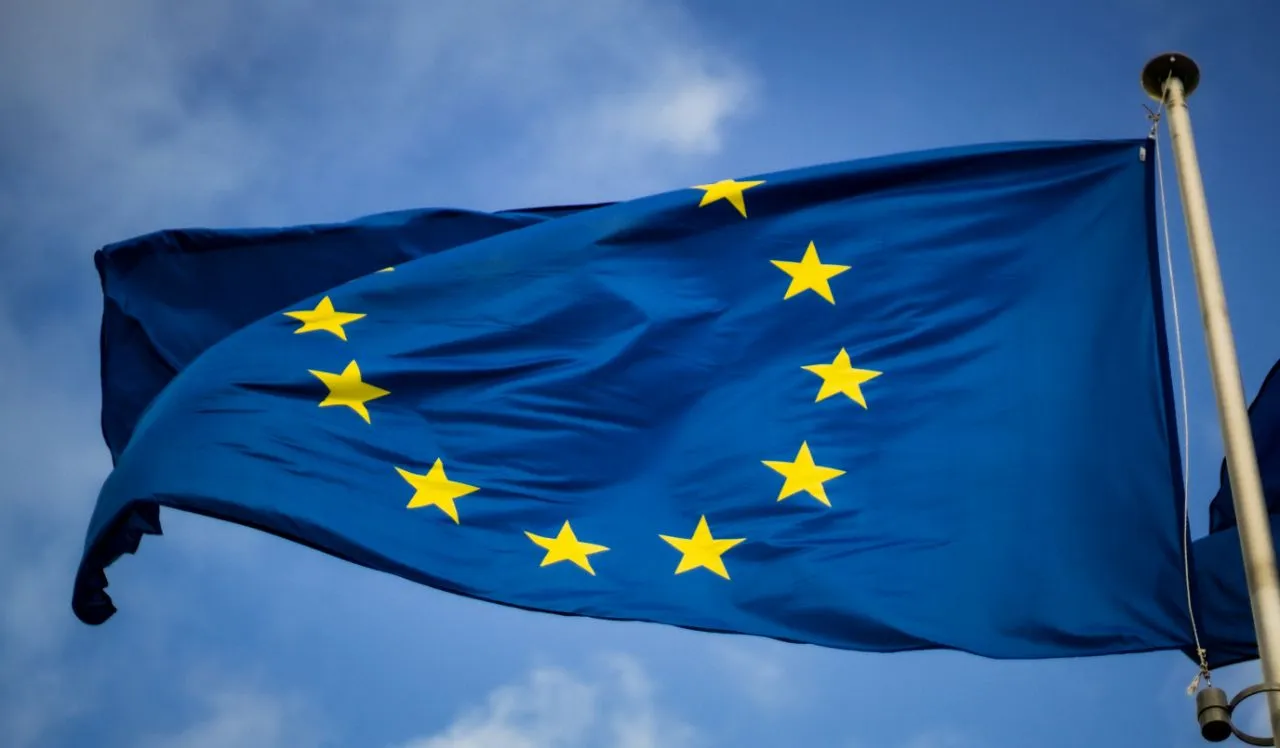
The European Council has banned all transactions within the European Union (EU) involving the Russian Ruble-backed stablecoin A7A5, according to a press release published Oct. 23.


The prohibition targets the stablecoin itself, its developer, its Kyrgyzstan-based issuer, and the operator of a platform that facilitates major A7A5 trades. The package also takes aim at Russian crypto exchanges.
https://asset.coinness.com/en/news/8d2f3591b98e3daf67502602aacc4069.webp
Photo by Christian Lue on Unsplash

Additional banking restrictions

This measure is part of a broader set of economic sanctions against sectors the EU stated assist the Russian invasion of Ukraine, including energy, finance, and defense industries. As part of this financial clampdown, the EU will also impose a ban on five additional Russian lenders starting Nov. 12. One of those lenders, Alfa-Bank, recently began offering Bitcoin buying and selling services, according to an X post by journalist Pete Rizzo.


The European body said the new crypto measures address Russia’s increasing use of digital assets to circumvent existing sanctions. Russian banks were cut off from the SWIFT international payment system in early 2022, following the onset of the Russo-Ukrainian war.


Reports of Russia using cryptocurrency to finance malign activities have surfaced previously. Earlier this month, Sławomir Cenckiewicz, the head of the Polish National Security Bureau (BBN), told the Financial Times that Russia has employed crypto to finance attacks on EU countries. Cenckiewicz said that a network of agents recruited by Russia’s GRU military intelligence agency and uncovered in Poland in 2023 had been substantially funded with cryptocurrency.


Reflecting this concern, lawmakers in Poland’s lower house approved a bill in September to strengthen national crypto oversight, a move also expected to help curb Russian funding channels. Cenckiewicz noted that Polish intelligence agencies are closely monitoring the legislation to prevent loopholes that allow foreign actors to support agents using digital assets.


Russia’s evolving crypto policy

The EU’s action comes as Russia itself is attempting to refine its own cryptocurrency rules.


According to the Moscow Times, Russia's central bank wants to limit cryptocurrency use strictly to cross-border payments within an experimental legal regime (ELR). The institution continues to reject recognition of cryptocurrency as a legal means of payment and has advocated banning its use for domestic payments and retail investment, while permitting trading only for high-net-worth individuals through licensed platforms.


Russia’s finance ministry has expressed a more flexible view, pointing to the scale of crypto adoption among the public. Earlier this year, the central bank estimated that domestic crypto transactions exceeded 1 trillion rubles (about $12.4 billion) per month, and that as of March, wallets linked to Russian users held roughly 827 billion rubles (about $10.2 billion).


The finance ministry and the central bank have agreed to tighten supervision of the crypto market, with officials expecting to finalize the new framework before the end of the year.


 

More to Read
View All
Policy & Regulation·

Dec 01, 2023

Fasset becomes sixth crypto firm to secure VARA license

Fasset becomes sixth crypto firm to secure VARA licenseFasset FZE, a digital asset brokerage based in Dubai in the United Arab Emirates (UAE), has successfully obtained a Virtual Asset Service Provider (VASP) license from Dubai’s Virtual Asset Regulatory Authority (VARA).This achievement, evidenced by a listing on VARA’s website on Wednesday, marks the culmination of VARA’s approval process, granting Fasset the authorization to provide broker-dealer services through its Web3-based financial services platform to a broad spectrum of clients, including both retail and institutional investors.Fasset, with a focus on practical applications of digital assets underpinned by blockchain technology, offers a range of services encompassing stable cryptocurrencies, tokenized commodities, precious metals and fiat currencies.Photo by Hongbin on UnsplashInvestcorp fundingSimultaneous with securing the VARA license, Fasset announced an upcoming investment from global investment manager Investcorp ahead of its Series B funding round, although the exact funding amount remains undisclosed. In 2022 the firm raised $22 million in Series A funding. With plans for a beta launch scheduled for this month and a full roll-out in January 2024, the startup is attempting to make an impact on the market.Mohammad Raafi Hossain, the CEO of Fasset, underscored the strategic importance of the VARA license in advancing the company’s mission to facilitate access to digital assets in emerging markets. In a post published on Thursday via the company’s LinkedIn account, Hossain outlined that this approval plays a crucial role in Fasset’s global licensing strategy, enabling seamless asset transfers across high-traffic remittance corridors, particularly from the Gulf Cooperation Council countries to Asia.Targeting emerging marketsHossain remarked:“Fasset’s focus on enabling people across emerging markets to access to digital assets is bolstered with this permission from VARA in UAE. As one of the most progressive regulatory frameworks in the world, the VARA approval is a crucial link in our global licensing portfolio, connecting places like Indonesia, Malaysia, Bangladesh, Pakistan, and Turkiye through blockchain.”The countries Hossain mentioned are precisely the markets that the firm is attempting to target. In August the firm launched an app which allows users to buy, sell and swap various cryptocurrencies with those markets in mind. Earlier in the year, Fasset had partnered with Mastercard in an effort to expand its service and product offering in IndonesiaWorking towards compliant frameworksFasset has been proactive in engaging with regulatory bodies, dating back to its establishment in 2019. The fledgling firm is now reaping the benefits of following that approach of regulatory compliance. The founding team’s prior collaboration with the UAE Prime Minister’s Office in crypto regulation laid the groundwork for compliant frameworks, something that is seen by officials as essential to the UAE’s technological progress.Dubai’s emergence as a key player in the cryptocurrency industry is evident, with an increasing number of crypto companies setting their sights on the Middle East, particularly Dubai, as a potential hub. In the month of November alone, five distinct entities, including CFI, GCEX, HEX, Crypto.com and Ripple, secured authorization from Dubai for crypto operations, showcasing the growing prominence of the region.

news
Policy & Regulation·

Feb 28, 2025

First stablecoins gain DFSA approval in Dubai

The Dubai Financial Services Authority (DFSA), the financial regulatory agency of the Dubai International Financial Center (DIFC), a special economic zone, has approved two stablecoins under its crypto regulatory framework. The two stablecoins, USD Coin (USDC) and EURC, are both issued by blockchain-focused financial services firm Circle. While USDC is a U.S. dollar-backed stablecoin, EURC is a euro-backed stablecoin. In a press release published on the Circle website on Feb. 24, the company announced details regarding the approval. The stablecoins are the first to be recognized and approved by the DFSA.Photo by Christoph Schulz on UnsplashStablecoin integrationThe development means that firms based in the DIFC are now free to integrate either stablecoin into digital asset applications and products focused on areas such as payments and treasury management. A number of Circle executives took to social media to comment on the development. Circle Co-founder and CEO Jeremy Allaire outlined on X that the approval means that financial institutions in Dubai “are now able to transact in markets with USDC and EURC.” In legally recognizing the two stablecoins, Allaire pointed out that the DFSA had joined regulators in the European Union (EU) and Canada.  Last Summer, Allaire announced that Circle’s stablecoins complied with the EU’s Markets in Crypto Assets (MiCA) regulation. In December, Circle became the first stablecoin issuer to meet Canadian listing regulations. Dante Disparte, Circle’s chief strategy officer and head of global policy, pointed out that a trend is emerging requiring the pre-clearing of stablecoins prior to them entering into circulation or gaining regulatory approval. “In always-on finance, reciprocity is key,” he added.  Meanwhile, the firm’s EU Strategy & Policy Director, Patrick Hansen, underscored the significance of the approval. Hansen pointed to the fact that the DIFC is home to 6,000 registered entities, including 800 authorized financial firms. An ‘edge’ over TetherEugene Cheung, Chief Institutional Business Officer at Hong Kong-based digital asset platform OSL, said that the approval was “massive for institutional adoption,” while giving Circle an “edge” over Tether within the $157 billion stablecoin market. While Circle has always taken a regulatory-compliant approach, competitor Tether has struggled with compliance. In Europe, 10 companies have been approved to issue stablecoins under MiCA regulations, but Tether is not among them. This has led to a number of exchanges delisting Tether’s USDT in Europe. The DIFC was first established in 2004. The economic free-zone caters to firms operating within the Middle East, South Asian and African regions. The number of businesses registered within the free zone has increased by 25% since 2023. In November 2022, the DIFC recognized Bitcoin (BTC), Ethereum (ETH) and Litecoin (LTC). The following year, it added Toncoin (TON) and Ripple’s XRP, together with ZETA, the native token of the ZetaChain network. In 2024, the DFSA amended its crypto regulations to allow foreign funds to invest in recognized crypto tokens, while enabling domestic qualified investor funds to invest in unrecognized tokens.Although the regulatory approach taken by the authorities in Dubai accommodates stablecoins, algorithmic stablecoins are prohibited.

news
Web3 & Enterprise·

May 06, 2024

Animoca Brands partners with Saakuru Labs to bolster Web3 gaming

Metaverse gaming company Animoca Brands has recently announced a strategic partnership with Saakuru Labs, aiming to drive the adoption and integration of blockchain technology within Saakuru Labs' ecosystem. The collaboration is expected to bolster the expansion of the Web3 gaming industry, particularly in Southeast Asia, where the partnership officially kicks off. The initiative involves the incorporation of Web3 games developed with the Saakuru Protocol into the Animoca Brands ecosystem. Gasless transactionsAnimoca Brands will play a crucial role by providing gaming titles to its partners, while Saakuru Labs will facilitate Animoca Brands' expansion efforts in Southeast Asia. Developers stand to benefit from access to accelerated development processes and gasless transactions. Gasless transactions are particularly significant in regions like Southeast Asia, known for lower-income demographics. The market has shown a keen interest in blockchain technology and Web3 games, indicating promising growth potential. With gasless transactions, developers can seamlessly integrate critical functionalities into their gaming titles, including infrastructure components.Photo by Bastian Riccardi on UnsplashTransition to Web3 gamingThe Saakuru Protocol, known for its consumer-centric L2 infrastructure, enables major integrations of Web3 components into traditional gaming segments. This ensures a smooth transition from traditional gaming to Web3 gaming, enhancing the overall gaming experience. Yat Siu, Executive Chairman of Animoca Brands, emphasized the pivotal role of gaming in the evolution of the Internet and open metaverse, highlighting Southeast Asia's potential to lead in Web3 technology adoption. Jack Vinijtrongjit, CEO of Saakuru Labs, underscored the platform's capability to offer seamless engagement with multiplayer gaming titles without latency or transaction fees. The partnership between Saakuru Labs and Animoca Brands aligns with Saakuru Labs' recent collaboration with cloud computing infrastructure platform Aethir, aimed at enhancing blockchain gaming through GPU infrastructure. Notable partners of Animoca Brands, including GameGPT, W3GG and GameFi.org, have already expressed their commitment to adopting the gasless protocol. Experts believe that gaming presents an ideal avenue to accelerate blockchain technology adoption and advance Web3 gaming principles. With gaming becoming a mainstream form of entertainment, seamless integration of technology is crucial for user acceptance. The outcome of the Animoca Brands and Saakuru Labs partnership is anticipated to manifest results in the coming quarter or by the end of the year. 

news
Loading