Top

Japan’s rate hike looms over Bitcoin as institutional skepticism persists

Markets·December 15, 2025, 9:30 PM

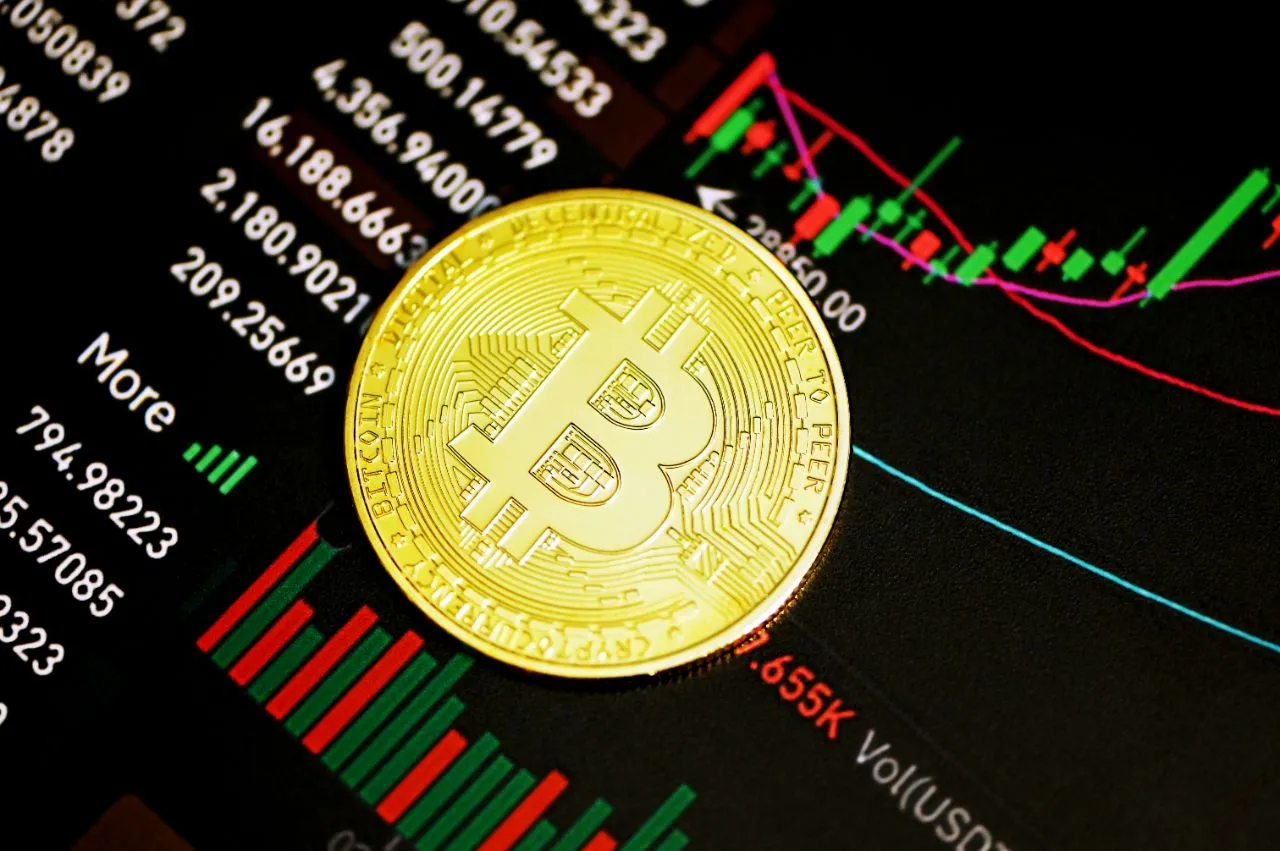
Bitcoin is facing growing uncertainty as it trades near $90,000, down nearly 30% from its October peak of $126,000. While the cryptocurrency remains under pressure, investors are increasingly focused on Tokyo, where a potential change in monetary policy could tighten global liquidity.


According to CoinDesk, which cited a report from Nikkei, the Bank of Japan (BOJ) is expected to raise its policy rate by 25 basis points to 0.75%, a move that would push borrowing costs to their highest level in nearly three decades. Historically, a stronger yen has often been associated with weaker Bitcoin performance amid tighter global liquidity.
https://asset.coinness.com/en/news/47e263f49fbac6086712eed212312b13.webp
Photo by Kanchanara on Unsplash

Yen carry trade in focus

The report suggested that higher rates could unwind the yen carry trade, a strategy in which investors borrow cheap yen to fund positions in higher-yielding assets such as stocks and U.S. Treasuries. A similar dynamic played out following the Japanese central bank’s July hike, which precipitated a market-wide selloff that dragged Bitcoin from roughly $65,000 down to $50,000.


However, CoinDesk noted that a recurrence of such volatility cannot be assumed. It added that speculative positioning is already skewed toward yen strength, while steadily rising Japanese bond yields suggest monetary policy is adjusting to prevailing market realities.


Institutional skepticism toward Bitcoin

Beyond the macroeconomic landscape, fundamental skepticism remains entrenched among traditional finance heavyweights. John Ameriks, Vanguard’s global head of quantitative equity, said at Bloomberg’s ETFs in Depth conference that the asset behaves more like a speculative digital collectible, comparable to a Labubu toy, than a conventional investment, citing its lack of income generation, compounding, and cash-flow characteristics.


Ameriks’ comments follow Vanguard’s move earlier this month to permit trading of select third-party crypto ETFs. He said the decision was based in part on the funds’ ability to establish a track record since their January 2024 launch. While acknowledging that Bitcoin could theoretically offer value during periods of high inflation or political instability, he maintained that its history remains too short to draw conclusions.


Bullish case for Bitcoin

A contrasting view was offered by Katherine Dowling, president of the Bitcoin Standard Treasury Company. Speaking with DL News, Dowling projected that Bitcoin would surge to $150,000 by the end of 2026. She pinned this bullish outlook on favorable U.S. regulatory shifts, increased liquidity from Federal Reserve rate cuts, and sustained institutional adoption via ETFs.


The perceived influence of institutional flows was also underscored by a recent weekly survey of 2,000 South Korean investors conducted by CoinNess and Cratos. The data showed that 42.3% of respondents view flows into and out of spot Bitcoin ETFs as the primary price driver. Monetary policies in major economies like the U.S. and Japan ranked second at 26.7%, while 16.3% pointed to shifts in equity markets. Another 11.5% attributed price action to the halving cycle, and 3.4% said they could identify no specific catalyst.


More to Read
View All
Web3 & Enterprise·

May 27, 2023

Binance Introduces Dedicated Trading Platform in Japan

Binance Introduces Dedicated Trading Platform in JapanGlobal cryptocurrency exchange Binance made an announcement on Friday regarding its plans to establish a new trading platform exclusively for residents of Japan.The move is in compliance with Japanese laws and regulations, and a demonstration of the company coming into line with Japan’s legal and regulatory framework relative to crypto assets and crypto asset trading. While specific details such as the platform’s launch date are yet to be disclosed, Binance has assured its Japanese customers that this information will be provided in the near future.Photo by Bagus Pangestu on PexelsPlatform transitionIn terms of scheduling, we do know that a new know your customer (KYC) verification process will be available after August 1, to migrate to the new local platform for existing Japanese users on the global platform. As part of the transition process, Binance will be sending out information to Japanese residents who currently utilize their global trading platform. This communication will include instructions on procedures including further information on identity verification.To facilitate a smooth transition, Binance’s global trading platform will cease providing services to Japanese residents on November 30, 2023. Additionally, there are plans to change the company name from Sakura Exchange Bitcoin to “Binance Japan Co., Ltd.”This development marks Binance’s initial foray into the Japanese market firmly under its own brand. In November 2022, the company entered the country by acquiring Sakura Exchange Bitcoin (SEBC). The forthcoming trading platform, dedicated exclusively to domestic residents, represents the first step in Binance’s strategic approach to the Japanese market.The new services on the platform are set to launch during the summer, with future expansion plans to broaden that offering further. Binance also intends to introduce initiatives in Japan that leverage its ecosystem, including the provision of free educational resources through “Binance Academy” to promote Web3 education.Service offeringThe newly created entity will offer crypto spot trading with fiat deposit and withdrawal facility to its Japanese customers. Crypto lending products will be provided through a digital asset earn program. For those who like to dollar cost average (DCA), an automated recurring purchase feature will be provided.In 2021, Binance introduced an NFT marketplace and that will be a service that it will also extend to its Japanese customers. Upon launch of the dedicated service, crypto derivative trading will not be offered although it is understood that it may be offered at a later stage. Derivatives are likely to be under much closer scrutiny by the Japanese regulator than Binance’s other products.It is worth noting that Binance had previously received a warning from the Financial Services Agency (FSA) for offering cryptocurrency trading services to Japanese residents without proper registration. With its full-fledged entry into the Japanese market, it remains to be seen what impact this move will have. Will it accelerate the regulatory landscape and the adoption of Web3 technology in Japan from a global perspective?Additionally, how smoothly will Binance be able to acquire new accounts while competing with domestic business operators? These developments warrant close attention as they unfold.

news
Policy & Regulation·

Oct 26, 2023

Binance Behind New Hong Kong Crypto Exchange Pursuing License

Binance Behind New Hong Kong Crypto Exchange Pursuing LicenseThe launch of a crypto exchange named HKVAEX in Hong Kong has raised eyebrows as it appears to be closely connected to the global cryptocurrency giant, Binance.Photo by Florian Wehde on UnsplashResource sharingWhile the two entities do not officially acknowledge any affiliation, they share resources and have some commonalities that suggest a deeper connection, according to a report published by the South China Morning Post (SCMP) on Wednesday.HKVAEX was established in Hong Kong as an independent entity under BX Services Limited. Despite the absence of shared names, official affiliations, or public statements, several clues point to a connection. The logos of Binance and HKVAEX bear a resemblance, and Binance’s official accounts, as well as CEO Changpeng Zhao (CZ), are among HKVAEX’s followers on social media platform X (formerly Twitter).Gaining a foothold in Hong KongIt’s worth noting that Binance’s services are not available in Hong Kong, which raises questions about the motivation behind establishing an independent entity within the city. While HKVAEX appears to be actively pursuing a virtual asset license in Hong Kong, Binance has been relatively silent about its own licensing plans within the Chinese autonomous territory. This move could potentially provide Binance with a strategic foothold in a market that is becoming increasingly significant for digital asset entities.Hong Kong has recently introduced a licensing scheme for digital asset entities, and this development has spurred enthusiasm among such entities to establish operations in the region. Alvin Kan, the Head of Asia at Sei Labs, has noted that Asia is poised to become a major expansion zone for the Web3 sector, with regulatory developments in the US creating opportunities for expansion beyond American borders.Stanley Fung, who currently heads up HKVAEX, previously served as the chief of Huobi’s Hong Kong operations until November 2022, according to his LinkedIn profile. His departure from Huobi coincided with the entrance of crypto entrepreneur Justin Sun into Huobi’s management.In a company-managed Telegram group, HKVAEX has emphasized its status as an “independent crypto exchange” in Hong Kong, separate from Binance. However, it also revealed that it sources liquidity from Binance. Despite asserting its independence and having its own technical team, there have been instances of collaboration between the two entities in Hong Kong, such as a promotional campaign where Binance was referred to as a “partner” in incentivizing the opening of an HKVAEX account.Changing strategyBinance has faced a series of regulatory challenges in recent times. In May, Binance exited the Canadian market due to new regulations related to stablecoins and restrictions on crypto exchanges. In the US, the two leading regulators have filed lawsuits against Binance, CZ, and related entities, leading to the departure of several top officials from the company.The leading global exchange appears to be pursuing a different strategy more recently. It has entered the Japanese and Thai markets through the acquisition of a local entity and a joint venture with a local company. While forced out of the Netherlands, its Dutch customers were moved to rival Coinmerce, which connects to the Binance trading engine and order books.The evolving regulatory landscape is reshaping the cryptocurrency industry, and the relationship between Binance and HKVAEX highlights the complexities and strategies adopted by major players in this evolving space.

news
Web3 & Enterprise·

Nov 22, 2023

Coins.ph partners with Paxos to further PYUSD adoption

Coins.ph partners with Paxos to further PYUSD adoptionCoins.ph, the Philippines’ leading cryptocurrency exchange, has forged a strategic alliance with Paxos Trust Company, a New York-based institution specializing in blockchain, aiming to propel the adoption of PayPal USD (PYUSD) for seamless cross-border remittances.Photo by C Bueza on UnsplashTargeting fourth largest remittance marketThe Southeast Asian firm outlined details of the partnership via a blog post published to its website on Tuesday. The integration of PYUSD into Coins.ph marks a significant milestone, providing Filipinos with a secure and convenient avenue for transferring funds across borders to their loved ones. Wei Zhou, CEO of Coins.ph, emphasized the foresight in prioritizing the growth of USD stablecoins, particularly PYUSD, acknowledging the Philippines as the fourth largest remittance-receiving country globally, with over 40% of these remittances originating from the United States. Zhou stated:“With PayPal behind it and its availability on platforms such as Venmo and Xoom, PYUSD is set to become one of the most widely used stablecoins in the world.”PYUSD is a U.S. dollar stablecoin promoted by American multinational payment system PayPal and issued by Paxos.Nick Robnett, Senior Director of Customer Success at Paxos, echoed Zhou’s sentiment, stating that PYUSD stands as the safest dollar-backed stablecoin accessible to global institutions and consumers. This regulated digital asset enables Coins.ph users to send U.S. dollars swiftly and affordably, challenging conventional remittance networks and providing enhanced access and economic freedom.Asian expansionThis latest collaboration in the Philippines comes hot on the heels of similar in-roads made elsewhere in Southeast Asia. In Singapore, Paxos has partnered with Crypto.com, an entity that is headquartered in the city-state. The local regulator, the Monetary Authority of Singapore (MAS), had outlined a new regulatory framework for stablecoins in August, making conditions right for Paxos to further develop its PYUSD offering from that location.It got a further boost last week when MAS awarded its local subsidiary, Paxos Digital Singapore Pte. Ltd., in-principle approval to trade within Singapore. The relatively new stablecoin has already been listed on international crypto exchanges such as Bitstamp, Coinbase and Kraken.Philippine potentialThe Philippines is shaping up to have a lot of potential for Paxos and its PYUSD stablecoin. The country has been working on the publication of a regulatory framework for crypto. Coins.ph Head of Legal Compliance, Robert De Guzman, stated in April that the Southeast Asian country was shaping a progressive crypto regulatory framework. Earlier this year, Donald Lim, the Founder of the Blockchain Council of the Philippines (BCP), said that the country was poised for crypto adoption.For users keen on employing PYUSD for remittances, the process is streamlined. Senders transmit PYUSD to the designated Coins.ph wallet address of recipients, from where easy conversion to the Philippine peso (PHP) on the app and subsequent cash-out becomes possible. This can be facilitated through InstaPay or PESONet fund transfers to banks and other e-wallets or through various supported over-the-counter remittance centers endorsed by Coins.ph.

news
Loading