Live Feed
New
Yesterday, May 9, 2026
18:27
According to CoinNess market monitoring, BTC has risen above $81,000. BTC is trading at $81,025.51 on the Binance USDT market.
17:51
Whale Alert reported that 250 million USDC has been minted at the USDC Treasury.
14:55
MicroStrategy (MSTR), the largest corporate holder of Bitcoin, has recorded a year-to-date return of approximately 9.4% on its $5 billion investment in the cryptocurrency.
CEO Phong Le announced the figures today on X, adding that the company "optimizes its capital, equity, bond, and credit decisions daily through a multivariate model to maximize annual BTC returns."
MicroStrategy has previously stated that it may sell Bitcoin if conditions are favorable.
14:49
An address suspected of belonging to BitForex founder Garrett Jin has deposited 108,169 ETH, worth approximately $250 million, to Binance, Onchain Lens reported. Jin, who founded the fraudulent cryptocurrency exchange BitForex, is a well-known Bitcoin OG. He was previously accused of insider trading last October after entering a large short position immediately before a crash in Bitcoin's price.
13:55
Prominent trader Darryl Wang (Eugene Ng Ah Sio), known as 'Pigeon' in the crypto community, has predicted that the crypto market will begin a significant move next week, with many altcoins expected to break out of their sideways trading ranges. Wang explained that Bitcoin appears to have established a floor around the $80,000 mark. He noted that based on current market-wide volume and open interest (OI), most coins can now achieve significant price movements with much less buying pressure than before, leading him to believe the market is still undervalued. For a rally to materialize, Wang stated that Bitcoin needs to cleanly break above $80,000, which would then allow major altcoins like Ethereum (ETH), Solana (SOL), and Hyperliquid (HYPE) to establish a new upward trend. He added that he hopes the market avoids another rejection at key resistance levels.
13:43
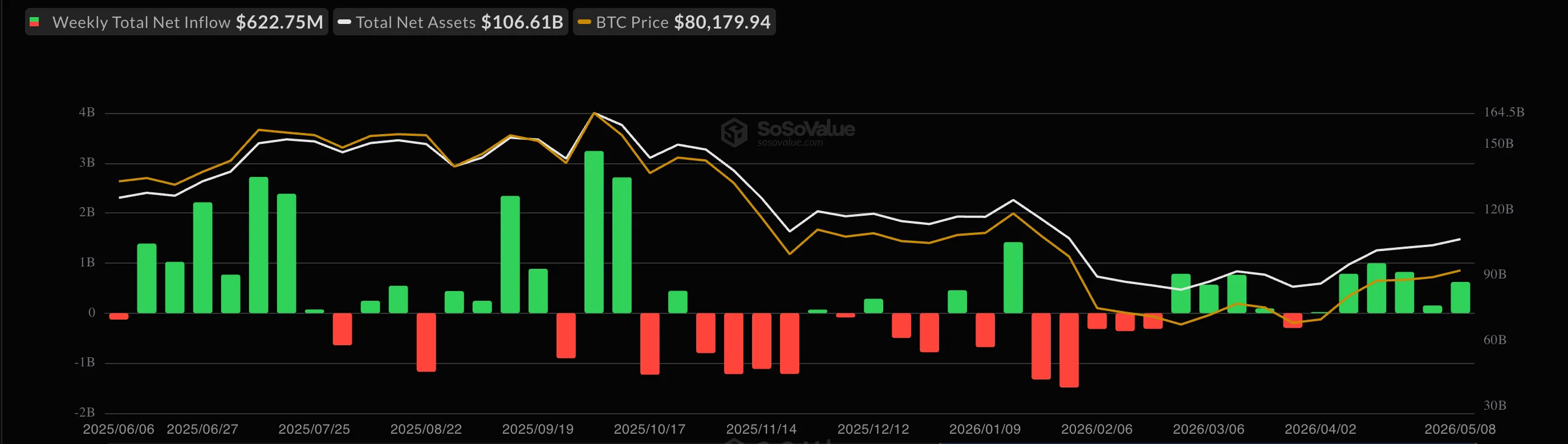
U.S. spot Bitcoin ETFs have recorded six consecutive weeks of net inflows, attracting a total of $3.4 billion during the period, BeInCrypto reported, citing data from SoSoValue. This marks the longest streak of net inflows since the week ending July 25, 2025.
Notably, the third week of April (the week ending April 17) saw a net inflow of $996.38 million, the largest weekly inflow since mid-January of this year. BeInCrypto noted that while the recent inflow trend is similar to the pattern seen last summer, the scale of the inflows is significantly smaller. The outlet added that whether the streak will extend to a seventh week depends on trading flows over the next few days.
13:41
Global oil inventories are shrinking at a record rate as the war in Iran disrupts shipping in the Persian Gulf, rapidly eroding the buffer stock designed to absorb supply shocks. This sharp decline signals a growing risk of extreme price spikes and supply shortages.
With the Strait of Hormuz effectively blockaded for two months, governments and industries have dwindling options to counter a supply loss of over one billion barrels. The rapid depletion of stocks means the market will remain vulnerable to future supply disruptions for an extended period, even after the conflict ends.
Morgan Stanley estimates that from March 1 to April 25, global oil inventories fell by an average of about 4.8 million barrels per day, a rate that far surpasses the highest quarterly decline ever recorded by the International Energy Agency (IEA). Approximately 60% of the reduction was in crude oil, with the remainder being petroleum products.
Natasha Kaneva, Head of Global Commodities Research at JPMorgan, noted that the oil system requires a minimum inventory level and will reach an untouchable safety stock limit before inventories are fully depleted.
12:34
Kelp DAO, the Ethereum (ETH) restaking protocol that recently suffered a hack of approximately $292 million, announced on its official X account that it will proceed with a series of contract operations over the next 24 hours. These operations, coordinated with Aave (AAVE), are intended to advance the next phase of the process for establishing rsETH as collateral.
12:22
Whale Alert reported that 813,367,100 USDT has been transferred from HTX to an unknown wallet. The transaction is valued at about $813 million.
11:49
Although Bitcoin's price has shown temporary weakness by dipping below $80,000, options traders anticipate the correction will be short-lived, CryptoSlate reported on May 9. The outlet noted that data from options trading, volatility, and on-chain indicators suggest the market is undergoing a healthy correction rather than a capitulation. While selling pressure in the spot market is easing, sentiment in the options market is more optimistic. Implied volatility, which had fallen to its lowest level since October 2025, has recently surged. Simultaneously, the 25-delta skew—an indicator of relative demand between call and put options—is rapidly normalizing. This indicates that traders are reducing their downside hedges while demand for upside exposure continues to grow, CryptoSlate explained.
11:39
The head of Iran's parliamentary energy committee stated on May 9 that oil production at fields across the country is proceeding normally. He emphasized that actions by adversaries against Iranian tankers are completely illegal and have not had a significant effect on the country's oil exports. The official added that there have been no official reports of an oil spill in the waters near Kharg Island. This statement follows earlier reports, based on satellite imagery, that a large-scale oil spill covering tens of square kilometers had been detected near the island, which is a key hub for Iran's oil exports.
11:38
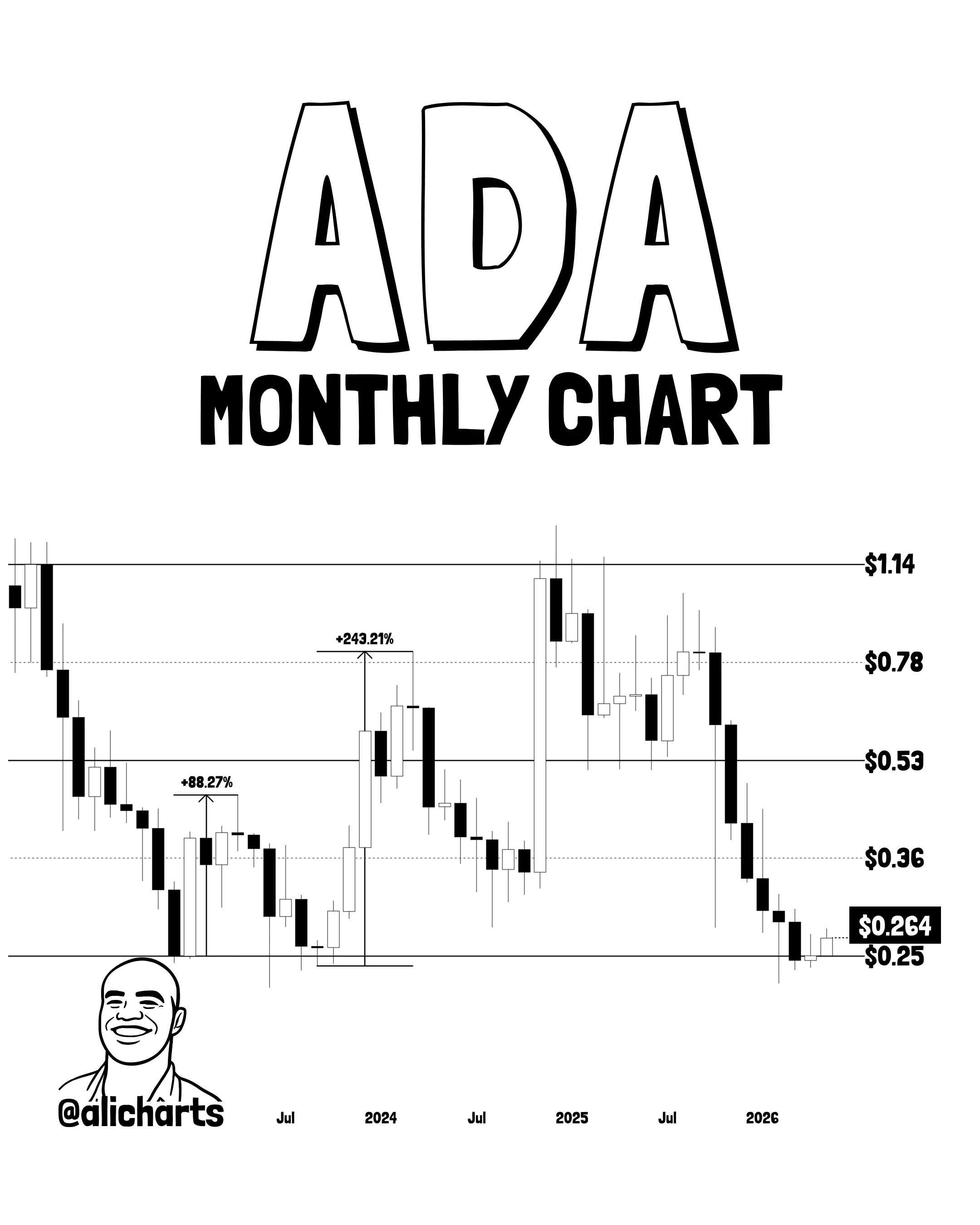
An analysis from crypto analyst Ali Martinez suggests that if Cardano (ADA) maintains its support at the $0.25 level, its next price target could be $0.36. Martinez noted that on the monthly chart, ADA has historically experienced sharp rallies after confirming support at $0.25. He highlighted that a rebound from this level in January 2023 led to an 88.27% increase, while another in September 2023 resulted in a 243% price surge to its peak. Martinez explained that holding the $0.25 support line could pave the way for a structural rally. Therefore, as long as this price level is defended, the next target could be $0.36, with a potential further rise to $0.53. Conversely, he warned that a break below the $0.25 support could lead to a larger correction.
11:23
Base, the Layer 1 blockchain from the largest U.S. crypto exchange Coinbase, announced via its official X account that cumulative stablecoin payment volume within the x402 protocol surpassed $100 million in the first quarter. The x402 protocol is a Coinbase-led project that aims to be an open standard for AI payments, supporting transactions between AI agents. Base added that over 90% of on-chain stablecoin transactions by AI agents take place on its network.
08:43
The market capitalization of Solana-based memecoin Aura (AURA) has surged to $63 million, a daily increase of approximately 600%, according to GMGN monitoring.
AURA's market cap jumped from a recent low of $8 million. The address with the highest profit during this rally (9MUN) is currently holding about $330,000 in unrealized gains, a 66-fold return on its initial investment.
The investor reportedly purchased about $5,000 worth of AURA last June when its market cap was around $890,000. The token's market cap later soared to $236 million, increasing the investor's paper profit to as high as $1.25 million (a 250x gain), but the investor did not realize the profits before a significant pullback.
The latest surge was reportedly triggered after the official Binance X account posted a meme image this morning with the text "aura maxxxxing."
08:11
Nasdaq-listed mining company Bitdeer sold all the Bitcoin it mined again this week. The company announced that it mined 193.8 BTC this week and sold the entire amount. Bitdeer has maintained a strategy of holding no Bitcoin since February.
07:34
Jack Mallers, CEO of the Bitcoin payment app Strike, argued that increased participation from Wall Street in the Bitcoin market does not threaten the cryptocurrency's core values, Cointelegraph reported. In a podcast interview, Mallers stated that if Wall Street's entry could break Bitcoin, then the asset was never destined for success, adding that it is built on the concept of being money for everyone. He described Bitcoin as an asset that competes with global capital and predicted that traditional stores of value like real estate, art, and government bonds will gradually be demonetized as Bitcoin becomes monetized.
07:03
Goldman Sachs has pushed back its forecast for the next U.S. Federal Reserve rate cuts by one quarter, citing stronger-than-expected inflation, Bloomberg reported.
In a report on May 8, the bank said it now expects the next two rate cuts to occur in December 2026 and March 2027. Goldman analysts noted that rising energy costs could keep the core Personal Consumption Expenditures (PCE) price index at around 3% this year, above the Fed's 2% target.
This, they added, could delay the point at which conditions are met for the Fed to begin easing its monetary policy.
06:39
BTC perp long/short ratios on top exchanges by open interest
The following are the 24-hour long/short ratios for BTC perpetual futures on the world’s three largest crypto futures exchanges by open interest:
Overall: 50.27% long, 49.73% short
- Binance: 51.64% long, 48.36% short
- OKX: 51.13% long, 48.87% short
- Bybit: 54.14% long, 45.86% short
06:35
Trump Media & Technology Group (DJT) announced a net loss of approximately $405.9 million for the first quarter of 2026. The company attributed the majority of the loss to write-downs on its cryptocurrency and stock holdings, stating that unrealized losses from these assets reached about $368.7 million in the first quarter. The company currently holds 9,542 BTC and 756 million CRO.
06:19
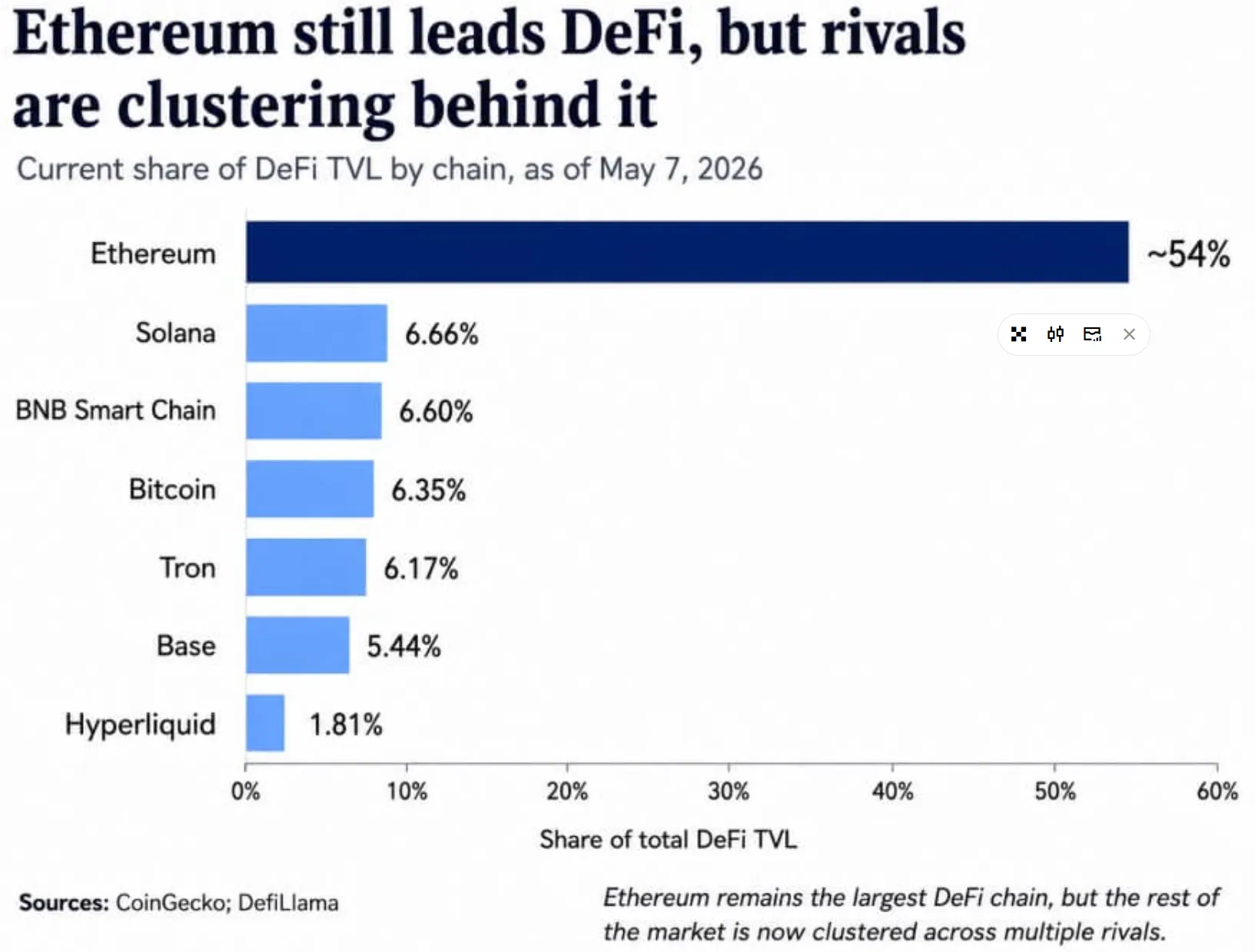
Ethereum's share of the total value locked (TVL) in decentralized finance (DeFi) has fallen to approximately 54% as of May 7, down from 63.5% at the beginning of the year, CryptoSlate reported, citing data from DeFiLlama. This figure is approaching its lowest level in recent years. Despite the decline in market share, Ethereum remains the largest network within the DeFi ecosystem, maintaining a TVL of about $45.4 billion. The market attributes this trend to the diversification of DeFi liquidity, driven by the growth of competing chains such as Solana, Base, and BNB Chain.
06:14
A U.S. Manhattan federal court has authorized the transfer of approximately $71 million in ETH that was frozen in connection with an exploit linked to the North Korean hacking organization Lazarus Group. According to Unfolded, Judge Margaret Garnett partially modified a previous asset freeze order. The ruling allows Aave (AAVE) to move ETH associated with an Arbitrum-based rsETH exploit to a protocol-managed wallet, following a governance vote. However, the court upheld an approximately $877 million claim against North Korea by victims of terrorism and also established legal protections for governance participants. The market is noting this case as an example of a DeFi protocol collaborating with the courts to create procedures for asset recovery and management amid state-sponsored hacking incidents. Some analysts have also suggested that DAO governance votes could evolve into a hybrid form, incorporating legal validity beyond simple decentralized decision-making.
05:58
Zhang Rongxuan, a former special diver in the Singaporean navy, has been sentenced to six years and 10 months in prison for stealing approximately 1.7 million USDT from a friend's cold wallet by secretly photographing its seed phrase. According to local reports, Zhang obtained an apartment access card at a social gathering and entered the victim's home while it was empty to take the picture. He then used the stolen funds to purchase luxury watches, gamble, and pay off a mortgage. Zhang pleaded guilty to multiple charges, including computer misuse and money laundering, with the court noting that sufficient restitution had not been made.
05:52
The Bank of Canada (BoC) has indicated that regulations for Canada-based stablecoins could be introduced in the middle or latter half of 2027, Reuters reported. During testimony before the Canadian Senate, BoC Senior Deputy Governor Carolyn Rogers stated that while significant work on the regulatory design is underway, the original plan to introduce the rules in early 2027 was ambitious. She explained that the actual implementation is more likely to occur in mid or late 2027.
05:42
Ethereum-based Tether (USDT) recorded a net outflow of approximately $1.29 billion from exchanges on May 9, its largest in about three months, according to on-chain analytics firm Santiment. Santiment explained that when stablecoins move off exchanges, it suggests investors are reallocating funds to self-custody wallets, DeFi, or OTC markets rather than keeping them on exchanges for immediate purchases. The firm analyzed that such a large-scale outflow is typically characteristic of institutional or whale investors and likely represents a repositioning to build new positions rather than a complete exit from the crypto ecosystem.
05:39
Blockchain engineering firm Antier Solutions has secured $3 million in funding. The round was led by Indian venture capital firm GVFL. The company plans to use the funds to expand its platform products, increase adoption within the government and financial services sectors, and strengthen its presence in overseas markets.
