Top

Turkish Lira emerges as dominant fiat trading pair on Binance

Policy & Regulation·November 11, 2023, 12:47 AM

The Turkish Lira (TRY) claimed the top spot as the most influential fiat trading pair on Binance throughout the month of September, as per the latest research from the leading cryptocurrency exchange.
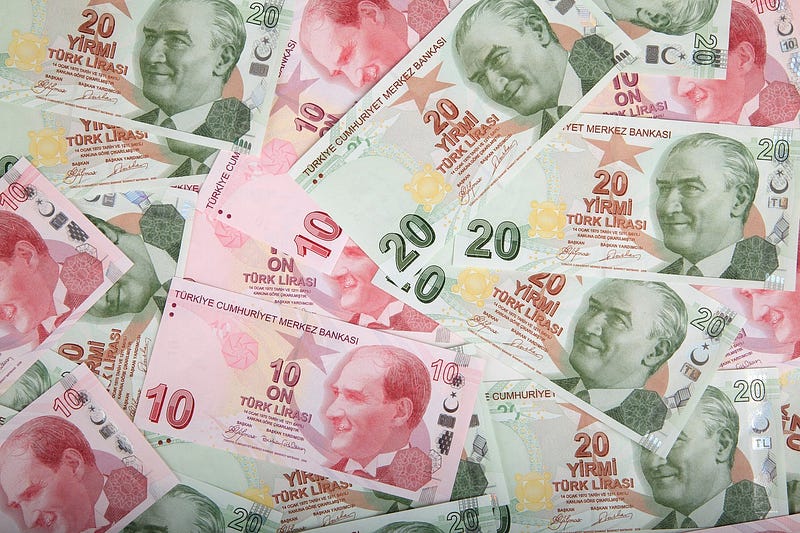
Photo by PublicDomainPictures on Pixabay


75% of all fiat volume

According to a report by Cointelegraph on Friday, despite being the fourth-largest crypto market globally in terms of transaction volume, following the United States, India and the United Kingdom, the Turkish Lira commanded a staggering 75% of all fiat volume in early September. This surge in the TRY trading pair is attributed to a recent influx of crypto investors into the Turkish market.

In its analysis last month, crypto market data provider Kaiko put Turkish Lira dominance at 81% on Binance. Kaiko also pointed to growth in the volume of the Brazilian Real on Binance, while dominance of the British Pound and the Euro were fading.

It’s important to note that the disproportionate level of lira-based fiat volume on the Binance exchange may also have come about due to difficulties Binance has had in recent months in keeping various fiat on and off-ramps open. In June Binance US suspended USD deposits while pausing fiat withdrawals.

It has also faced disruption when it comes to Euro payments, withdrawals and deposits. In May Binance Australia users experienced difficulties relative to AUD deposits and withdrawals following a decision to terminate the availability of PayID services to Australian account holders.


27% new crypto sector participants

Binance’s research revealed that 27% of participants in Turkey initiated their crypto investment journey within the past year, with 8% joining in the last six months alone. Most respondents indicated holding up to $175 (5,000 TRY) in cryptocurrencies, expressing a strong inclination towards investing in real estate.

The profitability factor emerged as a significant motivator for Turkey’s interest in crypto, with ease of monitoring, no minimum threshold, and low transaction costs standing out as key drivers for new investors. However, the inherent risks associated with crypto investments contribute to the hesitancy observed among many Turkish investors.

The evolving landscape of crypto adoption in Turkey is evident in the statistics, showing a substantial increase from 16% to 40% over the last three years. Chainalysis’ Global Crypto Adoption Index 2023 ranks Turkey at 12th place. Moreover, the country received humanitarian aid in the form of cryptocurrency during the 2023 earthquake, underscoring the growing integration of digital assets in various aspects of Turkish society.


Protecting long-term wealth

A report by KuCoin earlier this year identified a marked increase in crypto investors in Turkey. It found that one of the main motivations for the pursuit of crypto investments in Turkey was the desire to create long-term wealth. Recent years have seen the Turkish sovereign currency suffer from runaway inflation. Recent data put the year-on-year inflation rate at 59%.

It’s likely that the ongoing loss of buying power of the Turkish Lira is a key motivator for Turkish citizens in choosing to onboard into crypto, in an effort to safeguard their savings and wealth.


More to Read
View All
Policy & Regulation·

Sep 22, 2023

Hong Kong Authorities Block Access to JPEX Amid Ongoing Investigation

Hong Kong Authorities Block Access to JPEX Amid Ongoing InvestigationDubai-headquartered crypto exchange JPEX has been under intense scrutiny in Hong Kong over the course of the past week due to issues experienced by Hong Kong users in withdrawing funds from the platform. In the most recent twist to the saga, authorities in the Chinese autonomous territory have now blocked access to the JPEX website and mobile application.Photo by Tao Yuan on UnsplashCutting off service accessThe firm published a statement on Wednesday, outlining this latest sanction, while protesting that the move had been unreasonable. It appears that the authorities requested local telecommunications providers to block access to the company’s online platform.The measure follows ongoing enforcement actions initiated by local law enforcement agencies, which have led to the detention of at least 11 individuals and the seizure of assets related to the case. The scandal has also had implications for the crypto sector as a whole, as local regulators are now looking once more at regulation and determining if there’s a need to tighten regulatory measures as a consequence of JPEX’s failings in Hong Kong.VPN recommendationIn its statement, JPEX stated:“Since September 13, 2023, the SFC [Securities and Futures Commission] has suddenly made a series of accusations against our platform’s operating model and promotional methods, which we vehemently resent as they were made without investigation or review.”In response to the blocking of their platform, JPEX has encouraged users to utilize virtual private network (VPN) services to access their services. The exchange sought to reassure its user base, stating: “Here, we strongly reiterate that, even in the face of such oppression and unfair treatment, our platform will continue to operate as usual. Users can log into our mobile application or operate on our web version using VPN applications like Surfshark.”The investigation into JPEX was initiated following warnings from the SFC regarding false or misleading statements made on social media by crypto influencers and the trading platform relative to a trading license application.On Sunday, JPEX announced that it had suspended certain operations and increased withdrawal fees due to an ongoing liquidity crisis, triggering an influx of complaints from users. As of Monday night, the police had received a total of 1,641 complaints, with claims amounting to approximately HK$1.19 billion ($152 million) in assets involved, as revealed during a police briefing on Tuesday.DAO Stakeholders Dividend PlanIn response to these developments, JPEX unveiled plans for a “DAO Stakeholders Dividend Plan.” Under this initiative, JPEX users will have the opportunity to convert their assets on the platform into DAO stakeholder dividends at a 1:1 ratio.The exchange intends to distribute 49% of the DAO Stakeholder dividends, with an estimated total value of approximately 400,000,000 USDT available for subscription and conversion. Additionally, JPEX plans to offer repurchase options one year and two years after the program’s launch.New users who subscribe to the DAO stakeholder dividends will enjoy double payouts, and they will not be required to bear all the operational responsibilities of the platform. This move is seen as an attempt by JPEX to address the concerns of its user base and navigate the challenges it currently faces.The situation surrounding JPEX remains fluid, with ongoing investigations and regulatory actions continuing to unfold.

news
Policy & Regulation·

Aug 01, 2023

Bank of Korea Explores Jeju, Busan, and Incheon for Citizen-Centric CBDC Pilot Test

Bank of Korea Explores Jeju, Busan, and Incheon for Citizen-Centric CBDC Pilot TestThe Bank of Korea (BOK) is reportedly reviewing three potential locations for a pilot test of a citizen-centric payment system utilizing the Korean Won central bank digital currency (CBDC). Instead of choosing Seoul, the nation’s capital city, the BOK is considering Jeju, Busan, and Incheon for the pilot. That’s according to local tech news outlet IT Chosun.The three cities have been selected as possible testbeds, and discussions with commercial banks are ongoing to move the project forward. Once a city is chosen, the BOK will collaborate with local retailers, including hypermarkets, to test the CBDC payment and distribution system.Photo by Ethan Brooke on UnsplashRegional currency modelThe CBDC test will be limited to a specific area, operating similarly to regional currencies issued by municipal governments to stimulate local economies. The CBDC wallet app will be available to all citizens, but its usage will be restricted to retailers in the designated area. Presently, Jeju, Busan, and Incheon already have their own regional currencies managed by local banks and financial institutions.However, implementing the CBDC system poses technical challenges. In remote tests last year, the BOK discovered that transaction speeds for small transfers were slower compared to traditional payment processing providers in regions outside the Seoul Metropolitan Area.Against this backdrop, the BOK seeks to recruit an unusually large number of tech experts in order to build a large-scale system for small payments. The bank has been actively hiring individuals for this purpose since the beginning of the year.CBDC test next yearWith the test scheduled for next year, the BOK aims to promptly select the test destination based on the system’s expected performance, estimated user numbers, and potential economic impact.While Busan is more or less shunned due to its large population, Jeju is emerging as a preferred choice. However, the final decision has been tentatively postponed due to internal issues within the BOK.Following the pilot test results, the BOK may gradually broaden the scope of the CBDC system. Meanwhile, in a similar development, China began its CBDC pilots in 2020 and has now expanded its CBDC use to 26 cities across 17 provinces.According to a BOK official, the Korean central bank is making seamless preparation for the test and engaging in discussions with commercial banks to explore their operating models and devise effective implementation strategies.

news
Web3 & Enterprise·

Jul 04, 2025

Solana faces rising phishing threats in South Korea amid growing adoption

As Solana (SOL) gains institutional momentum through new investment products and major platform integrations, the blockchain is also becoming a target for sophisticated phishing scams in South Korea.Photo by GuerrillaBuzz on UnsplashFake websites and impersonatorsAccording to a recent Etoday report, attackers have been impersonating the Solana Foundation and Superteam Korea, a developer community within the Solana ecosystem. Using fake group chats on messaging platforms like KakaoTalk and Telegram, the scammers deploy official branding and fabricated partnership announcements to appear legitimate. Victims are lured with promises of five SOL tokens for creating wallets on fraudulent websites mimicking Solflare, a widely used Solana wallet. Users are then instructed to stake their tokens in exchange for daily yield, enabling the scammers to access their funds. The schemes have become more advanced, with perpetrators using names and photos of Superteam Korea members and generating fake wallet interfaces that display fabricated token balances. When victims attempt to withdraw funds, they are removed from chats, blocked from further communication and left with inactive websites as evidence is wiped. The Solana Foundation and Superteam Korea have issued public warnings, stating they do not solicit investments through messaging platforms or request payments to specific accounts. They have noted an increase in phishing sophistication and advised users to be cautious of unsolicited offers, particularly those that promise guaranteed returns. Solana adoption gains momentumThese scams stand in contrast to Solana’s recent growth. The Rex-Osprey Solana + Staking ETF, launched in the U.S., recorded $12 million in inflows and $33.6 million in trading volume on its first day. It is the first U.S.-listed ETF to offer SOL exposure with staking rewards available directly through brokerage accounts. Additionally, PancakeSwap’s V3 liquidity pool went live on Solana, offering up to 84% of trading fees to liquidity providers and enabling swaps starting at 0.01%.Amid these developments, Bitwise Chief Investment Officer Matt Hougan and Head of Research Ryan Rasmussen expressed cautious optimism about Solana, predicting it could set new all-time highs this year, though likely with more difficulty than Bitcoin. They pointed to rising interest in stablecoins, ETF approvals and the emergence of treasury firms focused on SOL and Ethereum (ETH) as key factors that could support long-term value. The pair also reaffirmed Bitwise’s $200,000 price target for Bitcoin, citing sustained institutional demand.

news
Loading