Top

NuriFlex Holdings partners with Catalyx Exchange to explore security tokens and RWAs

Web3 & Enterprise·November 06, 2023, 7:54 AM

NuriFlex Holdings Inc., the Canadian parent company of South Korean IoT solutions provider NuriFlex Co., Ltd., has recently signed a memorandum of understanding (MOU) with the Canadian cryptocurrency exchange, Catalyx. According to a report by the Korea Economic Daily, this collaboration is designed to facilitate both entities’ entry into the markets of security token offerings (STOs) and real-world assets (RWAs).

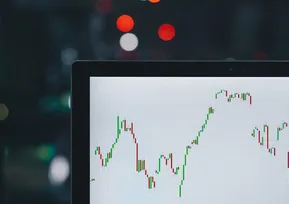
Photo by Chris Liverani on Unsplash


NuriFlex Group’s diverse portfolio and industry experience

With a 30-year track record, NuriFlex Group has supplied global utility companies with robust software platforms designed for handling vast amounts of data. Beyond this, the group manages an array of services, including blockchain-based digital payments, a social dating metaverse known as NuriTopia and Web3 wallet services. Furthermore, NuriFlex Group has established a business network to support central bank digital currency (CBDC) initiatives in Central and South America as well as Africa. Leveraging its longstanding industry presence and extensive connections, NuriFlex Group strives to venture into the sectors of STOs and RWAs.


Canadian crypto exchange since 2019

Meanwhile, Catalyx Exchange, established in 2019 and headquartered in Calgary, Alberta, is known to have the management and technological expertise necessary to operate trading platforms for security tokens and RWAs.

An official from NuriFlex Group conveyed their enthusiasm for the partnership, emphasizing their collective goal to lead the way in innovation. They intend to jointly launch a platform that is not only secure and efficient but also fully compliant with the laws and regulations of the country in which they operate.

A representative from Catalyx also shared a positive outlook, noting that the exchange has been gearing up to branch out into the STO and RWA sectors for several years. They expressed their pleasure at having the opportunity to collaborate with NuriFlex Holdings on this venture.

More to Read
View All
Web3 & Enterprise·

May 22, 2023

Funding Round Sees HashKey Target Unicorn Valuation

Funding Round Sees HashKey Target Unicorn ValuationLeading financial technology company, Hong Kong-based HashKey Group, is looking to raise between $100 million and $200 million based on a $1 billion dollar company valuation that sees it take on unicorn status.According to an initial report by Bloomberg, early stage talks on the fund raise are progressing positively. It cites sources familiar with the matter in suggesting that as the fund raise negotiations progress, the terms of the offering, extent of the capital raise, and the valuation upon which its all based could change.Photo by Annie Spratt on UnsplashLeveraging a crypto-friendly environmentThe Web3 infrastructure developer and digital asset management firm has decided to take advantage of favorable conditions in Hong Kong in order to raise capital. The current business backdrop in the Chinese autonomous territory is particularly positive, and something that’s likely to make the capital raise a much easier task.Hong Kong has sought to create a crypto-friendly environment by way of both word and deed over the course of the past six months. With that being the case, it’s logical that there is tremendous opportunity for businesses like HashKey to achieve rapid growth in the nascent digital assets sector.Under the supervision of the Hong Kong regulator, Hashkey has already started to offer its services, one of only two companies (alongside OSL) to be permitted to trade in advance of the full implementation of licensing next month.While there have been some difficulties relative to banking the digital assets sector in Hong Kong, ZA Bank, Hong Kong’s largest virtual bank, has stepped up with the aspiration of banking the sector. ZA Bank is expected to facilitate crypto-fiat conversions with both of the currently licensed exchanges, HashKey and OSL, where customers can swap crypto into fiat currencies. The bank will also offer basic banking services to local web3 startups, a category that is currently underserved by traditional financial institutions.HashKey itself is cognizant of the conditions being right on the ground in Hong Kong and the opportunity that presents. Its chairman, Xiao Feng stated that Hong Kong is “very serious about building an international virtual asset center,” when speaking at the city’s Web3 Festival recently, an event that drew 13,000 attendees on its first day.Diversified service offeringThe firm’s activities in Hong Kong extend to HashKey Pro, a Hong Kong-compliant virtual asset exchange, and HashKey Capital, an investment firm. In April, the company established HashKey Wealth.This wealth management service offers investors access to a wide range of digital assets, including Bitcoin, Ethereum, and other cryptocurrencies, together with alternative investments such as decentralized finance (DeFi) projects and non-fungible tokens (NFTs).The program is designed to meet the needs of both institutional and high net worth individual investors. The investment strategies offered vary, ranging from passive to actively managed portfolios. Different risk profiles are employed to suit investors’ preferences. The program also provides a range of other services, including custody, trading, and portfolio rebalancing, to ensure that investors can manage their investments with ease.

news
Markets·

Mar 04, 2024

Bitcoin rally significantly benefits online-only Kbank in Korea

Following the recent bitcoin boom, transactions in cryptocurrencies among Korean investors have surged, significantly benefiting local banks that have made contracts with Korean crypto exchanges to offer real-name accounts for crypto investors. As the price of bitcoin soared to as high as KRW 90 million ($67.6 million) in Korea on Thursday, online-only bank Kbank saw an uptick in trading fee revenue, according to local media outlet The Seoul Economic Daily. Kbank is a partner with crypto exchange Upbit, which accounts for 70% of the Korean crypto market.  Under the current law, Korean crypto exchanges offering trading against Korean won must secure real-name accounts from a bank. These banks typically earn fees of KRW 300 to KRW 1,000 per transaction. Currently, other than Kbank, NongHyup Bank offers real-name accounts to Bithumb, Kakaobank to Coinone, Shinhan Bank to Korbit and Jeonbuk Bank to Gopax.Photo by Kanchanara on UnsplashCrypto trading volume up 68.2% in a monthAccording to Xangle, a crypto data intelligence platform, the total crypto trading volume in Korea rose by 68.2% between the last week of January and the last week of February, rising from KRW 2.39 trillion to KRW 40.2 trillion. During the same period, the daily average trading volume also grew from around KRW 4 trillion to KRW 5.7 trillion.   In particular, the bitcoin trading volume on Upbit surged to 19,254 BTC on Feb. 28, reaching the second-highest level since Nov. 10, 2022, when the asset’s trading volume stood at 20,710 BTC. After signing the real-name account contract with Upbit in 2020, Kbank raked in KRW 29.2 billion in fees during the last bull market of 2021, which was equivalent to 14% of its annual interest income of KRW 198 billion and exceeded its net income for the year, which stood at KRW 22.5 billion. Increased bank deposits from exchange usersKbank also saw a substantial rise in its balance sheet, with Upbit users depositing around KRW 2.94 trillion into their real-name accounts. The sum is six times greater than the deposits made into NongHyup Bank by Bithumb users, which stood at KRW 547.1 billion.  Experts see that the surge in Kbank’s user base, which recently surpassed 10 million users, is largely attributed to growing excitement surrounding bitcoin. One crypto insider said that crypto trading fees, which have been on the decline for the past 2 years, could take a turn this year, signaling further gains for the affiliated banks.  

news
Web3 & Enterprise·

Nov 08, 2023

GDAC joins hands with Zodia Markets to cultivate global digital asset network

GDAC joins hands with Zodia Markets to cultivate global digital asset networkGDAC, a cryptocurrency exchange run by Korean blockchain-based fintech company Peertec, has signed a business deal with Zodia Markets, a European digital asset marketplace under the UK’s Standard Chartered Group. As key institution-first digital asset platforms in their respective regional markets, the two enterprises plan to work together to build a global digital asset and stablecoin network to drive innovation, with a focus on preventing money laundering and reducing financial costs.Photo by m. on UnsplashAbout Zodia Markets and GDACThe Standard Chartered Group established Zodia Markets in 2021 following approval from the UK’s Financial Conduct Authority (FCA). The group’s latest partnership with GDAC represents a step further into the Korean market, in which it is already a major player through its local branch, the Korea Standard Chartered Bank.GDAC has been making strides in cybersecurity by forging partnerships. The exchange teamed up with Genians, a cybersecurity firm listed on the KOSDAQ stock exchange, and attracted investments from it to accelerate the establishment of a global security network. In October, GDAC entered into a collaborative agreement with crypto wallet provider Bitgo, aiming to enhance the security of the exchange’s wallet services.The exchange serves not only profit-oriented corporations but also non-profit organizations, such as the Community Chest of Korea. It also runs the GDAC Fund Service, a digital asset management solution for corporate clients that it jointly founded with Woori Financial Group.Dedication to different client demographics“Through our partnership with Zodia Markets, a subsidiary of the UK’s Standard Chartered Bank, we look forward to providing even higher-value digital financial services to our corporate clients,” said Lee You-ree, CCO of GDAC. “We also plan to continuously launch helpful, high-liquidity digital financial services for individual customers as well through our work with a European digital financial platform.”

news
Loading