Top

X-TICKET teams up with Catalyze Research for XRPL expansion

Web3 & Enterprise·November 06, 2023, 3:48 AM

South Korean Web3 performing arts platform X-TICKET has signed a memorandum of understanding (MOU) with Catalyze Research, a Web3 research firm and an official partner of Ripple, to jointly expand the XRP Ledger (XRPL) ecosystem and support the integration of Web3 into Korea’s performing arts landscape.
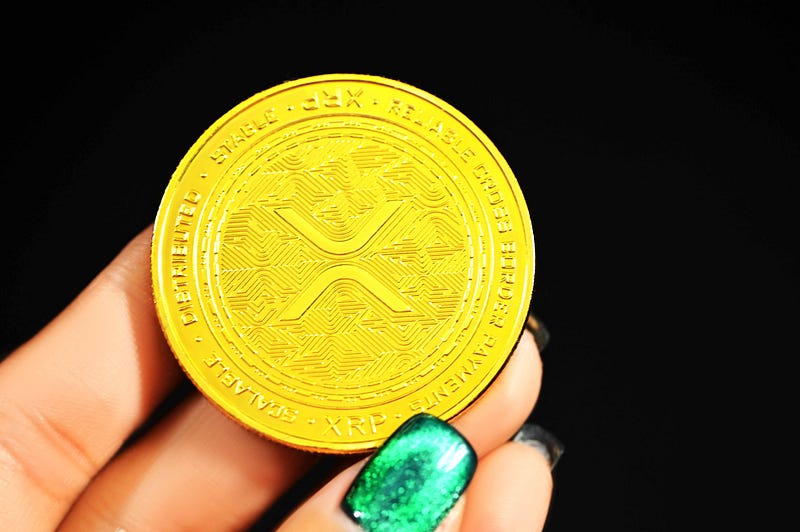
Photo by Kanchanara on Unsplash

“We are delighted to work alongside Catalyze Research. The XRPL ecosystem, together with XRP, is poised to play a significant role in bringing the Korean performing arts industry onto the global stage. We hope to create synergies through collaborations with Korean cultural performances,” said X-TICKET CEO Shin Yong-un.


Leading a new era of event ticketing

X-TICKET harnesses blockchain technology to provide digital collectible tickets for performing arts shows, including live musicals like “Cats” and “The Phantom of the Opera.” This service is expected to revolutionize the industry by preventing various problems that tend to occur with ticketing, such as duplication, loss and scalping, thus fostering a secure, transparent and efficient performing arts ecosystem. The platform recently launched its beta version and held a sales event for NFT tickets to “The Phantom of the Opera” shows.


Pioneering Web3 solutions

Catalyze Research, on the other hand, specializes in Web3 and blockchain research and consultations. The firm teamed up with Ripple in July to expand the presence of XRPL in the Korean market — a decentralized, public blockchain for businesses and developers — and encourage participation in the XRPL developer community.

“Catalyze Research is actively engaged in numerous collaborations to expand the XRPL ecosystem. We plan to implement blockchain technology into X-TICKET and the Korean performing arts sector to extend the ecosystem’s reach,” the firm stated.

The partnership between the two enterprises represents a significant step forward in the intersection of technology and the arts in Korea.


More to Read
View All
Web3 & Enterprise·

Jun 09, 2023

Animoca Brands Expands Focus to Non-US Markets

Animoca Brands Expands Focus to Non-US MarketsHong Kong-based Web3 and blockchain unicorn, Animoca Brands, is shifting its attention to markets outside the United States following the Securities and Exchange Commission’s (SEC) classification of its $SAND token as an unregistered security.This move comes after the SEC named $SAND, along with other tokens like Solana and Polygon, in lawsuits against major exchanges Binance and Coinbase Global. The labeling of these tokens as securities by the SEC poses legal risks for companies involved in their sale.Photo by Zulian Firmansyah on UnsplashNavigating regulatory challengesAnimoca Brands, led by Co-Founder and Chairman Yat Siu, has long embraced a global approach rather than focusing solely on one territory. Siu clarified the firm’s response to the latest regulatory development to the South China Morning Post (SCMP) via email on Thursday.He emphasized that while the SEC concentrates on the US, Animoca Brands operates in more progressive jurisdictions such as Hong Kong and Japan, where $SAND is widely available and accepted. In response to the recent blockchain-hostile climate in the US, the company has proactively started emphasizing other markets, reducing its reliance on the US market and mitigating potential risks associated with regulatory actions.Exchange business impactWhile Coinbase CEO Brian Armstrong has declared that his company has no intentions of delisting tokens labeled as securities by the SEC, this decision poses challenges for other exchanges less committed to selling these tokens. Dan Gallagher, Chief Legal Compliance and Corporate Affairs Officer of Robinhood Markets, expressed concerns about listing tokens due to regulatory rules and the uncertainty surrounding tokens created by organizations outside the US.These developments could have a chilling effect on exchanges, prompting crypto firms to consider moving away from the US market due to perceived uncertainty and the associated legal risks. As a demonstration of that, in a bankruptcy court hearing on Thursday, it emerged that the FTX Debtor is talking with bidders with a view to restarting the international business but restarting the US-based business is less certain.Animoca’s Middle East ventureIn a further display of its commitment to expanding outside the US, Animoca Brands announced plans in March to make significant investments, worth tens of millions of dollars, in the Middle East. This move reflects the company’s proactive strategy to tap into non-US markets and leverage the growth potential offered by progressive jurisdictions.Animoca Brands’ decision to prioritize non-US markets and reduce its reliance on the US market aligns with its global operating approach. The SEC’s classification of $SAND as a security has prompted the company to shift its attention to more progressive jurisdictions where $SAND remains widely accessible.As other firms, including Ripple, also explore growth opportunities outside the US, the global landscape of the crypto industry is evolving. By navigating regulatory challenges and expanding into promising markets, Animoca Brands aims to position itself for continued success and mitigate potential risks associated with the SEC’s actions in the US market.

news
Markets·

May 20, 2025

South Korea’s crypto market hits $968.5B in H2 2024 as Bitcoin rally lifts activity

South Korea’s cryptocurrency market experienced notable growth in the second half of 2024, as total trading volume climbed to 1.35 quadrillion won ($968.5 billion). This marks a 24% increase compared to the 1.09 quadrillion won ($782.7 billion) recorded in the first half of the year. The data was released on May 20 by the Financial Intelligence Unit (FIU), which operates under the Financial Supervisory Service (FSS).Photo by Daniel Bernard on UnsplashTrading volume and market cap surgeThe average daily trading volume rose by 22%, reaching 7.3 trillion won ($5.26 billion), with a significant surge observed after October. According to the financial authority’s report, this sustained momentum was driven by a broader bullish trend in the global crypto market, led by Bitcoin hitting all-time highs. Growing institutional interest following the launch of multiple spot Bitcoin ETFs in the U.S. and increasingly favorable crypto-related policies have further fueled the rise in asset prices. To evaluate the state of the domestic crypto market, the FIU conducted a survey of 25 virtual asset service providers (VASPs) during the second half of 2024. The survey covered 17 exchanges as well as eight entities providing either custodial or wallet services. By the end of 2024, South Korea’s total crypto market cap had surged to 107.7 trillion won ($77.55 billion), representing a 91% increase from 56.5 trillion won ($40.68 billion) in June. In contrast, the global crypto market grew by 60% over the same period, reaching a total of $3.59 trillion. However, the Korean market experienced a sharp decline in assets held by custodial and wallet service providers, which fell by 89% to 1.5 trillion won ($1.08 billion). This drop was largely attributed to a rise in business closures. Additionally, the number of users on these platforms plummeted by 99%, falling to just 1,300 customers who had completed Know Your Customer (KYC) verification. Performance and token preferencesDespite these setbacks, the 25 VASPs reported combined revenues of 1.22 trillion won ($878.5 million), marking a 15% increase. Operating profit also rose by 27% to 744.6 billion won ($536.2 million). However, capital adequacy weakened, with the capital-to-asset ratio falling by 12 percentage points to 36.5%. Meanwhile, Korean won deposits—cash held on platforms for trading—more than doubled, surging 114% to 10.7 trillion won ($7.7 billion). The number of employees at crypto exchanges increased by 18%, reaching 1,862, while staff dedicated to anti-money laundering (AML) efforts rose by 46% to 207 individuals. On average, fiat-to-crypto exchanges offered trading in 224 different tokens, an increase of 28 compared to the previous half-year. Among the top 10 cryptocurrencies by market cap in Korea, six—Bitcoin (BTC), Ethereum (ETH), Ripple (XRP), Solana (SOL), Dogecoin (DOGE) and Cardano (ADA)—also appeared in the global top 10. Collectively, these accounted for 71% of Korea’s total crypto market cap. However, the remaining four differed: Korean investors favored Ethereum Classic (ETC), Shiba Inu (SHIB), Stellar (XLM) and Bitcoin Cash (BCH), whereas global investors leaned toward Tether (USDT), Binance Coin (BNB), USD Coin (USDC) and TRON (TRX). User base growth and demographic trendsThe number of KYC-verified users eligible to trade reached 9.7 million in the second half of 2024, representing a 25% increase from the previous period. Individual users accounted for the vast majority, while corporate users made up less than 0.01% of the total. By age group, users in their 30s accounted for the largest share at 29%, followed by those in their 40s (27%), 20s and younger (19%), 50s (18%) and 60s and older (7%). The majority of users—66%, or roughly 6.37 million people—held less than 500,000 won ($360) in digital assets. In contrast, 12% of users held over 10 million won ($7,180), while 2.3% had portfolios exceeding 100 million won ($71,820). 

news
Web3 & Enterprise·

Sep 07, 2023

Japanese Financial Giant SBI Extends Use of Ripple’s Remittance Tech

Japanese Financial Giant SBI Extends Use of Ripple’s Remittance TechSBI Remit Co., Ltd., a prominent player in the international money transfer sector and a subsidiary of Japanese financial services conglomerate SBI Group, has unveiled a significant expansion of its collaboration with Ripple in Asia.Photo by Kanchanara on UnsplashPhilippines, Vietnam, and IndonesiaThe strategic alliance between the two companies will enable international remittance services utilizing Ripple’s XRP cryptocurrency as a bridge currency, connecting bank accounts in the Philippines, Vietnam, and Indonesia.The partnership, announced via a statement published to SBI’s website on Wednesday, builds upon SBI Remit’s history of utilizing Ripple Payments for its international remittance services, which dates back to 2017. The company has been a pioneer in Japan, leading the way in offering an international remittance service that leverages XRP as a bridge currency between two sovereign currencies.This latest move underscores SBI Remit’s interest in furthering its exploration and use of XRP-based remittances. In 2021, it introduced a service targeting digital wallets in the Philippines, marking a milestone in using XRP for international remittances in Japan.Simplifying international remittancesThe newly introduced scheme aims to simplify the international remittance process significantly. The process involves SBI Remit initiating a customer’s remittance request, followed by SBI VC Trade facilitating real-time XRP transfers in response to the request. This dynamic approach has been made feasible through a strategic partnership with Tranglo Pte. Ltd., a long-standing Ripple partner. It ensures that customers receive their remittances in their respective local sovereign currencies.SBI emphasized the advantages of using XRP as a bridge currency, highlighting its ability to enable fast and cost-effective money transfers. XRP also boasts excellent scalability, allowing users to seamlessly send funds to Ripple’s global partners. SBI believes that this will enhance its competitiveness in the international remittance sector.Targeting important remittance marketsThe decision to target the Philippines, Vietnam, and Indonesia was not arbitrary. These countries have a substantial share of remittances channeled into bank accounts, making them ideal candidates for XRP adoption. SBI Remit anticipates that the introduction of the XRP-based remittance service will further accelerate cryptocurrency adoption in these nations.Yoshitaka Kitao, chairman and CEO of SBI Holdings, expressed the company’s commitment to transforming international remittance services. The press release also conveyed SBI Remit’s dedication to extending its reach beyond the initial three Asian countries. At the time of publication, XRP was trading at $0.5022.The significance of the announcement was not lost on retail investors with an ongoing interest in XRP. Taking to X (formerly Twitter) one wrote:“Everyone who says Ripple does not utilize XRP, and that nobody uses XRP is WRONG.”At Paris Blockchain Week earlier this year, Monica Long, President of Ripple, stated: “The past couple of years have been a real tipping point for institutional DeFi, where even the biggest of banks are embracing this technology as the future, and they have to adapt or die.” That statement is relevant when this latest expansion of the Ripple/SBI partnership is considered.SBI Remit’s expanded partnership with Ripple marks a significant step in the evolution of international remittance services. By harnessing the power of XRP as a bridge currency, SBI Remit aims to revolutionize cross-border transactions while targeting countries with substantial remittance markets.

news
Loading
