Top

Seoul and Baobab Partners Face Controversy Over Unpaid Prize Winnings for SWF2023 Hackathon

Policy & Regulation·October 24, 2023, 8:53 AM

The city of Seoul has come under public scrutiny for failing to pay the winners of the Seoul Web3 Festival (SWF2023) Hackathon a cash prize worth KRW 150 million (approximately $112,000). The Seoul Metropolitan Government has argued that since it was simply a naming rights sponsor, the responsibility for paying the prizes lies with Baobab Partners, who co-hosted the event. However, critics argue that the city did not properly vet Baobab Partners more rigorously before hosting the event.
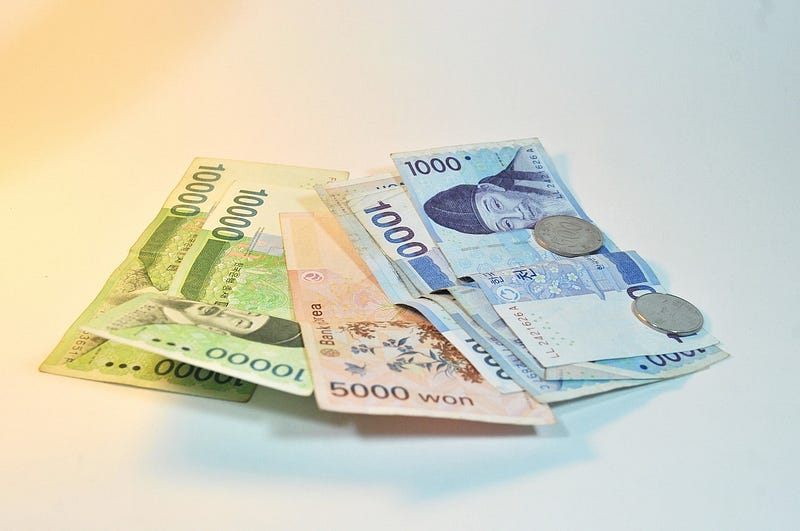
Photo by okaybuild on Pixabay


Unpaid prizes linger

The SWF2023 Hackathon took place from July 31 to August 2 at Dongdaemun Design Plaza (DDP) and was co-hosted by the city of Seoul, the Seoul Design Foundation, and Baobab Partners. It offered a total prize pool of KRW 150 million attracting 417 participants who made up 115 teams.

However, although over two months have passed since then, the winners are yet to be paid their prize money. “Baobab Partners initially proposed the SWF2023 event, and they were responsible for gathering the necessary sponsorship funds to run the event,” said a city representative.

According to industry sources on Monday, the company’s CEO, Choi Jin-beom, issued a handwritten apology last Friday regarding the incident. “We promised to pay the winners by today, but we were unable to deliver on that promise. We explored multiple avenues, including investors, new contractors, and other assets, but were ultimately unable to secure the funds to do so,” he said. “The narrative that the funds were diverted elsewhere or invested in cryptocurrencies or stocks is untrue,” he added, clarifying that related information was transparently disclosed to the city of Seoul.


Baobab Partners’ swift rise raises industry eyebrows

Baobab Partners had previously participated as an event planner at last year’s Blockchain Week in Busan, which turned out to be a success. “We also spoke with the Busan city government, who gave a positive opinion of the company,” the representative added. It was under this context that Seoul entered into a naming rights agreement with Baobab Partners. The agreement stipulated that the company would be in charge of attracting and managing sponsorships, and the prize money and operational costs would be covered by corporate sponsorship funds.

Nevertheless, questions have arisen within the industry about Baobab Partners’ short track record and its successive collaborations with public organizations. Baobab Partners is a startup that was founded in May 2021. In November of the same year, the firm signed memoranda of understanding with three blockchain companies during NFT Busan 2021, a large-scale NFT fair held in the southern port city to share the latest blockchain trends. As a result of its efforts, it was listed alongside prominent companies such as Coinone and Onther despite only six months passing since its establishment. Subsequently, Baobab Partners relocated from Seoul to Busan, and the following year, it participated as an event planner at Blockchain Week in Busan.


Accumulating allegations

Speculation suggests that this success was not solely due to Baobab Partners’s capabilities. The company’s CEO is believed to have political connections, according to an anonymous industry insider. Choi denied such claims and stressed that its technical expertise should not be downplayed, citing the fact that Baobab Partners was the first entity in Korea to develop virtual reality (VR) banking technology and had received a KRW 15 billion investment from Finger, a KOSDAQ-listed company.

Baobab Partners has also been mired in controversy over supposedly unpaid wages. In response to a claim made by an industry source that many former employees of Baobab Partners have still not received their due wages, a Seoul representative stated that there is no such dispute according to conversations with company representatives, seeking to dispel the dispute. Choi further explained, “We didn’t have wage disputes until last year. The difficulty in paying wages began in January this year due to the failure to execute promised investment funds.”

The city said that it is currently conducting legal examinations and looking into necessary measures for two matters involving Baobab Partners, including the handling of hackathon winnings.


More to Read
View All
Web3 & Enterprise·

Jul 19, 2023

AIITONE Partners with FIDES Development for Real Estate Tokenization

AIITONE Partners with FIDES Development for Real Estate TokenizationAIITONE, a South Korean blockchain-based fintech company, has announced a partnership with FIDES Development, a real estate developer, to enhance their collaboration in the security token sector, as reported by local outlet Hankook Economy TV.FIDES Development has been undertaking various initiatives within the real estate sector, including the identification of underlying assets for security tokens, the development of virtual reality-based show houses, and the implementation of artificial intelligence-powered property technology. In order to support FIDES in these endeavors, AIITONE will provide its advanced fintech services.Photo by Jiho Choi on UnsplashReal estate tokenizationThe objective of the collaboration between the two companies is the tokenization of real estate properties. FIDES Development has developed a wide range of projects, including apartments, offices, and multi-purpose complexes. One of their current projects is a 39-floor accommodation building in Gangwon Province.Legalizing security tokensGiven the accelerating legislative process associated with legalizing security tokens in the National Assembly, construction and development companies are increasingly interested in the fractional investment industry.Both AIITONE and FIDES Development expressed their excitement about this partnership, as they believe it will enable them to identify valuable real estate assets and tokenize them, thus creating innovative and secure investment opportunities.Notably, Kim Seung-bae, CEO of FIDES Development, is also the chairperson of the Korea Developer Association (KODA), which has trained around 18,000 professionals in the field. KODA serves as a legal organization representing South Korea’s real estate development industry.Similar developments in JapanMeanwhile, similar developments have been observed in Korea’s neighboring country, Japan. In May, Mitsui & Co. Digital Asset Management introduced Alterna, a security token platform with a primary focus on real estate. Alterna has democratized investment opportunities that were previously inaccessible, enabling individuals to invest with a minimum of 100,000 yen. The platform garnered substantial interest from Japanese investors, amassing over 10,000 pre-registrants ahead of its official launch.

news
Web3 & Enterprise·

Apr 25, 2024

Worldcoin executives meet Malaysian leaders 

OpenAI CEO Sam Altman's Worldcoin project aims to bolster ties with Malaysian officials amid concerns over data privacy. Sam Altman and Alex Blania, key figures behind the Worldcoin project, recently engaged in discussions with Malaysian leaders, including the nation's Prime Minister, to enhance government relations. The move comes as Worldcoin faces scrutiny and seeks to address concerns surrounding data protection.Photo by Esmonde Yong on UnsplashAddressing privacy concernsThe "proof-of-personhood" crypto project has been under scrutiny for its data collection practices. Last month, temporary bans were imposed by Spain and Portugal, halting Worldcoin's data collection activities. The project offers WLD tokens to users in exchange for iris scans to create their personal World ID, prompting privacy advocates' concerns. Government attention and oversightWorldcoin's high-profile nature, coupled with Sam Altman's involvement, has drawn significant government attention. Countries like Germany, France, Argentina, Kenya and South Korea have initiated investigations into the project's data collection practices. Despite challenges, senior government officials continue to engage with Worldcoin amidst growing concerns about artificial intelligence threats like deepfakes. Strengthening government relationsTo address regulatory concerns, Worldcoin's parent company, Tools for Humanity, appointed Trevor Traina, former U.S. ambassador to Austria, as Head of Global Affairs. Traina emphasized the importance of meeting policymakers' expectations regarding data privacy and security. New privacy measuresIn response to regulatory pressures, Worldcoin introduced "Personal Custody," discontinuing the storage of biometric data for new signups. Additionally, users can now request the deletion of their iris codes, and stricter age verification measures have been implemented to prevent minors from signing up. These measures were developed in consultation with privacy experts and data protection authorities. Despite challenges, Worldcoin has assigned over five million World IDs, according to project data. 

news
Policy & Regulation·

Sep 29, 2025

Japan surges to the front of Asia’s crypto pack as policy tailwinds mount

Japan’s cryptocurrency market has surged to become the fastest-growing in the Asia-Pacific region, driven by a government overhaul of its digital asset policies. On-chain transaction value jumped 120% in the year ending June 2025, according to a new report from Chainalysis. The expansion signals renewed activity in a market long characterized by its cautious approach. The Japanese government is increasingly open to crypto as a mainstream investment class through a series of reforms, including proposed friendlier tax laws and the licensing of regulated stablecoins, aiming to attract investment and foster a domestic Web3 industry.Photo by Daniel Hehn on UnsplashOverhauling a strict tax codeA central pillar of the reform is a proposed change to Japan’s tax code, which currently subjects crypto gains to rates of up to 55%, compared with a flat 20% on stock profits. The ruling Liberal Democratic Party is backing proposals to introduce the same 20% rate for crypto starting in fiscal 2026, along with rules that would allow investors to carry forward losses for up to three years. The measures, which require parliamentary approval, are intended to align digital assets more closely with traditional financial instruments. Uncertainty has emerged, however, with Prime Minister Shigeru Ishiba’s decision to resign. Ishiba has been supportive of the crypto industry, and the LDP’s leadership election on Oct. 4 could reshape the policy outlook. Sanae Takaichi is seen favoring tighter oversight, Shinjiro Koizumi more receptive to digital assets, and Finance Minister Katsunobu Kato stressing a balance between investor protection and innovation. Paving the way for a stablecoin eraThis political transition coincides with a shift in the Japanese market, which remains heavily concentrated in just a few assets. Over the past year, yen-denominated trading was dominated by XRP with $21.7 billion in volume, outpacing Bitcoin ($9.6 billion) and Ethereum ($4.0 billion). While political developments add unpredictability to the outlook, successful regulatory reforms could set the stage for positive change. One potential catalyst is the government’s recent licensing of the first issuer of a yen-backed stablecoin. Stablecoin issuer JPYC received Japan’s first funds transfer service provider license in August, with its launch anticipated in October. Broader access to stablecoins, digital tokens pegged to fiat currencies like the U.S. dollar or yen, is expected to provide Japanese traders and institutions with a more familiar tool for settlement. Major financial players are also moving in this direction. SBI Group, a leading financial conglomerate, recently deepened its partnership with Ripple to distribute RLUSD, an enterprise-grade U.S. dollar-backed stablecoin, in Japan. SBI plans to make the regulated stablecoin available by March 31, 2026. Corporate Japan bets on blockchainAt the same time, SBI Group also recently partnered with infrastructure provider Startale Group to build a blockchain-based trading platform for tokenized real-world (RWA) assets like stocks. The venture is a bet on the burgeoning tokenization market, which Ripple and Boston Consulting Group (BCG) project could reach nearly $19 trillion by 2033. Alongside moves by major financial groups, Japan is also nurturing its homegrown Web3 talent through the J-StarX Program, coordinated by JETRO Dubai and sponsored by the Ministry of Economy, Trade and Industry. This year, more than half a dozen Japanese startups, together raising over $17 million, were selected for the initiative, spanning blockchain infrastructure, AI-driven platforms, and advanced fintech solutions.  Since August, the cohort has been preparing for international exposure, with showcases scheduled at GITEX GLOBAL 2025 in Dubai and a visit to Abu Dhabi’s Hub71 in October. The initiative reflects Japan’s strategy of expanding overseas networks for its startups while positioning them to access the UAE’s growing Web3 and fintech markets. 

news
Loading