Top

Coins.ph Suffers 12M XRP Exploit

Policy & Regulation·October 24, 2023, 12:15 AM

Coins.ph, a leading cryptocurrency exchange in the Philippines, is grappling with the alleged loss of over 12 million XRP tokens, valued at $6 million, in a purported exploit.

That’s according to various reports that have been emerging from the Philippines in recent days. The incident not only spotlights serious questions about the security protocols and regulatory oversight of crypto exchanges in the Philippines but it also sparked fears of an impact on market sentiment relative to the XRP unit price.
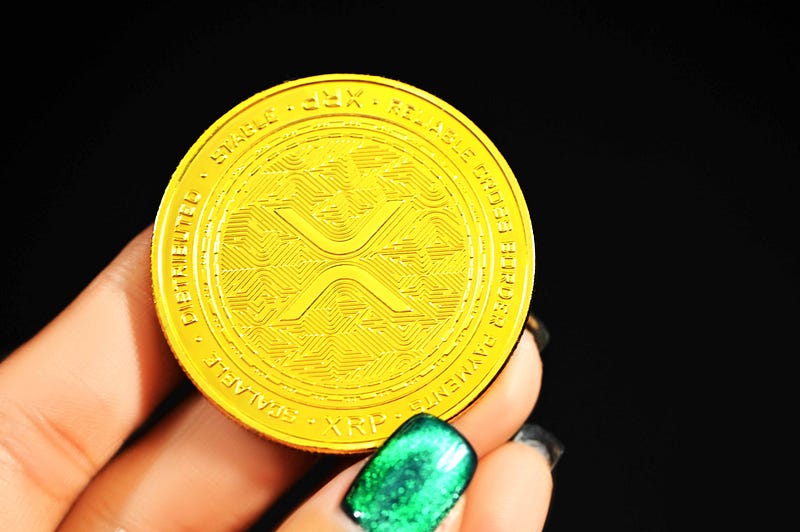
Photo by Kanchanara on Unsplash


Hacker used various platforms

The reports revealed that an exploit targeted Coins.ph, resulting in the unauthorized transfer and exchange of 12 million XRP tokens in a mere 30 minutes. The hacker behind this incident managed to navigate through various platforms, including OKX, WhiteBIT, OrbitBridge, SimpleSwap, ChangeNOW, and Fixed Float, leaving users and investors alarmed.

Coins.ph’s wallet, the focal point of the exploit, has a connection to BitGo, a California-based crypto custody firm, which initiated its activation back in 2018. At present, neither Coins.ph nor BitGo has issued any official statements regarding this reported breach.

The alleged exploit brings to the forefront once again, the importance of robust security protocols and regulatory oversight within the cryptocurrency industry in the Philippines and elsewhere. Coins.ph is a major player in the crypto sector in the Southeast Asian country, having more than 10 million users.

The hacker responsible for the exploit attempted to execute several transactions, trading nearly 13 million XRP tokens, with one transaction seemingly failing to go through. Following the successful acquisition of approximately 12.2 million XRP tokens, the hacker swiftly moved these assets to different exchanges.

Responding to the incident, some platforms promptly blocked or marked the stolen XRP tokens and sought assistance from blockchain analysis firms such as Cristal and Chainalysis. This exploit is being deemed as one of the most substantial thefts of XRP tokens in recent history.

It’s understood that WhiteBIT blocked the movement of some of the XRP that has been implicated in the hack. WhiteBIT told The Block: “WhiteBIT, as soon as received a request from the Philippines-based exchange Coins, promptly reacted and blocked 445,000 Ripple.”


XRP impact

XRP, the native cryptocurrency of the Ripple network, which primarily focuses on facilitating cross-border payments, has been grappling with its price stability in recent times. This has been largely due to the ongoing legal disputes between Ripple and the US Securities and Exchange Commission (SEC) over allegations of conducting unregistered securities offerings.

While it had been speculated initially that the hack would have impacted the XRP unit price, XRP seems to have held up well. At the time of writing, it was trading at $0.526. There has been an overall uplift in the crypto market as a whole over the course of the past 24 hours which may be a contributing factor, with digital asset market cap being up 2.7%.

As the crypto community waits for official responses from Coins.ph and BitGo, the incident serves as a stark reminder of the importance of safeguarding digital assets and enhancing regulatory oversight in an industry that continues to evolve and expand.


More to Read
View All
Web3 & Enterprise·

Apr 24, 2023

OPNX Confirms Significant VC Backing

Newly founded bankruptcy claim trading platform OPNX has provided further details about the entities backing the fledgling startup. Taking to Twitter on Friday, Open Exchange CEO Leslie Lamb outlined a number of venture capital backers, with a mixture of international and Asia-centric firms among them. Global backersLamb’s tweet via the firm’s official Twitter account, together with a similar announcement published to the firm’s website, outlined AppWorks, a leading Taiwanese venture capital firm and startup accelerator, as an investor in the company. Other Asian backers include Hong Kong-based crypto fund, Token Bay Capital and the Hong Kong-based arm of one of China’s largest banks, China Merchant Bank International.With the firm based in Dubai, Middle-Eastern interest is represented through the involvement of Saudi digital asset fund, Tuwaiq Limited. Otherwise, the company lists a number of other international backers, including US equity options exchange MIAX Group, DeFi-focused venture and trading firm Nascent, top tier global venture capital firm Susquehanna and the investment arm of market maker and early stage investor, DRW. Questionable founding teamOnly hours after the disclosure by Open Exchange, DRW reached out to CoinDesk to confirm that it is not an investor in the bankruptcy claims exchange. Nascent and Susquehanna also denied that they are involved. The companies are still being listed by OPNX as backers of the project on its website.The launch of OPNX has been mired in controversy from the outset as its founding team includes the founders of the former crypto hedge fund Three Arrows Capital (3AC) which failed spectacularly in 2022. Su Zhu and Kyle Davies, the founders of 3AC are now the founders behind OPNX. Before their involvement, OPNX was preceded by Seychelles-based crypto yield platform CoinFLEX. That business also failed during the 2022 crypto bear market. It entered into a restructuring process with the consent of the courts in the Seychelles. Emerging from it is OPNX with the 3AC duo of Zhu and Davies having gotten involved at that point. Industry push-backMany in the crypto space have been highly critical of the development of OPNX on the basis of the involvement of both Zhu and Davies. The duo are being blamed for the collapse of the crypto hedge fund due to mismanagement and the knock on effects the firm’s demise had on other entities within crypto. Many of the series of crypto lenders who failed at a later stage in 2022 had major exposure to the wayward hedge fund.There had been some speculation as to who was backing the new project. Earlier this month, BitMEX co-founder and former CEO Arthur Hayes claimed that the 3AC duo had received substantial funding from Bahrain’s sovereign wealth fund to establish the project. In February, Hayes suggested that the crypto bull market must be starting based on news of Zhu and Davies wanting to launch the OPNX platform.Crypto-focused venture capitalist Michael Arrington also spoke out around that time, stating on Twitter, that 3AC founders successfully raising capital for their latest venture was “the saddest bulls**t I’ve heard in a long time.”Upon its launch earlier this month, industry commentators quickly declared the project a flop citing a trading volume of $13.64 on its first day of trading. Five days in, OPNX made light of the situation, declaring a win on the basis that it had progressed to $12,398 in trading volume, representing a 90,000% increase in trading.Dubai’s Virtual Assets Regulatory Authority (VARA) issued an investor and marketplace alert on April 12 stating that while OPNX may be Dubai-based, it is not regulated by VARA and instead operates on an unregulated basis. It warned investors against using any unregulated crypto entity.

news
Policy & Regulation·

Jul 13, 2023

South Korean Job Seekers to Benefit from Digital Badges for License Credentials

South Korean Job Seekers to Benefit from Digital Badges for License CredentialsSouth Korean job seekers will soon be able to enjoy the convenience of proving their license credentials with digital badges based on non-fungible tokens (NFTs).The South Korean Ministry of Employment and Labor has announced that its affiliate, the Human Resources Development Service of Korea (HRDK), plans to create a mobile application that supports virtual asset wallets. These wallets will allow citizens to conveniently store their HRDK-issued licenses in the form of digital badges.Photo by Gül Işık on PexelsNFT-based digital badgesThese digital badges, which are based on NFTs, will also serve as proof of certification for HRDK’s education and training courses. Decentralized identifiers (DIDs) based on blockchain technology will prevent forgery and counterfeiting and improve personal information protection. The incorporation of gaming elements within NFTs is expected to motivate citizens to engage in continuous learning.Chosen as this year’s state-led blockchain initiative last December, the digital badge project is supported by the Ministry of Science and ICT (MSIT) and the Korea Internet and Security Agency (KISA). HRDK aims to complete the transformation of its 18.5 million issued licenses into digital badges by the end of this year. The project also involves digitizing vocational training certificates issued by the Korea Employment Information Services (KEIS), which has an average annual issuance of 3.6 million certificates. Access to these badges will also be facilitated through not only state-managed mobile ID wallets but also private platform wallets.In the context of employment and career management, individuals have traditionally received paper certificates and had to deliver them to relevant organizations. This process often involved inconvenience, as it required in-person visits, mailing, or scanning. Moreover, individuals faced the hassle of repeatedly obtaining the same certificate due to expiration dates and storage concerns.Seamless certificate managementWith the introduction of the digital badge service, users will be able to download a mobile application on their smart devices. This app will enable them to access their national certificates, allowing them to view their qualification and training completion information at any time. Additionally, users will gain the convenience of instantly submitting or verifying their certificates remotely through their mobile devices whenever necessary.HRDK will further enhance its services through strategic partnerships with credentialing organizations from both the public and private sectors.Kim Young-joong, the Acting President of HRDK, emphasized the significance of national licenses and training certificates as objective measures of individuals’ performance and skills, underscoring their importance in the employment landscape. He further expressed HRDK’s commitment to ensuring customer satisfaction by leveraging cutting-edge technology and efficient data management practices to drive innovation in public services.

news
Web3 & Enterprise·

Nov 21, 2025

Grab joins hands with StraitsX to enable stablecoin retail payments across Asia

Grab, the Nasdaq-listed Southeast Asian superapp, has signed a strategic memorandum of understanding (MOU) with StraitsX, a Singapore-based stablecoin payment infrastructure provider, to develop Web3 wallets and a payment network powered by stablecoins. A Nov. 18 press release said Web3 wallets will be added to the Grab app, allowing merchants in Asia to accept stablecoin payments from local and overseas customers.Photo by Grab on UnsplashXSGD and XUSDUnder the partnership, Grab users may be able to hold and use stablecoins like XSGD and XUSD, which are pegged to the Singapore dollar and U.S. dollar respectively, and convert between fiat and other stablecoins in-app, provided they meet regulatory compliance requirements. Grab expects the integration to facilitate real-time cross-border settlement with transparent foreign-exchange rates, improving efficiency through faster, cheaper, and compliant transactions. The superapp operator seeks to create a single, interoperable Web3 payment framework that eliminates the need to switch between country- or method-specific systems. Merchants are expected to benefit from enhanced liquidity and capital management via programmable settlement features enabled by smart contracts and on-chain treasury tools. ASEAN’s regulatory gapsThis industry development comes amid growing interest in digital finance among intergovernmental organizations. In a blog post, Yasuto Watanabe, Director of the ASEAN+3 Macroeconomic Research Office (AMRO), noted the private sector’s growing involvement in stablecoins, outlining their advantages and risks. He said stablecoins offer greater accessibility and enable faster, cheaper transactions compared with traditional banking.  Stablecoins are widely used for remittances in Southeast Asia, particularly in the Philippines and Vietnam, and are also a common tool for small businesses engaged in cross-border trade. Watanabe also warned of risks such as anonymity-driven money laundering and capital control evasion. He also pointed to concerns that the rise of U.S. dollar–denominated stablecoins could undermine monetary sovereignty. In this context, the AMRO Director underscored the importance of the ASEAN+3 region addressing existing gaps through concerted action. 12M USDT seized in Thailand crackdownGovernment concerns are reflected in recent crypto-related crimes making headlines. In a recent case, Thai authorities, in coordination with the U.S. Secret Service, detained 73 individuals and confiscated assets valued at more than 522 million baht. About 400 million baht of that total was in USDT (12 million USDT). Tether said in an announcement that it supported law enforcement in the operation. The emergence of stablecoins is clearly transforming the traditional financial landscape. Companies are racing to harness new technologies, while regulators focus on combating illicit activity and strengthening consumer protections. As the sector evolves, new opportunities and risks will surface, and the balance between innovation and safety will be a key question moving forward. 

news
Loading