Top

Shinhan Card’s Membership NFTs Offer Discounts at Emart24 Convenience Stores

Web3 & Enterprise·October 10, 2023, 5:12 AM

Shinhan Card, a major South Korean credit card company, announced on October 10 (local time) that it is launching membership non-fungible tokens (NFTs) in collaboration with convenience store chain Emart24 and Kakao’s blockchain subsidiary Ground X.
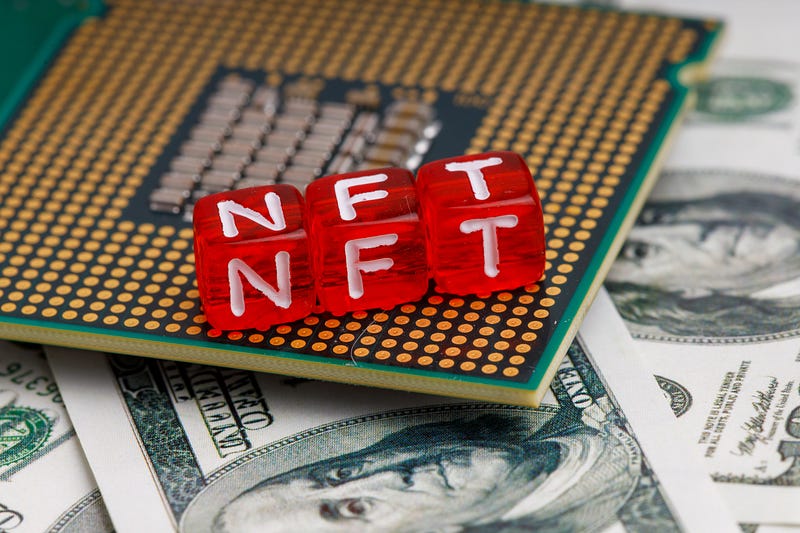
Photo by Andrey Metelev on Unsplash


NFT and loyalty points

Owners of the membership NFTs can make purchases of KRW 5,000 ($3.71) or more at Emart24’s brick-and-mortar stores using the Shinhan Card mobile app, known as Shinhan pLay, to earn KRW 1,000 worth of My Shinhan Points. This benefit can be claimed up to three times a month.

Moreover, upon purchasing the NFT, buyers will be gifted a KRW 2,000 off Emart24 coupon. Every month, they’ll be treated to a KRW 1,000 off coupon, a 10% off coupon on alcoholic beverages (with savings of up to KRW 3,000), and another 10% off coupon (with savings of up to KRW 1,500).

NFT holders also get a KRW 2,000 discount coupon for the card company’s shopping platform, Allthat. Furthermore, every month, when they spend over KRW 10,000 in the food and nutrition category, they can use a 20% discount coupon, saving up to KRW 10,000 on their purchase.


Valid for three months

These benefits will remain valid for three months starting from the date of issuance of the NFT. A total of 1,000 membership NFTs will be offered for sale at KRW 9,900 each on the Allthat platform until October 16.

Purchased NFTs can be received via Ground X’s Klip Wallet, which is accessible through the Emart24 app and the Shinhan pLay app.

This initiative stems from an NFT alliance established in July of last year, comprising Shinhan Card, Emart24, and Ground X. The alliance, known as GRID, has set its sights on promoting the widespread adoption of NFTs across diverse sectors, including finance, commerce, and entertainment. Commencing with this effort, Shinhan will engage in collaborative efforts with fellow GRID members to explore additional avenues for expanding its services through its pLay app.

More to Read
View All
Web3 & Enterprise·

Jul 13, 2023

Suspected Malicious Activity Drains AnySwap Tokens via Multichain Executor

Suspected Malicious Activity Drains AnySwap Tokens via Multichain ExecutorAccording to an on-chain sleuth known as Spreek, a person is using the Multichain Executor to drain tokens associated with the AnySwap bridging protocol.Multichain is a cross-chain routing network, established and maintained by a Chinese developer team. It supports in excess of 25 blockchains and more than 1,100 tokens.Photo by Marek Piwnicki on Unsplash$100 million outflowThis revelation comes after abnormal outflows of over $100 million from Multichain bridges on July 7, which were flagged by the Multichain team. Spreek’s report via Twitter on July 10 states that the Multichain Executor address has been draining anyToken addresses across multiple chains and transferring them to a new externally owned account (EOA).Evidence provided in the report includes an Ethereum transaction, 0x53ede4462d90978b992b0a88727de19afe4e96f0374aa1a221b8ff65fda5a6fe, which called the “anySwapFeeTo” method on the Multichain Router: V4 contract. This transaction resulted in approximately $15,275.90 worth of anyDAI being minted on Ethereum, sent to the Multichain Executor, burned, and exchanged for the underlying DAI backing the asset.The funds from these transactions were sent to the following address:0x1eed63efba5f81d95bfe37d82c8e736b974f477b. Similarly, on the BNB Smart Chain (BSC), the Multichain Executor used the anySwapFeeTo function to convert $208,997 worth of anyUSDC into Binance-pegged USDC and sent them to the same address. Additionally, 50.80 anyBTC, equivalent to $39,251.43 at the time, was converted into Binance-pegged Bitcoin and sent to the address.In total, approximately $263,524.33 worth of tokens were sent to this address through the anySwapFeeTo method. Spreek suggests that this behavior could be part of the protocol’s normal functioning. However, a different account engaged in similar activity the day before and ultimately sold the drained tokens, indicating malicious intent.Potential exploitSpreek theorizes that the attacker may be exploiting the anySwapFeeTo function by setting fees to an arbitrarily large amount, allowing them to drain users’ funds. The function apparently permits setting any value, enabling the address to choose the total value of the token held in that anyToken.The Multichain incident has puzzled blockchain analysts, as it remains unclear whether it resulted from an exploit or if it was simply large token-holders moving their funds between networks. The mystery began on July 7 when over $100 million worth of tokens were withdrawn from the Ethereum side of Multichain’s bridges and transferred to wallet addresses with no prior transactions. This represented the majority of funds held on each bridge.Hack or rug pullThe Multichain team labeled these withdrawals as “abnormal” and advised users to stop using the protocol. However, they have not disclosed the source or nature of the anomaly. In response to the incident, stablecoin issuers Circle and Tether froze some of the addresses involved in the suspicious transactions. Chainanalysis, a blockchain analytics firm, has commented that the incident appears more like a hack or rug pull rather than a migration.Adding to the complexity, the Multichain team has reported that their CEO is missing, and they have shut down certain bridges due to losing access to some of the network’s multi-party computation network servers. There have been various concerns relative to Multichain since May. The situation continues to evolve, with ongoing investigations and efforts to mitigate any potential damage caused by the suspected malicious activity.

news
Policy & Regulation·

Aug 16, 2023

Singapore Takes Lead in Regulating Stablecoins

Singapore Takes Lead in Regulating StablecoinsSingapore has taken a proactive step by finalizing regulations for stablecoins, solidifying its position as one of the first jurisdictions to do so on a global scale.The Monetary Authority of Singapore (MAS) has established a comprehensive framework that outlines essential prerequisites for stablecoin operations, according to an announcement made by the central bank on Monday.Key highlights include:Reserve Backing: Stablecoins must be backed by reserves consisting of low-risk and highly liquid assets. The value of these reserves should equal or surpass the circulating stablecoin value at all times.Prompt Redemption: Stablecoin issuers are mandated to return the par value of the digital currency to holders within five business days upon redemption requests.Transparency: Issuers must furnish users with “appropriate disclosures,” including audit outcomes of the backing reserves.These regulations will be applicable to stablecoins issued in Singapore that mirror the value of the Singapore dollar or any G10 currency, such as the US dollar. Stablecoins meeting all the requirements outlined by the regulations will receive recognition from the regulator as “MAS-regulated stablecoins.” This distinct categorization will differentiate them from tokens lacking regulation.Photo by CoinWire Japan on UnsplashKey roleWith a market valuation of approximately $125 billion, stablecoins have rapidly emerged as a significant force within the crypto space. Leading the pack are Tether’s USDT and Circle’s USDC, which together command around 90% of the market’s total value.Stablecoins play a key role in the crypto trading market. They allow traders to move in and out of various cryptocurrencies and back into fiat. However, despite their immense influence, stablecoins have largely remained unregulated across the globe. While their primary use has been in trading, stablecoin proponents assert their versatility in various applications, including remittances.Digital currency hubSingapore has been actively positioning itself as a hub for digital currencies, striving to attract foreign companies seeking refuge from the crypto industry’s apprehensions surrounding the current unwelcoming US regulatory approach.Despite their prevalence, stablecoin issuers have faced criticism regarding the transparency of their reserve holdings. Singapore’s regulatory measures aim to bring increased clarity to this sector.Ho Hern Shin, Deputy Managing Director of Financial Supervision at MAS, expressed that the framework’s purpose is to enable stablecoins to serve as a credible digital medium of exchange and bridge the gap between fiat and digital asset ecosystems.Positive industry responseLeading stablecoin firms, Tether and Circle, have applauded Singapore’s new regulations. Yam Ki Chan, Vice President of Strategy and Policy for APAC at Circle, stated that MAS is at the forefront of forward-looking regulators globally, establishing a transparent regulatory framework for stablecoins and digital assets. Paolo Ardoino, CTO of Tether, hailed the framework for providing a clear structure, accountability, and transparency in stablecoin operations within Singapore.The collapse of algorithmic stablecoin UST last year drew regulatory attention to this category of stablecoins. Unlike traditional stablecoins like USDT and USDC, UST was governed by an algorithm and lacked real-world assets as reserves.Singapore’s stablecoin regulations have placed it in a select group of jurisdictions pioneering such rules. Hong Kong is presently undergoing public consultation on stablecoins and plans to introduce regulations in the coming year.

news
Policy & Regulation·

Apr 21, 2023

Crypto Features in India-UK Markets Dialogue

Crypto Features in India-UK Markets DialogueAccording to a press release published by HM Treasury, the 2nd India-UK Financial Markets Dialogue meeting held on Wednesday featured six key themes with crypto featuring among them.©Pexels/SkitterphotoThe event brought officials from both nations together in the first in-person financial dialogue since 2017. While the meeting considered banking, insurance and reinsurance, capital markets, asset management and sustainable finance, it also allotted time to discuss payments and crypto-assets.CBDC knowledge sharingBoth sets of officials discussed the scope for augmenting knowledge on Central Bank Digital Currencies (CBDC) by way of mutual learning. The officials agreed on the importance of robust global approaches relative to the emergence and development of crypto-assets internationally. The joint statement issued following the meeting revealed that progress relative to the G20 roadmap for enhancing cross-border payments was a matter which was discussed. It’s an item that could have major implications for the use of cryptocurrency in cross border transactions.Global collaborationThe meeting marks another move towards greater global collaboration on policy and regulation relative to digital payment systems and crypto assets. Earlier this month, India’s Finance Minister Nirmala Sitharaman said that the introduction of any new regulations on digital assets needs to be coordinated on a global basis. “The G20 and its members agree that it’s not going to be possible to have an independent, standalone country dealing with crypto assets”, Sitharaman stated at a news conference following a meeting of central bank governors and G20 finance ministers.There’s a growing recognition among politicians, government and central bank officials that decentralized money doesn’t end at a territory’s borders due to its inherently decentralized properties.Taking steps to regulate cryptoWhile on the one hand strategizing as to how digital assets can be best controlled on a global level, India is also taking its own individual steps towards national regulatory action. Recently, it expanded its Prevention of Money Laundering Act (PMLA) to include consideration of digital assets. The newly amended PMLA will now deal with the exchange of digital assets for fiat money and vice versa. It also considers safekeeping, transfer and administration relative to cryptocurrency. Furthermore, its broadened scope deals with financial services offered related to virtual or digital assets.Rajagopal Menon, the VP of India’s leading cryptocurrency exchange WazirX, has said that “regulations levied by India have been baby steps toward institutional participation in the crypto exchange.” While market participants in the digital assets space are apprehensive about the regulatory measures that governments and state regulators choose to adopt, so long as the objective isn’t to regulate the innovation out of existence, such developments can have a profoundly positive effect on the digital assets market.There’s no doubt that in line with Menon’s point relative to the Indian context, the same scenario can play out in all digital markets given the application of the right regulatory approach. Institutional investment for the most part has eluded crypto despite many already heralding its arrival in recent years. Institutions move slowly and the only way in which they will be comfortable in working with digital assets is with complete regulatory clarity having been set out.So while some in crypto may be concerned at the mention of global regulatory coordination in respect of digital assets, so long as it doesn’t go too far, greater work towards improved regulatory clarity in the digital assets market can be a catalyst for further adoption and growth in India, the UK and further afield.

news
Loading