Top

Tether Alters ToS in Singapore Restricting USDT Redemption

Policy & Regulation·September 26, 2023, 1:19 AM

Tether, the issuer of the world’s largest stablecoin, USDT, has made substantial revisions to its Terms of Service (ToS), which may have a significant impact on its user base in Singapore.

News of the change emerged on Monday, with Dr. Julian Hosp, CEO of Cake Group, the project team behind Singapore-based Cake DeFi, taking to social media and providing a copy of an email from Tether’s Compliance Department, confirming the change. That notification read:

”Tether has changed its terms of service to, among other things, restrict its onboarding standards. Corporates controlled by; another entities, directors, shareholders residing in Singapore are no longer permitted to be Tether customers.”

In his commentary, Hosp stated that he wouldn’t be in a position to confirm “if redeeming $USDT into $USD is actually possible, due to being in #Singapore.”
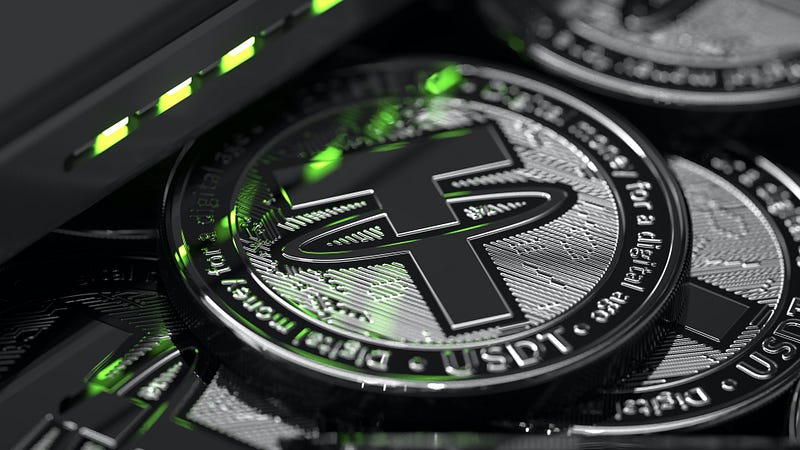
Photo by DrawKit Illustrations on Unsplash


ToS Change in Context

Within the cryptocurrency ecosystem, eyebrows have been raised regarding the timing of Tether’s ToS change, as it has coincided with a major instance of crypto-related money laundering. Conversely, some argue that the issue could be specific to Cake DeFi. The DeFi protocol had been flagged for enhanced due diligence (EDD), suggesting that the modification in Tether’s ToS might potentially be a result of a partnership issue between the two entities.

Stablecoins like USDT play a pivotal role in the digital asset ecosystem, serving as a bridge between the volatile world of cryptocurrencies and the stability of traditional fiat currencies like the US dollar. Any disruption in their usage can trigger a domino effect in the crypto markets.

The cryptocurrency sector is grappling with regulatory uncertainties worldwide, and Singapore is no exception. The Monetary Authority of Singapore (MAS) has been actively reviewing and updating its crypto-related regulations to align with international standards and mitigate risks to financial stability.

The precise motive behind Tether’s decision to restrict USDT redemption for specific customers in Singapore remains unclear. Notwithstanding that, Tether’s Chief Technology Officer (CTO) Paolo Ardoino expressed the view that the matter is being misunderstood. He tweeted:


Spreading FUD

”Before spreading FUD [fear, uncertainty and doubt] it would be great if you guys did take a look at webarchive… This is Jan 2022…. And if you open the link below: Last updated: May 12, 2020… Again, take a moment to search and verify information before YOLO [you only live once] posting.”

Clearly Ardoino is making the point that the ToS change is consistent with existing compliance policy which has been in place since 2020. Notwithstanding that, in reviewing related records, media outlet Protos found that USDT issuance and redemption after May 2020 demonstrate that the firm continued to do business with Singapore-based entities. The publication cited UQPAY specifically, a Singapore-based payments processor. It was found to have issued USDT between May 14 and May 18 in 2020.

More to Read
View All
Web3 & Enterprise·

Jan 10, 2024

KLEVA to undergo upgrade and migrate to WEMIX3.0 network

KLEVA, a decentralized finance (DeFi) service that until now has been based on the Klaytn blockchain, is set to move to Wemade’s WEMIX3.0 mainnet as a native service and undergo a new upgrade to “KLEVA omni”, according to an official Medium announcement by WEMIX on Tuesday (KST). As a result, KLEVA tokens will be issued on the WEMIX3.0 network instead of Klaytn. Existing tokens will be migrated to WEMIX3.0 as well.Photo by GuerrillaBuzz on UnsplashThe team at KLEVA revealed that it decided to move the service to WEMIX3.0 to gain access to broader inter-network connectivity. The decision also came as a result of security strengthening efforts related to custodial bridge services using the Lock and Mint method. Unveiling KLEVA omniKLEVA omni is an amalgamation of service advancements within the Trans-Chain DeFi protocol, rooted in the WEMIX Foundation's unagi initiative – a new innovative omnichain network and interoperable Web3 gaming platform. This innovative protocol integrates optimized tokenomics tailored for the omnichain ecosystem. By going beyond the limitations of single-chain DeFi and placing an emphasis on token rewards, the value of the Trans-Chain DeFi protocol is centered around the KLEVA token.  At its core, KLEVA omni is differentiated in its ability to process trans-chain transactions. It serves not only as a comprehensive solution for inter-chain yield farming but also as a bridge between service providers and users across boundaries.  Solution to variable yields and interchain risksIn addition, in the current market landscape, variations in deposit yields and loan interest rates exist for the same asset across different chains and services. KLEVA omni addresses this by sharing such information with users, streamlining their research and decision-making processes. This makes it easier for users to optimize their investment portfolios. The protocol will use una Bridge – a non-custodial omnichain bridge under the unagi initiative that mitigates the risks presented by wrapped tokens – to enable secure and efficient trading. It will also support various blockchains like Arbitrum, Optimism, Avalanche, Polygon, Ethereum, BNB and Solana.

news
Web3 & Enterprise·

Feb 29, 2024

DeSpread partners with Arbitrum to build ecosystem for Korean developers

DeSpread, a Korea-based consulting firm specializing in Web3 and blockchain, announced today its partnership with Arbiturm, a Layer 2 network built on the Ethereum blockchain. This news was reported by local media outlet Etoday. Through the partnership, DeSpread aims to create an ecosystem for Arbitrum developers, seek collaboration with Korean enterprises and attract more onchain users. Photo by Sigmund on UnsplashArbitrum is one of the largest Layer-2 blockchains operating on the Layer-1 Ethereum network, designed to address the scalability issue of the ETH network. DefiLlama, a DeFi total value locked (TVL) aggregator, shows that Arbitrum has the fourth largest TVL among all chain networks, and the largest TVL among ETH-based Layer 2 networks. To foster Arbitrum-based services, DeSpread plans to distribute research content and development guides to Korean developers in an effort to bring down the language and cultural barriers when working with Arbitrum. Regular events featuring Arbitrum experts are also in store, set to be held both online and in-person formats. These efforts are intended to help companies seeking to adopt blockchain technologies collaborate with Arbitrum.   Forging an ecosystem within the Korean ETH communityJeff Kim, Head of operation at DeSpread, expressed his excitement about the partnership with Arbitrum, saying that Arbitrum is the network showing the strongest performance among all Layer 2 solutions on the ETH network. He added that Despread plans to support Arbitrum so that it can create its ecosystem within the Korean Ethereum community and raise its brand awareness. Nina Rong, Head of Ecosystem Development at Arbitrum, stated that Arbitrum has long been keeping an eye on Korea’s blockchain ecosystem. The partnership will help Arbitrum strengthen its position in the Korean market and shape a developer-friendly environment for individuals and businesses, she said.

news
Web3 & Enterprise·

Jun 15, 2023

More Players Join NH Bank-Led Security Token Consortium in South Korea

More Players Join NH Bank-Led Security Token Consortium in South KoreaMultiple South Korean banks and fractional investment firms are now joining the security token consortium led by NongHyup Bank (NH Bank), according to a report from local news outlet Etoday today.Expanding consortiumNH Bank announced today that the Industrial Bank of Korea, Shinhan Bank, and Woori Bank, along with fractional investment companies, will be participating in the banking sector’s security token consortium. This consortium was established in April and initially comprised NH Bank, Suhyup Bank, Jeonbuk Bank, and six fractional investment companies.The objective of the banking sector’s involvement in the consortium is to contribute to the security token industry by developing distributed ledger technology infrastructure, conducting research to promote security tokens, and strengthening investor protection.The consortium participants will engage in further discussions on how banks can participate in the security token market while adhering to evolving legislation related to security tokens. Additionally, they will explore methods to establish the necessary platforms required by fractional investment companies to issue security tokens.Photo by Mathieu Stern on UnsplashSecurity tokens as corporate bondsIn the long term, the group plans to issue security tokens as corporate bonds, taking inspiration from German tech company Siemens’ strategy, or create a secondary market for security tokens to promote the overall security token ecosystem. Earlier this year, Siemens issued a blockchain-based one-year bond worth 60 million euros ($64.9 million).The consortium’s new fractional investment firms include fractional real estate investment platform Funble, artificial intelligence entertainment firm Blade Ent, blockchain tech firm Trackchain, online bookstore Yes24’s fractional artwork ownership platform ARTiPIO, and electric vehicle (EV) charging sharing platform Charzin.

news
Loading