Top

Linear Finance Dealing With LUSD Exploit

Policy & Regulation·September 22, 2023, 1:43 AM

Linear Finance, the Hong Kong-based DeFi protocol, made an announcement by way of a blog post published to the project’s website on Thursday, suggesting that the project’s native stablecoin, LUSD, has come under attack.

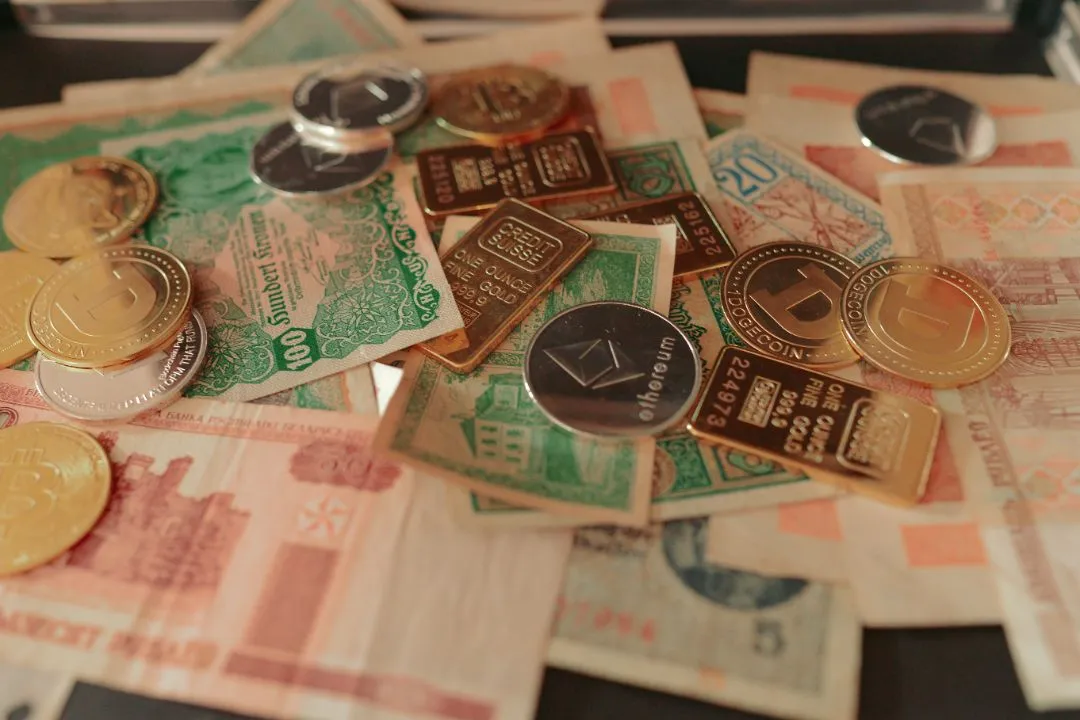
Photo by Markus Spiske on Unsplash


Taking precautionary action

This security breach has prompted the team to take immediate action to safeguard user accounts and the project’s integrity. The project team is actively investigating the exploit attack on LUSD. It has issued a stern warning to its users, advising them against buying or trading LUSD until the team can confirm the situation’s status.

This measure is aimed at preventing further complications and ensuring the community’s interests remain protected. Furthermore, the project has temporarily suspended liquidations to secure users’ accounts. This step has been taken to mitigate immediate concerns and ensure that no user faces undue losses as a result of the exploit.


Assets disposed on PancakeSwap & Ascendex

Amid the ongoing investigation, Linear Finance’s team has pledged to provide timely updates as soon as more information becomes available. In explaining away the nature of the attack, the project team clarified:

”The attacker was able to mint an unlimited supply of LAAVE and subsequently traded the liquid asset to LUSD on the Linear Exchange, prior to selling it on PancakeSwap and Ascendex.”


Project response

In its efforts to deal with the issue, the Linear Finance project team has engaged an on-chain data specialist to track down the attackers. The Linear bridge contract has been disabled relative to LUSD. All protocol contracts that allow tokens to be minted, exchanged, or burnt have been paused. Meanwhile, wallets identified as having been involved in the protocol exploit have been shared with the authorities and major cryptocurrency exchanges.


Synthetic asset protocol

Linear Finance creates synthetic assets with the protocol design enabling unlimited liquidity. The network has been built on top of the Ethereum blockchain. As a consequence of activity surrounding the exploit, trading of LUSD over the course of the past 24 hours has proven to be out of the ordinary. At the time of writing volume over the past 24-hour period had increased by 8412%. The current market price of the stablecoin stands at $0.9874.

Protocol and network hacks and exploits have been coming in thick and fast in recent days. Hong Kong crypto exchange CoinEx has been trying to recover from a $70 million hack on the platform over recent days. Meanwhile, Seychelles-headquartered peer-to-peer crypto platform Remitano suffered a $2.7 million hack late last week.

On Wednesday, the project team behind DeFi protocol Balancer warned network users that the Balancer front-end user interface was under attack. The Ethereum-based DeFi network fell victim to another exploit last month, resulting in losses in the region of $900,000.

In the dynamic crypto sector, unforeseen events like potential exploits can disrupt the market and sow uncertainty. The issue remains a major challenge both for centralized exchange platforms and DeFi protocols.

More to Read
View All
Policy & Regulation·

Sep 13, 2023

Korean National Assembly Members’ Crypto Holdings to Undergo Investigation

Korean National Assembly Members’ Crypto Holdings to Undergo InvestigationThe Anti-Corruption and Civil Rights Commission of Korea (ACRC) has announced that it has convened a special investigative team to conduct an investigation into the virtual asset dealings of members of the 21st National Assembly, particularly details on acquisition, trading, and losses.Photo by Mediamodifier on UnsplashComing under scrutinyThe National Assembly passed a resolution back in May titled “The Resolution on Voluntary Reporting and Investigation of Virtual Assets of National Assembly Members,” requesting that all members of the Assembly should voluntarily report the status and changes in their holdings of virtual assets for a thorough investigation by the ACRC amid public concern about conflicts of interest and illegal transactions.As a result, individual consent forms for the collection, use, and third-party provision of personal information were submitted to the ACRC last Monday by Assembly members of the ruling and opposition parties.Other minor political parties like the Justice Party, Basic Income Party, and Transition Korea Party that had previously submitted their personal information consent forms have resubmitted their forms in accordance with the format of those submitted by the ruling and opposition parties. Independent lawmakers and some non-negotiation bodies have also voluntarily submitted forms of their own.Extensive legal probeThe scope of the investigation includes the domestic acquisition, trading, and losses of virtual assets by Assembly members starting from the beginning of their term on May 30, 2020, to May 31, 2023, when their personal information consent forms were submitted. The ACRC will compare this information with reports formerly filed by the members themselves.The ACRC appointed Vice Chairman and Secretary General Jung Seung-yoon as the head of the team and assigned some 30 investigators to carry out a census for 90 days starting on September 18. It will be executed under the Act On The Prevention Of Corruption And The Establishment And Management Of The Anti-Corruption and Civil Rights Commission and the Personal Information Protection Act.“As this is an important matter of public interest, we will conduct the investigation promptly and fairly in accordance with the law and guidelines,” said Jung. “We will also strictly protect the data acquired during the investigation process, including the personal information consent forms.”

news
Policy & Regulation·

6 days ago

Japan eyes crypto tax reform as macro headwinds pressure digital asset markets

The Japanese government and ruling coalition have begun coordinating plans to introduce a flat 20% separate tax on cryptocurrency gains, based on a Dec. 1 report by Nikkei cited by CoinDesk Japan. The change is expected to be reflected in the 2026 tax reform outline.Photo by Nataliya Vaitkevich on PexelsLower crypto taxes, aligned with stocksUnder the proposal, income from crypto trading would be taxed in line with traditional financial instruments such as stocks. This would mark a notable decrease from the current regime, under which cryptocurrency gains are treated in principle as miscellaneous income, combined with salary and other earnings, and taxed on a comprehensive basis at rates that can climb to around 55% including local taxes. Policymakers are reportedly treating the move toward separate taxation as contingent on the establishment of a stronger investor-protection framework through tighter regulation. The planned reforms are also seen as potentially laying the groundwork for the eventual domestic approval of exchange-traded funds (ETFs) backed by crypto assets. Market pullback deepens on policy signalsThe more favorable tax outlook for investors came against a weaker market backdrop. According to CoinMarketCap, the total crypto market capitalization declined about 1.73% over the past 24 hours, extending a pullback that followed recent communications from the central banks of Japan and China. In a Dec. 1 report by Reuters, Bank of Japan (BOJ) Governor Kazuo Ueda indicated that the central bank intended to consider the possibility of an interest-rate increase at its next policy meeting. His comments are interpreted as suggesting a potential shift toward higher rates in December, prompting concern that yen-funded carry trades could begin to be unwound. Such trades typically involve borrowing yen at low interest rates to invest in higher-yielding assets, and their reversal can create pressure on broader asset markets. In a separate weekend statement, the People’s Bank of China (PBOC) restated that digital asset trading remains illegal in China and highlighted what it described as a renewed pickup in speculative crypto activity. The central bank also singled out stablecoins as a source of risk, pointing to concerns about fraud, money laundering, and unauthorized cross-border capital flows that could undermine Beijing’s efforts to maintain capital controls. Against this policy backdrop, major cryptocurrencies moved in mixed directions. Over the past 24 hours, Bitcoin inched up around 1.02%, Ethereum declined about 0.86%, and XRP fell roughly 0.9%. Analysts split amid weak market activityAnalysts and market commentators continued to diverge on the implications of the latest pullback. Veteran trader Peter Brandt suggested on X that Bitcoin may be entering a deeper corrective phase similar to those seen in past bull markets. He cited historical instances of “exponential decay” and suggested the price could retrace toward $50,000 before potentially advancing to the $200,000–$250,000 range in the next rally cycle. Author Robert Kiyosaki, known for “Rich Dad Poor Dad,” reiterated his preference for assets such as gold, silver, Bitcoin, and Ethereum in a Nov. 29 post on X, linking this stance to his view that the Japanese carry trade had effectively run its course. Roughly a week before that message, he had disclosed selling about $2.25 million worth of Bitcoin at around $90,000 per coin, noting that his initial purchase price had been close to $6,000. By contrast, long-time Bitcoin critic Peter Schiff continued to argue in favor of precious metals. He contended that gold derives inherent value from industrial and commercial uses tied to its physical properties, including conductivity, ease of shaping, and resistance to corrosion, while maintaining that Bitcoin lacks practical utility and instead depends on investor belief. SwanDesk CEO Jacob King, another skeptic of the asset, offered an even more pessimistic assessment. He said he did not expect Bitcoin to revisit its previous all-time high and characterized the current decline as the final bear market before the asset ultimately fades from relevance. Shorter-term indicators have reinforced expectations for muted trading conditions. According to CNBC, Grayscale Head of Research Zach Pandl pointed to a decline in open interest for perpetual futures, interpreting it as a sign of reduced speculative positioning and leverage. He also highlighted relatively subdued trading volumes on both centralized and decentralized exchanges, suggesting that near-term market activity is likely to remain restrained. 

news
Web3 & Enterprise·

Jul 15, 2025

DDC Enterprise signs MOU with Animoca Brands in $100M deal

Animoca Brands, a Hong Kong-based Web3 company focused on blockchain gaming and NFTs, has signed a memorandum of understanding (MOU) with DayDayCook (DDC) Enterprise Limited in a deal that will see Animoca allocate up to $100 million in Bitcoin with that capital to be exposed to yield enhancement strategies operated by DDC.Photo by Erika Fletcher on UnsplashBitcoin treasury strategyIn a press release published to its website, Animoca Brands claimed that the deal accelerates the Bitcoin accumulation strategy pursued by DDC. Back in May, DDC Enterprise, a Chinese company listed on the Nasdaq in the U.S. while headquartered in Hong Kong, became one of many Nasdaq-listed companies recently to add Bitcoin to its balance sheet.  At that time, it made a symbolic initial 21 BTC purchase, bearing in mind the leading digital asset has a supply cap of 21 million BTC. The company has set out an ambitious plan to build up a Bitcoin treasury of 5,000 BTC over the course of three years. DDC Founder Norma Chu described the development as a “pivotal moment.” ‘Pristine monetary asset’On this occasion, Chu described the partnership with Animoca as a “transformative step,” reflecting the companies’ “shared vision to accelerate Bitcoin’s role as a pristine monetary asset.” As part of the partnership, Animoca Brands Co-Founder and Executive Chairman, Yat Siu, will join DDC’s Bitcoin Visionary Council (BVC). The company established the BVC recently in order to put strategic leadership and guidance in place so that DDC’s Bitcoin-related treasury operations are conducted in accordance with industry standards so as to maximize value creation in the long term. Siu said that the arrangement enables Animoca Brands “to enhance the value of [its] blockchain technologies and maximize the value of [its] Bitcoin holdings.” Commenting further on the partnership, he added: “We will focus on developing strategies to enhance Bitcoin’s value proposition, leveraging DDC’s commitment to advancing corporate Bitcoin treasury solutions." Siu told Cointelegraph that Animoca Brands' belief in the abilities of the DDC founder played a large part in the company establishing the partnership. He said that her background and experience enable her to “bridge the East and West to successfully navigate markets on both sides of the planet,” adding that “she has good appeal and connections to the Chinese market, one of the largest for crypto adoption, while also running a NASDAQ-listed company.” On BitcoinTreasuries.net, a Bitcoin treasury data hub, DDC is listed as 47th in terms of corporations globally that have adopted a Bitcoin treasury strategy, ranked by the amount of Bitcoin that they have accumulated. The website suggests that DDC currently holds 368 BTC, valued at approximately $43.2 million. Following its initial purchase of 21 BTC in May, the company followed up with the acquisition of 38 BTC in June. On July 1, it announced that it had raised $528 million to expand its Bitcoin holdings, with confirmation of a further purchase of 230 BTC by July 7.

news
Loading