Top

Korbit Report: SEC Commissioner Shares Insights on Crypto Regulation

Policy & Regulation·September 18, 2023, 7:17 AM

Korbit Research Center, a division of South Korea’s cryptocurrency exchange Korbit, on Monday, released a report that provides a comprehensive summary of its interview with Hester M. Peirce, a Republican Commissioner at the US Securities and Exchange Commission (SEC), which took place on August 18. The interview was conducted by Peter Chung, the head of research at Korbit Research Center.

Photo by Joshua Hoehne on Unsplash


Korbit’s meeting with US crypto experts

In August, Chung made a trip to the United States, where he met with prominent figures and companies within the cryptocurrency industry to gain a deeper understanding of the ongoing institutionalization of cryptocurrencies in the United States. Through this opportunity, Korbit intends to release a series of reports that will encapsulate the valuable insights garnered during these interactions in the US.

His first interviewee of the series was Commissioner Peirce, who serves as one of the five commissioners at the SEC. These commissioners are appointed by the President of the United States with the confirmation of the US Senate. To maintain political balance and impartiality, it is mandated that no more than three commissioners belong to the same political party.

Peirce assumed her role as a Commissioner at the US Securities and Exchange Commission (SEC) in January 2018, following her appointment by President Trump. Before her tenure at the SEC, she held the position of Senior Counsel on the United States Senate Committee on Banking, Housing, and Urban Affairs. She is known as an advocate for technological innovation.


Token safe harbor proposal

Peirce earned the nickname “Crypto Mom” due to her advocacy for encouraging innovation within the cryptocurrency industry through the implementation of reasonable regulations. One notable initiative that exemplifies her perspective is the token safe harbor proposal. This proposal suggests giving blockchain network developers a three-year grace period during which they can work on building a decentralized network while being exempted from complying with the registration rules of federal securities laws, as long as certain conditions are met.

During the interview, Peirce expressed concerns about recent actions taken by the SEC, which have added to the uncertainty surrounding cryptocurrency regulations. She also emphasized the need for swift legislative action to establish a framework for cryptocurrency regulation. Peirce noted that there appears to be a tendency to prioritize the classification of virtual assets over investor protection.


Suggestions for Korea

Although Peirce hasn’t engaged in any direct interactions with Korean regulators, she suggested the Korean government optimize regulations for its own cryptocurrency industry. Her suggestion was to minimize unnecessary intervention and instead foster an environment where the sector can naturally evolve in accordance with the principles of a free-market economy.

Furthermore, Peirce delved into detailed discussions on three pivotal topics: the classification of virtual assets as securities, the need for disclosure requirements, and the significance of assessing the extent of decentralization within a network.


Classification of cryptocurrencies

The Commissioner said that it is inappropriate for the SEC to contend that most cryptocurrency projects should fall under its regulatory purview. The SEC’s argument is based on the assertion that cryptocurrencies may constitute securities because they function as a medium of value exchange in fundraising activities, much like investment contracts in traditional financial markets. Despite this, she expressed optimism regarding the recent US court’s ruling on the Ripple vs. SEC case, which she believes may help rectify misconceptions surrounding the classification of investment contracts.


Balancing investor protection and investor choice

Meanwhile, she expressed her viewpoint that regulations aimed at protecting investors should stay true to the disclosure principles introduced back in 1934 when the SEC was first established. However, she also argued that the SEC should avoid imposing arbitrary restrictions on investors’ choices. During the initial phases of a cryptocurrency project, there tends to be an inherent information asymmetry between crypto project leaders and individual investors. To ensure a fair investment environment, she advocated for legal mandates for disclosure. Notably, both her token safe harbor proposal and the Responsible Financial Innovation Act proposed by US Senators Kirsten Gillibrand and Cynthia Lummis incorporate such disclosure requirements.


Decentralization assessment

Commissioner Peirce also approached the assessment of decentralization with a thoughtful perspective. Her Token Safe Harbor Proposal 2.0 states that after the three-year grace period, “token transactions may not constitute securities transactions if the network has matured to a functioning or decentralized network.” However, she admitted to grappling with the challenge of precisely defining what constitutes sufficient decentralization. During the conversation, she sought Mr. Chung’s perspective on this matter. In response, Mr. Chung shared that the Korbit Research Center regularly conducts measurements and assessments of the degree of decentralization for major blockchain networks every six months.

Regarding the interview, Peter Chung expressed his admiration for the high-ranking official’s openness to innovation and strong communication skills. He also voiced his hope for more open discussions in Korea that could promote sustainable growth of the country’s crypto industry.


More to Read
View All
Web3 & Enterprise·

Apr 20, 2023

Celsius and BlockFi Filings Reveal Bhutan Crypto Investment

Celsius and BlockFi Filings Reveal Bhutan Crypto InvestmentThe tiny kingdom of Bhutan, nestled in the Himalayas, has been secretly holding millions of dollars in cryptocurrency, according to recent filings in the bankruptcy processes of crypto lenders Celsius and BlockFi. The revelation has surprised many observers, given the country’s reputation as a conservative and traditionalist society that places a high value on spiritual well-being and happiness over material wealth.©Pexels/Prateek KatyalDruk Holdings and InvestmentThe cryptocurrency holdings were reportedly managed by Bhutan’s Druk Holdings and Investment, which was established in 2018 with the aim of investing in a range of assets to help diversify the country’s economy and reduce its dependence on hydro-power exports. It’s understood that the fund had invested in a number of cryptocurrencies, including Bitcoin, Ethereum, and Ripple, and had seen significant gains as a result.While the exact amount of cryptocurrency held by the Bhutan Investment Fund is not known, a Forbes report estimates that it could be worth several million dollars. This represents a significant portion of Bhutan’s overall foreign reserves, which stood at $1.2 billion at the end of 2022.The news of Bhutan’s cryptocurrency holdings has sparked a debate about the role of digital assets in the country’s economy. Some experts have argued that cryptocurrencies could provide a valuable source of revenue for Bhutan, particularly as the country seeks to reduce its reliance on hydro-power exports. Others, however, have expressed concerns about the risks associated with investing in such a volatile and unpredictable asset class.A new frontier for investmentDespite these concerns, it appears that the Bhutan Investment Fund is committed to continuing its cryptocurrency investments. In a statement to Blockworks, the fund’s CEO, Tenzin Lekphell, said that “digital assets represent a new frontier for investment, and we believe that they have the potential to provide significant returns for our investors.”The news of Bhutan’s cryptocurrency holdings comes at a time when many countries around the world are grappling with the question of how to regulate and manage digital assets. While some countries, such as China, have taken a hardline approach and banned cryptocurrencies altogether, others, like Japan, have taken a more moderate approach and have sought to regulate the industry to prevent fraud and protect investors.Others still, like the United States and India have flip flopped on the subject with the United States having taken a regulatory hard line in recent months.A crypto opportunity for smaller nationsIt remains to be seen what approach Bhutan will take towards cryptocurrency regulation. However, the news of the country’s cryptocurrency holdings is a sign that even small, remote nations can take advantage of the opportunities provided by digital assets. On Tuesday Jason Lau, COO of crypto exchange Okcoin, stated that Bhutan’s investment was no surprise, with the expectation that other sovereign wealth funds would follow suit.Bhutan’s decision to invest in cryptocurrency has raised eyebrows in the international community. However, it is also a testament to the country’s willingness to explore new and innovative approaches to economic development. As the world continues to grapple with the opportunities and challenges posed by digital assets, Bhutan’s example may provide a valuable case study for other nations seeking to diversify their economies and embrace new technologies.

news
Web3 & Enterprise·

Sep 11, 2023

UAE’s Royal Office Visits Korea to Further Security Token Collaboration with AIITONE

UAE’s Royal Office Visits Korea to Further Security Token Collaboration with AIITONEAIITONE, a Korea-based augmented reality firm specializing in security tokens, invited journalists to showcase its strategy to foster business collaborations between South Korea and the United Arab Emirates (UAE) on the occasion of the Korean visit of the Private Office of His Highness Sheikh Ahmed Bin Faisal Al Qassimi.Photo by Ethan Brooke on UnsplashPrivate Office’s return visitThe Private Office is a Dubai-based corporate conglomerate that operates businesses in various areas including real estate, energy, and finance. This visit by the Private Office marks a return visit following AIITONE’s visit to the UAE in July.The conference took place at a hotel in Gangnam, Seoul, and was attended by Lee Jin-yeop, CEO of AIITONE; Bruce Jeong, Chairman of Middle East Investment; and H.H. Sheikh Ahmed Bin Faisal Al Qassimi.Security tokens, CBDCs, smart defenseChairman Jeong, leading AIITONE’s global initiatives, said that their primary endeavor is to set up a Korean branch of the Royal Office. This branch will function as an international business hub, facilitating collaborations across three key sectors: security tokens, central bank digital currencies (CBDCs), and smart defense ventures.The event also featured presentations by AIITONE officials who introduced the company’s focus areas.Kang Man-soo, who leads AIITONE’s defense unit, highlighted the company’s technical expertise in maintenance training equipment, interactive electronic technical manuals, and integrated system support. He pointed out that AIITONE has been actively involved in the development of technical manuals and training simulators for various defense assets, including warships, guided weapons, and fighter aircraft. Kang emphasized that AIITONE’s strategic partnerships with Korean defense firms have propelled their engagement in initiatives aimed at exporting these products to countries such as Indonesia, Malaysia, and Poland.Lee Joo-hyung, the head of AIITONE’s extended reality (XR) content division, revealed the company’s plan to create portable products that can replicate the physical sensations of the real world, including sensations like physical contact and heat. Additionally, Lee introduced MOUM, a metaverse platform that features blockchain-powered security functions and generative artificial intelligence (AI) capabilities.Park Sang-il, who is at the helm of the firm’s security token project, showcased AIITONE’s comprehensive security token platform, which enables users to both issue and distribute security tokens. Notably, the platform is compatible with hyperledgers Besu and Fabric.Since arriving in Korea last Wednesday, the Royal Office has met with representatives from Standard Chartered Bank Korea and lawyers from law firm Kim and Chang, as well as lawmaker Yang Hyang-ja. Additionally, the Royal Office made a visit to smart farms located in South Jeolla Province.H.H. Sheikh Al Qassimi expressed a high regard for South Korea, acknowledging its beautiful natural landscapes and significant economic development. He underlined that this visit serves as an opportunity for the Royal Office to strengthen cooperation between UAE companies and their Korean counterparts, further fostering economic exchanges between the two countries.

news
Policy & Regulation·

Apr 07, 2025

Former Binance CEO advising Kyrgyzstan on blockchain & crypto

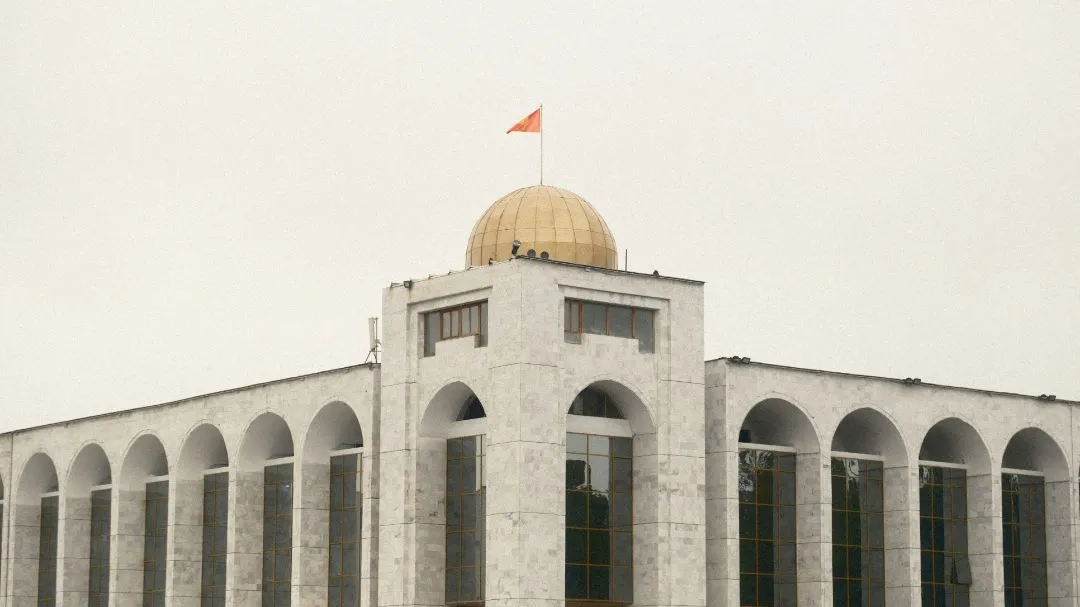
Binance co-founder and former CEO, Changpeng Zhao (CZ), has partnered with the authorities in the Central Asian republic of Kyrgyzstan to provide advice on crypto regulation and the development and adoption of blockchain technology. It’s understood that CZ has signed a memorandum of understanding (MOU) to this effect with the National Investments Authority (NIA), a state authority that falls under the direction of the President of the Kyrgyz Republic. The NIA promotes foreign direct investment, assisting foreign companies in developing business opportunities within Kyrgyzstan. Photo by Abai K on UnsplashCrypto & blockchain ecosystem developmentIn a statement published on X on April 3 by the President of the Kyrgyz Republic, Sadyr Zhaparov, the president outlined that in accordance with the MOU, the parties will cooperate on the development of the crypto and blockchain ecosystem. Breaking that down further, the president said that this cooperation will involve the provision of technical, infrastructural and technological support and expertise. Additionally, it will involve collaboration towards the implementation of related educational initiatives. Zhaparov added: “This cooperation marks an important step towards strengthening technological infrastructure, implementing innovative solutions, and preparing highly qualified specialists in blockchain technologies, virtual asset management, and cybersecurity. In light of the rapid global evolution of digital technologies, such initiatives are crucial for the sustainable growth of the economy and the security of virtual assets, ultimately generating new opportunities for businesses and society as a whole.” ‘Crypto adoption one country at a time’CZ reacted to this X post by the President of the Kyrgyz Republic, stating: “Kyrgyzstan. Crypto adoption, one country at a time.” He also remarked that this event had brought Zhaparov to X, given that this was his first post on the platform, with an account registered last month. Steve Milton, co-founder and CEO of Web3 wallet project Fintopio and a former Binance marketing executive, commented on the development. Milton stated that Kyrgyzstan is a forward-thinking country, while interpreting CZ's involvement as a step that will help move adoption forward. Additional advisory activityIn another X post, CZ provided details on his advisory activity. He stated: “I officially and unofficially advise a few governments on their crypto regulatory frameworks and blockchain solutions for gov efficiency, expanding blockchain to more than trading. I find this work extremely meaningful.” Reports emerged in January that Malaysian Prime Minister Datuk Seri Anwar Ibrahim had discussed digital finance policy matters with CZ. The Binance co-founder said that those discussions revolved around digital asset regulation and risks related to such assets. Furthermore, cross-border collaborations and collaborations between industries were discussed. In December CZ met with the King of Bhutan. Prior to that visit, he posted a link to an article on X that outlined that the Kingdom of Bhutan has accumulated in excess of $1 billion in Bitcoin. At that time, the Binance co-founder said that many nation states will use Bitcoin and other cryptocurrencies as reserve assets. In the past, commentators have identified Kyrgyzstan as having considerable potential for crypto mining, given ample hydroelectric generation within the mountainous country. However, crypto mining tax receipts as of the end of last year suggest that crypto mining still remains a niche activity in the Kyrgyz Republic.

news
Loading