Top

Com2uS USA CEO Highlights Importance of Transition from Web2 to Web3 Gaming

Web3 & Enterprise·September 06, 2023, 9:28 AM

Lee Kyu-chang, CEO of South Korean game developer Com2uS’ American branch, stressed the important role of Web3 games in encouraging gamers to embrace blockchain technology during a discussion at the Korea Blockchain Week (KBW) 2023 event held at the Shilla Hotel in Seoul on Tuesday.
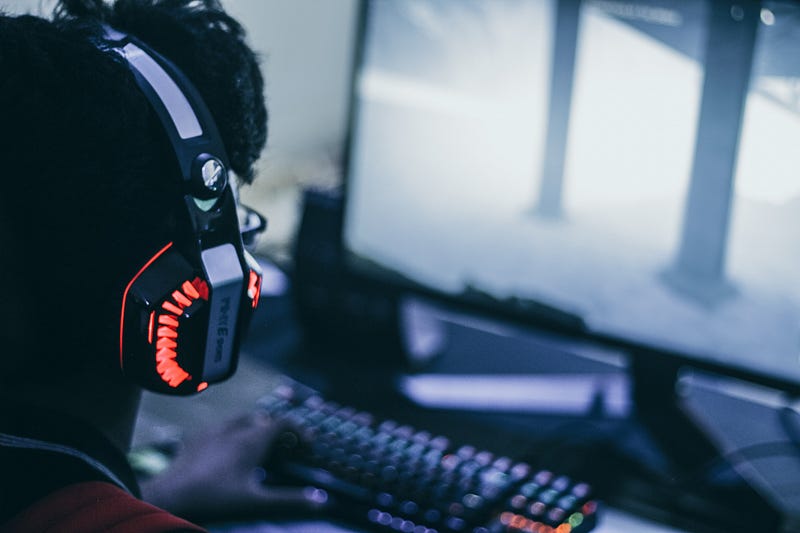
Photo by Fredrick Tendong on Unsplash

Lee shared various insights on the topic that Com2uS Group has gained through its experience in developing blockchain games. “We view blockchain not as a platform but as a tool,” he said.


Nurturing Web3 adoption among gamers

In particular, the CEO emphasized the need for Web2 users to transition to Web3. Indeed, Com2uS is aiming to migrate to Web3, although it is still majorly involved in Web2 businesses.

However, there stands a roadblock to achieving this widespread transition. “Gamers do not understand Web3. What they want is for good games to be released. And if they’re not good, they won’t play them regardless of whether they’re Web2 or Web3,” Lee explained, arguing that fun Web3 games will have gamers naturally learning about Web3.

Due to these reasons, the conversion rate for gamers is currently quite low. To remedy this, Lee proposed that facilitating the transition for Web2 gamers to Web3 is a more sustainable method than directly targeting only Web3 users. The latter strategy is not ideal due to the fact that there aren’t many Web3 users yet in the first place, and more importantly, existing ones are not typically gamers.


Balancing the shift

The Com2uS Group has thus chosen to concentrate on Web2 while gradually transitioning to Web3. “We must remember that the transition is slow. We went through a similar process when shifting from PC to mobile gaming,” Lee cautioned.

“Our company’s mission is to make people want to play games with ownership rights and make them want to own game assets.”


More to Read
View All
Web3 & Enterprise·

Dec 10, 2024

GRVT snags license to become world’s first regulated DEX

GRVT, a hybrid cryptocurrency exchange platform that bases its operations in Singapore, has secured a trading license in Bermuda which the project claims, makes it the first regulated decentralized exchange (DEX).  In a press release published on the project’s behalf by PR Newswire on Dec. 6, the project, which aspires to be “Goldman Sachs on blockchain,” announced the acquisition of a Class M Digital Asset Business License from the Bermuda Monetary Authority (BMA). Photo by GuerrillaBuzz on UnsplashAiming for further licensingThe license puts the firm on a path to operate as a fully regulated DEX. Securing this Class M license isn’t the end of the project’s regulatory compliant endeavors, however. Class M confers a “modified” exchange license under the Bermuda Digital Asset Business Act (DABA). Class M covers pre-operational activities while the service remains within a sandbox environment. The company hopes to have acquired Class F or “Full” licensing designation by mid-2025. At that point, GRVT will be in a position to take its service from a sandbox environment to full launch of its institutional-grade perps DEX in a regulatory compliant manner. On X GRVT suggested that this licensing is pivotal in the movement of decentralized finance (DeFi) towards mainstream adoption. “With this milestone, DeFi evolves - safer for users and institutions alike,” the project wrote. Hybrid approachAs a hybrid DEX, GRVT combines the decentralization of DeFi with the structure and compliance required for the participation of institutional investors. Commenting on this latest development, GRVT CEO Hong Yea stated:”We've always believed compliance should be the foundation for crypto and DeFi, not an afterthought. Without it, earning institutional trust—and bringing revolutionary technologies to the mainstream—becomes nearly impossible." Yea told Cointelegraph that in two weeks time, the project will officially launch its mainnet to all users. “Our trading volume will then be available through major external data providers,” he added. In preparation for that mainnet launch, the project announced in September that it had partnered with 16 market makers including Galaxy Trading, Amber Group, QCP and others, in order to ensure that the platform has sufficient liquidity in place to enable a smooth launch. Users have been testing the platform following its Open Beta Testnet launch in August. The GRVT CEO believes that the project can “unify cryptocurrency and mainstream finance, creating a system where assets move freely and all forms of value coexist in one integrated ecosystem.”   A regulated yet decentralized offeringReferring to the two main components baked into the GRVT offering, he said that “decentralization distributes control away from central authorities, promoting transparency, security, and user empowerment.” Meanwhile, “regulation establishes standards to protect users, ensure market integrity and promote fair practices.” In successfully pursuing licensing in Bermuda, GRVT joins a list of more than 30 firms in the digital assets sector who have obtained licensing in the British overseas territory. In October global cryptocurrency exchange platform Kraken launched a Bermuda-based derivatives trading business having obtained licensing from the BMA. USDM stablecoin issuer Mountain Protocol received a Class F license from the BMA in July. Other entities successfully licensed by the BMA include Coinbase, HashKey, Circle, Bittrex and Zero Hash.

news
Policy & Regulation·

Jan 02, 2024

Chinese authorities provide insight into conviction of RenrenBit founder

China has provided insights into the conviction of Zhao Dong, the influential crypto over-the-counter (OTC) trader and widely known founder of the RenrenBit crypto trading desk. The ‘OTC King’Last Wednesday, China’s Supreme Procuratorate disclosed that Zhao, known as the "OTC King," was handed down a substantial prison sentence for engaging in illegal foreign exchange and crypto business operations. The case is emblematic of China's persistent efforts to clamp down on cryptocurrency trading, even when conducted through less transparent channels like OTC desks, private chat groups and stablecoins.Photo by Hanson Lu on UnsplashTracing fundsIn their comprehensive disclosure, the Chinese authorities outlined the meticulous investigation that led to Zhao Dong's conviction. The focus was on tracing fund movements across Chinese bank accounts, overseas cash pools and the circulation of Tether and Bitcoin. Investigators honed in on accounts associated with Zhao Dong and the chat groups used for trading activities. Their arsenal included detailed bank records, WeChat conversations, testimonies from Zhao's OTC agents and other documentary evidence. The report highlighted that all defendants, including Zhao Dong, confessed to the process of collecting dirhams in cash in Dubai, paying RMB to the other party's designated account, buying Tether with dirhams, and allowing the domestic gang to illegally sell it back for RMB. Seven year sentenceIn one of the alleged schemes, Zhao Dong purportedly orchestrated crypto-fiat trades between Dubai-based entities holding cash piles in United Arab Emirates (UAE) dirhams and Chinese contacts within the country. With numerous related recipients confirming that the funds Zhao received were payments from foreigners, the prosecution's case was made so much stronger. Zhao unsuccessfully argued during three public court hearings that his actions constituted digital currency transactions and not a breach of foreign exchange laws. The prosecution countered with evidence from the group's chat records, emphasizing the nature of foreign exchange in their dealings. The court ultimately rendered a verdict, sentencing Zhao Dong to seven years in prison and imposing a 2.3 million Chinese yuan ($325,000) fine. This conviction serves as a stark reminder of the stringent regulatory stance that China has adopted towards cryptocurrency trading. Zhao Dong was considered one of China's most influential OTC crypto traders. He was a Bitfinex shareholder and founder of the D Fund venture capital fund. He established RenrenBit in August 2018, incorporating the company in Singapore. The influential crypto trader is also believed to have been involved in assisting stablecoin-issuer Tether to launch its Tether Yuan product. However, once the authorities moved against him, RenrenBit was taken offline while Tether scrapped its pursuit of Tether Yuan. Despite his influence, Zhao has ultimately become a symbol of the government's commitment to curbing such crypto trading activities within mainland China. The outcome underscores the severity of China's regulatory crackdown on cryptocurrency trading and sends a strong message to other players in the crypto space within the country.

news
Web3 & Enterprise·

May 10, 2023

OmniBOLT to Support BRC-20 Tokens on Lightning

OmniBOLT to Support BRC-20 Tokens on LightningSingapore’s OmniBOLT, a project that’s developing technological solutions within bitcoin’s layer two network environment, has outlined that it will support BRC-20 tokens on Lightning Network.Before we consider precisely what OnmiBOLT's decision to support BRC-20 tokens means, let’s cover the backstory.Photo by Sander Weeteling on UnsplashBRC-20BRC-20 is an experimental token standard which was created by an anonymous developer with the handle “Domo”, and username ‘@domodata’ on Twitter. A token standard governs how and where a cryptocurrency can be used. The approach has been pioneered by developers on the Ethereum blockchain who created the ERC-20 standard a number of years ago, relative to the Ethereum network.A bitcoin evolutionIn this instance, BRC-20 is a fungible token standard designed for the bitcoin blockchain. Bitcoin development is very slow and conservative, and deliberately so, in an effort to put network security first. However, it has had two major upgrades over the course of the last few years, namely SegWit and Taproot.Many in crypto have been critical of the bitcoin project on the basis of it being a pet rock that lacked features and the flexibility to use it in other ways aside from as a store of value or means of exchange. However, those protocol upgrades have led to further development that is expanding bitcoin’s use case and versatility.SegWit and Taproot enabled the development of Bitcoin Ordinals in January 2023. Ordinals provide a means to create Bitcoin non-fungible tokens (NFTs), by attaching data to individual satoshis, the smallest denomination of Bitcoin. NFTs created this way are immutable as they’re not created on side chains but on the bitcoin blockchain itself.In a fast moving scenario, the development of Ordinals led two months later to the emergence of the BRC-20 standard. BRC-20 tokens can be stored on the bitcoin base-chain, built with the assistance of Ordinals. BRC-20 is an exciting development as it stands to enable smart contract capabilities relative to bitcoin.Solving the bitcoin fee issueMany see this development as a solution for the longer term fees issue that the bitcoin blockchain will have to overcome. Bitcoin miners are compensated in mining rewards but the level of rewards is being cut in half every four years. The concern is that in the longer term, there may not be enough revenue for miners to continue to secure the network effectively.With the development of Bitcoin Ordinals, more fees are generated, and so this is seen as a means through which the network can sustain itself over the longer term.Mempool backlogSo what’s not to like? The issue that has arisen over the past few days is that bitcoin transaction fees have hit a two year high. Over the past few days, there have been in excess of 400,000 unconfirmed bitcoin network transactions sitting in the mempool. The mempool is a mechanism within the bitcoin protocol that stores the data relative to a queue of transactions that are waiting to be confirmed.Relieving pressure on bitcoinThat brings us back to the significance of the Singaporean team of developers at OmniBOLT deciding to support BRC-20 tokens on the lightning network. That move can relieve the pressure on the bitcoin mainnet. The project is being backed by Waterdrip Capital, Danhua Capital, Redline DAO and others.Bitcoin has been a boring protocol and many have celebrated that fact as a feature and benefit for a network that serves a couple of vitally important use cases exceptionally well. However, development never stops and it’s fascinating to see another side to the protocol unfold, and all the while, it’s not entirely clear where it will end.

news
Loading