Top

TRYB Emerges as Turkish Alternative to Dollar-Pegged Stablecoins

Web3 & Enterprise·September 02, 2023, 11:12 AM

In a market typically dominated by dollar-backed stablecoins like Tether (USDT) and USD Coin (USDC), a new player has emerged in Turkey to operate alongside those dominant stablecoins.

According to a report by CoinDesk on Friday, BiLira’s TRYB stablecoin, pegged to the Turkish lira (TRY), has rapidly climbed the ranks to become the world’s second-largest non-US dollar-pegged stablecoin. It currently trails Tether’s euro-pegged EURt, which according to Coingecko data, currently holds a market cap of $221 million. In just three weeks, TRYB has skyrocketed, quadrupling its market cap to $136.10 million.
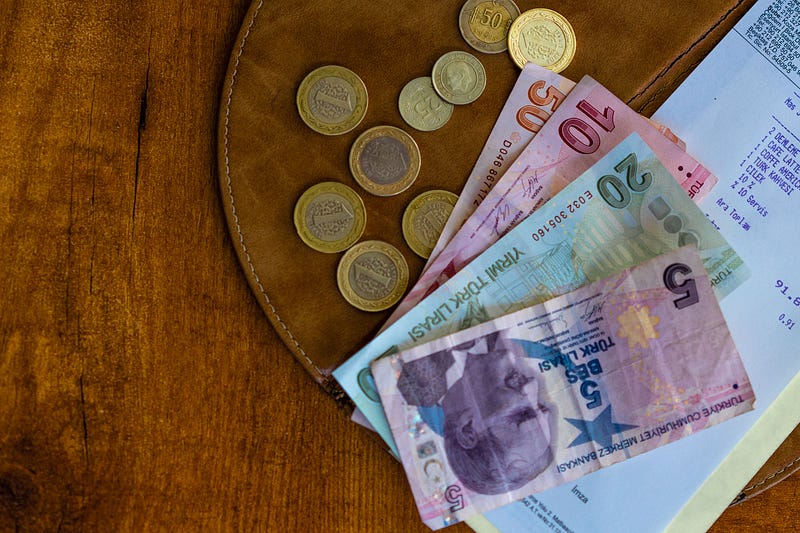
Photo by Oleksandr P on Pexels


Market cap volatility

However, TRYB's market cap had fallen off a cliff on Friday, dropping from $135 million earlier in the day to $40 million. TRYB, an Ethereum-based stablecoin, offers a unique proposition in that it is pegged to the Turkish lira, allowing users to exchange 1 TRYB for 1 TRY. The stablecoin offering, which is administered by Istanbul-based BiLira, is underpinned by 100% fiat reserves held in Turkish banks.

The Turkish lira has earned its reputation as one of the most volatile fiat currencies globally, often experiencing fluctuations against the US dollar. Over the course of the last five years, the currency has lost 94% of its value when benchmarked against the performance of the US dollar.

In response to this volatility, TRYB has found its purpose as a medium of exchange. It can act as a gateway to transition user’s Turkish lira into cryptocurrencies and vice versa. This trend aligns with the global use of stablecoins as the foundation of crypto trading pairs, providing traders with a stable asset while sidestepping fiat currency’s unpredictability.


Exiting the lira

The US Federal Reserve acknowledged the significance of stablecoins in December 2022, highlighting their role in facilitating crypto trades, serving as collateral for crypto loans, and minimizing inefficiencies tied to fiat-to-crypto conversions. In fact, stablecoins account for over 80% of the trading volume on centralized exchanges, attesting to their pivotal role in the crypto ecosystem.

It’s likely that the Lira-pegged stablecoin will act as a means to access other cryptocurrencies and US dollar-pegged stablecoins like USDT and USDC, rather than be considered as a rival or replacement. That’s by virtue of the ongoing difficulties of the Turkish sovereign currency which it tracks. So long as the lira continues to erode in terms of buying power, it’s likely that citizens will be looking for avenues to escape from that erosion of value.


Increased interest in crypto

Given this monetary backdrop in Turkey, it shouldn’t surprise anyone to learn that interest in crypto is on the rise. In a recent report published by Seychelles-based cryptocurrency exchange KuCoin earlier this week, a significant increase in the number of crypto investors in Turkey over the course of the past eighteen months has been identified.

The report found that 52% of the adult Turkish population have participated in crypto-related investments. Over the past 18 months, the number of Turkish adults embracing crypto has risen to that 52% level from 40%.


More to Read
View All
Web3 & Enterprise·

Nov 30, 2023

Lemon Healthcare launches blockchain-based electronic prescription service

Lemon Healthcare launches blockchain-based electronic prescription serviceSeoul-based healthcare data platform company Lemon Healthcare’s blockchain-based, personalized electronic prescription service dubbed “LemonCare” has officially been launched in three major hospitals in the North Gyeongsang Province region of South Korea, according to an article published by local news outlet Etnews on Thursday. This comes after the recent end of the service’s development and pilot operation period.Photo by Christina Victoria Craft on UnsplashRevolutionizing healthcareThe aim of the project was to replace paper prescriptions with electronic prescriptions through a blockchain-based mobile service that offers patients an additional layer of security as well as the ability to view and manage their prescription history. It also reduces and prevents risks such as duplicate prescriptions.Kyungpook National University Hospital, Kyungpook National University Chilgok Hospital and Daegu Fatima Hospital — all located in Daegu Metropolitan City in North Gyeongsang Province — were selected as participants in the pilot project, during which they were responsible for electronically prescribing medication to patients, which would then be compounded and delivered by nearby pharmacies. They will also be the first to implement the app as an official service.Advancing healthcare accessLemon Healthcare stated that it has also hired new personnel, applied for patents related to electronic prescriptions and issued some 500 electronic prescriptions.Patients who have received treatment at any of the three hospitals and want to utilize the electronic prescription service can do so under the “Electronic Prescription Delivery” option on the hospital’s mobile app. After completing user authentication, the patient’s prescription is transmitted to the pharmacy of their choice, from which patients can pick up their medication.Leveraging its blockchain technology, Lemon Healthcare plans to bring secure and accurate electronic prescription services to more people in the future.

news
Policy & Regulation·

Aug 17, 2024

Historic ruling sees Dubai court validate crypto as salary payment

The Dubai Court of First Instance in the United Arab Emirates (UAE) has notched up another milestone relative to the continuing rollout of the use of and legal status of cryptocurrency by recognizing crypto as a legitimate means of payment where salaries are concerned. The groundbreaking decision, which was revealed in the court via case number 1739 of 2024, gives confirmed legal recognition to the validity of crypto as a means of payment for salaries, which may be stipulated in an employment contract.Photo by David Rodrigo on UnsplashRuling reflecting a progressive approach to cryptoThe outcome hit the radar of a number of crypto-centric UAE-based lawyers, with Web3 lawyer Irina Heaver, a partner at NeosLegal, pointing out that the decision marks a shift from previous relevant case law in the UAE in 2023 when a similar set of circumstances led to crypto not being recognized for the purposes of salary payment. Commenting on the ruling of that previous case, she stated: “This decision reflected a traditional viewpoint, emphasizing the need for concrete evidence when dealing with unconventional payment forms.” Ecowatt (EWT) tokensIn this latest case, the circumstances revolved around a dispute whereby an employee claimed for unpaid salary, termination compensation and further benefits. The employee’s contract of employment outlined a payment in both fiat currency, alongside 5,250 Ecowatt (EWT) tokens.  Ecowatt is a renewable energy blockchain project which claims to serve a purpose in reducing carbon impact on a global basis through the tokenization of green energy. It was the failure of the employer to pay out the tokenized portion of the employee’s salary that led to the dispute and the subsequent lawsuit. The court ultimately sided with the employee, agreeing that the employer must fulfill its contractual obligation and pay out the remainder of the employee’s salary and benefits in Ecowatt tokens. The judgement stated: “As the respondent did not provide evidence of payment in EcoWatt tokens, the court orders the respondent to pay the claimant the value of her wages in EcoWatt tokens.” In weighing up this latest adjudication, Heaver concludes that the move is congruent with the progressive approach that is being taken to digital assets within the UAE. “This decision reflects a broader acceptance of cryptocurrency in employment contracts and highlights the court’s recognition of the evolving nature of financial transactions within the Web3 economy,” she stated. Mahmoud Abuwasel, partner at Wasel & Wasel, an international firm with a presence in Abu Dhabi, also noted the relevance of the ruling, posting on the matter on legal update database, Lexology.  Greater legal clarityLittle by little, greater clarity is emerging in jurisdictions worldwide with regard to the status of cryptocurrency and digital assets within the context of international legal systems. In 2023, a Chinese court recognized virtual assets as legal property, affirming the legal status of virtual assets as protected property under Chinese law.Earlier in 2023, the courts in the Chinese autonomous territory of Hong Kong determined cryptocurrency to be property “capable of being held in trust.” Not all decisions have been positive however, with a Singaporean court determining in April 2023 that crypto is not money, albeit that the judge did acknowledge that the matter would require a more detailed examination of evidence in another court. 

news
Web3 & Enterprise·

Jan 23, 2024

Intella X teams up with Galxe to ramp up ecosystem

Blockchain gaming platform Intella X has partnered with Galxe, a Web3 protocol that allows users to own, manage and share their digital credentials, according to an official announcement by Intella X’s operator Neowiz on Tuesday (KST). The two companies vowed to leverage Galxe's community network and expertise to create an Intella X channel on the Galxe platform, revitalizing the Intella X ecosystem.Photo by GuerrillaBuzz on Unsplash"Through this partnership, we look forward to exchanging our knowledge with Galxe and effectively growing the Intella X community, which will help revitalize the Intella X ecosystem and strengthen our global competitiveness," said Jose Ko, CEO of Intella X. Leading the way in Web3 communitiesWith over 14 million on-chain users, Galxe is a pioneer in Web3 community building. Its vast network supports 26 blockchains and various social networking websites, including X, Discord and more. In particular, the protocol also operates a rewards-based Loyalty Points system with over 3,300 partners, including Optimism, Polygon and Arbitrum, which distributes points rewards based on participation in project campaigns. "We will strive to leverage the Galxe community and introduce Web3 technology that serves to expand the Intella X ecosystem. Through our collaboration, we will bring innovations, developers and gamers to the Web3 market,” said Galxe CEO Charles Wayn. Revolutionizing blockchain gamingIntella X, which is built on the Polygon Network, is a Web3 gaming platform that emphasizes contribution and rewards. Services include a decentralized exchange (DEX), NFT marketplace and digital wallet, as well as a service protocol that rewards platform participants. In December last year, the platform also beta-launched a service last month dubbed Space Candy Store, an innovative platform service designed to reward gameplay.

news
Loading