Top

Gate.io Shrugs Off Withdrawal Concerns Amid Multichain Crisis

Web3 & Enterprise·June 02, 2023, 2:31 AM

Gate.io, a prominent cryptocurrency exchange, has refuted rumors circulating within the crypto community about withdrawal issues on its platform. On Wednesday, the exchange reassured users that its operations remain unaffected by recent events.
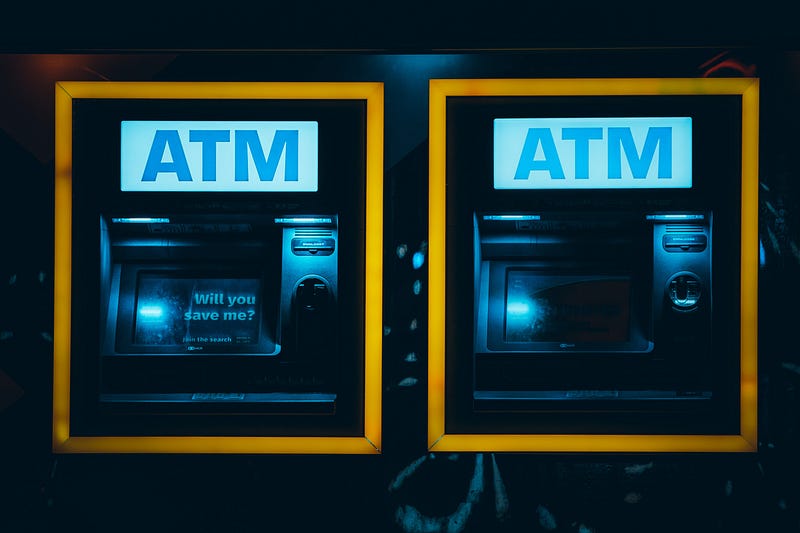
Photo by Keller Chewning on Unsplash


Gate.io confirms smooth operations

Gate.io is one of the oldest Chinese Bitcoin exchanges. It moved its corporate headquarters to the Cayman Islands once the Chinese authorities took a hardline stance on cryptocurrencies a few years ago. It also maintains offices in Seoul, South Korea, and is currently preparing to launch a bespoke Hong Kong-based platform.

According to the exchange, withdrawals are functioning properly, and the overall operations of the exchange are healthy. It explicitly stated, “There are no issues with our operations or withdrawals as rumored.”


Multichain concerns

Speculation emerged on social media on May 24 when Arkham Intelligence reported that members of the separate blockchain project Multichain had transferred $3 million worth of the $MULTI token to Gate.io. Arkham also mentioned other transactions involving Multichain-related tokens, some of which were subsequently suspended for deposit on the leading exchange, Binance.

While Arkham did not directly suggest any risks to Gate.io itself, the combination of market activity and other events led to rumors. ‘Coinsumption,’ a Twitter account with nearly 31,000 followers, suggested on May 31 that Gate.io might be facing insolvency problems and advised users to withdraw their funds from the exchange.

The ongoing issues with Multichain may well be unrelated to Gate.io. Multichain’s team members recently stated that they are unable to contact their CEO or access project servers. The project has experienced transaction delays over the past few days.


Native token price impact

Gate.io’s native token ($GT) has reportedly been affected by these rumors, as its value has declined by 6.59% over the past 24 hours. In contrast, Bitcoin has only experienced a 1.4% decrease.

The $GT token losses can be attributed, in part, to a period of several hours during which the token’s price dropped from $4.92 to $4.49. In isolation, this change represents an 8.7% loss, although there have been partial recoveries and other fluctuations to offset the decline. At the time of publication, the $GT token unit price stood at $4.36.

Despite the recent challenges, Gate.io continues to demonstrate significant trading volume. On the most recent day, the exchange recorded approximately $525 million in trading volume, solidifying its position as one of the largest centralized exchanges with sub-billion daily trading volumes.

The almost ten-year-old exchange is among several cryptocurrency exchanges preparing to comply with upcoming regulations in Hong Kong. It aims to operate alongside other platforms, such as CoinEx, OKX, Huobi, and BitMEX, as they adapt to the regulatory framework being implemented in the region.

Gate.io has dispelled rumors of withdrawal issues, assuring users that its operations are functioning normally. Notwithstanding that, as with everything in the crypto space, the facts and circumstances can change in an instant. Therefore, it’s a topic that is worthwhile watching as further news emerges relative to ongoing issues on the Multichain project.

More to Read
View All
Policy & Regulation·

Jun 02, 2025

Thailand’s SEC moves to block five exchanges to protect investors

Thailand’s Securities and Exchange Commission (SEC), an independent state agency responsible for the supervision of capital markets including the digital assets sector within the Southeast Asian nation, has moved to block five cryptocurrency exchange platforms. In a statement published by the agency to its website on Thursday, May 29, the SEC outlined that it deems the five exchanges, namely OKX, Bybit, CoinEx, XT.com and 1000X.Live, to be unauthorized crypto trading platforms.Photo by REY MELVIN CARAAN on UnsplashCountering money laundering activityIt is acting against these platforms “to protect investors” and to prevent their use for money laundering purposes. In offering services to Thai users on an unauthorized basis, the exchanges were found to be in breach of Thailand’s Digital Asset Business Act B.E. 2561 (2018). The agency has asked the Ministry of Digital Economy and Society (MDES) to take measures to block local access to these online platforms. That block will be put in place on June 28. On that basis, the SEC has advised Thai users of such platforms to proceed to remove their assets from them before that June 28 deadline.  An updated version of the Royal Decree on Measures to Prevent and Suppress Technology-related Crime, (No. 2) B.E. 2568 (2025), was introduced by the Thai government in April. It facilitated the establishment of the Committee for the Prevention and Suppression of Technological Crime.  Following practices overseasThe committee met with the MDES in April, with the parties setting out the process through which unauthorized digital asset platforms would be restricted and blocked. On that occasion, similar practices carried out in other jurisdictions within the Asian region were referred to.  In December 2023 India’s Financial Intelligence Unit (FIU) moved to block nine offshore crypto exchanges, having issued them with compliance show-cause notices.  In April 2024 the Philippines SEC requested that Google and Apple remove apps associated with global exchange Binance from the local versions of their application stores. Japan’s Financial Services Agency (FSA) similarly ordered both companies to remove apps belonging to unregistered crypto exchanges in February of this year. Back in March, the Thai SEC filed a lawsuit against Aux Cayes FinTech Co. Ltd., an OKX affiliate company. The complaint alleged that OKX had been running an unlicensed exchange in Thailand, and was filed with the Economic Crime Suppression Division of the Thai police force. The SEC outlined on March 21 that a similar criminal complaint had been filed against XT.com. It’s understood that Bybit, CoinEx and 1000X.Live have also been recipients of complaints on the same basis. Earlier this year, the Economic Crime Suppression Division considered taking action against Polymarket, a crypto-based prediction market, on the basis that the platform violated Thailand’s gambling laws, and in doing so, posing a risk to economic and social stability in Thailand. In April 2024, the SEC issued a warning to crypto exchange platforms against the use of misleading advertising, drawing their attention to the fact that advertising of that nature would potentially place those platforms in breach of regulatory guidelines. 

news
Policy & Regulation·

Apr 12, 2023

Bitmain Fined by Chinese Authorities for Tax Irregularities

Beijing-based cryptocurrency mining firm Bitmain has reportedly violated tax regulations in China, with local authorities imposing major fines. According to the reports, Bitmain has failed to pay personal income taxes amounting to $2.4 million, which has led to a penalty of $3.7 million from the Beijing Municipal Office of the State Administration of Taxation. Leading mining equipment manufacturerBitmain Technologies is one of the biggest cryptocurrency mining equipment firms in the world, established in 2013. The company is renowned for its reputation as a manufacturer of crypto mining equipment and solutions. Reports suggest that Bitmain was compelled to end its operations in China in October 2021 as a direct result of the blanket ban on cryptocurrencies that was issued by the Chinese government in September 2021.However, despite these regulatory challenges and the bear market in the cryptocurrency industry in 2022, the company has reportedly continued to achieve success in its business. Bitmain’s latest Antminer product sold out within a minute in December, despite the declining profitability of cryptocurrency mining. On Tuesday, it emerged that North American crypto miner CleanSpark had acquired 45,000 Bitmain Antminers, doubling its mining capacity.The company’s founder, Jihan Wu, established a $250 million fund in September 2022 to help the mining industry during the difficult crypto winter. Following his departure from Bitmain in 2021, Wu established Bitdeer, a new cryptocurrency mining company that served as a spin-off of Bitmain. Crypto crackdownThe fine imposed on Bitmain highlights the continued scrutiny of the crypto industry in China. The country has taken steps to crack down on the crypto market, particularly going after the mining industry. China has banned crypto mining, though it still takes place via underground operations. One major headline in recent weeks related to the fact that a former Chinese Communist Party (CCP) secretary helped a crypto mining operation operate. One China court also ruled that cryptocurrency mining affects the climate negatively.Despite the crackdown, China is making headway with its digital yuan, a central bank digital currency (CBDC). The country continues to run pilots for the CBDC, each more extensive than the last. As China’s digital yuan gains momentum, it has been speculated that the country may use it as a tool to further restrict the use of decentralized cryptocurrencies.Companies operating in China will have to keep a close eye on their operations, especially since the country does not take a favorable stance towards crypto. Hong Kong hubHowever, Hong Kong is opening up to the crypto industry and is attempting to become a crypto hub. The Hong Kong government recently launched a regulatory framework for crypto exchanges, making it easier for crypto businesses to operate within the city. This move has attracted a significant number of crypto firms to relocate to Hong Kong from mainland China.Bitmain’s $3.7 million fine imposed for violating tax regulations in China is a clear sign that the scrutiny of the crypto industry in the country is still prevalent. Despite the challenges and uncertainties, the company has continued to achieve success in its business, and the industry’s regulatory landscape is continuously evolving. Companies in China will have to ensure compliance with all relevant regulations, while also exploring opportunities to operate in crypto-friendly jurisdictions like Hong Kong.

news
Policy & Regulation·

Sep 19, 2023

Kazakhstan Launches NPC With CBDC Implementation by 2025

Kazakhstan Launches NPC With CBDC Implementation by 2025Kazakhstan’s National Bank (NBK) has unveiled the National Payment Corporation (NPC), a dedicated entity responsible for spearheading the development and launch of the country’s central bank digital currency (CBDC), known as the digital tenge.In a press release published last Friday, the NBK set out that the launch of the NPC is effectively a restructuring of the Kazakhstan Center for Interbank Settlements. The new entity has been entrusted with overseeing the national payment system.This mandate includes overseeing critical functions like interbank clearing services, facilitating money transfers, and managing digital identification. However, the NPC’s central mission revolves around establishing a robust “digital financial infrastructure” with a primary focus on realizing the digital tenge.Photo by Uladzislau Petrushkevich on Unsplash2025 targeted launch dateThe journey toward the digital tenge began in February of this year, with an ambitious launch date set for 2025. Deputy Governor of the NBK, Berik Sholpankupov, initially articulated a vision centered on a “collaboration between traditional finance and DeFi,” aimed at significantly improving financial inclusion and strengthening international trade.As of now, the CBDC pilot in Kazakhstan has advanced to a controlled environment pilot phase involving actual consumers and merchants. One of the key partners in this venture is Binance, the world’s largest cryptocurrency exchange. Binance is actively supporting the pilot through its technical solution, BNB Chain, marking a convergence between traditional financial institutions and the blockchain-based cryptocurrency sector.Kazakhstan’s pursuit of CBDCs aligns with a global trend as numerous countries worldwide explore the potential of CBDCs. An astounding 105 countries, representing a substantial 95% of the global gross domestic product (GDP), are currently exploring the concept, highlighting the collective recognition of the transformative potential of digital currencies in shaping the future of finance.Last week it emerged that the NBK had entered into a collaboration with the global financial messaging service SWIFT relative to the beta-testing of a CBDC.Attracting global exchangesIn a move that bolsters the development of crypto in the central Asian country, Binance launched a regulated digital asset platform in collaboration with the local Freedom Finance Bank. Around the same time, Bybit secured in-principle approval to trade within the country from the local regulator.Kazakhstan’s proactive stance toward cryptocurrency is also evident in its taxation policies. In 2022, the government collected approximately $7 million in tax payments from cryptocurrency mining entities following the implementation of revised regulations governing the fiscal responsibilities of cryptocurrency mining.Additionally, the government introduced legislation aimed at curbing excessive energy consumption by domestic crypto miners, instituting licensing requirements, and making minor adjustments to the taxation framework.Kazakhstan’s steps in establishing the National Payment Corporation and venturing into the realm of CBDCs reflect the country’s interest in embracing the digital era and staying at the forefront of financial innovation. As the industry looks on, Kazakhstan’s digital tenge project could serve as a model for others seeking to bridge the gap between traditional finance and the exciting possibilities of DeFi.

news
Loading