Top

Bitay Ventures into Expanding UAE Crypto Market

Web3 & Enterprise·September 01, 2023, 1:52 AM

Turkey’s Bitay, a cryptocurrency exchange headquartered in Istanbul, has taken the decision to enter the United Arab Emirates (UAE) market.

The company announced the development via a press release published on Thursday.

Bitay General Manager Niyazi Yilmaz expressed his satisfaction in having made the move, stating: “The UAE provides a stable regulatory environment for crypto exchanges. It will serve as more than just a market for Bitay, it will be our technology base, central to our global blockchain strategy.”
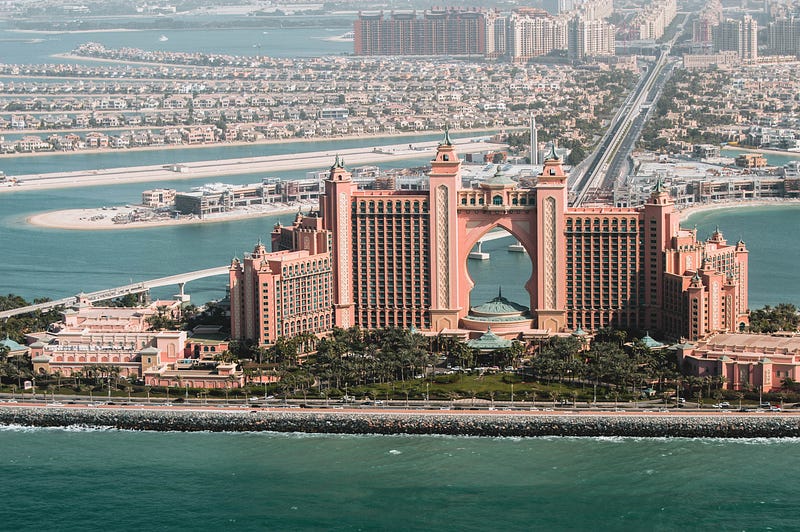
Photo by Aldo Loya on Unsplash


Government-aided kickstart

Bitay sprang to life in 2018 following the award of a research grant by the Turkish government. The business has been operational in Turkey over the course of the past five years, but took the decision to expand on a global basis in 2021. The upshot of that decision saw the company obtain a Money Services Business (MSB) license in 16 states in the United States. Beyond that, the firm has made efforts to extend its services to customers across Europe, Asia, Africa, and the Americas.

Last year, Bitay entered the Indian market, and as part of that process, it established an office in Gurgaon. At that time, the company claimed that India, the Turkic countries, Eastern Europe, the Balkans, and selected countries in the Middle East and North Africa (MENA) were its priority markets.


Stablecoin USP

The company feels that it has something additional to offer the UAE market by comparison with other platforms that will provide it with a unique selling proposition (USP). It will also offer AEDD, a stablecoin that is pegged to the UAE's local currency, the United Arab Emirates Dirham (AED). Yilmaz explained: “AEDD is not just a stable coin, but a testament to the investment and trust we place in the UAE’s digital future.”

To further bootstrap the launch of the platform within the UAE, Bitay is offering some preliminary incentives to encourage UAE residents to use the service. To that end, it’s launching an “Advantageous 2nd Sales Period” campaign. The offering will incorporate 25% discounts on its native exchange token, accompanied by a yield bonus of up to 30% on USDT-based investments.


Native token offering

The company claims that its native token achieved a 330% surge in value within its first year. That said, exchange tokens have been the subject of controversy more recently. The reliance of failed cryptocurrency exchange FTX on its native FTT token was a key factor in the downfall of the platform in 2022. Similar concerns have been raised with regard to global crypto exchange Binance relative to its native BNB token, albeit that any such assertions remain a matter of speculation.

A progressive regulatory approach to virtual assets over the course of the past 12 months in the UAE has seen proponents of digital currency heap praise on the country. It has also led to a number of sizable crypto platforms attaining licensing in Dubai and Abu Dhabi, while others have established offices or headquarters within the UAE.

More to Read
View All
Web3 & Enterprise·

Dec 06, 2023

Bitcoin records this year’s highest in Korean market, surpassing KRW 60M

Bitcoin records this year’s highest in Korean market, surpassing KRW 60MBitcoin, the world’s largest cryptocurrency, exceeded the KRW 60 million (approximately $45,700) mark in the South Korean market on Wednesday (local time), reaching its highest value of the year.So far today, the nation’s leading crypto exchange, Upbit, saw Bitcoin’s price soaring to a daily peak of KRW 60,642,000. Meanwhile, another major trading platform, Bithumb, observed Bitcoin’s value touching a daily high of KRW 60,775,000.Photo by André François McKenzie on UnsplashHighest since November 2021This is the first time Bitcoin went above the KRW 60 million mark since November 2021. Amid this development, the Kimchi premium, a term indicating the gap in crypto prices between Korean exchanges and their foreign counterparts, has exceeded 4%. According to data from crypto information platform CoinNess, at the time of publication, the average price of Bitcoin on Korean platforms is KRW 59,986,250, while the average price of Bitcoin on foreign platforms is KRW 57,605,406.Ethereum prices are also on the rise. On Upbit, Ethereum reached its highest point of the day at KRW 3,163,000, and on Bithumb, it peaked at KRW 3,162,000.Rate hike halt and Bitcoin halvingThe ongoing surge in Bitcoin’s value is widely believed to be influenced by a halt in global interest rate hikes and the anticipated Bitcoin halving event scheduled for April 2024. Additionally, the potential approval of spot bitcoin exchange-traded funds (ETFs) by the U.S. Securities and Exchange Commission is seen as another significant factor contributing to the rise in the digital currency’s prices.Meanwhile, the Crypto Fear and Greed Index from software comparison platform Alternative.me currently indicates a sentiment of “Greed” with a score of 72. This index assesses various factors, including volatility, market momentum and volume, social media buzz, market dominance and trends. The scale ranges from 0 to 100, where 0 signifies “Extreme Fear” and 100 represents “Extreme Greed.” Scores nearer to 0 suggest increasing fear among investors, potentially signaling a buying opportunity. On the other hand, scores approaching 100 imply growing greed, hinting at the possibility of a market correction.Korean won as the top fiat trading pairDuring this latest Bitcoin rally, where the cryptocurrency climbed to over 50% of its highest price in almost two years, South Korean crypto traders have played a significant role, Bloomberg reported, citing data from CCData. In November, the South Korean won exceeded the U.S. dollar as the top fiat trading pair in the crypto market for the first time.

news
Web3 & Enterprise·

Jul 17, 2023

Blockchain Firm NEOPLY Rebrands as Neowiz Partners to Focus on Investment

Blockchain Firm NEOPLY Rebrands as Neowiz Partners to Focus on InvestmentNeowiz Holdings, a South Korean investment holding company, announced today that its blockchain subsidiary NEOPLY held an extraordinary general meeting of shareholders and rebranded itself as Neowiz Partners, according to local news outlet News1. Upon this name change, the company will participate as a liquidity provider in the industry through strategic partnerships with investment firms such as venture capital firms and private equity funds.Photo by Precondo CA on UnsplashAbu Dhabi’s supportEarlier, it was revealed that Neowiz Partners became a part of the Innovation Programme offered by the Abu Dhabi Investment Office (ADIO) in the United Arab Emirates (UAE). This program offers incentives to various businesses operating in high-growth areas like financial services and technology.Diverse portfolioUnder its new name, Neowiz Partners aims to build a diverse portfolio of investments in promising companies committed to emerging technologies such as artificial intelligence (AI) and robotics. This strategic move is intended to foster future growth and seize the potential offered by these innovative sectors.Neowiz Partners’ global headquarters, known as H-Lab, located in the Abu Dhabi Global Market (ADGM), will oversee investment and management related to its blockchain businesses. Meanwhile, the operations of these blockchain projects will continue to be managed by NEOPIN, a subsidiary of H-Lab and a CeDeFi protocol that operates as a one-stop solution for those seeking a non-custodial wallet.Earlier reports highlighted NEOPIN’s achievement in launching Korea’s first liquid staking products for ETH. This approach enables users to deposit their cryptocurrencies into a staking pool and receive liquidity provider tokens in return. These tokens can then be deposited again to generate additional yields.On the occasion of this renaming, Neowiz Partners will establish itself as a dedicated investment company, while H-Lab will concentrate on serving the blockchain industry and associated ventures.

news
Policy & Regulation·

Nov 04, 2025

Hong Kong SFC opens door to global order book integration for digital assets

At Hong Kong FinTech Week 2025, Securities and Futures Commission (SFC) Chief Executive Julia Leung outlined plans to link Hong Kong’s crypto market with global liquidity. She announced that licensed virtual asset trading platforms (VATPs) will be allowed to share a global order book with their overseas counterparts. According to a statement published on the SFC’s website, this step will enable local investors to access international markets more efficiently, improving price discovery and competitiveness. Leung added that more initiatives are on the way to connect local brokers directly to global liquidity networks. This latest connectivity push comes as Hong Kong considers new guardrails for crypto holding companies such as digital asset treasuries (DATs), which hold cryptocurrencies as strategic assets.Photo by Manson Yim on UnsplashSFC points to regulatory gaps for digital asset treasuriesThe state-owned newspaper Wen Wei Po reported that Securities and Futures Commission (SFC) Chairman Kelvin Wong noted the current lack of regulations governing listed companies operating as DATs and the limited understanding of such entities. Chairman Wong added that firms seeking to list in Hong Kong as DATs would need to persuade both the SFC and the Hong Kong Stock Exchange (HKEX) of their suitability. For companies already listed, he urged investors to remain alert to the potential risks involved. This regulatory concern over crypto investing companies emerges as Hong Kong simultaneously presses ahead with its ambition to become a leading hub for digital finance. City advances on e-HKD and tokenizationIn line with that ambition, the Hong Kong Monetary Authority (HKMA) unveiled its e-HKD Pilot Programme Phase 2 Report in an Oct. 28 press release. The report outlines the potential benefits of its central bank digital currency (CBDC), the e-HKD, and tokenized deposits, noting that public feedback on both concepts has been broadly positive. The program's second phase involved 11 pilot projects led by various consortiums. These projects explored retail use cases, emphasizing the e-HKD’s commercial viability and scalability. Key focus areas included the settlement of tokenized assets, programmability, and offline payments. Participants in the program included Aptos Labs, the Boston Consulting Group (BCG), Hang Seng Bank, Standard Chartered, and BlackRock. Based on the report's findings, the HKMA stated it would initially prioritize the e-HKD’s application in wholesale or large-value payments, leveraging its credit risk–free nature as a central bank liability. Concurrently, the authority plans to continue studying potential retail and corporate applications, aiming to lay the groundwork for broader implementation by the first half of 2026. Survey shows strong investor appetiteAmong the program’s participants, Aptos Labs, Boston Consulting Group (BCG), and Hang Seng Bank reported accelerating interest in tokenized funds. A survey they conducted found that 61% of retail investors in Hong Kong and mainland China planned to double their exposure. Held between May and June 2025 among more than 500 retail fund investors, the survey tracked sentiment and appetite for tokenized products. Mainland participants showed particularly strong demand for cross-border access. The findings also detailed differing motivations among Hong Kong investors. Active traders expect to lift tokenized fund allocations from 10% to 26%, attracted by round-the-clock trading and greater flexibility. Wealth transfer planners indicated an expected expansion from 5% to 16%, highlighting programmable fund structures for tailored trusts and transparent oversight. Long-term investors aim to raise exposure from 8% to 25%, citing instant liquidity and the ability to use tokenized assets as loan collateral. Mainland investors projected their allocations would climb from 11% to 24%, reportedly viewing tokenized funds as a practical route around capital restrictions. The survey noted that programmable features could support dynamic allocation across Hong Kong products, the onshore use of profits, and smoother cross-border transfers. BCG commented that the survey outcomes align with Hong Kong's measured advance in crypto oversight, pointing to the city’s stablecoin regime that came into force in August. The Hong Kong Monetary Authority (HKMA) has signaled, however, that licensing under that regime will not begin until early next year. The ongoing development of the e-HKD and the prospective regulation of digital-asset treasuries point to Hong Kong’s broader strategy of integrating digital finance into its mainstream economy. Together, these initiatives underscore a cautious yet steady effort to position the city as a global center for digital finance. 

news
Loading