Top

WEMIX PLAY Adds Four More Games to Its Lineup

Web3 & Enterprise·August 25, 2023, 8:29 AM

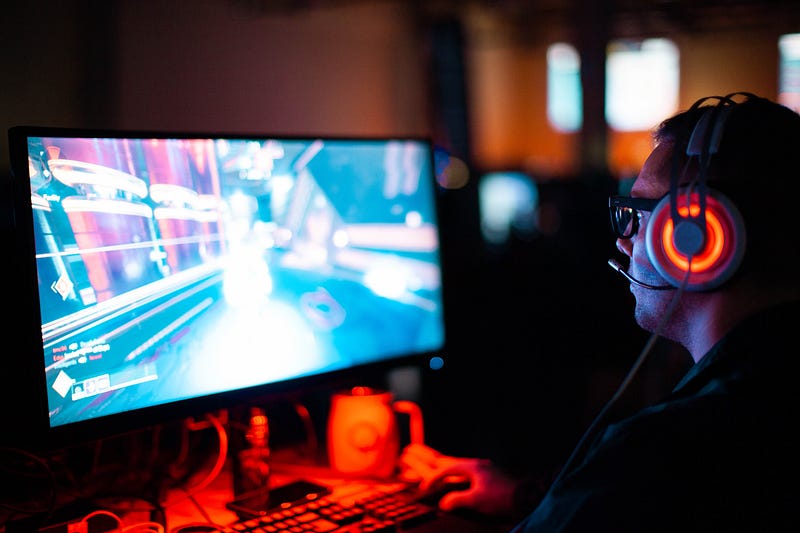
South Korean gaming publisher Wemade has taken a stride by signing contracts with four distinct gaming developers to integrate their games onto WEMIX PLAY, Wemade’s blockchain gaming platform. This news arrives merely a week after the onboarding of the preceding three games.

Photo by Sean Do on Unsplash


Tank battle game

Among the additions is “Tank Battle Heroes: World War,” developed by T-Bull S.A., a mobile game developer based in Poland. Its forthcoming contribution stands out as a 3D multiplayer tank battle game, featuring realistic snowy and desert environments. Gamers will enjoy Tank Battle Heroes by defending their territory and conquering rival territories.


Action RPG

Joining the roster is “Wind of Chaos,” an action role-playing game designed by Altwolf Software, a company hailing from Belarus. In “Wind of Chaos,” players immerse themselves as pirates, opting for individual or group endeavors in their quest to destroy enemy ships and engage in adrenaline-inducing battles.


3D artillery game

Hong Kong’s tech enterprise, HK Pharos Tech, is set to introduce “TNT Bomb Commando,” a 3D artillery game. The game’s appeal lies in the extensive customization options for characters, enabling gamers to personalize in-game avatars with over 100 costumes.


Strategy puzzle RPG

Another notable addition is The First Hunter, a strategy puzzle RPG that is currently under development by Korean gaming company Captains. Rooted in the narrative of an online novel of the same name, The First Hunter offers gamers a unique universe to explore. Engaging in battles to collect a wide range of characters and nurture their growth is a central facet of the gameplay experience.

More to Read
View All
Web3 & Enterprise·

Aug 24, 2023

Maple Finance Secures $5 Million to Fund Asia Expansion

Maple Finance Secures $5 Million to Fund Asia ExpansionMaple Finance, a crypto capital network focused on institutional business, has recently concluded a funding round that raised $5 million, with a view towards using the funds to finance an expansion into the Asian market.Maple Finance operates as a platform that empowers lending pool delegates and credit professionals to establish their own credit facilities on the blockchain. These facilities cater to different borrowers who can draw from these pools.Notably, Icebreaker Finance initiated a $300 million lending pool on Maple to assist Bitcoin miners in 2022. Maple Finance functions as the infrastructure atop which these lending pools are built, with pool delegates and lenders independently evaluating and verifying their risk.Photo by Monstera on PexelsMaple Direct lendingThe capital infusion was led by Blocktower Capital and Tioga Capital, with participation from supporters including GSR Ventures, Cherry Crypto, Veris Ventures, and Spartan Capital. This funding will not only facilitate Maple Finance’s expansion endeavors but will also fuel the growth of its newly introduced pure-play lending division, Maple Direct.Maple Finance has spotted an opportunity that has opened up due to the collapse of lending giants like Genesis Lending, BlockFi, Voyager, and Celsius in the institutional lending space. In addition to its role as a platform for facilitating third-party pool creation, Maple Direct was launched in June. It offers overcollateralized loans secured by Bitcoin, Ethereum, and staked Ethereum as collateral.Sydney Powell, the firm’s Co-Founder and CEO explained that Maple Direct is designed to offer an over-collateralized lending product transparently on-chain, providing a differentiated approach in the market. Unlike other platforms, borrowed collateral isn’t rehypothecated for yield generation; instead, it is securely held with a qualified custodian. This strategy positions Maple Finance to cater to market demand while minimizing risk.Strategic expansionPowell told TechCrunch: “I think now is the time to do that because all the other competition exited, and so that’s created this opportunity for us to step in and offer a product.” He expanded further on how the company is thinking strategically, relative to the expansion of the services it is now offering: “Other players try to focus on just trying to build the technology, kind of like Uber and Airbnb. What we’ve tried to do is to act as an underwriter so we need to show credit expertise. I think it gives us a little bit more control over the outcome and it’s a little bit closer to Apple in that it’s more vertically integrated.”Pushing into AsiaThe newly raised funds are earmarked for global expansion, with a particular focus on the Asia-Pacific (APAC) region. This is a strategic move, considering that several jurisdictions in APAC, such as Singapore and Hong Kong, have adopted pro-crypto regulations.“In Asia, you have regulatory clarity, or rather, regulatory support, both coming out of Hong Kong and Singapore in terms of new legislation that’s come through, and you already have a very heavy trading focus over there,” Powell stated.Maple’s product development is ongoing. Earlier this month, the company launched a Treasury Bill Pool that provides accredited investors with access to US Treasury Bills with what it claims is a “risk-free rate” of return, given that the pool generates a yield of 4.67%.

news
Policy & Regulation·

Dec 31, 2024

Legislator calls for Bitcoin reserve in Hong Kong

In an interview with local media, Hong Kong legislator Johnny Ng called for the Chinese autonomous territory to implement a national Bitcoin reserve. Ng made the comments in a discussion with Hong Kong-based state-owned Chinese language media outlet, Wenweipo. The legislator believes that there is an opportunity for Hong Kong to take advantage of China’s “one country, two systems” approach to governance, which gives it the freedom to implement such a reserve despite mainland China remaining much less enthusiastic where Bitcoin and cryptocurrencies are concerned.Photo by Kanchanara on UnsplashSpot Bitcoin ETF impactThe Hong Kong Legislative Council member suggested that as a first step, Hong Kong needs to assess the impact that spot Bitcoin exchange-traded funds (ETFs) in the United States have had. Spot Bitcoin ETFs were launched in the U.S. in January. The leading spot Bitcoin ETF, IBIT, provided by asset manager BlackRock, has achieved a growth rate five times faster than any other ETF launched in the past. El Salvador and the Kingdom of Bhutan are examples of nations that have made Bitcoin a significant component within their national reserves. A recent report suggests that El Salvador currently holds 6,000 Bitcoin which it purchased at an average price of $45,465. In November, Arkham Intelligence reported that Bhutan was holding Bitcoin with a dollar value which had exceeded $1 billion at that time. Ng also referred to a move by individual states in the U.S. towards holding Bitcoin as a reserve asset. In August, the state of Wisconsin increased its holdings of shares in BlackRock’s spot Bitcoin ETF, IBIT. Last month, the state of Pennsylvania introduced a bill to make Bitcoin a strategic asset. Ohio has proposed similar legislation while Alabama’s State Auditor, Andrew Sorrell, has suggested that his state should establish a Bitcoin reserve. Reducing price volatilityNg believes that furthering the Chinese autonomous territory’s dealings relative to Bitcoin could prove beneficial, given that Bitcoin has the potential to play a role in attracting more talent and investment to Hong Kong. Additionally, he feels that the development of Bitcoin reserves at state level could help in reducing the price volatility of the asset as it goes through the process of global adoption. The Hong Kong lawmaker also believes that there is an opportunity for the Chinese antonymous territory to benefit from first mover advantage, stating that “the value of Bitcoin will be more stable, causing more and more other countries to follow suit and reduce their holdings of traditional assets.” Ng's latest interview follows a similar comment he made on X in July, where he suggested that Bitcoin is worth considering as an official financial reserve for a country. David Bailey, CEO of Bitcoin Magazine, took to X stating: “Hong Kong making moves, SBR here we go. President Trump must make the Strategic Bitcoin Reserve his top priority the day he enters the White House.”In recent days, soundings from Japan and Russia suggested that neither of these countries was prepared to establish Bitcoin reserves. However, just like with the advent of the Bitcoin ETF in the U.S., following Trump’s expression of interest in the establishment of a strategic Bitcoin reserve, the level of consideration of the matter has increased considerably among governments around the world.

news
Policy & Regulation·

Jan 02, 2024

K-GAMES and KOCCA release report on overseas gaming regulations

The Korea Association of Game Industry (K-GAMES) – the body responsible for overseeing and nurturing the country’s successful gaming industry – released its 2023 Global Game Policy and Legislation Study on Tuesday (KST) in collaboration with the Korea Creative Content Agency (KOCCA).Photo by Tingey Injury Law Firm on UnsplashThe report summarizes gaming-related regulations and laws in six Western European countries – the United Kingdom, Germany, Belgium, the Netherlands, Spain and France – including those on standard terms and conditions, the protection of minors, personal privacy, payment and more. "Through cooperation between public and private sectors, we have been able to achieve tasks like collecting information and securing databases on overseas gaming markets by country and continent," said Kang Shin-chul, President of K-GAMES. "We will continue to contribute to the development of the domestic game industry," he added. Regulatory landscapeThe study found that operators in the specified countries are not required to obtain special licenses, appoint local representatives, or set up servers in order to operate a gaming business in their respective countries. It also details country-specific requirements, such as in Germany, where the use of content that glorifies or justifies Nazi-related symbols or actions is prohibited. A closer look at Belgium’s stanceInterestingly, the report revealed that the regulation of randomly distributed in-game items varied by country. The UK, Germany, Spain, the Netherlands and France have no legal restrictions on such items, but the UK and the Netherlands have recommended that information on the odds of winning them in games of chance should be disclosed before a player obtains or opens an item. Meanwhile, Belgium has implemented a regulation that prohibits paid games of chance for stochastic items altogether due to its laws regarding gambling. However, there are no regulations on Play-to-Earn (P2E) games unless they constitute gambling, which is also true of the other five countries. Minting game items into NFTs is also not subject to oversight in all six nations unless they are considered financial instruments. There are also no standard terms and conditions set by Belgium’s national government for gaming services, which are instead governed by the European Union’s (EU) General Data Protection Regulation (GDPR). 

news
Loading