Top

Abu Dhabi Approves M2 for Crypto Services

Policy & Regulation·August 17, 2023, 2:41 AM

M2, a virtual asset firm based within Abu Dhabi Global Market (ADGM) in Abu Dhabi, has received authorization from the Financial Services Regulatory Authority (FSRA) to establish a multilateral crypto trading facility in the United Arab Emirates (UAE) capital.

This pivotal development, announced on Wednesday, allows M2 to provide both retail and institutional clients in the region with the capability to engage in activities such as purchasing, selling, and safeguarding digital assets, including Bitcoin.

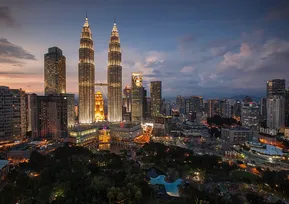
Photo by Jametlene Reskp on Unsplash


2023 platform launch

Scheduled for a launch later in 2023, the M2 platform’s creation has been a year-long process, designed to cultivate trust, security, and integrity within the burgeoning virtual asset landscape. The company’s mission is to empower users with access to the highest level of services, including the ability to transact with cryptocurrencies using fiat currency and tap into derivative and yield offerings.

Stefan Kimmil, the CEO of M2, acknowledged the significance of this regulatory milestone:

“The process of obtaining the license is the first step on our journey, and we will remain in close dialogue with ADGM to ensure transparency around the custody of client assets.”

Kimmil also expressed M2’s commitment to maintaining the high industry standards, as the UAE solidifies its position as a global front-runner in the virtual asset realm.

Founded earlier this year, M2 claims to have a depth of credible expertise driving it, with executives having joined the firm from traditional finance giants such as Deutsche Bank, JP Morgan, and Goldman Sachs.


Progressive regulation

The FSRA has taken a forward-thinking approach to digital asset regulation, having introduced a comprehensive framework for virtual assets in 2018. This framework has not only attracted numerous major cryptocurrency-focused companies to establish operations within its regulated financial and economic zone but has also fostered the region’s digital asset landscape.

ADGM CEO Salem Al Darei underscored the organization’s mission of driving growth and investment opportunities in the virtual asset sector: “We remain committed to enhancing Abu Dhabi’s digital asset landscape and actively supporting the diversification of our thriving economy.”

This sentiment is well-aligned with the broader vision of expanding the digital horizons of the UAE. The approval granted to M2 follows in the footsteps of significant advancements in the UAE’s cryptocurrency landscape. In November 2022, cryptocurrency exchange giant Binance secured financial services permission, bolstering its presence in the region.

Furthermore, Rain, a prominent cryptocurrency exchange that serves the Middle East and North Africa (MENA), Turkey, and Pakistan, obtained regulatory approval last month to extend virtual asset brokerage and custody services to UAE residents.

The emergence of M2’s platform points to the ongoing fostering of a dynamic virtual asset ecosystem that is currently ongoing in Abu Dhabi and the UAE at a national level. As the platform prepares for its forthcoming launch, it’s seeking to usher in a new era of accessibility, sophistication, and opportunity for the growing community of retail and institutional clients seeking to engage with cryptocurrencies in the UAE.

More to Read
View All
Policy & Regulation·

Jun 19, 2023

Korea’s Busan City to Develop Blockchain-Based Carbon Neutrality Platform

Korea’s Busan City to Develop Blockchain-Based Carbon Neutrality PlatformBusan Metropolitan City, known for being home to South Korea’s largest port, announced today that its consortium won the bid for the 2023 new local energy facilitation project offered by the Korea Energy Agency, an organization under the Ministry of Trade, Industry, and Energy (MOTIE). The consortium consists of five entities, including Busan City, tech solution provider Nuri Flex, and gas distributor Busan City Gas. As the winning bidder, Busan City and its collaborators will proceed with the development of a blockchain-based platform that promotes carbon neutrality.Photo by BERK OZDEMIR on PexelsCarbon neutralityThe primary aim of this project is to create a system that leverages surplus renewable energy to achieve carbon neutrality in the city’s port and industrial infrastructure. The initiative includes providing eco-friendly renewable energy to port and industrial facilities, establishing a blockchain-based carbon credit system to support businesses in joining the global corporate renewable energy initiative RE100, and facilitating the trading of surplus electricity. These measures are intended to save energy, enhance power system stability, and create greater value.Boosting green energy proportionThe project is set to take place from June 2023 to December 2024, with an estimated cost of 3 billion KRW ($2.3 million). The national and local governments will each finance 25% of the project, while the private sector will cover the remaining 50%. Upon completion of the project, Busan aims to increase the proportion of renewable energy within the city. Leveraging surplus energy and engaging in carbon credit trading, Busan expects to gain a competitive edge in the carbon-neutral sector.

news
Web3 & Enterprise·

Jan 24, 2024

OKX and HashKey plan partnership to promote industry development

HashKey Group, the Hong Kong-based regulated cryptocurrency exchange, is planning a partnership with crypto derivatives platform OKX.Photo by Ivan Lau on UnsplashAdvancing innovation and growthThe duo announced their plans via a press release which was published on Tuesday. The objective of the partnership is aimed at advancing compliant virtual asset innovation and industry growth in Hong Kong. The collaboration between HashKey Group and OKX capitalizes on the strengths and resources of both entities to elevate services and experiences. Harnessing these strengths the pair intend to contribute towards Hong Kong's emergence as a hub for the regulated virtual asset industry. The partnership will encompass various industry initiatives, including blockchain infrastructure development, product diversification and virtual asset investment education within the region. First regulated exchangeNotably, HashKey Group achieved a significant milestone last year by becoming the first Hong Kong Securities and Futures Commission (SFC)-regulated crypto exchange authorized to serve retail users. The firm secured Type 1 and Type 7 licenses from the SFC, in line with the  "compliance first” approach the company is taking. Founded in 2018 and headquartered in Hong Kong, with operations in Singapore and Tokyo, HashKey Group caters to a diverse clientele, including retail investors, institutions, family offices, funds and professional investors. The services offered by the company encompass a Hong Kong SFC-regulated virtual asset exchange, global asset management and wealth management, with a focus on blockchain and digital assets, blockchain node validation, tokenization and Web3 incubation and community operations. Its Singaporean subsidiary, digital asset fund manager HashKey Capital, secured a regulatory license from the Monetary Authority of Singapore (MAS) in December. Unicorn statusOKX Ventures, the investment division of OKX, played a crucial role in supporting HashKey's Series A financing. That Series A funding round saw HashKey achieve unicorn status with a $1.2 billion valuation earlier this month. OKX Ventures focuses on investing in projects that nurture sustainable growth within the global virtual asset ecosystem. OKX, already serving over 50 million users worldwide, has a notable presence with sponsorships that include Manchester City FC in the English Premier League (EPL) and the McLaren Formula 1 racing team. Earlier this month, the company expanded its sponsorship with McLaren. The digital asset exchange began onboarding customers in Hong Kong a month before officially launching operations there, aligning with the city's new virtual asset service providers (VASPs) regime implemented on June 1 of last year. In March 2023, OKX established a Hong Kong entity to launch virtual asset services, with plans to apply for the virtual asset service provider (VASP) license and Type 1 & 7 licenses under the Securities and Futures Ordinance. Approval is anticipated by early 2024. The collaborative effort between HashKey Group and OKX marks a significant stride in advancing compliant virtual asset innovations in Hong Kong. This partnership aims to enhance service offerings and customer experiences, further solidifying Hong Kong's position as a regulated virtual asset industry hub. By leveraging their respective strengths, these industry leaders are well placed to assist in elevating Hong Kong's standing in the global virtual asset landscape, fostering growth and compliance in this rapidly evolving sector.  

news
Web3 & Enterprise·

Nov 14, 2023

Upbit D Conference participants share insights on Web3 and blockchain

Upbit D Conference participants share insights on Web3 and blockchainBlockchain specialists from 29 countries gathered on Monday (local time) at Upbit D Conference (UDC) 2023 in Seoul to explore capital markets in the forthcoming Web3 era. This era is characterized by user-controlled, communal data management, a notable shift from the Web2 space where major tech corporations held dominant control over data.Organized by Dunamu, the operator of South Korea’s Upbit cryptocurrency exchange, the conference featured 39 experts, focusing on the transformative potential of blockchain technology in this new internet phase.Photo by Shubham Dhage on UnsplashAsset tokenization and investment opportunitiesAccording to a report by the Asia Business Daily, one of the key speakers at the conference, Wally Yu, a Solutions Architect at San Francisco-based Chainlink Labs, delved into how cross-chain solutions and asset tokenization could add to the financial industry. He explained that Chainlink’s Cross-Chain Interoperability Protocol (CCIP), designed to connect various blockchains, is only beginning to reveal its capabilities in integrating with traditional financial markets. Yu pointed out the growing interest from banks in tokenizing their conventional assets and transferring them to the blockchain. This move, he suggested, could lead to increased liquidity and open up new investment opportunities.Yu also compared the current DeFi market to traditional sectors like stock, real estate, and derivatives, noting DeFi’s relatively smaller scale. However, he underlined blockchain’s transparency as a key advantage over traditional markets, where transparency is often lacking. According to Yu, the adoption of blockchain by traditional financial firms could address longstanding issues more effectively.Looking ahead to the Web3 era, Yu envisioned a scenario where different tokens are interconnected, potentially bringing an estimated $900 trillion worth of assets onto the blockchain. This, he believes, would significantly enhance liquidity in the financial markets.From Web2 to Web3During the conference, Korean mobile network provider SK Telecom’s (SKT) Vice President, Oh Se-hyun, outlined the company’s forward-looking strategy to transition its 30 million subscribers from Web2 to Web3. She highlighted SKT’s search for high-value markets to expand its business scope, underscoring the company’s active efforts in constructing Web3 infrastructure. This strategic pivot aligns with their vision for the upcoming Web3 era.SKT, which established its Web3 division in 2017, initially engaged in developing a private mainnet. However, the company has since shifted its focus towards services aimed at boosting customer engagement, such as custody, web and app services. Oh emphasized the need for Web3 wallets to support a diverse range of assets and decentralized applications (dApps), but she stressed that ease of use is paramount. She views that these wallets will serve as gateways for customers entering the blockchain space.SKT has developed and is improving its own Web3 wallet, dubbed Wallet T. Oh shared her belief that the future of financial business models will pivot from traditional and big-tech banks to those based on public chains. In preparation for this shift, SKT is contemplating strategies to embrace blockchain-based Web3 services.Crypto regulationThe conference also touched on the potential integration of virtual assets within regulatory frameworks. There’s growing anticipation in the market for the approval of spot bitcoin exchange-traded funds (ETFs) by the United States Securities and Exchange Commission, especially following the inclusion of asset manager BlackRock’s proposed spot bitcoin ETF in the Depository Trust and Clearing Corporation’s (DTCC) clearing-house eligibility file.Emily Parker, Executive Director at CoinDesk, mentioned that a spot bitcoin ETF is on the horizon in the U.S. She anticipated that such a development would not only boost cryptocurrency prices but also positively impact the market for non-fungible tokens (NFTs). Echoing this sentiment, Oh Se-hyun from SKT predicted that the approval of a spot bitcoin ETF could unlock access to a $30 trillion market.SKT’s Oh also addressed the complexities surrounding the regulatory landscape for cryptocurrencies. She acknowledged the challenge facing authorities in developing these regulations all at once, highlighting the gradual progress in this area. She cited the outcome of Ripple’s lawsuit in the U.S., which resulted in Ripple’s XRP tokens being classified differently for different investors: as a security for institutional investors but not for retail investors. Additionally, Oh pointed to the upcoming Markets in Crypto-Assets Regulation (MiCA) in the European Union, slated for implementation in December 2024. She emphasized that the establishment of such regulatory guidelines brings clarity and reduces uncertainty, which can be reassuring for businesses operating in the crypto space.Providing further insights into this matter, Kim Gap-rae, a senior researcher at the Korea Capital Market Institute (KCMI), spoke about the importance of regulatory clarity in the cryptocurrency sector. He pointed out that it’s more crucial for governments to have clear regulations rather than focusing on the extent of regulation. Understanding new regulatory or legislative trends is essential for governments as they look to develop new infrastructures.According to Kim, a potential spot bitcoin ETF approval in the U.S. could prompt South Korea to consider a similar approval. However, he noted that Korea currently lacks a regulatory framework for Bitcoin custody, which could lead to a competitive environment among crypto companies in the country. Kim believes that a deeper understanding of custodian regulations will enable better adaptation to new types of ETFs and foster their growth in Korea.

news
Loading