Top

China’s Bitmain Makes Plans to Unveil World’s First 1XJ/T Bitcoin Miner

Web3 & Enterprise·August 14, 2023, 11:40 PM

Bitmain, the leading player in the cryptocurrency mining equipment business, is set to host the upcoming 2023 Global Digital Mining Summit (WDMS 2023) in Hong Kong, using the event as a springboard to launch its latest Bitcoin miner.

The Beijing-headquartered mining equipment manufacturer set out its summit and equipment launch plans on Chinese social media platform WeChat on Monday.
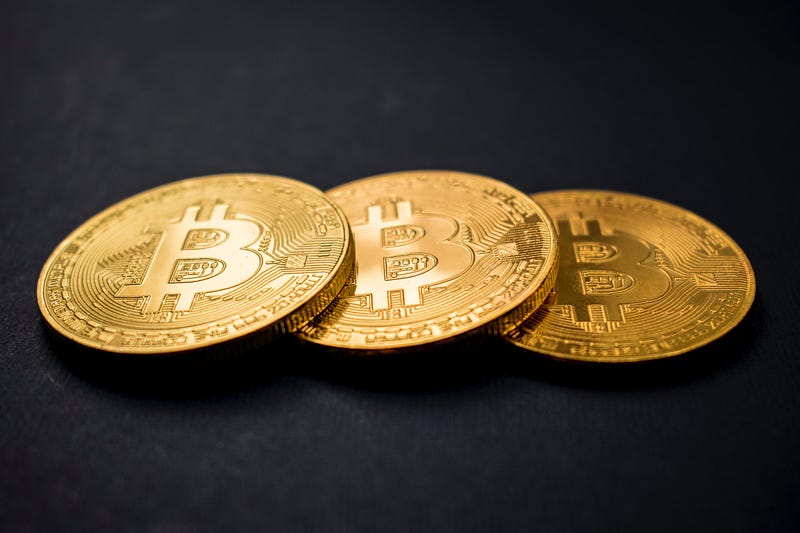
Photo by Dmitry Demidko on Unsplash


Introducing the ANTMINER S21

With the theme “Empower the Bull Market, Mine with Timing,” the summit will aim to assist clients in strategically positioning themselves in the mining sector to reap the rewards of the next crypto bull market. During the event, Bitmain will introduce its latest research and development achievement — the ANTMINER S21 mining machine.

The ANTMINER S21 is likely to take its place at the forefront of Bitcoin mining, given that Bitmain’s ANTMINER series has dominated the mining sector in recent years. Bitmain claims that with the S21, it is introducing a miner with unmatched computing power and efficiency, ushering the global mining industry into the 1XJ/T (Joules/Terahash) era.


Ever greater efficiency

Bitmain has consistently led the industry’s technological innovations, starting with the S9 model, which first broke the 100J/T barrier, to the S19 series with efficiency ratings of 34.5J/T, 29.5J/T, 21.5J/T, and 20.8J/T. The upcoming S21 is expected to continue this track record of ever greater Bitcoin miner efficiency.

In addition to technological advancements, Bitmain is using the summit as a mechanism to offer benefits to attendees. The company will launch a customer points system, allowing clients to apply for credit limits for S21 miners based on their points, enabling them to mine first and pay later. Moreover, the points system will facilitate conversion of points into exclusive coupons for the ANTMINER S21.


Hong Kong venue

Hong Kong has been chosen as the venue for this summit and that’s likely by design rather than by coincidence. Over the course of the past twelve months, the Chinese autonomous territory has been making huge strides in its efforts to become a center for blockchain and crypto-related business.

In recent months, Hong Kong has announced several supportive blockchain policies, attracting a significant pool of Web3 talent. The summit will also feature keynote speeches from local government officials, indicating the willingness of the local administration to take every opportunity to further Hong Kong’s strategic objective of furthering crypto, blockchain, and Web3 in the city.

Bitcoin mining has proven to be ruthless in its drive towards ever greater efficiency. This is playing out mainly on two different fronts. Firstly, in terms of the cost of the energy input. Miners continue to innovate in this area, to the extent that at this point, it’s difficult to remain competitive if an operation is not tapping into an energy source with a near zero input cost. This is being exploited by sourcing energy that is surplus to energy grid requirements, oftentimes renewable energy, that would otherwise be wasted.

The second major factor is the efficiency of the miners themselves. Entities that gain early access to the latest generation of miners from Bitmain and other mining equipment manufacturers immediately become more efficient than the other mining outfits that they compete with to unlock Bitcoin mining rewards on the Bitcoin network.


More to Read
View All
Web3 & Enterprise·

Sep 12, 2023

Coinbase Affirms Commitment to India Despite Disabling Sign-Ups

Coinbase Affirms Commitment to India Despite Disabling Sign-UpsLeading US-based cryptocurrency exchange Coinbase announced on Monday that it has temporarily disabled new user sign-ups for its exchange platform in India.A report emerged via India’s English-language business daily The Economic Times on Monday which stated that Coinbase was stopping “all services” for Indian users.Photo by Big G Media on UnsplashClarification of a misunderstandingIt appears that Coinbase sent emails to a subset of its Indian customers, notifying them of the cessation of exchange operations in the country by September 25. However, a more recent report by TechCrunch outlined that Coinbase has provided further clarification that these emails were sent exclusively to customers who did not meet the updated standards set by the company.On that basis, these messages do not affect and are not relevant to the majority of Coinbase users in India. The email further advised affected users to transfer their funds from the platform by the specified date.A Coinbase spokesperson communicated to TechCrunch via email, stating:“We stopped allowing new user sign-ups on our exchange product in India back in June of this year. We maintain a robust tech hub in the country and offer live products, including our Coinbase Wallet. We are committed to India over the long term.”Coinbase’s proprietary exchange app in India reportedly boasts fewer than 50,000 monthly active users, as indicated by data from Sensor Tower, shared by an industry executive.Difficulty in cracking Indian marketDespite its aspirations, Coinbase has been unable to make headway with local authorities since launching its exchange in India over a year ago. The lack of progress with local officials has proven frustrating for company executives, including Durgesh Kaushik, who joined Coinbase last year as the Senior Director for Market Expansion, only to leave the company within a couple of months.Coinbase’s CEO, Brian Armstrong, made a visit to India last year to launch the exchange service by adding support for India’s popular payment instrument, the Unified Payments Interface (UPI). Unfortunately, the body overseeing UPI immediately denied Coinbase’s recognition, leading Coinbase to suspend support for the payment system shortly thereafter.UPI has proven to be a runaway success in India. Consequently, being able to access and integrate with it would be very important in providing Coinbase’s Indian customers with the means of on-ramping and off-ramping between the exchange and fiat currency. Coinbase affirmed its commitment to collaborating with the National Payments Corporation of India (NPCI) relative to UPI but these efforts simply have not borne fruit.RBI pushbackIn May of the same year, Armstrong disclosed that Coinbase had to halt its trading service in India due to “informal pressure” from the Reserve Bank of India (RBI), the nation’s central bank. Armstrong pointed out that cryptocurrency trading isn’t illegal in India — in fact, the country had recently imposed taxation on it. However, there were elements within the government, including the RBI, that appeared less enthusiastic about cryptocurrencies and were exerting “soft pressure” behind the scenes.Notably, other Indian cryptocurrency exchanges like CoinDCX and CoinSwitch remain operational, but they’ve had their own struggles in their own local market. In August CoinSwitch downsized its headcount, citing a 30% tax on crypto gains and a 1% tax deducted at source (TDS) on transactions as contributing factors. That same month, CoinDCX cut its headcount by 12%.

news
Web3 & Enterprise·

Aug 14, 2023

UAE Royal Office to Visit South Korea Next Month for Web3 Ventures

UAE Royal Office to Visit South Korea Next Month for Web3 VenturesAIITONE, an immersive tech company based in South Korea, said Monday that officials from the Royal Private Office of H.H Sheikh Ahmed Bin Faisal Al Qassimi in the United Arab Emirates (UAE) are set to visit South Korea next month. During the visit, the Royal Office will work with AIITONE to enhance collaboration with Korean enterprises leading the Web3 sector, including information technology (IT) and blockchain, and explore cooperative opportunities across different sectors such as energy and finance.The Royal Office will also engage in practical preparations for establishing the UAE banks’ Korean branches and meet with members of the Korean National Assembly and related business officials.Photo by Saj Shafique on UnsplashNurturing international relations“This visit will consist of meetings and discussions with Korean lawmakers, further strengthening political cooperation between our two countries and facilitating the exchange of opinions on crucial international matters,” a representative from the Royal Office commented.“During the visit, a South Korea-UAE Web3 forum will also be held, expediting discussions on fintech-related collaboration possibilities such as blockchain and STO,” the representative added.Transcontinental fintech growthAIITONE and the Royal Office had previously signed a memorandum of understanding (MOU) vowing to work together to expand their respective business operations into each other’s regions — East Asia and the Middle East — and subsequently bolster the fintech industries there.Under the partnership, AIITONE plans to convene with major Korean companies in order to analyze industry trends and explore potential areas for collaboration. The discussions are expected to cover various areas, including the establishment of Islamic banks in Korea, setting up offices for the investment of Arab capital in Asia, and strengthening cooperation in the field of security tokens.The company will also work with the Royal Office on security token projects and central bank digital currencies (CBDCs) — areas where Dubai leads innovation.“Through activities such as the UAE Web3 forum and blockchain-based security token ventures, we aim to pioneer new models of cooperation and achieve sustainable development,” said Bruce Jeong, Principal of Middle East Investment and AIITONE.

news
Markets·

Sep 21, 2024

Hong Kong leads East Asia in crypto transaction growth

An analysis of data recently published as part of Chainalysis’ Global Cryptocurrency Adoption Index demonstrates that Hong Kong has recorded a year-on-year crypto transaction value growth rate of 85.6%.  On that basis, the territory accounts for the sixth-largest crypto economy in the world. Furthermore, Hong Kong ranks 30th in terms of global crypto adoption. That’s an improvement of 17 places, as it was ranked 47th in 2023. Regulatory framework aiding crypto adoptionAn excerpt from the 2024 Geography of Cryptocurrency Report by Chainalysis was published on September 18. It found that the steps taken in the Chinese autonomous territory in terms of laying down a regulatory framework for digital assets has led to this uptick in transactional activity, due to the increased adoption of digital assets by institutions.  Over the course of the past eighteen months, Hong Kong has launched crypto trading licensing. Earlier this year, exchange-traded funds (ETFs) were given the green light, with the subsequent launch of Bitcoin and Ethereum ETF products.  On the topic of ETF’s, Kevin Cui, CEO of digital asset trading platform OSL said that “as market conditions improve, we are seeing indications of a growing institutional interest that could lead to increased capital inflows in the near future.” Meanwhile, the Chinese autonomous territory is working towards the establishment of regulations that cover the issuance and trading of stablecoins.lil artsy on PexelsHong Kong key to Chinese crypto resurgenceIn terms of crypto adoption, mainland China ranked 11th this year, dropping down one place by comparison with last year. The report notes the complicated history China has had with cryptocurrency in recent years, given that a crypto trading ban remains in place. However, last year’s report pointed to the strong usage of centralized crypto exchanges by mainland China residents, which suggests that the ban has either been ineffective or poorly enforced.  The Chainalysis report speculates that “Hong Kong may finally influence China to re-open its doors to crypto.” This is not the first time that Chainalysis has made such an assertion. In last year’s report, it made a similar claim, suggesting that the development of Hong Kong as a crypto industry hub would lead to a softening in the stance of mainland China towards crypto. This year’s report suggests that mainland China residents have turned to over-the-counter (OTC) platforms in order to access crypto as a means towards preserving their wealth. The report quoted Ben Charoenwang, associate professor of finance at the INSEAD Asia Campus as stating: “Nowadays, if you want to move money out of China through traditional unofficial means like using mules, fees can be as high as 25 to 30 percent. The increasing use of OTC crypto in China suggests that people are looking for faster options to move money.” The report finds that five of the top 50 grassroots adopters of crypto, South Korea, China, Japan, Hong Kong and Taiwan, are located in East Asia. South Korea leads the region in terms of the most crypto value transacted metric. Chainalysis suggests that South Korea’s strong interest in altcoins signals that it will remain a leader in the region from a cryptocurrency innovation perspective.

news
Loading