Top

$120M Crypto Ponzi Scheme Exposed in India

Policy & Regulation·August 10, 2023, 1:48 AM

In a recent crackdown, local authorities in the state of Odisha in India, have dismantled a massive $120 million cryptocurrency Ponzi scheme.

That’s according to a report by local news agency ANI earlier this week. The operation led by the Economic Offences Wing (EOW) of the state police has resulted in the arrest of key individuals orchestrating the fraudulent endeavor. This latest development underscores the growing concerns around cryptocurrency scams and their detrimental impact on investors.

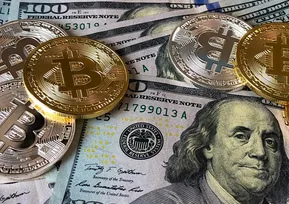
Photo by Ayiman Mohanty on Unsplash


STA crypto token

The mastermind behind the Ponzi scheme had adeptly evaded capture by frequently changing locations. The scheme, operating across India, revolved around the STA crypto token, a digital asset at the heart of the fraudulent activities.

Similar to the infamous OneCoin scandal, where billions were swindled from unsuspecting investors, the STA token scheme exploited victims who had invested in the token and then recruited others under the guise of a multi-level marketing initiative. Promised bonuses and extravagant returns were used as bait to lure individuals into the scheme, which eventually unraveled, leaving numerous investors financially devastated.


Unregulated token offering

Reports highlight that the STA token was not authorized by any regulatory body. This glaring absence of oversight enabled the scammers to continue their operations unchecked. The nature of the scheme involved recruiting victims in various Indian states who were promised substantial returns. These victims, in turn, were enticed to bring in new investors, creating a vicious cycle of recruitment and investment.

The investigation into the scheme revealed that the STA token offering attracted individuals through aggressive promotional strategies. This allowed the scheme to establish a vast network across India, involving approximately 200,000 individuals. The victims were led to believe that their investments would yield significant bonuses and returns, a tactic that echoes the tactics used by OneCoin promoters.


False claims

The STA token was introduced in September 2021 and rapidly established a presence on social media platforms, presenting itself as a legitimate cryptocurrency. It falsely claimed to be a blockchain-based platform connecting users with local farmers. This facade lent an air of legitimacy to the scheme, effectively deceiving unsuspecting investors.

The scheme’s audacity was further highlighted by a grand event hosted by STA criminal promoters in a luxurious hotel in Goa. This extravagant affair aimed to further legitimize the project and attract more victims.

This incident adds to a series of cryptocurrency-related scams that have plagued India. The GainBitcoin scam, which came to light last year, led to the loss of over $1.25 billion for around 100,000 victims. The Indian authorities have responded by issuing public advisories warning citizens against falling victim to such schemes that promise quick wealth through cryptocurrency investments.

In a recent parliamentary session, Minister of State for Finance Pankaj Chaudhary revealed that the Enforcement Directorate (ED) is actively investigating multiple instances of cryptocurrency-related fraud. These investigations have uncovered proceeds of crime amounting to over $130 million.

More to Read
View All
Markets·

Jul 03, 2023

Korean Crypto Market’s Healthy Growth Requires Corporate Participation

Korean Crypto Market’s Healthy Growth Requires Corporate ParticipationA healthy growth of the South Korean virtual asset industry needs the private sector’s investment in cryptocurrencies, a legal scholar argued at a recent international academic conference titled “Digital Financial Transition and International Trends in Commercial Law.”That’s according to a report by local news outlet Edaily. Namgung Ju-hyun, an assistant professor of commercial law at Sungkyunkwan University Law School, attended the two-day event hosted over the last weekend by the Korea Commercial Law Association to point out that the current restrictions on corporate investments in cryptocurrencies have not only increased speculation within the domestic market but have also hampered Korean companies’ endeavors in pursuing blockchain-powered projects.Banks and companiesProfessor Namgung addressed the current situation where Korean commercial banks are withholding real-name bank accounts from firms without specific legal grounds. This practice became common after the Act on Reporting and Using Specified Financial Transaction Information was revised in March 2021. This Act requires virtual asset service providers (VASPs) to adhere to anti-money laundering (AML) regulations; therefore, firms wishing to trade cryptocurrencies with the South Korean currency must have real-name accounts with domestic banks. While the Act doesn’t explicitly restrict issuing such accounts to corporations, banks have shown reluctance to do so.However, in countries like the United States, cryptocurrency trading in the corporate world is thriving. For instance, institutional investors at Coinbase, America’s largest crypto exchange, accounted for over 85% of the total trading volume in the first quarter, a rise from 76% during the same period last year.Photo by JESHOOTS.COM on UnsplashMinor altcoins’ strong presenceProfessor Namgung identified the prevalence of retail investors and their speculative behaviors as the primary issue plaguing the Korean crypto market. A case in point is a relatively large proportion of trades in minor altcoins. As per a report by the Korean Financial Services Commission (FSC), the combined market cap of BTC and ETH accounted for only 33% in the domestic market, a contrast to their 58.2% share in the global market. Namgung underscored that the high trade volumes of volatile crypto assets contribute to the Kimchi premium, a phenomenon where crypto prices in Korea are higher than those in other countries.Namgung also mentioned that Korean companies like Hyundai Motor, Lotte Homeshopping, and Shinsegae, despite promoting projects based on non-fungible tokens (NFTs), face difficulties due to their inability to convert cryptocurrencies to cash on domestic crypto exchanges. In comparison, global companies like Nike are successfully leveraging NFTs for their projects and exploring new business opportunities.Role of financial authoritiesProfessor Namgung urged Korean financial authorities to devise guidelines that encourage corporate participation in the crypto market, eliminating uncertainties. As a step towards risk management, he recommended considering publicly traded companies or established firms of a certain size as initial participants in the crypto market.Input from international scholarsPrior to Professor Namgung’s talk, the international academic conference also featured presentations from foreign scholars, namely Mirella Pellegrini, a professor at LUISS University of Rome; Marco Bodellini, an associate lecturer in banking and financial law at Queen Mary University of London; and Albert H. Choi, a professor of law at the University of Michigan Law School.Professor Pellegrini discussed personalized financial products and investor protection in the digital market from the perspective of the European Union. Dr. Bodellini provided insights into central bank digital currencies (CBDCs) from a policy perspective, while Professor Choi focused on digital transformation and retail shareholder engagement.

news
Policy & Regulation·

Jul 25, 2023

Report Cites Escalating Crypto Use by Pro-ISIS Groups

Report Cites Escalating Crypto Use by Pro-ISIS GroupsA recently published report suggests that pro-ISIS terrorist groups in central and southeast Asia and the Middle East are increasing their use of cryptocurrency.According to the report which was published on Friday by blockchain analytics firm TRM Labs, cryptocurrency has become a favored tool for terrorist organizations, with ISIS affiliates showing an increasing preference for the Tron network’s USDT stablecoin. The report highlights that terrorist groups worldwide, including those linked to ISIS, are actively utilizing cryptocurrencies for fundraising purposes, allowing them to attract supporters and bolster their operations.Photo by David McBee on PexelsOn-chain evidenceTRM Labs has been closely monitoring these activities over the past year and has uncovered a growing amount of on-chain evidence. Pro-ISIS networks in countries such as Tajikistan, Indonesia, Pakistan, and Afghanistan have been observed using crypto assets to facilitate their illicit activities, with Tether (USDT) stablecoin on the Tron network (TRX) being their preferred choice for transactions.The disturbing revelations show how recruited fighters were enticed to join ISIS’ Afghanistan affiliate (ISKP) through the use of cryptocurrency fundraising campaigns. One such campaign operated for over a year and managed an address that received approximately $2 million in USDT on Tron in 2022. TRM Labs played a role in getting the operation dismantled, leading to the arrest of Shamil Hukumatov, a senior ISIS fundraiser allegedly responsible for the scheme.Indonesia & PakistanIn Indonesia, individuals used a crypto platform to transfer over $517,000 in 2022 to addresses linked to pro-ISIS fundraising campaigns in Syria, all using USDT on Tron. This connection demonstrates the global reach and sophistication of the terrorist groups’ crypto operations.Additionally, a media unit associated with ISPP, the Pakistan affiliate of ISIS, ramped up its fundraising efforts in the latter half of 2022. The entity sought to capitalize on natural disasters, such as earthquakes in Turkey and Syria, to raise funds by publicizing various cryptocurrency addresses flagged by TRM Labs as associated with the terrorist organization.SyriaTRM Labs’ investigation ultimately points to pro-ISIS fundraising campaigns in Syria as a central hub for cryptocurrency usage by the terrorist group and its supporters. A significant portion of the donations ends up supporting ISIS families in camps like al-Hol and Roj, as well as funding local cryptocurrency exchanges that facilitate the group’s activities.For TRM Labs, the identification and tracking of these campaigns and their donors are crucial steps in mapping out and potentially disrupting pro-ISIS networks worldwide. Their efforts aim to mitigate the risks posed by the misuse of cryptocurrencies in financing terrorism and illegal activities.The rising adoption of cryptocurrencies by terrorist organizations poses significant challenges to law enforcement agencies and regulatory authorities worldwide. It’s a worrying development for legitimate users of digital assets as it may result in far more heavy-handed regulation as a direct consequence.Under these circumstances, it is crucial for the crypto community, governments, and regulatory bodies to collaborate in implementing effective safeguards against the abuse of digital currencies for nefarious purposes. Only through collective action can this threat be neutralized.

news
Web3 & Enterprise·

Nov 18, 2023

XREX secures MPI license from Singapore regulator

XREX secures MPI license from Singapore regulatorTaipei-based cryptocurrency exchange XREX has received in-principle approval from the Monetary Authority of Singapore (MAS) for a Major Payment Institution (MPI) license.Photo by Mark König on UnsplashBitCheck payment tool offeringThe approval marks a crucial step for the fledgling exchange business, enabling it to offer digital payment token products and services in Singapore. Once it’s upgraded to a full license, XREX will be able to expand its BitCheck payment tool, currently facilitating transactions involving fiat currencies, stablecoins and various cryptocurrencies.This regulatory milestone places XREX among the approved exchanges, stablecoin issuers, neobanks and payment service providers in Singapore. Since the introduction of the licensing regime in January 2020, the MAS has received over 580 applications for payment services licenses, with fewer than 20 Digital Payment Token (DPT) licenses and in-principle approvals granted to date. XREX now joins the ranks of established entities like Coinbase, DBS Vickers, Circle, Paxos, Ripple and Revolut in receiving approval from the MAS.Taking to X on Friday, the company acknowledged the license award while outlining that the license would mean that it can now start to offer an e-money issuance service, cross-border money transfers, account issuance services, digital payment token services, as well as merchant acquisition and domestic money transfer services.Serving home and overseas marketsWayne Huang, Co-Founder and Group CEO of XREX, emphasized that XREX Singapore will serve as the primary provider of products across the Asia Pacific (APAC) region. Simultaneously, XREX Taiwan will continue to play a pivotal role in product design, engineering, research and threat analysis functions for the company. Positioning itself as the Asia Pacific headquarters for the group, XREX Singapore aims to target emerging markets in the region where access to USD liquidity may present challenges.Christopher Chye, CEO of XREX Singapore, expressed the significance of the approval, noting the thorough scrutiny by Singapore’s regulatory authorities. Chye stated:“Singapore wants to attract responsible actors, and the reality is that doing so necessitates a fine-tooth comb. This is great for Singapore and great for our industry as a whole. XREX is looking forward to introducing cheaper, safer, and faster domestic and cross-border payments for Singapore and emerging market businesses.”It was no secret that the company had been working towards acquiring a license in Singapore for some time. In December 2022, its Singapore team tweeted out such a claim, adding that an MPI license from MAS “is one of the most coveted and well-regarded licenses worldwide.”Highlighting Singapore’s progressive and robust regulatory framework, Nick Chang, XREX Group and XREX Singapore Head of Compliance, said:“Singapore boasts a progressive and robust regulatory framework, offering our users the clarity and confidence they need to access digital assets and use stablecoins.”XREX has also made in-roads into the European market. In May of last year, the company opened an office in Lithuania, while becoming a crypto asset service provider within the Baltic state. Earlier this year the company strengthened its compliance process by integrating transaction monitoring and investigative tools from blockchain analysis firm Chainalysis.

news
Loading