Top

Crypto Exchange Bithumb Holds Free Trading Event To Boost User Base and Liquidity

Web3 & Enterprise·August 01, 2023, 6:34 AM

Bithumb, South Korea’s second-largest cryptocurrency exchange, has announced a major “no trading fee” event in an attempt to narrow the gap with its competitor Upbit, the leading exchange in the market.

The event started on August 1, with select listed virtual assets available for trading without having to pay a fee on the exchange’s Korean won market.
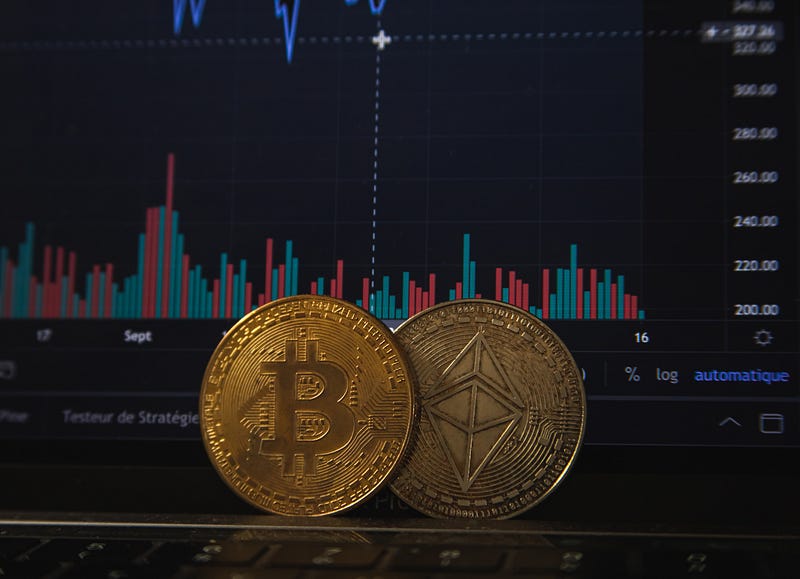
Photo by Pierre Borthiry — Peiobty on Unsplash


Assets with no trading fees

Aptos (APT), Stacks (STX), Flow (FLOW), Sui (SUI), Bitcoin Gold (BTG), FirmaChain (FCT2), Blur (BLUR), Waves (WAVES), Metal (MTL), and Loom Network (LOOM) will be the first assets to have no fees during the event.

The cryptocurrencies eligible for free trading can easily be distinguished by the blue “Free” badge displayed next to their names. Users can also check the full list through the “Fee-Free” category displayed at the top of the exchange chart.

The event is scheduled to continue until further notice and an additional ten assets eligible for free trading will be added every week as well.


Boosting liquidity

According to a Bithumb official, the virtual assets to be unveiled later on will be “subject to active domestic and international investment,” and the exchange will strategically select those that have the highest potential to expand liquidity.

Through this event, Bithumb aims to support the diversification of cryptocurrency investors’ portfolios and increase its user base, thereby enhancing trading liquidity.

More to Read
View All
Policy & Regulation·

Oct 08, 2024

UAE exempts crypto from VAT

The United Arab Emirates (UAE) is updating its tax policy such that cryptocurrency-related transfers and conversions will be exempt from value-added tax (VAT).  News of the policy change emerged via the UAE’s Federal Tax Authority (FTA), which published an Arabic version of the updated tax code on Oct. 2, followed by the publication of an English version on Oct. 4.Photo by Darcey Beau on UnsplashExemption backdated to 2018British multinational consulting firm PricewaterhouseCoopers (PwC) published a review of the UAE tax code update on Oct. 4. The auditing firm noted that virtual assets are defined within the UAE tax code as a “representation of value that can be digitally traded or converted and can be used for investment purposes.”It noted that Article 42 of the update dealt with the crypto VAT exemption. The firm suggested that entities dealing with crypto should “analyze the impact of the exemption on their (retrospective) VAT position, especially in respect to their input tax recovery,” adding that voluntary disclosures may be required to correct previous tax returns. Additionally, a VAT exemption has been introduced on services extended to fund managers relative to licensed funds. Younis Haji Al Khoori, a UAE Ministry of Finance official, stated that the amendments have been made with a view towards easing the burden on businesses. He stated:“These amendments help minimise misunderstandings, simplify procedures, and ultimately contribute to an improved quality of life for all.”  Crypto-friendlyAbdulla Al Dhaheri, CEO of the Blockchain Center in Abu Dhabi, commented on the development on X, stating:”The UAE, driven by visionary leadership, continues to set the global standard by becoming the number 1 destination for blockchain innovation. With the elimination of VAT on crypto transfers and conversions, the UAE reinforce their commitment to building a world-leading digital economy, attracting the best talent and investment from around the globe.” The UAE, and particularly Dubai and Abu Dhabi, have taken great strides forward in ensuring regulatory clarity for the virtual assets sector over the course of the past two years. Regulatory frameworks have been put in place, leading to many participants in the crypto sector praising the regulatory stance taken within the UAE.  This latest addition has equally being welcomed within the crypto sector. Many crypto sector participants have highlighted it as a wake-up call for other jurisdictions to follow suit or see crypto enterprises move to the UAE.  The Indian authorities, in particular, have an unfavorable tax policy in place relative to digital assets, with a 1% tax deducted at source (TDS) being applied. This latest development in the UAE prompted some to consider if India would learn from the UAE’s example. Earlier this year, the Indonesian tax framework, which subjects crypto assets to both income tax and VAT, was cited as the main reason for a slump in crypto trading. A recently published report by blockchain data platform Chainalysis found that the Middle East & North Africa (MENA) region accounts for 7.5% of crypto trading volume, with the report noting that the UAE, alongside Saudi Arabia, is showing a strong interest in decentralized platforms.

news
Policy & Regulation·

Apr 07, 2023

Korean Financial Regulator to Inspect Non-Fiat Crypto Trading Platform

Korean Financial Regulator to Inspect Non-Fiat Crypto Trading PlatformThe Financial Intelligence Unit (FIU) under the Korean Financial Services Commission (FSC) plans to launch a comprehensive inspection on crypto trading platform Fobl (previously known as Foblgate) from March 11.©Pexels/김 대정Unlike other major Korean crypto exchanges, such as Upbit or Bithumb, which allow trading between fiat currencies and cryptocurrencies, Fobl only offers trading between cryptocurrencies.Inspection on non-fiat exchangesThe FIU’s inspection of Fobl is a follow-up to the regulator’s inspection of GDAC, another Korean non-fiat crypto exchange. This suggests that the FIU will focus on inspecting non-fiat exchanges in the first half of this year.Many in the cryptocurrency industry have been paying attention to the FIU’s move after its first inspection of GDAC, as it could signal the direction in which the regulator would take. Earlier this year, the FIU announced that it would conduct inspections not only on non-fiat crypto exchanges but also on wallet solutions, custodians, and staking service providers. It is known that the FIU has been reviewing anti-money laundering (AML) systems and asset management statuses of these crypto enterprises.Fobl’s possible addition of fiat tradingThe Korean crypto industry suspects Fobl might transform itself into a fiat crypto exchange, considering the FIU’s notice that it will prioritize examining non-fiat exchanges that are preparing to support fiat trading.Fobl CEO’s take on the marketPrior to this news, Fobl CEO Ahn Hyun-joon said in a recent interview with Etnews that the platform is in talks with multiple banks to acquire real-name bank accounts and is complying with all the regulations required by the authorities. During the interview, he also raised concerns about the uncertainty that faces non-fiat crypto trading platforms, pointing out that 97% of the crypto trading in Korea is being carried out in crypto exchanges that support trading of Korean won.In Korea, the financial regulator requires virtual asset service providers (VASPs) offering trading in Korean won to hold real-name registered accounts at domestic banks as a measure to prevent money laundering.

news
Web3 & Enterprise·

Aug 25, 2025

DBS Bank enables crypto-linked structured note distribution

Singapore’s DBS Bank has announced the launch of the distribution of crypto-linked structured notes. The development will see structured notes tokenized on the Ethereum blockchain, with the product being made available to eligible non-DBS clients across three digital investment platforms and exchanges. In a press release published to its website on Aug. 21, DBS, the largest bank in Southeast Asia, disclosed that its tokenized structured notes would be made available to the investing public via ADDX, DigiFT and HydraX. These platforms have signed agreements with DBS to distribute its tokenized structured notes, which are debt securities that combine various types of financial products into one offering.Photo by Shubham Dhage on UnsplashFirst token distributionThe development marks a milestone for DBS insofar as it makes for the bank’s first-ever token distribution. The bank explained that the nature of the note means that investors are provided with a cash payout when cryptocurrency prices rise. In this way, the investor can build exposure to the asset class without having to directly manage any digital assets.While this is DBS Bank’s first token distribution, the bank had launched crypto-linked structured notes for its own eligible clients back in September 2024. DBS asserted that demand for the product has been strong, given that it enables investors to run advanced investment strategies related to their digital asset portfolios. ‘The next frontier of financial markets infrastructure’Commenting on the development, DBS Bank’s Head of Foreign Exchange and Digital Assets, Li Zhen, said that “asset tokenization is the next frontier of financial markets infrastructure.” He added that the tokenized product offering addresses a growing institutional appetite for digital assets. Singapore-based Ryan De Souza, APAC partnership lead at blockchain development firm Offchain Labs, described the product offering as an example of the fractionalization prophecy starting to play out. Access to this type of product would typically be available with a minimum investment size of $100,000. With the tokenization of the product, accessibility is increased given that minimum investment has been reduced to $1,000. Each tokenized note represents a fungible $1,000 share of the conventional structure note product. The development is also significant from the perspective of Ethereum. It demonstrates yet another instance of institutional adoption, which increases both liquidity and demand relative to ETH. Tokenized product offerings are likely to gain further momentum given that they bring greater transparency and efficiency by comparison with conventional offerings. DBS outlined that its clients executed in excess of $1 billion in trades involving tokenized structured notes and crypto options within the first half of 2025. Additionally, trade volumes related to these products grew by almost 60% from Q1 2025 to Q2 2025.Singapore-headquartered product distribution partner DigiFT recently partnered with crypto market maker GSR with the launch of its secondary over-the-counter (OTC) trading service for tokenized real-world assets (RWAs). Back in March, DigiFT announced plans to launch an on-chain index fund, backed by a tokenized stock portfolio. ADDX, another Singapore-based platform, had joined forces with OCBC Bank back in 2023 with a view towards facilitating the launch of a tokenized equity-linked structured note.

news
Loading