Top

Indonesia’s Financial Regulator Appoints Hasan Fawzi to Oversee Crypto

Policy & Regulation·July 15, 2023, 1:22 AM

The Financial Services Authority (OJK) of Indonesia has chosen Hasan Fawzi, a former executive of the Indonesia Stock Exchange (IDX), as the head of fintech and digital assets oversight and innovation.

That’s according to a number of reports published in local and regional news outlets on Thursday. Fawzi, who has served as the Director of the Indonesia Bond Pricing Agency (IBPA) since 2008, brings a wealth of experience in the securities pricing sector. Alongside Fawzi, Lodewik Paulus Agusman, previously responsible for the internal audit department at Bank Indonesia, has also been elected as a member of the OJK Board of Commissioners. These appointments were approved by the House of Representatives Commission overseeing banking and finance.
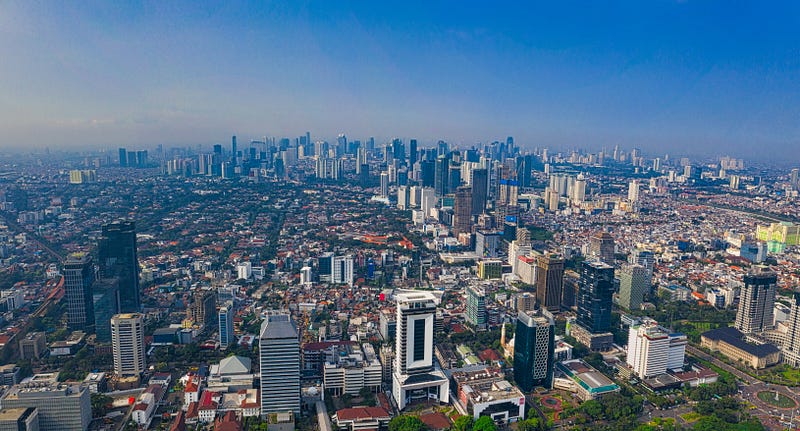
Photo by Tom Fisk on Pexels


Digital asset oversight

Fawzi’s role as the Executive Director for the Supervision of Technological Innovation in the Financial Sector, Digital Financial Assets, and Crypto-assets places him in charge of overseeing peer-to-peer lending platforms, cryptocurrencies, and other components of the evolving industry.

Indonesia’s stance on cryptocurrencies remains complex and multi-faceted. While the country is striving to launch a state-backed crypto exchange by mid-2023, as announced by Didid Noordiatmoko, head of the Commodity Futures Trading Regulatory Agency (Bappebti), recent statements by Bali Governor Wayan Koster suggest a tightening of regulations concerning crypto payments.

Governor Koster emphasized that foreign tourists who use cryptocurrencies for payments, violate visa provisions, or engage in unauthorized activities will face strict consequences. The Bali Representative Office of Bank Indonesia reiterated that while cryptocurrencies themselves are legal in Indonesia, their use as a payment instrument is not.

The appointment of Hasan Fawzi to OJK demonstrates Indonesia’s strategic efforts to strengthen oversight and foster innovation within the fintech and digital asset sectors. Fawzi’s extensive experience in securities pricing and leadership in the Indonesia Stock Exchange make him a valuable addition to the regulatory landscape. As Indonesia navigates the complexities of cryptocurrency usage, it will be fascinating to observe the evolution of regulations and how the country’s financial authorities shape the future of the industry.


Controlled innovation

These recent developments highlight Indonesia’s determination to stay at the forefront of financial technology albeit with efforts to retain strict controls over the rollout of that innovation. The country recognizes the importance of effectively regulating emerging technologies while fostering an environment conducive to innovation. With Fawzi at the helm of fintech and digital assets oversight, the OJK aims to strike a balance that protects investors and consumers while promoting technological advancement.

As these appointments await final approval from President Joko Widodo, the financial industry and crypto enthusiasts will closely watch Indonesia’s regulatory landscape. The decisions made in the coming months will shape the future of fintech and crypto in the country. Indonesia’s approach to this dynamic sector serves as a case study for other nations seeking to establish oversight and embrace the potential of digital assets. Their international regulatory peers will be monitoring efforts in Indonesia to bring about effective regulation of the digital assets space.

More to Read
View All
Web3 & Enterprise·

Aug 14, 2023

RaonSecure to Develop Digital Identity Strategy for the Indonesian Government

RaonSecure to Develop Digital Identity Strategy for the Indonesian GovernmentRaonSecure, a South Korea-based decentralized identity (DID) service provider utilizing blockchain technology, has secured a contract with the Korea-Indonesia e-Government Cooperation Center. The contract involves providing consultation services aimed at devising a strategy for the implementation of a digital identity system in Indonesia. The selection of RaonSecure as the contract winner was orchestrated by Korea’s National Information Society Agency (NIA), and this strategic venture is being executed through the bilateral center.Photo by Ben Sweet on UnsplashBilateral center fostering tech exchangeEstablished in Jakarta in 2016, the bilateral center aims to facilitate the exchange of technological expertise between the Korean government and its Indonesian counterpart. This organization also serves to accelerate the entry of Korean enterprises into the Southeast Asian market.Indonesia’s national service portalAs the Indonesian government looks forward to establishing a national service portal, the need for a robust national digital identity system has been growing. This system is envisaged to support functionalities such as user authentication, e-signatures, and privacy protection.Blockchain-based DID implementationIn light of these needs, RaonSecure has emerged as a suitable company for the project, showcasing its technological prowess and stability. The Korean tech firm’s expertise has been evident in the successful deployment of its blockchain-powered DID platform, OmniOne, across diverse organizational settings. Noteworthy deployments include providing OmniOne for the issuance of identification cards to government employees, licensed drivers, and military veterans. Furthermore, RaonSecure has recently partnered with the Korea Federation of Savings Banks (KFSB) to develop a solution that verifies bank customers’ identities using mobile ID cards.The Indonesian venture is encouraging development for RaonSecure as it will serve as a gateway to not only fostering its presence within Southeast Asia but also propelling its reach far beyond, and the company’s blockchain DID technology will play a key role in spearheading this expansion into new horizons.

news
Web3 & Enterprise·

Aug 22, 2023

Dunamu Pushes for Biodiversity Conservation Through NFT Project

Dunamu Pushes for Biodiversity Conservation Through NFT ProjectDunamu, the fintech company operating South Korea’s leading crypto exchange Upbit, said Monday that it signed a memorandum of understanding (MOU) with the Korea Arboreta and Gardens Institute (KoAGI) and the Korea Green Foundation (KFG) to drive a non-fungible token (NFT) biodiversity project over the course of three years. This comes as part of efforts to ramp up biodiversity conservation efforts.Photo by Eelco Böhtlingk on UnsplashThe MOU was signed at Dunamu’s headquarters in Gangnam, southern Seoul, with Dunamu CEO Lee Sirgoo, Director Ryu Kwang-soo of the KoAGI, and Lee Mi-kyung, Head of the KFG, in attendance.“This partnership serves as a starting point for Dunamu to actively utilize our technology to conserve biological resources — especially trees — and collaborate with various communities,” said Lee Sirgoo, CEO of Dunamu.Conservation meets NFTsThe project will involve creating NFTs from images of plant seeds stored in the Seed Vault — a conservation facility managed by KoAGI — which will then be issued through Upbit NFT, the exchange’s NFT trading platform. Owners of these NFTs will have the opportunity to engage in various events such as quizzes, Dunamu said, thereby promoting biodiversity conservation and fostering awareness about the importance of forests.Additionally, certain plant species that have been issued as NFTs will be selected to be placed in plant conservation facilities built in collaboration with botanical gardens located near the plants’ natural habitats.“Given the irreplaceability of both NFTs and flora and fauna, we will continue to do our utmost to fulfill our environmental responsibilities,” CEO Lee emphasized.The involved parties are also looking to establish an online community where they could directly gather the NFT owners’ opinions through methods such as polling to help plan for more upcoming projects. This integration of online projects with offline conservation activities is expected to contribute to local development and biodiversity.Boosting ESG effortsAs a key part of its ESG strategy, Dunamu has been focusing on trees while leading efforts for environmental protection and forest restoration. Earlier this year, the company teamed up with KoAGI to issue NFTs and contributed its entire sum of sales proceeds and transaction fees of around KRW 20 million (approximately $14,800) to establish an endangered plant protection fund.The company also held a campaign back in March with the Korea Forest Service and the Korea Forest Welfare Institute called “2nd foRest,” dedicated to restoring forests affected by fires. For every virtual tree planted in Dunamu’s metaverse, 2ndblock, two real trees were planted.The following month, Dunamu donated KRW 500 million in aid for the recovery of areas hit by the large-scale forest fires in Gangneung, Gangwon Province. The company also established virtual reality healing gardens at the Geumcheon Fire Station and Seoul Rehabilitation Hospital.

news
Web3 & Enterprise·

Sep 07, 2023

Experts Gather at KBW 2023 to Explore the Future of Blockchain and Web3

Experts Gather at KBW 2023 to Explore the Future of Blockchain and Web3Blockchain and Web3 experts from around the world gathered at the Shilla Hotel in Seoul on Tuesday and Wednesday to attend Impact, the main conference of Korea Blockchain Week (KBW) 2023. There, they shared insights on the challenges faced by the blockchain industry as well as future prospects, especially their anticipation for South Korea’s role in shaping the industry’s landscape.Photo by Terren Hurst on UnsplashCurrent challengesAmong these experts was Sid Powell, CEO and Co-founder of Maple Finance; Stephen Richardson, Managing Director of Financial Markets and Head of the Asia Pacific region at Fireblocks; and Kelvin Koh, Co-founder and CIO at Spartan Group, who discussed the opportunities presented by bridging traditional finance with decentralized finance (DeFi) during a panel session on Wednesday.They mentioned the recent trending decline in DeFi transactions among institutional investors, which can be attributed to the DeFi industry’s fragmented infrastructure that can be difficult to understand. In order to rekindle investor confidence and interest, the industry must consider the integration of infrastructure and highlight the advantages of DeFi such as low costs, transparency, and liquidity to showcase its potential for financial gain.In a fireside chat on the same day, Jeremy Allaire, Co-founder and CEO of global fintech company Circle, acknowledged yet another mounting challenge facing the industry — the mass adoption of blockchain technology and Web3. However, the solution to this roadblock is not far out of reach, he said. Allaire predicted that by 2025, most cryptocurrencies, including stablecoins — cryptocurrencies that are pegged to a commodity or fiat currency to maintain a stable price — will have a legal foundation, thus paving the way for mass adoption.Suk Hwan Paul Kim, CEO and Vice Chairman of Grip Labs, and Archie Ravishankar, CEO of Cogni, also said that implementing user-friendly services and institutional entry will be a key strategy for persuading Web2 users to transition to Web3 platforms and encouraging mass adoption.Outlook for KoreaMeanwhile, several key figures expressed positive hopes for the pivotal role that Korea will play in the development of the Web3 ecosystem. In particular, Polygon Labs co-founder Sandeep Nailwal and COO Michael Blank pointed out that Korean companies, especially those in the gaming industry, are open to applying Web3 technology to their business projects, thus accelerating next-generation innovation in various fields like gaming, social media, and entertainment. Indeed, Polygon Labs’ own Korean partner firms recognize that the future of the Internet will rely on blockchain technology.In order to build a solid Web3 ecosystem, they said, three core values are of utmost importance — privacy, transparency, and openness. Fostering an environment that users can trust while freely interacting with others is the key, and Polygon Labs has vowed to contribute to doing so.Notably, Commissioner Caroline D. Pham of the US Commodity Futures Trading Commission (CFTC) was also in attendance, where she shared her thoughts on the proper regulation of virtual assets. She stated that it is essential to apply the safety measures we have learned from the past century of financial history to the future cryptocurrency industry, cautioning against a one-sided view that virtual assets are inherently bad.In drawing a comparison between the US and Korea, she stated that although the US possesses strong technical capabilities and is gradually adopting a more positive perspective on virtual assets, Korea is still ahead by a decade due to the fact that the general public is more open to embracing emerging technologies. Therefore, the future partnership between the US and Korea could offer valuable insights, not only in terms of economic prosperity but also in legal and regulatory aspects.

news
Loading