Top

Bitget Claims Debt-Free Status via Proof of Reserves

Web3 & Enterprise·July 14, 2023, 12:11 AM

Bitget, the Seychelles-based cryptocurrency derivatives exchange, proudly announced that its total proof-of-reserves ratio has reached an impressive 223% in its latest report.
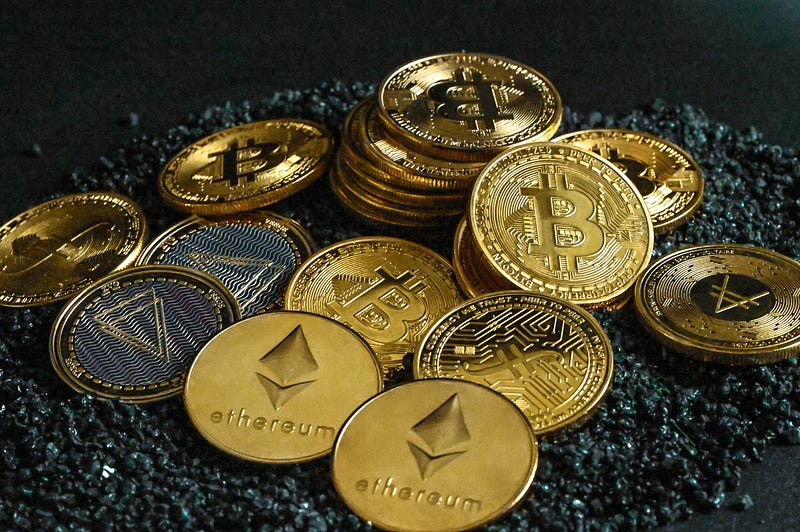
Photo by Traxer on Unsplash


Reserve of $1.44 billion

In a press release published to its website on Thursday, the exchange revealed that it currently holds a reserve of $1.44 billion, encompassing 31 different crypto assets. The reserve ratios for popular cryptocurrencies such as Bitcoin (BTC), Tether (USDT), Ether, and USDC stand at 454%, 135%, 171%, and a staggering 2,604%, respectively.

Bitget executives, in an interview with Cointelegraph, emphasized the exchange’s commitment to operating without relying on debt or user funds for transactions or investments. They stated that the company is debt-free and has no outstanding liabilities, nor is it listed as a creditor for any recently bankrupt companies.

When questioned about the high collateralization for certain coins, the exchange clarified that the funds originate from profits generated through transaction fees and returns from investments and acquisitions. While Bitget does not have external insurance for its users, it maintains a robust $300 million User Protection Fund.

Executives assert that this fund operates more effectively than third-party insurance, enabling them to efficiently safeguard users’ assets without being dependent on external bureaucracy or policy changes.


Partnering with third-party auditors

Although not yet a regulatory requirement, Bitget aims to enhance transparency by increasing partnerships with third-party auditors to thoroughly examine its assets and reserves. The exchange diligently updates its proof-of-reserves every month, further reinforcing its commitment to accountability and trustworthiness.

While proof-of-reserves has gained popularity as a means of disclosing information about exchange assets, experts have cautioned about its effectiveness. Jack Graves, a professor of law at Syracuse University, highlights the challenges in determining the portion of assets pledged as collateral unless one has access to an exchange’s financial services, books, and records.

Bitget’s remarkable proof-of-reserves ratio and its commitment to being debt-free demonstrate a greater focus on behalf of cryptocurrency exchanges in providing the crypto trading public with an enhanced level of information relative to the real-time financial position of the exchange.


Crypto loans

The move is significant and much needed, following a dreadful 2022 for crypto consumers that saw many of them lose funds due to a complete lack of transparency with regard to funds held on deposit on behalf of customers. That period saw the collapse of platforms such as Celsius, FTX, Voyager, BlockFi, and others as a direct consequence of the mismanagement of user funds.

It’s interesting too, that most of the platform failures involved crypto lenders, a space that Bitget recently announced that it was entering. Earlier this month, the company outlined that it would begin to offer crypto lending products to meet a need from users who are seeking alternative funding solutions, backed by digital assets.

By diligently managing its funds and actively seeking audits, Bitget is making an effort to foster trust within the cryptocurrency community and ensure the safety of users’ assets.


More to Read
View All
Policy & Regulation·

Mar 14, 2025

Korea’s Bithumb joins forces with Interpol to fight crypto crime

South Korean crypto exchange Bithumb is working with the International Criminal Police Organization (Interpol) to combat global criminal activities involving digital assets. According to Korean media outlet Joseilbo, Yoo Jung-ki, who heads Bithumb's Policy Support Office, met with Tomonobu Kaya, Assistant Director of Interpol's Financial Crime and Anti-Corruption Centre, during a recent meeting in Thailand. The gathering was part of a three-day event held from March 10 to 12, organized under Interpol's Project ViCTOR (Virtual assets-facilitated financial Crime – Trace, Obstruct and Recover), an initiative funded by Japan's Ministry of Foreign Affairs. During their meeting, the two officials explored ways to enhance cooperation while committing to maintaining a close, sustainable working relationship.Photo by rc.xyz NFT gallery on UnsplashExchange shares expertiseDuring his Bangkok visit, Yoo delivered a speech addressing emerging crypto crime trends and necessary regulatory changes to protect users. He also discussed the Financial Action Task Force's (FATF) guidelines and recommendations, along with South Korea's policies on anti-money laundering and combating terrorism financing (AML/CFT). His presentation resonated with the audience, particularly when he emphasized the importance of collaboration between the public sector and crypto exchanges on multiple fronts, including recovering stolen funds from criminals. Regarding the meeting, Yoo stated that he found it meaningful to participate, as a representative of South Korean crypto exchanges, in a gathering focused on developing global countermeasures against money laundering and digital asset crimes. He added that Bithumb is committed to supporting the international cooperative system aimed at preventing and recovering from crypto crimes. Interpol’s effortsThe event also covered recent updates on Interpol's Global Rapid Intervention of Payments (I-GRIP) stop-payment mechanism, launched in 2022, and Singapore's evolving crypto regulatory landscape. In June last year, Interpol reported that police across 61 countries had collectively intercepted approximately $135 million in fiat currency and $2 million in cryptocurrency, with I-GRIP helping authorities track illicit proceeds from both types of currencies.Interpol's involvement in investigating crypto crimes has been expanding recently. According to Cointelegraph, Argentine lawyer Gregorio Dalbon has requested that a prosecutor and judge issue an Interpol Red Notice for Hayden Davis, a co-creator of the LIBRA token allegedly linked to Argentine President Javier Milei. The controversial memecoin, launched last month, briefly reached a $4.5 billion market cap before its value collapsed.

news
Web3 & Enterprise·

Jun 08, 2024

Bitdeer sets out mining chip roadmap

Singapore-headquartered Bitcoin mining company Bitdeer has outlined a roadmap of chip development which will culminate in the introduction of its most energy efficient mining chip to date, the “SEAL04” chip. According to a press release published by the company on June 6, the company outlined that it wanted to be transparent in demonstrating its plans over the short to medium term in terms of research and development and technological advancement.Photo by Michael Förtsch on UnsplashIterative progressionThe starting point for its roadmap is the SEAL01 chip, which the company introduced in Q1 2024. That mining chip was engineered using a four-nanometer process technology. It was developed in collaboration with a semiconductor fabricator albeit that the company has not disclosed the identity of that fabricator. That chip weighed in at 18.1 Joules/Terahash (J/TH). The SEAL01 represents the company’s first release relative to its SEALMINER technology.  Bitdeer feels that providing guidelines for technology releases will better inform market participants, and that’s important given that uncertainty creates a major difficulty for those operating in the Bitcoin mining space.  With that, Bitdeer is projecting a Q3 2024 release for its SEAL02 miner, which will clock up between 15 and 16.5J/TH. SEAL03 is scheduled for Q4 2024, with an efficiency boost taking it to between 11 and 12J/TH. Finally, the SEAL04 is scheduled for release in Q2 2025. That chip is expected to have an energy efficiency range as low as 5.5-6J/TH. The two most critical factors for Bitcoin miners to stay competitive include the cost of energy and the level of energy efficiency achieved by the mining equipment that is being used. It’s believed that the roadmap will help in managing miners’ expectations relative to technological advancement.  Gearing up for a post-halving mining environmentTo develop the SEALMINER equipment series, Bitdeer outlined last March that it had “assembled an international team of professional engineers specializing in chip design, firmware, and hardware engineering.” At that time, the company suggested that the new range of mining equipment would allow it to assist the Bitcoin mining community “in seizing opportunities following the 2024 halving event.” Alongside its chip development roadmap, the company came to the industry’s attention earlier this week with stablecoin issuer Tether acquiring a 25% stake in the Singaporean mining equipment developer, according to a filing with the U.S. Securities and Exchange Commission (SEC). This acquisition makes Tether the second-largest shareholder in Bitdeer, behind Victory Courage Ltd., which is registered to Bitdeer CEO Jihan Wu. Wu, who co-founded Bitdeer and served as CEO of ASIC manufacturer Bitmain previously, was appointed as CEO of Bitdeer in January. The appointment was made so that Wu could oversee what was expected to be a period of rapid growth at the company. In the June 6 SEC filing, Tether Holdings Limited disclosed control over 23,587,360 BTDR shares. This significant increase in holdings stems from a private placement deal closed with Bitdeer last week, enabling the Bitcoin miner to secure $100 million in financing. The deal also includes a warrant allowing Tether to purchase up to 5,000,000 additional shares at $10.00 each over the course of the next year. Bitdeer plans to use the raised funds to expand its data centers, develop ASIC-based mining rigs and support other general corporate purposes.  

news
Policy & Regulation·

Dec 27, 2023

Worldcoin withdraws verification service from Indian market

Worldcoin, the startup co-founded by OpenAI CEO Sam Altman, has encountered setbacks in its eye-scanning initiatives just six months after its international expansion. A recent report by TechCrunch indicates that the company’s signature orb eye-scanner is no longer available to users in the Indian market. According to that report, the Worldcoin Foundation clarified that its activities have also been suspended in France and Brazil. The company clarified that its offerings in those markets were only intended to be limited-time product previews as opposed to long-term roll-outs.Photo by Big G Media on UnsplashTemporary service haltIn India, the World App is experiencing widespread adoption, but the orb-verified proof of personhood services has been temporarily halted. The pause aims to allow the protocol to develop and implement a bespoke, safe and orderly process to meet the growing demand. The setback comes after Tools for Humanity, the organization behind Worldcoin, announced the expansion of World ID, its digital identity program linked to iris scans, in July. The startup had ambitious plans, intending to make 1,500 orbs available in over 35 cities globally. Recently, the company unveiled a program offering $5 million in grants to developers utilizing its eye-scanning technology. Regulatory investigationsSam Altman and his co-founders established Worldcoin in 2020 to help individuals prove their digital identity amidst the rise of AI. Over the years, Worldcoin has secured $250 million in funding from notable venture capitalists, including Andreessen Horowitz. However, the startup has faced regulatory challenges, including investigations by French and German regulators and an Argentinian government agency. Altman, himself, has navigated recent challenges. In November, the OpenAI board temporarily removed him as CEO, reinstating him two weeks later. More recently, Fortune reported that Altman quietly received $75 million from the University of Michigan for a new venture capital fund, raising questions about transparency, particularly following the launch of OpenAI’s signature product, ChatGPT. Asian tourIn recent weeks, the project development team behind Worldcoin had engaged in a tour of Asia. The objective of that mission was to gather market feedback prior to engaging in greater efforts to expand the reach of its World ID verification system within the region. To gauge market receptiveness to its product offering, the tour included meetups in major Asian cities such as Hong Kong, Seoul, Singapore and Tokyo. Up until mid-November, the Asian region accounted for 1.4 million World App sign-ups.The introduction of World ID 2.0 by the company on Dec. 13 led to a surge in the price of WLD. Over the course of the 48 hours that followed, it jumped from $2.47 to $4.23, a 71% increase. At the time of writing, the token unit price stood at $3.66. As Worldcoin navigates these challenges, the cryptocurrency industry will closely monitor developments, recognizing the broader implications for the startup’s innovative approach to digital identity verification.

news
Loading