Top

Julius Baer Expands Crypto Wealth Management Services in Dubai

Web3 & Enterprise·June 30, 2023, 1:09 AM

Julius Baer, a renowned Swiss private bank, is making strides in the world of digital assets with the expansion of its crypto wealth management services in Dubai.

This move, reported by Bloomberg on Wednesday, represents the bank’s first major crypto product offering overseas. The Middle Eastern subsidiary of Julius Baer, JBME, has announced its intention to apply for a “digital assets license variation” to complement its existing permissions granted by the Dubai Financial Services Authority.

If successful, this license variation will empower the company to offer advisory and custodial services for digital assets like Bitcoin, Ether, and other cryptocurrencies.
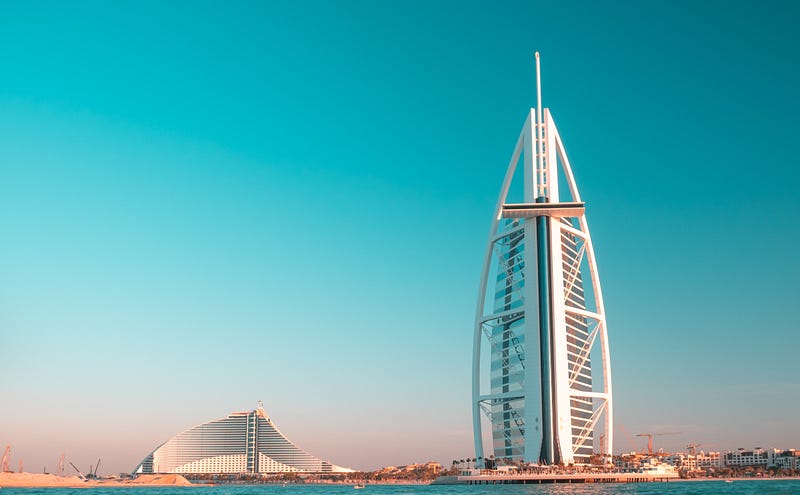
Photo by Sascha Bosshard on Unsplash


UAE “key geography”

Jonathan Hayes, the head of digital assets development at Julius Baer, has underscored the United Arab Emirates (UAE) as a “key geography” for the bank’s expansion. He points to the region’s substantial economic development as a catalyst for venturing into the Dubai market.

Julius Baer has already made strides in the crypto space within Switzerland by offering lending services to select crypto clients. This pioneering service allows customers to leverage their digital assets held by the bank. However, it is currently limited to clients with diversified portfolios that include traditional assets.


Attracting international interest

The UAE, along with other individual Emirates in the country, has been actively striving to attract crypto businesses. As US authorities tighten regulations, numerous companies are seeking more crypto-friendly environments to operate in. It started to accept crypto business license applications in April. US crypto exchange Coinbase indicated its interest in locating a base there the following month.

In Dubai, prominent cryptocurrency exchanges such as Binance Holdings Ltd., OKX, and Crypto.com have all submitted license applications to the Virtual Assets Regulatory Authority. Binance was among one of the first to secure a license while its understood that it may be looking towards the UAE as a strategic base for the company going forward. Meanwhile, another US crypto platform, Gemini, has suggested that it will now work towards obtaining a crypto license in the UAE.

Julius Baer has witnessed a broad demand from affluent individual clients ranging in age from 25 to 70, according to Lucia Desmarquest, the Deputy Head of the bank’s central and eastern European division.

Having first launched its crypto services in May of the preceding year, Julius Baer currently provides standard advice on digital assets to investors domiciled across 25 countries, including Luxembourg and Singapore.

The bank’s wealth management services cover approximately the top 15 cryptocurrencies in the market. Each token undergoes meticulous due diligence and is subject to review by a dedicated panel.

This expansion aligns with the broader trend of TradFi firms exploring opportunities in the digital assets space, as the industry continues to evolve and gain traction globally. Julius Baer’s expertise and established reputation position it well to navigate the evolving landscape of crypto wealth management and cater to the needs of its savvy clientele.

More to Read
View All
Policy & Regulation·

Aug 01, 2023

Binance Expands Crypto Offering in Dubai with New License

Binance Expands Crypto Offering in Dubai with New LicenseDubai has welcomed one of the biggest players in the crypto sector, Binance, with the Virtual Asset Regulatory Authority (VARA) awarding the firm a new trading license.Photo by Petar Avramoski on UnsplashServing qualified investorsAccording to an announcement made by the company on Monday, Binance’s Dubai-based subsidiary, Binance FZE, has secured the operational Minimum Viable Product (MVP) license from VARA.Eligible investors in Dubai, deemed as “qualified retail clients,” will now have access to authorized services such as compliant crypto-to-fiat exchanges, adhering to the guidelines set by the Financial Action Task Force (FATF). To qualify, investors must meet specific criteria, including being at least 21 years old and possessing a minimum of 500,000 United Arab Emirates dirhams ($136,000) in net liquid assets, supported by relevant documentary proof like bank statements and proof of funds.Additionally, qualified investors are required to provide valid identification documents, including passports and visas, along with proof of a valid UAE address and contact details. This comprehensive verification process ensures compliance with regulatory requirements and enhances security measures for all parties involved.Expanded service offeringThe move is a significant development as it allows Binance to offer cryptocurrency exchange and virtual asset broker-dealer services to institutional and qualified retail investors in Dubai.With the new license, Binance’s Dubai entity can now offer crypto-to-fiat exchange, conversions, transfer and custody solutions, brokerage facilities, as well as virtual asset payments and remittance services. The development builds upon Binance’s previous progress, having received the provisional MVP license in March 2022, followed by the preparatory MVP license in September 2022.Licensing challengesIt’s worth noting that some crypto exchanges have faced challenges operating with preparatory MVP licenses due to limited capabilities, only serving a restricted set of accredited investors. Bybit CEO Ben Zhou had previously highlighted this concern. That said, Zhou still came to the conclusion recently that the regulatory approach in the UAE is superior by comparison with many other jurisdictions.The news of Binance’s successful licensing comes shortly after VARA suspended the operational license of another crypto exchange, BitOasis, for not meeting required conditions within the set timeframes. BitOasis assured its commitment to fulfilling the remaining conditions in collaboration with VARA.In April 2023, VARA sought additional information from Binance, aiming to tighten regulatory standards in the emirate. Binance promptly provided all requested information and looked forward to further collaboration with VARA as it prepared for the next phase of licensing.Compliance with VARA’s framework includes adherence to compulsory rulebooks related to general operations, compliance, and market conduct requirements. The regulator has published key highlights of the regulations in 2023, underscoring its efforts to create a robust and well-regulated crypto market in Dubai.Regulatory headwindsBinance’s latest regulatory achievement indicates the exchange’s dedication to expanding its services and offerings in the region. It could potentially lead to something even more significant for the company in the Middle East as Binance has suggested that it would be more likely to expand in places such as Dubai, given an adverse regulatory approach elsewhere.Over the course of the past three months, the company has been forced out of key markets such as Germany, Canada, Belgium, the Netherlands, and Cyprus, due to regulatory pushback.

news
Policy & Regulation·

Jul 14, 2025

Shanghai officials potentially signaling openness to stablecoins

The Shanghai office of a Chinese regulatory body which oversees assets belonging to state-owned enterprises (SOEs) is reported to have held a session dedicated to the topic of digital assets and in particular, stablecoins, fueling speculation of a positive shift in outlook on crypto in China.Photo by Hanny Naibaho on UnsplashOn July 11, Reuters reported that the State-owned Assets Supervision and Administration Commission (SASAC) held the meeting in Shanghai on July 10, with the publication suggesting that the event represented “a marked shift in tone” in the consideration of digital assets in China, bearing in mind that crypto trading and mining are banned within the country. Following the “development trend and response strategies” study session, He Qing, director of the organization, said that there was a need for "greater sensitivity to emerging technologies and enhanced research into digital currencies." The regulator called on Chinese state-backed agencies to consider the adoption of blockchain technology for use cases like real-world asset (RWA) tokenization, supply chain finance and cross-border trade. A policy expert from Shanghai-headquartered securities firm, Guotai Haitong Securities, attended the meeting, outlining details on the history, characteristics and categories of cryptocurrencies and stablecoins, while also discussing global regulatory frameworks. Last month, a subsidiary company of Guotai Haitong Securities, Guotai Junan International (GTJAI), became the first company from the Chinese mainland to be given approval by the Hong Kong securities regulator to offer digital asset trading services. Adapting to the stablecoin trendIn June, state-owned financial newspaper, Securities Times, called on Beijing to adapt “to the trend of stablecoins.” The publication claimed that industry insiders “generally believe that, as an emerging payment tool, the unique advantages and potential risks of stablecoins cannot be ignored, and that the development of [yuan-backed] stablecoins should be sooner rather than later”. The same month, Pan Gongsheng, governor of the People’s Bank of China, acknowledged that stablecoins are playing a role in disrupting global payments infrastructure.  It also emerged recently that JD.com, a Chinese e-commerce giant, and Ant Group, an affiliate company of the Alibaba Group, have been lobbying the Chinese authorities for the authorization of yuan-based stablecoins. On X, Shanghai Macro Strategist, a China strategist, claimed that the recent surge in the Bitcoin unit price had come about as a consequence of this stablecoin-focused SASAC meeting in Shanghai. At the time of writing, BTC has appreciated 9.3% over the course of the past seven days. The strategist suggests that the event is fueling speculation that “the Chinese government may be in the early stages of reassessing its official stance on the crypto industry.” In their monthly report for May, the strategist pointed out that “Beijing’s outright rejection of [Bitcoin] as a legitimate asset” was holding the leading asset back on its path to “reserve status.” The strategist added: “Over the longer term, a shift in China’s stance could prove to be the single most powerful bullish catalyst—elevating Bitcoin from a fringe asset to a globally recognized store of value.”

news
Web3 & Enterprise·

Jan 24, 2024

NEOPIN, Futureverse and Catalyze Research team up to bolster global blockchain ecosystem

In an official announcement on Wednesday (KST), CeDeFi protocol NEOPIN revealed that it has signed a business agreement with Web3 consulting firm Catalyze Research and metaverse and AI tech company Futureverse to expand the global blockchain industry and discover promising Web3 projects. Strategic allianceThrough this business agreement, the three enterprises plan on working towards two main objectives: expanding the global blockchain business industry and Futureverse’s open metaverse ecosystem. To do so, they have vowed to onboard NEOPIN’s gaming business partners to the Futureverse ecosystem and create decentralized finance (DeFi) products for NEOPIN based on The Root Network. They will also host hackathons and joint campaigns in efforts to incubate and accelerate Web3 projects in South Korea. “South Korea is an intellectual property (IP) and blockchain powerhouse that serves as the backbone of the open metaverse that Futureverse is striving for. We look forward to bringing together various IPs such as games and content – including DeFi collaborations – with Futureverse’s powerful infrastructure to bring us one step closer to the open metaverse,” said Ben Ko, Co-Founder and CEO of Catalyze Research. Based in Seoul, Catalyze Research offers insights into the Web3 industry as well as consulting services like mapping and implementation of business strategies, marketing, research, due diligence and more.Photo by Shubham's Web3 on Unsplash“By working with NEOPIN, a leading DeFi company with an extensive network in South Korea, we will expand the Futureverse and The Root Network ecosystems and create an environment where users and developers can create an open metaverse together. This partnership will bring Futureverse to the forefront of the South Korean blockchain industry with NEOPIN and Catalyze’s experience, expertise, vision and insights into the Korean market,” added Futureverse CEO Aaron McDonald. Redefining gaming, blockchain and DeFiFutureverse is a developer of AI and metaverse technologies that elevate gaming experiences and enable open, scalable and interoperable applications. It is also home to one of the largest global NFT-based metaverse communities, which is being expanded through the layer 1 blockchain The Root Network. The company’s partners include globally renowned brands like FIFA, Warner Bros., Mastercard and Reebok. NEOPIN, on the other hand, has been a trustworthy node validator for multiple blockchains since 2018 with a 0% accident and slashing rate and a 99.99999% block generation rate. It has also been bringing new faces to the industry by securing, investing in and incubating numerous domestic and foreign firms. Backed by this experience, NEOPIN plans to introduce innovative DeFi products through the newest three-way partnership. “We will actively help various game and content service companies that have partnered with us to operate in the Futureverse ecosystem. Based on our trustworthiness and stability, we will contribute to leading the decentralized exchange (DEX) and DeFi services in Futureverse,” said Kim Yong-ki, CEO of NEOPIN.

news
Loading
