Top

Korean Parliament to Hold Hearing on Virtual Assets Amid Controversies

Policy & Regulation·June 15, 2023, 9:09 AM

The National Policy Committee (NPC) of the South Korean National Assembly has reached an agreement to conduct a hearing on virtual assets next month. This decision comes following discussions between the ruling and opposition parties, as reported by local news outlet Kukinews.
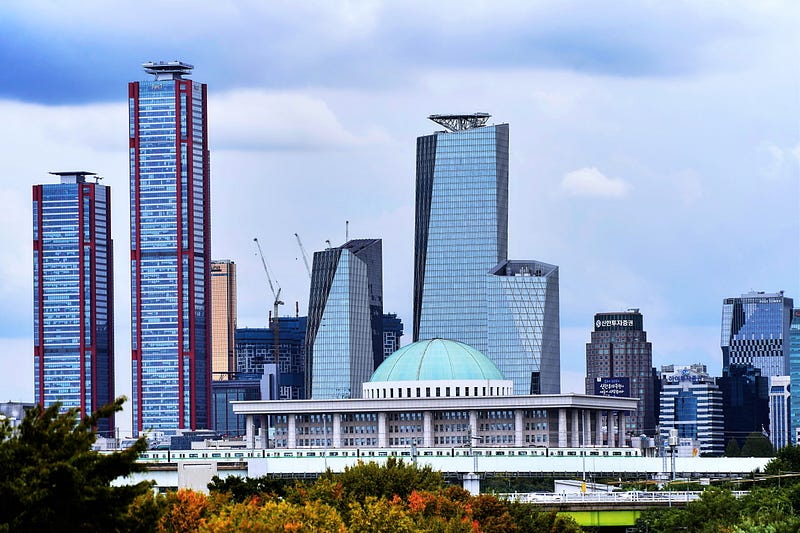
Photo by KS KYUNG on Unsplash


Hearing date

Lawmakers Yoon Han-hong and Kim Jong-min, who serve as administrative secretaries of the NPC, have agreed today to hold the virtual assets hearing on July 11. Yoon is a member of the ruling People Power Party (PPP), and Kim is a member of the opposition Democratic Party of Korea (DPK).

During a full session held this afternoon, Lawmaker Kim proposed the idea of a hearing on virtual assets, to which NPC Chair Back Hye-ryun agreed.


Growing public interest

Today’s meeting was organized to foster a better understanding of the current issues surrounding virtual assets, given the increasing public interest, particularly in light of the recent controversy involving Lawmaker Kim Nam-kook’s alleged ownership of cryptocurrency tokens and the employment of PPP leader Kim Gi-hyeon’s son in a crypto-related company.

The NPC intends to finalize the plan for the hearing on June 30, just before the plenary session on the day. The specific focus of the hearing and the participants, including witnesses, will be determined through consultations between the administrative secretaries.


More to Read
View All
Web3 & Enterprise·

Nov 14, 2023

Modhaus attracts $8M in advancing blockchain-based K-pop fan engagement

Modhaus attracts $8M in advancing blockchain-based K-pop fan engagementModhaus, a South Korean Web3 startup focused on blockchain-driven K-pop promotion, recently announced that it has raised $8 million in Series A funding, according to a report by local news outlet Maeil Business Newspaper. This latest funding round brings the company’s total investment to over $12 million.Photo by C D-X on UnsplashKey investorsThis Series A funding was led by Sfermion, a Chicago-based venture capital firm focused on non-fungible tokens and the immersive internet. The investment round also saw participation from various investors, including SM Culture Partners, Laguna Investment, the KDDI Open Innovation Fund, Foresight Ventures, Reflexive Capital, NFT song collector Cooper Turley, Quantstamp CEO Richard Ma and Playco CEO Michael Carter.Modhaus had previously attracted investment from other players in earlier funding rounds. These included UNOPND, a venture division of Web3 venture capital firm Hashed; Naver D2SF; CJ Investment and Futureplay.Digital photo cards and tokensDoubling as an entertainment agency, Modhaus operates Cosmo, an app that empowers fans to play a role in their favorite artists’ operations. Through Cosmo, fans can purchase digital photo cards, earning tokens in return. These tokens then allow fans to vote on various aspects of their artists’ activities. The use of blockchain technology ensures that all votes are transparently and securely recorded, boosting the fan-artist relationship.Sfermion’s general partner, Dan Patterson, expressed enthusiasm about their investment in Modhaus, explaining that it “has innovatively bridged the K-pop fandom with both tangible and digital realms through NFTs. [The new] investment signifies more than just financial backing; it’s a venture into melding the energetic world of K-pop with the expansive narrative of the metaverse.”Jaden Jung, CEO of Modhaus, said, “K-pop fans possess keen insights. With their sharp eyes for talent and trendspotting, we aim to enhance artist value through amplified fan involvement.” He emphasized the crucial role of fan engagement in the entertainment industry, pointing out that Modhaus is dedicated to elevating this aspect to new heights. He referred to the achievement of girl group TripleS, which has garnered 1.74 million subscribers on YouTube since its debut in February of this year, as an example of what they envision for Cosmo. He suggested that Cosmo has the potential to evolve into a platform akin to LinkedIn or Kickstarter within the K-pop sector, aiming to maximize the value and reach of artists.Deepening artist-fan connectionsModhaus seeks to use the funds raised from this recent investment round to advance its Cosmo platform. This improvement aims to deepen the connections between fans and artists, providing fans with more opportunities to actively engage with and contribute to their favorite idol groups.At the helm of Modhaus are co-founders Jaden Jung and Kwanghyun Joseph Baek. Jung brings over two decades of experience as a producer at JYP Entertainment and Woollim Entertainment. Baek, on the other hand, has a background as the Chief Operating Officer at Playlist Originals, a digital content studio, and as a consultant at Bain & Company.Their team also includes Chief Product Officer Park Jae-hyun, formerly Product Owner at Viva Republica, the fintech company behind the internet-only bank Toss. Chief Creative Officer Kim Jong-soo has a history in the music industry as well, having produced girl groups like Dreamcatcher and Dal Shabet. Chief Business Officer Lee Gyu-hwa comes from MyMusicTaste, a K-Pop platform, while Chief Financial Officer Yang Ji-eun brings her experience from venture capital firm NCORE Ventures.

news
Web3 & Enterprise·

Jul 22, 2023

McDonald’s Enters the Metaverse with McNuggets Land

McDonald’s Enters the Metaverse with McNuggets LandMcDonald’s, the global fast food giant, has ventured into the metaverse realm to commemorate the 40th anniversary of its beloved Chicken McNuggets, with McDonald’s Hong Kong spearheading the immersive experience.McNuggets Land, a virtual world situated within the metaverse platform The Sandbox, now welcomes enthusiastic players to embark on a quirky adventure filled with pixelated McNugget characters like “Coach McNugget” and his trusty sidekick, “Assistant Coach McNugget.” The project team behind The Sandbox laid out the details of the initiative via a blog post published on Medium on Thursday.In this novel virtual landscape, players are tasked with the mission of locating four McDonald’s signs, sparking excitement for the rewards that await. Among the enticing incentives are a shared prize pool of 100,000 SAND (approximately $44,000) and enigmatic “mystery boxes.” SAND is the native token of The Sandbox virtual world.Photo by Jas Rolyn on UnsplashCustomer engagement challengesThe CEO of The Sandbox, Sebastien Borget, expressed enthusiasm for collaborating with global brands like McDonald’s to drive mass adoption of the metaverse. The Sandbox has already witnessed the presence of several prominent brands like Adidas, Atari, and Gucci within its virtual world. Comparatively, it might be challenging for McNuggets Land to carve out a distinctive niche to capture enduring user engagement.Numerous brands have attempted whimsical activations within metaverses over the years, from Snapple’s virtual bodega to Taco Bell’s metaverse wedding. However, the fundamental question arises when virtual food or drink experiences are introduced — what’s the point when you can’t taste or smell in the metaverse?Bear market & regulatory setbacksMoreover, the timing of brands entering the Web3 space may be subject to scrutiny. With venture capital money flowing toward AI and Disney closing its metaverse ventures, the Web3 landscape faces a more challenging environment in 2023. The ongoing crypto winter and Securities and Exchange Commission (SEC) crackdowns have somewhat dampened the allure of these activations, making it imperative for brands like McDonald’s to offer a compelling “why” for their Web3 endeavors.Starbucks has been experimenting with its Web3 loyalty program called “Odyssey,” which ties in seamlessly with its customers’ real-world coffee purchases. This strategic approach aligns virtual rewards and digital collectibles with existing behaviors, giving added value to their regular activities. In doing so, Starbucks fosters a sense of community and gains valuable feedback for future improvements, ensuring a more sustainable and purposeful presence in the Web3 space.Formative developmentWhile McDonald’s McNuggets Land in the metaverse may excite some players with its whimsical charm, the bigger question remains: What value does it truly bring to the participants, and how does it ensure a lasting impact? In a rapidly evolving Web3 landscape, success lies in offering meaningful experiences that align with users’ existing behaviors and aspirations, fostering genuine engagement and community-building.We are still at a stage where consideration of the metaverse in terms of what it is, what it represents, and what experience users can or should glean from it is still formative. It remains to be seen as to the extent to which Mcdonald's will be successful in this instance, but it is encouraging that they’re brave enough to get involved with the innovation.

news
Policy & Regulation·

Sep 25, 2023

The Need for Crypto Regulation Improvements in South Korea

The Need for Crypto Regulation Improvements in South KoreaAlthough the cryptocurrency market entered a bearish phase last year, there are prospects for growth as regulatory inclusion and market transparency begin to improve. However, the domestic market is currently hindered by deepening monopolies and inadequate support policies, limiting the development of the industry, said Kim Jin-won, Executive Director of Korean crypto exchange COREDAX, during a conference last Friday in Seoul.The conference, hosted by the Federation of Korean Industries, invited experts to discuss the oncoming era of convergence and the current status and challenges of virtual asset legislation in South Korea, as well as the necessary steps for improving regulations on virtual assets.Photo by Kanchanara on UnsplashGlobal decentralization trendsOverseas, various decentralized projects, such as the integration of blockchain technology into traditional financial markets, have led to the growth of related markets such as Bitcoin futures, decentralized finance (DeFi), over-the-counter (OTC) trading, custodial services, the metaverse, and Web3. However, in Korea, the lack of clear guidance or policy management for crypto businesses and services prevents the market from thriving.Countries like the US and Japan as well as the European Union (EU) are overhauling regulations in order to dominate the global industry and market through blockchain technology and virtual assets. Kim emphasized that Korea also needs to incorporate such flexible regulatory improvements considering the likely possibility that various industries are going to thrive on crypto-related businesses.Challenging existing regulations and calls for clarityHe started off by stating that the implicit regulation known as the “One Exchange, One Bank” principle was created for administrative convenience and is acting as a barrier to entry into the crypto industry. He argued that it is a discriminatory regulation, especially considering the fact that securities firms choose to operate stock trading accounts through multiple banks.Regarding the standards for issuing bank accounts under real names, which will be determined by the Financial Intelligence Unit (FIU), he argued that they are difficult to comply with, even for banks that already have contracts with crypto exchanges. He called for the FIU to express a clear stance on the retroactive application of these standards to avoid potential consequences such as barriers to market entry for late-movers.“The crypto market — including DeFi, non-fungible tokens (NFTs), artificial intelligence (AI), the metaverse, and Web3 — is growing at an annual average rate of 12.8%, and is expected to reach a scale of $4.9 billion by 2030,” he said. “When combined with Web3 innovation, the metaverse will evolve into a 3D platform business that incorporates the use of payment methods, NFTs, and virtual assets.”Promoting innovation in the crypto industryTo foster such industry growth, it is necessary to actively explore new types of services as well as potential challenges. Innovative financial services should also be designated or promoted through regulatory sandboxes. The regulatory sandbox is a system run by the Korean government that exempts or suspends existing regulations for a designated amount of time for companies releasing new products and services and regulates them post-mortem if there is a problem.Kim went on to propose specific measures such as negative regulations — regulations that outline what is prohibited by law while allowing everything else — to promote new industries. He also suggested that banks should be allowed to engage in custodial services for virtual assets.Furthermore, he highlighted the need for cooperation between payment companies and crypto firms. “Payment service providers like Visa and Mastercard are already collaborating with global crypto exchanges to incorporate virtual assets into their businesses,” he said. “With companies like Tesla, eBay, and more adopting or considering adopting cryptocurrency as a payment method, we must consider allowing collaborations between domestic credit card companies, payment gateway companies, and crypto firms.”He also urged for the early approval of initial exchange offerings (IEOs) to stimulate the crypto market and advocated for support policies for virtual asset service providers (VASPs). He cited examples such as brokering transactions for security tokens, allowing OTC trading, requesting security token issuance assessments through system integration with account management agencies, and permitting outsourcing for issuance operations.

news
Loading