Top

Gate.io Shrugs Off Withdrawal Concerns Amid Multichain Crisis

Web3 & Enterprise·June 02, 2023, 2:31 AM

Gate.io, a prominent cryptocurrency exchange, has refuted rumors circulating within the crypto community about withdrawal issues on its platform. On Wednesday, the exchange reassured users that its operations remain unaffected by recent events.
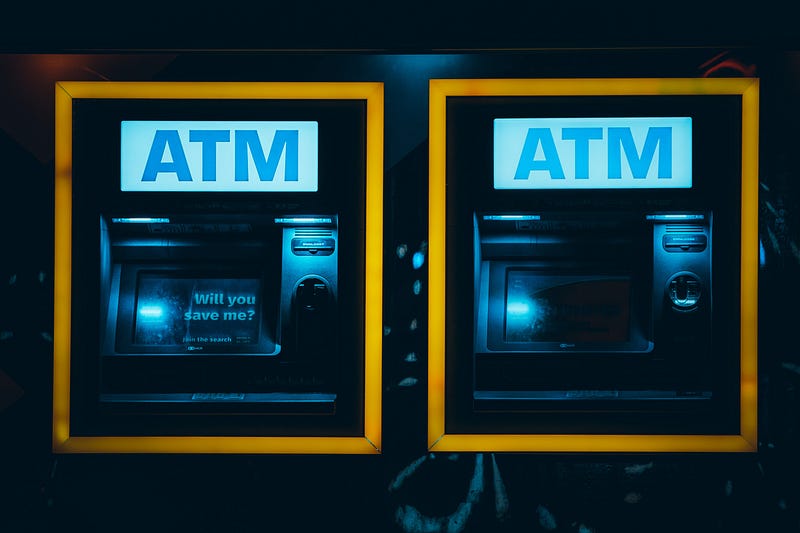
Photo by Keller Chewning on Unsplash


Gate.io confirms smooth operations

Gate.io is one of the oldest Chinese Bitcoin exchanges. It moved its corporate headquarters to the Cayman Islands once the Chinese authorities took a hardline stance on cryptocurrencies a few years ago. It also maintains offices in Seoul, South Korea, and is currently preparing to launch a bespoke Hong Kong-based platform.

According to the exchange, withdrawals are functioning properly, and the overall operations of the exchange are healthy. It explicitly stated, “There are no issues with our operations or withdrawals as rumored.”


Multichain concerns

Speculation emerged on social media on May 24 when Arkham Intelligence reported that members of the separate blockchain project Multichain had transferred $3 million worth of the $MULTI token to Gate.io. Arkham also mentioned other transactions involving Multichain-related tokens, some of which were subsequently suspended for deposit on the leading exchange, Binance.

While Arkham did not directly suggest any risks to Gate.io itself, the combination of market activity and other events led to rumors. ‘Coinsumption,’ a Twitter account with nearly 31,000 followers, suggested on May 31 that Gate.io might be facing insolvency problems and advised users to withdraw their funds from the exchange.

The ongoing issues with Multichain may well be unrelated to Gate.io. Multichain’s team members recently stated that they are unable to contact their CEO or access project servers. The project has experienced transaction delays over the past few days.


Native token price impact

Gate.io’s native token ($GT) has reportedly been affected by these rumors, as its value has declined by 6.59% over the past 24 hours. In contrast, Bitcoin has only experienced a 1.4% decrease.

The $GT token losses can be attributed, in part, to a period of several hours during which the token’s price dropped from $4.92 to $4.49. In isolation, this change represents an 8.7% loss, although there have been partial recoveries and other fluctuations to offset the decline. At the time of publication, the $GT token unit price stood at $4.36.

Despite the recent challenges, Gate.io continues to demonstrate significant trading volume. On the most recent day, the exchange recorded approximately $525 million in trading volume, solidifying its position as one of the largest centralized exchanges with sub-billion daily trading volumes.

The almost ten-year-old exchange is among several cryptocurrency exchanges preparing to comply with upcoming regulations in Hong Kong. It aims to operate alongside other platforms, such as CoinEx, OKX, Huobi, and BitMEX, as they adapt to the regulatory framework being implemented in the region.

Gate.io has dispelled rumors of withdrawal issues, assuring users that its operations are functioning normally. Notwithstanding that, as with everything in the crypto space, the facts and circumstances can change in an instant. Therefore, it’s a topic that is worthwhile watching as further news emerges relative to ongoing issues on the Multichain project.

More to Read
View All
Policy & Regulation·

Feb 02, 2024

Hong Kong’s PCPD investigates Worldcoin over privacy concerns

On Wednesday, the Office of the Privacy Commissioner for Personal Data (PCPD) in Hong Kong launched investigations at six premises controlled by Worldcoin, the biometric cryptocurrency project established by Sam Altman, the CEO of OpenAI. Potential personal data privacy risksIn a statement, the Privacy Commissioner expressed serious concerns about potential risks to personal data privacy. The PCPD executed warrants as part of the inquiry into Worldcoin's identity verification project, particularly focusing on the use of iris-scanning orbs for identity verification. The PCPD urged Hong Kong residents to consider the implications of Worldcoin's biometric data collection and emphasized the importance of evaluating the legitimacy of such data collection. The Commission also advised individuals to inquire about the purpose of data collection, the intended use of the data, the classes of entities with access to the data, the retention period of biometric data and the safety measures implemented to protect sensitive information. "The PCPD is concerned that the operation of Worldcoin in Hong Kong involves serious risks to personal data privacy, and believes that the collection and processing of sensitive personal data by the relevant organization may be in contravention of the requirements of the Personal Data (Privacy) Ordinance," stated the privacy watchdog. The Commission highlighted that any personal data controlled by Worldcoin must be collected for a lawful purpose related to the project's function or activity, with the information collected from users' irises deemed sensitive according to regulatory guidelines.Photo by Harpreet Singh on UnsplashGlobal scrutinyWorldcoin, which commenced operations in 2021 and officially launched in July 2023, has faced regulatory scrutiny in various countries due to privacy concerns. As of December 2023, Worldcoin reported that over 5 million people had created accounts using their identities. However, the project's approach to identity verification through iris scanning has triggered investigations and actions by regulators. Notably, the project suspended services in Kenya and halted iris scans in India in response to regulatory challenges.  The company’s activities in the French and Brazilian markets have been suspended. Last year the UK’s Information Commissioner’s Office said that it would make further enquiries into the company’s activities. Meanwhile, the German data watchdog has been investigating Worldcoin since 2022. In an effort to clarify the efforts the company is making to achieve compliance across international jurisdictions where data privacy is concerned, Worldcoin recently published a blog post on the subject. Within it, the company states that it “is designed to be fully compliant with all laws and regulations governing data collection and data transfer." Despite its ongoing regulatory challenges, Worldcoin CEO Alex Blania remains steadfast in advancing the project's mission, stating recently:"We race toward billions of users as fast as we possibly can."  The project closed out 2023 by expanding into Singapore. The privacy concerns surrounding Worldcoin underscore the growing importance of balancing technological innovation with robust data privacy regulations to ensure the protection of individuals' sensitive information.

news
Markets·

Jan 15, 2024

Spot bitcoin ETF approval triggers surge and shift in Korean crypto exchange performances

The U.S. Securities and Exchange Commission (SEC) approved the spot bitcoin exchange-traded fund (ETF) last Tuesday, prompting South Korean investors to flock to cryptocurrency exchanges to make transactions. However, the revenues recorded by these exchanges showed a mixed performance in response to this development due to their differing transaction fee policies, according to local news outlet DealSite on Monday.Photo by Maxim Hopman on UnsplashTrading volumes surge and retreatAccording to crypto analytics platform CoinGecko, as of 9 a.m. on Jan. 12 (KST), Upbit's trading volume on Dec. 11 and 12 was approximately $5.1 billion and $6.1 billion, respectively, for a total of about $11 billion. During the same period, Bithumb recorded $2.6 billion and $2.4 billion, respectively, totaling nearly $5 billion. However, as of this writing at 11 a.m. on Jan. 15, Upbit’s 24-hour trading volume has dropped back down to $2.1 billion and Bithumb to $874 million. "After the SEC's approval, crypto exchanges were simultaneously flooded with transactions," an anonymous industry employee commented. "Bitcoin and Ethereum were mainly traded." Fee divergenceAlthough the ETF approval caused a general uptick in trading volumes, the amount of revenue that the exchanges earned from transaction fees varied. Upbit charges a fee of 0.05% for both buying and selling crypto, meaning the exchange made an estimated KRW 14.8 billion in revenue from the fees from Dec. 11 to 12. Bithumb, on the other hand, hasn't earned any revenue from trading fees since its zero-fee policy was implemented in October last year.  Bithumb had previously charged 0.25% for transactions and 0.04% with coupons. By implementing the former, the exchange lost about KRW 15.8 billion ($12 million) in revenue, and with the latter, it lost about KRW 2.5 billion. For crypto investors, Bithumb's zero-fee policy has made investing more accessible, but the exchange is unlikely to reap its own rewards. Significant investor interestMoreover, with trading for the spot bitcoin ETF beginning on the 11th, the influx of funds is expected to boost trading. "All told there were 700,000 individual trades today in and out of the 11 spot ETFs," Bloomberg ETF analyst Eric Balchunas told X (formerly Twitter). "For context, that is double the number of trades for $QQQ." $QQQ refers to the Invesco QQQ ETF. According to an image that accompanied Balchunas’ post, the total trading volume across all 11 spot ETFs was reportedly $4.3 billion. Grayscale's GBTC had the highest volume at $2.1 billion, followed by BlackRock’s IBIT at $1 billion and Fidelity’s FBTC at $673 million.

news
Web3 & Enterprise·

Jun 15, 2023

LINE NEXT Captivates NFT Aficionados with Beta Launch of DOSI Land

LINE NEXT Captivates NFT Aficionados with Beta Launch of DOSI LandLINE NEXT, an American-based NFT platform subsidiary of Tokyo-headquartered messaging app developer Line Corporation, has launched the beta version of DOSI Land, the FINSCHIA token (FNSA) reward program on its global non-fungible token (NFT) platform, DOSI. This program aims to provide opportunities for its membership owners, known as DOSI Citizens, to win FNSA.Photo by Markus Winkler on PexelsWeekly token rewardsDOSI Land is a weekly program that rewards FNSA to lottery winners. However, only DOSI Citizens with Level 2 or above are eligible to participate in this event. DOSI Citizens are categorized into four levels, ranging from Level 1 to Level 4. Users can achieve attendance goals, invite friends, and make NFT transactions to elevate their Citizen status. It’s important to note that this program is not available in some countries, including the United States and Japan.DOSI Land comprises three lands: Emerald Orbit, Sapphire Starlight, and Golden Galaxy. Each land is accessible to Citizen Level 2, Level 3, and Level 4 users, respectively. Every week, a total of 3,000 FNSA will be distributed, with each land offering different chances of winning the token. Furthermore, each land has three zones, and users can participate in one zone per land. Participation in each zone requires DON, a membership point earned based on the total NFT transaction amount, and Level-up Passes, which are needed to improve Citizen status.DOSI operates the DOSI Citizen Membership system, which rewards users based on their contributions to the ecosystem. Alongside DOSI Land, DOSI has also implemented other reward programs such as DOSI Adventure and DOSI Arcade, offering a variety of NFTs to membership owners.As part of its efforts to expand the DOSI ecosystem, LINE NEXT incentivizes FNSA rewards to users actively engaging in DOSI through DOSI Land. The company plans to continue offering various benefits to DOSI users.DOSI’s presenceSince its beta launch, DOSI has attracted 4.6 million membership owners, facilitating over 410,000 transactions and involving 190,000 traders. These figures are as of May 2023. LINE NEXT cites NFT data analysis platform NFT Go’s statistics to state that DOSI is Asia’s largest and the world’s third largest platform in terms of monthly NFT traders. With its mission to establish a global ecosystem for NFTs and Web3, LINE NEXT aims to foster a thriving NFT platform business.The Finschia FoundationIn March of this year, the Finschia Foundation was established in Abu Dhabi, UAE, by Line Tech Plus, a Singaporean-based subsidiary of Line Corporation. This establishment was an effort to expand the corporation’s global Web3 endeavors. Line Corporation is a subsidiary of Z Holdings, jointly owned by South Korea’s Internet search engine provider Naver and Japanese technology investor Softbank Group.The Finschia Foundation operates Line’s open blockchain mainnet Finschia and rebranded its native crypto asset LINK (LN) to FINSCHIA (FNSA) last month. FNSA is currently listed on crypto exchanges Bithumb, Bittrex, and Huobi, according to CoinMarketCap.

news
Loading