Top

Temasek Cuts Pay Following FTX Autopsy

Web3 & Enterprise·May 29, 2023, 11:47 PM

Singaporean state-owned investment firm, Temasek Holdings, has announced a reduction in compensation for executives responsible for the company’s investment in the now-defunct cryptocurrency exchange FTX. Temasek, once the second-largest outside investor in FTX, faced scrutiny after the collapse of the exchange.
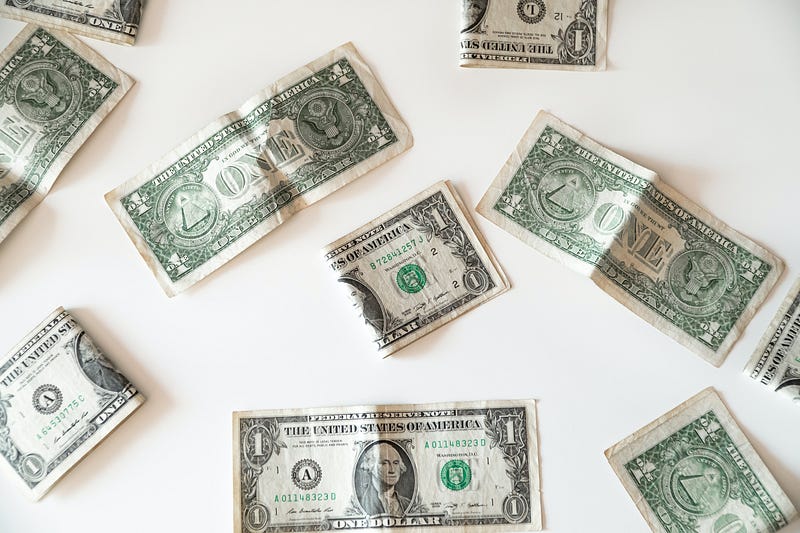
Photo by Emilio Takas on Unsplash


No misconduct finding

On May 29, Temasek released a statement confirming the completion of its internal review of the $275 million investment loss incurred from FTX. The review determined that there was “no misconduct” within the company. However, both the investment team and senior management took “collective accountability” and experienced a reduction in their compensation.

While acknowledging the inherent risks associated with any investment, Temasek emphasized the importance of continuing to invest in new sectors and emerging technologies to understand their potential impact on the business and financial models of existing portfolios. They recognized the need to adapt to an ever-changing world and explore avenues that could drive future value.

It’s worth noting that the $275 million loss from the FTX investment constituted only 0.09% of Temasek’s portfolio value, which stood at over $293 billion at the time of the collapse.

Temasek maintained that it conducted extensive due diligence before investing in FTX, emphasizing its commitment to a thorough review process. Chairman Lim Boon Heng stated in a May 29 interview with Bloomberg that there was fraudulent conduct intentionally hidden from investors, including Temasek. The negative outcome of the investment has been disappointing for the company and has had a significant impact on its reputation.


Reputational damage

Singapore Deputy Prime Minister Lawrence Wong echoed similar sentiments, highlighting the financial loss and reputational damage caused by the FTX collapse during a parliamentary meeting in November 2022.

During the due diligence process, Temasek reviewed FTX’s financial statements, assessed regulatory risks related to financial service providers in the cryptocurrency market, and sought legal advice. The company also engaged with individuals who had firsthand knowledge of FTX, including employees, investors, and industry participants.

In recent news, Temasek addressed and dismissed rumors about a $10 million investment in Array, a developer of algorithmic currency systems based on smart contracts and artificial intelligence. The company clarified that such reports were incorrect, refuting the circulating news articles and tweets.

Temasek’s internal review process is certainly a move towards transparency and accountability. It indicates a willingness towards addressing the matter. That said, there are FTX creditor groups who fervently disagree with Temasek’s analysis.


Class action lawsuit

Earlier this year a number of FTX creditors filed a class action lawsuit against a number of venture capital (VC) firms, including Temasek. The FTX customers maintain that Temasek and others played a role in a conspiracy to defraud them. Venture capital firms have countered with the view that they themselves were victims as a consequence of the FTX collapse, suffering multi-million dollar losses.

The fact remains that VCs get much further involved than merely handing over a check. They get involved with marketing, operations, and many other facets of the businesses of their portfolio companies. Meanwhile, other creditors suggest that Temasek has a responsibility to do right by the 1.4 million FTX creditors (a disproportionate number of them being Singapore-based) and to invest in a restructured FTX business, an option that represents the best opportunity for FTX customers to recover their funds.

Temasek may have reached certain conclusions by way of their internal report on the matter but this is not likely to be the final analysis relative to its involvement in the fall of FTX.


More to Read
View All
Web3 & Enterprise·

Sep 28, 2023

Gemini to Invest $24M as Part of India Expansion Plans

Gemini to Invest $24M as Part of India Expansion PlansUS-headquartered crypto exchange platform Gemini is exploring further operational expansion abroad, turning its attention specifically right now to India.The company first forayed into the world’s most populous country back in April with the announcement of the imminent launch of an engineering center.Having tested the waters in the South Asian country, the crypto exchange has decided to broaden its presence in the nation, according to a blog post published to the firm’s website on Tuesday. With a capital influx of Rs. 200 crore ($24 million), the exchange will be growing its development center in Gurgaon, a city that serves as an integral part of India’s National Capital Region (NCR).Photo by Naveed Ahmed on Unsplash70-member Gurgaon teamGemini has already onboarded over 70 staff members to its Gurgaon team. The company is actively hiring for more roles to fill its internal verticals, including tech development, finance, and compliance. In the next two years, the exchange plans to invest up to Rs. 200 crore ($24 million) in its Gurgaon facility, demonstrating a significant commitment where the Indian market is concerned.In an official statement, the company stated:“India has long been regarded as a hub for bar-raising talent by the world’s top technology companies, and we are thrilled to share that we are deepening our investment in the country. We are delighted to build on that announcement and reveal that we have opened our office within the Cyber Hub at Campus Cyber Greens.”The business is looking to tap into India’s rich pool of engineering talent to bolster its ecosystem with fresh Web3 solutions, inclusive of resource allocation towards optimized platform security.Singapore expansionPravjit Tiwana had previously been welcomed on board as the CEO of Gemini’s Asia-Pacific (APAC) operations earlier this year. He was previously the global chief technology officer (CTO) at the crypto exchange. Alongside this expansion, the company’s previous announcement in June to expand operations in Singapore is a task that also falls within Tiwana’s remit. At the time, the firm expressed the view that the APAC market will be crucial in securing the next phase of growth for the enterprise.Gemini signaled back in June that it intended to expand its reach in the Middle East also by pursuing a trading license in the United Arab Emirates.“India is undoubtedly a leading global hub for entrepreneurship and technological development. We are thrilled to build Gemini’s presence in India as we continue on our mission to unlock the next era of financial, creative, and personal freedom with crypto and Web3 innovation,” Gemini’s blog added, praising the ‘Startup India’ initiative.Growing interest in Indian marketPreviously, other crypto platforms like Coinbase and Algorand have also shown interest in onboarding software talent from India onto their teams. Amid the backdrop of India coming closer to possibly getting a concrete set of crypto rules around December this year, other crypto firms have also stepped into the market.In June, Gibraltar-based crypto-friendly bank Xapo announced its entrance into the Indian market. The OKX crypto exchange based in Seychelles is also scheduling a full-fledged expansion into the country.

news
Markets·

Jun 27, 2023

Huobi Delists USDD Stablecoin Pairs

Huobi Delists USDD Stablecoin PairsHuobi Global, the Seychelles-headquartered cryptocurrency exchange, has made the decision to delist ten trading pairs, primarily involving tokens used in transactions with the USDD stablecoin issued by the TRON DAO Reserve.That’s according to an announcement published to Huobi’s website on Monday. These tokens are supported by TRON founder Justin Sun, who also acts as an advisor to Huobi. The delisting, effective from June 29, will impact several tokens, including the Cardano blockchain token ADA, Solana’s SOL, ApeCoin’s native token APE, MATIC from Polygon, FIL from Filecoin, and ETC from Ethereum Classic.Photo by Napendra Singh on UnsplashUnregistered securitiesAll of these tokens were offered on the Houbi platform in pairs with USDD. Additionally, trading pairs involving ARPA, GAS, QTUM, and ZKS with Bitcoin will also be removed from the platform. Huobi stated that these changes are aimed at providing users with an improved trading experience.Originating from China, Huobi has played a significant role in spot and derivatives trading for digital assets. The decision to delist these tokens follows their classification as unregistered securities in recent lawsuits by the US Securities and Exchange Commission against Binance and Coinbase. Prior to Huobi, Robinhood and eToro had already removed some of these tokens from their platforms.Stablecoins are designed to maintain a stable value by pegging them to less volatile assets like the US dollar. They achieve this by holding equivalent reserves of cash and cash-equivalent assets as collateral. Stablecoins are widely used by traders for transferring funds between exchanges and as a hedge against price volatility. This makes them some of the most heavily-traded tokens in the crypto space.USDD stabilityUSDD, the stablecoin at the center of this delisting, currently ranks as the eighth largest stablecoin by market capitalization, with approximately $750 million. Huobi is the primary exchange for buying and trading USDD, according to CoinGecko, a crypto market data provider. USDD is backed by various digital assets such as Bitcoin, Ether, and TRX, and it is issued by the TRON DAO Reserve. The TRON DAO Reserve operates as a decentralized autonomous organization (DAO), utilizing blockchain technology to automate voting and transaction processes.USDD is an algorithmic stablecoin, with the assets held in backing the coin over-collateralized to a level of 170%. Despite this, the stablecoin has had issues in maintaining its US dollar peg from time to time. The issue has been that the token is partly backed by the TRX token, the native token of the TRON ecosystem. If TRX backing is discounted, the stablecoin is only 49% backed.Reports indicate that Sun acquired a controlling stake in Huobi through a Hong Kong-based asset manager, reportedly paying around $1 billion in November. However, Sun hasn’t provided any details of any such ownership stake.Huobi’s decision to delist these trading pairs reflects the evolving regulatory landscape and the need for exchanges to ensure compliance with securities regulations. By removing tokens that have faced legal scrutiny, Huobi aims to maintain a robust and compliant trading environment for its users.

news
Web3 & Enterprise·

Aug 21, 2023

Rotonda Launches iOS Version of Web3 Bithumb Burrito Wallet

Rotonda Launches iOS Version of Web3 Bithumb Burrito WalletRotonda, a subsidiary of Korean crypto exchange Bithumb, said Monday that it has officially released the iOS version of its Web3 digital wallet, Bithumb Burrito Wallet. This comes as part of the company’s efforts to make the app available for Web3 users on all operating systems.Photo by Shubham’s Web3 on UnsplashBoosted accessibilityRotonda has recently expanded the number of mainnets supported on the wallet to a total of 11 in order to enhance the accessibility of the service as well. Plans are underway to continuously improve features and build a user-friendly experience and interface.“By expanding our iOS-based services, we expect more users to be able to experience the new Web3 ecosystem,” the company said. “We will continuously enhance necessary features on Burrito Wallet for our users and strengthen competitiveness as a global service.”Collaborative eventThe company is also holding a two-part promotional event to mark the latest release in collaboration with ROACORE, an art tech platform created by ROALAND Foundation that allows non-fungible token (NFT) trading and NFT-based service experiences for artists and consumers. Users of the platform can participate in various Web3 experiences such as content consumption and offline events by using the native token ROA CORE (ROA).For the first part of the promotion, the first 10,000 users who sign up for Burrito Wallet and add the ROA token will receive 10 ROA tokens.The second part is a Learn-To-Earn (L2E) activity aimed at introducing ROACORE to users in a more engaging manner. Both new and existing wallet users can partake in a quiz after learning about ROACORE on the app. Four ROA tokens will be given to the first 5,000 participants.This promotional event will run from now until September 3. All reward tokens will be airdropped to winners, Rotonda said.Upcoming eventsRotonda is also set to co-host Next Block 2023 — a conference for exploring new business collaboration opportunities in building a new ecosystem for Web3 projects — with Bithumb META, Bithumb’s metaverse subsidiary on September 4.

news
Loading