Top

TON Foundation $250M Accelerator Fund Launch

Web3 & Enterprise·May 23, 2023, 1:04 AM

The team behind The Open Network (TON) layer one blockchain has launched a $250 million fund to promote and incentivize development on the network.

The Dubai-headquartered TON Foundation, the community managing the TON/Open Network blockchain project, provided details of the program via social media on Monday.

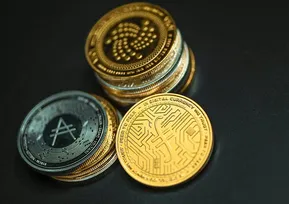
Photo by Ibrahim Boran on Unsplash


Boosting ecosystem projects

The $250 million fund is aiming to boost key TON ecosystem projects, with a particular focus on DeFi. The TON Foundation is already canvassing projects to participate and apply for funding.

Successful applicants will be offered between $50,000 and $250,000. The scheme goes beyond funding. Projects will also get to avail of mentorship from partners like GotBit, a consulting service targeted at blockchain start-ups. Growth advisory firm Web3Port will also be available to successful candidates in that mentorship role.

UAE-based multi-strategy crypto investment firm Cypher Capital will also be at the disposal of the TON-based start-ups, while they will also have the ability to access the Tonstarter launchpad. Additionally, the scheme features participation from East Asia, with South Korea-based Boom Labs, an incubator for Web3 developers, lending its support.

Justin Hyun, Head of Incubation and Growth at the TON Foundation, had this to say about the development:

“This is the beginning of many different incubators which will be supported in the future. Funding forms part of our local hubs rollout strategy and our ecosystem will work to attract new developers as well as successful repeat founders, based across a variety of key global locations.”


$25M funding in first year

Funding will be allocated from the TONcoin.Fund, a $250 million TON syndicate which invests in teams and projects that build on The Open Network. In the first year of the program, $25 million will be allocated.

Bill Qian, Chairman of Cypher Capital, said that the program “is unique within the Web3 universe today.” “TON Accelerator Program is taking the well-known incubator principle from the Web2 ecosystem, refining it, and evolving it by incorporating the best practices of Web3 protocols and methodologies,” he added.


DoraHacks Hack-a-TONx

In its announcement the TON Foundation outlined its intention to select the first successful projects from those who took part in the DoraHacks Hack-a-TONx. Hack-a-TONx was a two-month-long hackathon, put together by the TON Foundation in coordination with global hackathon organizer and multi-chain Web3 developer community, DoraHacks.

Submissions are being accepted by the TON Foundation from projects that have built on TON, who already have a minimum viable product (MVP). Although originally promoted by the makers of the Telegram messaging app, since 2020, TON has harnessed the TON Foundation to develop the project as a community-run and community-led open source initiative.

The African nations of Cameroon, the Democratic Republic of the Congo, and the Republic of Congo have all expressed an interest in adopting the TON blockchain. Earlier this month, the TON Foundation entered into a partnership with the Seychelles-based BIT crypto exchange. That collaboration will see BIT accepting TON tokens from its users for the payment of trading fees, with discounts offered to the exchange users who opt to pay using TON.

More to Read
View All
Policy & Regulation·

Sep 20, 2023

Korean Crypto Expert Claims NFTs and Security Tokens Shouldn’t Be a Priority for Investors Yet

Korean Crypto Expert Claims NFTs and Security Tokens Shouldn’t Be a Priority for Investors YetAlthough there has been a lot of speculation recently regarding the prospects of non-fungible tokens (NFTs) and security tokens as lucrative investment opportunities, these topics should not be of concern yet, said Kim Dong-hwan, CEO of Korean crypto consulting firm Wonder Frame, at Tuesday’s 2023 FNTimes Investment Forum hosted in Seoul by the Korean Financial Times.Photo by Markus Winkler on UnsplashFrom a price-to-earnings perspective, these types of investments should not be of priority to the average investor, Kim said, stating that this argument is rooted in historical context. Bitcoin, the kingpin of cryptocurrencies, had its first breakthrough in 2012 when its price was around $13. Since then, its value has skyrocketed nearly 2,000 times. Those who profited from Bitcoin then went on to invest in Ethereum, the second-largest cryptocurrency by market capitalization. Ultimately, the money earned from Bitcoin was constantly circulating in the crypto market.Grappling for liquidityHowever, Bitcoin’s liquidity — the frequency at which assets are bought and sold, which can be deemed the most important aspect of investing in and trading cryptocurrencies — is currently down. Liquidity in the crypto market usually flows in order from Bitcoin first, to altcoins, then to NFTs, Kim explained, because investments in NFTs are made by people who hold cryptocurrencies, not Korean won. Therefore, NFTs, which have now experienced more than a 90% decline from their peak, must depend on Bitcoin’s price recovery for their own resurgence.Securing liquidity for security tokens is also difficult, considering the fact that while these assets share common characteristics with cryptocurrencies, they are subject to strict regulatory oversight by financial authorities such as the Korea Exchange. Therein lies the difficulty in forecasting the prospects for security tokens.Kim thus questioned whether there would be market makers or liquidity providers that would be willing to boldly step into the role of satisfying the market, given the close scrutiny of authorities such as Korea’s Financial Services Commission (FSC) and Financial Supervisory Service (FSS). Although crypto exchanges like Upbit act as market makers by facilitating daily trading worth trillions of won, speculation suggests that securities firms that are responsible for supplying security token liquidity may find it challenging to do the same.Weak investments and negative perceptions of DeFiAnother concern for security tokens is fractional investments, which tend to be concentrated on assets of lower value. “Security tokens are fundamentally about dividing underlying assets and then selling them. However, in many cases, these underlying assets are of lower value or have no choice but to be traded this way,” Kim said.Kim also mentioned the regulatory hurdles hindering decentralized finance (DeFi) in general, despite its reputed appeal. “DeFi is perceived by international organizations like the Financial Stability Board (FSB), the US Federal Reserve System, and the European Union (EU) as a public enemy that causes financial instability in the real world,” he said.Taking all these factors into consideration, Kim recommended against investing in security tokens or NFTs at this time, given the current situation where even Bitcoin’s liquidity is at an all-time low. He suggested that, with market interest rates approaching 5%, unless there is a specific need to invest in virtual assets, it may be better to explore investment options positioned for higher interest rates.Kim is an industry expert who has previously written articles for crypto news site CoinDesk Korea for four years and has taken on the role of Chief Business Development Officer (CBDO) at Blitz Labs, a virtual asset research firm. He founded Wonder Frame in 2022, where he currently works as a professional consultant.

news
Web3 & Enterprise·

Jul 26, 2023

Axie Infinity Teams Up with CyberKongz in Blockchain Gaming Revival

Axie Infinity Teams Up with CyberKongz in Blockchain Gaming RevivalIn a bid to reinvigorate the world of blockchain gaming, Sky Mavis, the company behind the groundbreaking play-to-earn (P2E) blockchain game Axie Infinity, has announced an exciting partnership with CyberKongz, an Ethereum-based non-fungible token (NFT) collection.Together, they are set to develop a more comprehensive gaming ecosystem for the Ronin blockchain. Sky Mavis originated in Vietnam and came to prominence for developing the first major breakthrough for blockchain gaming within the crypto space. The company’s ties with Vietnam continue although it has since established its headquarters in Singapore.While the announcement, made via a blog post published on Tuesday, has sparked curiosity about a brand-new game on the horizon, specific details remain under wraps. Kathleen Osgood, Sky Mavis’ Head of Business Development, revealed that the upcoming game will be designed to be interoperable, seamlessly integrating with existing Axie Infinity experiences.Photo by Bestami Sarıkaya on UnsplashMoving to the Ronin blockchainBut the partnership goes beyond just creating a new game. It also includes the migration of CyberKongz’s popular Play & Kollect game, which is based on the Polygon blockchain. The move to the Ronin blockchain opens up new opportunities for CyberKongz to expand its user base and tap into Ronin’s thriving gaming community.Axie Infinity first captured the gaming world’s imagination in 2021 when it introduced the “play-to-earn” concept. This groundbreaking model allowed players to earn valuable cryptocurrency tokens while playing the game. It quickly became the leading project by sales volume in the burgeoning NFT space, according to data from CryptoSlam. On the other hand, CyberKongz also made headlines in 2021 when it impressively burned $4 million worth of Ether.However, since the NFT craze of 2021, interest in blockchain gaming has seen a decline, with some crypto-based games, such as Neopets, even transitioning to a non-crypto approach.Play-to-earn deficienciesSky Mavis Co-Founder, Aleksander Larsen, acknowledged earlier this year that the play-to-earn model needed improvement to thrive. He emphasized that games must prioritize fun and feature a robust economic system that enables players to earn rewards. Despite this, Kathleen Osgood remains optimistic that the blockchain gaming space can experience a revival through an experience that truly understands the motivations driving users towards Web3.According to Osgood, many teams in the space have merely attempted to replicate what worked in Web2, which may not be enough to drive explosive growth. Instead, she believes that attracting a massive audience lies in taking an innovative approach to leverage the unique offerings of Web3, appealing to users who are naturally drawn to its decentralized and rewarding nature.Gaming evolutionSky Mavis has started opening up its infrastructure to the Web3 ecosystem through the Ronin blockchain. By doing so, it hopes to create gaming communities that are not only more rewarding but also longer-lasting, fostering an environment of engagement and enthusiasm among players.As blockchain gaming continues to evolve, partnerships like the one between Sky Mavis and CyberKongz signal renewed efforts to iteratively improve on previous blockchain gaming models. With a new game on the horizon and the migration of CyberKongz to the Ronin blockchain, the stage is set for a new era of immersive and rewarding blockchain gaming experiences, building upon past efforts.

news
Web3 & Enterprise·

Jan 05, 2024

Wemade to onboard dance and play rhythm game Ritmi to WEMIX PLAY

Wemade has agreed to onboard Ritmi – a blockchain-based, Free-to-Play dance and rhythm mobile game built by UAE-based game developer Ritmi Games – onto its blockchain gaming platform WEMIX PLAY, according to an official Medium announcement on Friday (KST). It will be the first game of its kind in the WEMIX ecosystem.Photo by Kelli McClintock on UnsplashRhythmic funIn Ritmi, players can earn points by following the motions displayed on the screen in time with the music playing in the background. The game offers engaging and entertaining content like customizable avatars, personal music collections and dance battles. “We are pleased to partner with Wemade as pioneers in the gaming industry. We believe that together Wemade and Ritmi can sound harmonious in the gaming market,” said Ritmi Games CEO Kate Koroleva. Wemade’s global expansionThis rides on the coattails of Wemade’s recent efforts to expand its presence in the UAE. Last month, it became the first South Korean gaming company to form a partnership with the Dubai International Financial Centre’s (DIFC) Innovation Hub, where it plans to establish a WEMIX Play Center. It also partnered with the Dubai Chambers to contribute to advancements in the global Web3 and gaming industry.  On a broader scale, Wemade has been consistently securing partnerships with various developers in other regions as well, including North America, Europe and Asia. 

news
Loading